
The verdict
A mixed-report full-size luxury sedan, strong on safety and held back by efficiency.
The 2022 Genesis G90 is the last year of the first-generation flagship, and it plays the value card hard: a 420-hp V8 (or 365-hp twin-turbo V6), a genuinely lavish cabin, and an IIHS Top Safety Pick+ safety sheet for a base price of $74,950 — tens of thousands under an S-Class or 7 Series with comparable equipment. The tradeoffs are real, though: 19 MPG combined and a $4,100/yr fuel bill on required premium gas, wired-only CarPlay on dated infotainment hardware, and a resale/dealer-network profile that trails the established German flagships. It's an easy recommendation for someone who wants three-box luxury-sedan comfort and safety tech for meaningfully less money and doesn't mind being the one who has to explain what a G90 is.
Jump to scoresStrengths
- Flagship luxury cabin at a bargain price
- Comprehensive standard safety suite
- Cavernous front-seat space
What holds it back
- Poor fuel economy for the segment
- Expensive to buy and own over time
- Dated connectivity and no hands-free driving
Top alternatives
Cars shoppers cross-shop with the Genesis G90 3.51A-
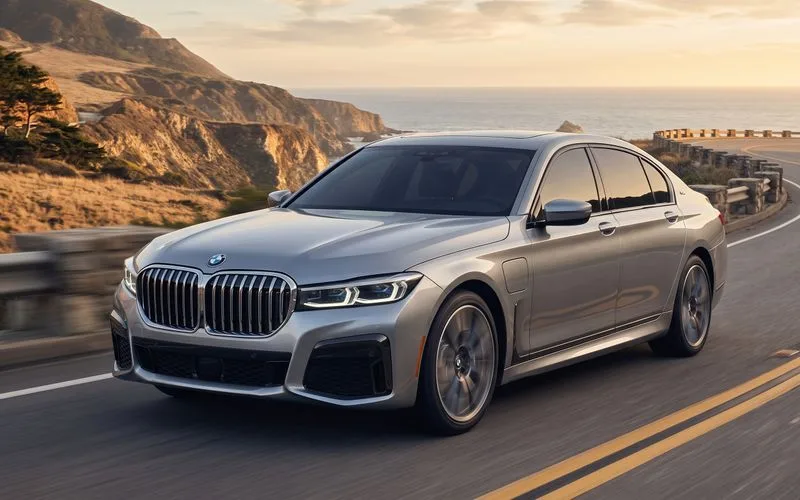 BMW 7 SeriesFull-Size Luxury SedanBetter at: Driving engagement
Costs more once equipped but offers hands-free Highway Assistant, a plug-in 750e and full i7 EV, and a chassis that rewards driving rather than just isolating you from it.
Compare 3.21B+
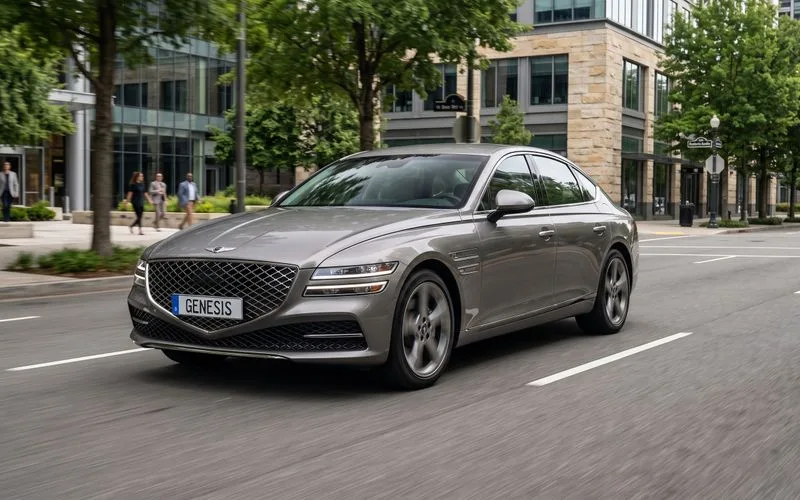 Genesis G80Mid-Size Luxury SedanBetter at: Value
Delivers most of the G90's design, materials and standard-safety story for tens of thousands less, with better resale and newer infotainment including wireless CarPlay.
Compare 3.20B+
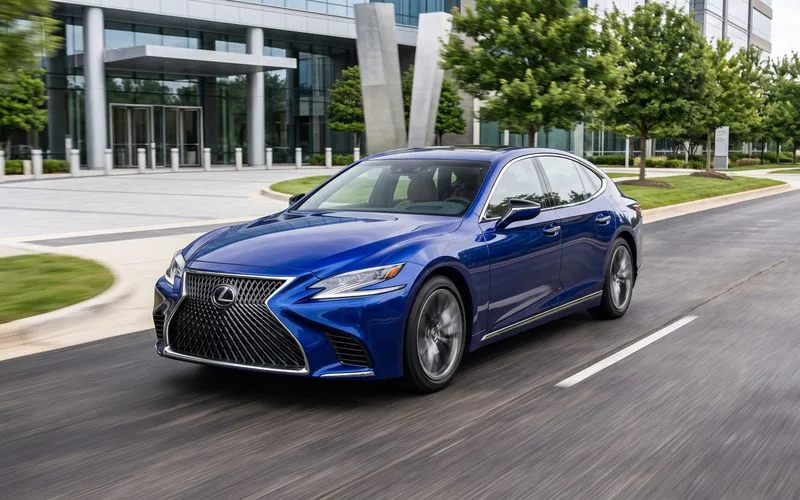 Lexus LSFull-Size Luxury SedanBetter at: Resale value
The safer long-term bet — stronger predicted reliability, roughly 47% five-year value retention against the G90's 37%, and a hybrid powertrain option to cut the fuel bill.
CompareHow it's evolved
10 scored model years · 2017–2026
Subject scores by year
Hover or tap a score to see what moved it versus the year before. A corner mark flags a big swing.
| Year | Performance | Efficiency | Safety | Space | Cost | Reliability | Tech | Use-case | Driving | Value |
|---|---|---|---|---|---|---|---|---|---|---|
| 2026 | 72 | 23 | 78 | 79 | 29 | 78 | 80 | 55 | 72 | 75 |
| 2025 | 71 | 19 | 74 | 73 | 29 | 67 | 80 | 53 | 68 | 74 |
| 2024 | 71 | 19 | 78 | 73 | 29 | 66 | 83 | 53 | 68 | 78 |
| 2023 | 71 | 19 | 79 | 73 | 29 | 63 | 80 | 52 | 68 | 77 |
| 2022 | 71 | 12 | 78 | 77 | 28 | 62 | 62 | 47 | 63 | 63 |
| 2021 | 68 | 13 | 80 | 77 | 28 | 59 | 62 | 47 | 63 | 67 |
| 2020 | 66 | 28 | 80 | 79 | 38 | 62 | 63 | 48 | 62 | 65 |
| 2019 | 66 | 16 | 62 | 80 | 28 | 74 | 55 | 48 | 63 | 66 |
| 2018 | 66 | 16 | 68 | 80 | 40 | 63 | 59 | 47 | 60 | 72 |
| 2017 | 65 | 18 | 68 | 80 | 42 | 66 | 53 | 45 | 64 | 69 |
Compare two years
Best fit & conditions
Higher scores mean a better fit for that use case. Learn more about use-case fit →
Subject profile
Detailed scoring by subject
1Performance & PowertrainOne of the G90's strongest categories.2.84B-
Ultimate is the volume trim for the 2022 G90 given the small $3,750 premium over base Premium; its naturally aspirated 5.0L V8 is the representative powertrain.
Peak torque for the 5.0L Ultimate volume trim.
Instrumented test figure for the V8 Ultimate; multiple outlets converge on 5.0-5.1 s across 2020-2022 model years (carryover powertrain).
Reviewers describe both engines as smooth, punchy and quiet with no notable lag, contributing to a serene cabin at cruise — near the top of the full-size luxury sedan calibration set.
The shared 8-speed automatic is consistently praised for shifting extremely smoothly with no hunting reported.
HTRAC AWD is offered as a ~$2,500 option across every trim/engine combination (not standard), with straightforward on-road traction operation rather than terrain modes or low range — basic but broadly available.
Two conventional gas engines (3.3T V6, 5.0 V8) cover the range with no hybrid, PHEV or EV variant, unlike some full-size luxury rivals already offering electrified options.
2Efficiency & RangeThe G90's lowest-graded category.0.00F
EPA combined rating for the RWD 5.0L V8 Ultimate, the volume configuration.
EPA city rating for the RWD 5.0L V8 Ultimate.
EPA highway rating for the RWD 5.0L V8 Ultimate.
Derived from the EPA combined MPG (19) and the G90's 21.9-gallon tank capacity; matches independent trim spec listings.
EPA annual fuel cost estimate at 15,000 mi/yr for the RWD 5.0L V8 Ultimate; well above the sedan band ceiling given the V8's thirst and premium fuel requirement.
Premium unleaded is required (not just recommended) on both the 3.3T V6 and 5.0L V8, adding real cost on top of already low MPG.
3SafetyThe G90's best-graded category.3.32B+
NHTSA catalogued both 2022 G90 body styles (RWD and AWD) but never crash-tested either — every rating field returns 'Not Rated'. Low-volume, six-figure full-size luxury sedans are routinely skipped by NCAP; the 2023-25 G90 (new generation) is likewise untested. The 4.5-star placeholder follows the convention used elsewhere in this dataset for untested flagships (Audi A8, 2023-25 G90) and is arguably conservative given every Genesis model NHTSA has actually tested (G70, G80, GV70, GV80) carries a 5-star overall.
The pre-redesign G90 closed out its generation with a clean sheet: IIHS rates the 2022 car Good on small overlap front (both driver and passenger side), moderate overlap front, side, roof strength, and head restraints & seats — every structural test it ran came back Good, with only seat belts & LATCH ease of use landing at Acceptable. That is a stronger across-the-board result than the redesigned 2023 car managed (which shipped without roof-strength/head-restraint ratings and later needed a rear-seat-belt revision), and it is enough for Top Safety Pick+. Docked slightly off a perfect score only for the one Acceptable mark.
Genesis sells the 2022 G90 in just two configurations — 3.3T Premium and 5.0 Ultimate — and does not gate driver-assistance behind either one: forward collision warning with forward/reverse automatic braking and pedestrian/cyclist detection, blind-spot monitoring with a blind-spot camera, rear cross-traffic alert, lane-keeping assist, driver attention warning and nav-linked adaptive cruise control with Highway Driving Assist are standard equipment across the range. That is a comprehensive suite standard on every trim, on par with rivals that make you step up a trim for blind-spot or adaptive cruise, though it stops short of the following year's redesign, which added a Blind-Spot View Monitor, Remote Smart Parking Assist and Advanced Rear Occupant Alert as standard.
Split result, similar shape to the redesign that followed it but with a slightly weaker pedestrian half. Vehicle-to-vehicle front crash prevention rates Superior — the top band — but pedestrian daytime detection rates only Advanced (one notch below Superior), and IIHS does not publish a nighttime pedestrian rating for this model year at all, so the system's night-time pedestrian capability is simply undemonstrated rather than confirmed. That combination — a Superior car-to-car result carried by weaker/unconfirmed pedestrian performance — sits at the boundary between the two guidance bands rather than cleanly in the top one.
Standard, active, and layered rather than warning-only. Blind-Spot Collision-Avoidance Assist automatically applies corrective front braking when a vehicle is detected during a lane change, Rear Cross-Traffic Collision-Avoidance Assist brakes autonomously when backing out of a spot with cross traffic present, and Safe Exit Assist keeps the electronic child lock engaged (and can prevent the door from opening at all) when a vehicle is approaching from behind as a rear passenger tries to exit — a genuinely trailer-adjacent, intervention-grade feature set, not just chimes. A blind-spot camera view is also standard, short of the full Blind-Spot View Monitor the 2023 redesign added.
Lane Keeping Assist and Highway Driving Assist's lane-centering work together to hold the car in the middle of its lane 'at all speeds' on the highway, and reviewer summaries describe the centering as controlled rather than crude. It sits short of the top band because this is the first-generation implementation (a year before Genesis's more refined HDA II arrived on the redesigned car) and Genesis's own guidance still requires clearly visible lane markings and steers drivers away from poor weather or winding/slippery roads — the same conservative envelope as the later car, on an earlier-generation system.
Smart Cruise Control is full-speed-range with stop-and-go and is standard across the 2022 lineup, paired with Highway Driving Assist and an Auto Curve Zone Slowdown that reduces speed for detected curves — a genuinely integrated highway-assist package for the model year, not a bare-bones adaptive cruise. A contemporary review specifically calls the stop-and-go tuning well judged ('worked like a dream'). It stays just under the top of the band because it remains hands-on with no hands-free tier, and it is the outgoing generation's system rather than the following year's HDA II refinement.
No hands-free driving option exists on the 2022 US-market G90 at either trim. Highway Driving Assist and Smart Cruise Control are both hands-on systems requiring continuous steering input; Genesis did not introduce even the Hands-On Detection nuance from the following year's redesign until the 2023 car, and never offered a Level 3 system in the US market on this generation. In a segment where the 7 Series (Highway Assistant) and S-Class (Drive Pilot) were beginning to offer supervised hands-free driving, this remains the flagship's weak point; the small non-zero score credits a capable hands-on highway assist, not any hands-free capability.
IIHS rates the 2022 G90's standard LED headlights Good across all trims — a stronger result than the redesigned 2023-26 car, which IIHS marked down to Acceptable. Uniform Good, standard on the whole range with no trim lottery, is squarely the top band; it is not scored higher only because Good (not a documented 'superior beam pattern across every condition') is the ceiling IIHS reports rather than a perfect result.
Reviewers describe the driving position favorably for a big sedan — a moderately raked windshield and an instrument panel that isn't overly deep or tall keep forward sightlines clear, and visibility 'from the driver's seat is good all round.' A standard 360-degree surround camera backstops the areas natural sightlines can't reach, making parking straightforward despite the car's size. This sits above mid-pack but short of best-in-class because, as on most large sedans, thick rear pillars and a raised trunk line still compromise the rear three-quarter view relative to the front.
Workable but not a strong suit. IIHS rates the 2022 G90's seat belt and LATCH ease of use only Acceptable — the one blemish on an otherwise all-Good crashworthiness sheet — consistent with anchors that are present but not especially easy to reach. Rear legroom is tight for the segment at 37.8 inches, and heavily bolstered rear seats with a raised transmission tunnel make a center third seat impractical, so three-across car-seat installs are out even though two complete outboard LATCH sets plus a center tether exist.
4Space & ComfortOne of the G90's strongest categories.3.26B+
Standard 5-passenger configuration on the volume 3.3T Premium trim for the unchanged 2022 model year; the 4-passenger VIP rear-seat package remains an Ultimate-trim option, not the representative config.
2022 is a carry-over year for this generation (2018-2022 facelift), so interior dimensions are unchanged from 2021; front headroom exceeds the top of the full-size sedan normalization band.
Unchanged from the prior model year; exceptionally generous front legroom for the segment, well above the sedan normalization band top.
Second-row headroom sits in the upper portion of the full-size sedan band, unchanged from the prior model year.
Rear legroom is solid but mid-pack for a full-size luxury sedan, well short of long-wheelbase rivals; unchanged from the prior model year.
Trunk volume is about average for a full-size luxury sedan, mid-band, unchanged from the prior model year.
Competitive everyday storage — deep console, power-folding hands-free trunk, door pockets — but the volume 3.3T Premium trim lacks the standout VIP console/fridge features reserved for the Ultimate trim.
Nappa leather, heated/ventilated power front seats are widely praised for long-haul comfort; second-row comfort is good though not chauffeur-grade like the Ultimate's VIP seats.
Electronically controlled adaptive suspension delivers a supple, well-controlled ride that reviewers call close to but a step below the S-Class benchmark; some body roll in corners from the soft tune.
Reviewers repeatedly describe the cabin as supremely quiet at highway speed, aided by acoustic glass and active noise control, unchanged from prior years.
Heated and ventilated power front seats with memory are standard on the 3.3T Premium; rear-seat heating/ventilation and rear entertainment remain reserved for the pricier Ultimate trim, so the volume trim is well-equipped but not top-of-class.
5Cost of OwnershipOne of the G90's weakest categories.0.00F
Entry trim for the 2022 model year, the final year of the first-generation G90, is the 3.3T Premium RWD; base MSRP is a small increase over 2021 and sits well above the general sedan reference band as a full-size flagship.
3.3T Premium AWD is the practical volume configuration for US buyers given AWD's popularity in the segment; 5.0L Ultimate trims run $78,700-$81,200.
Combines Edmunds' post-warranty repair projection with industry estimates for scheduled maintenance in years 4-5 once the complimentary period ends; sits near the top of the sedan cost band, typical for a large luxury flagship with complex features. Note: CarEdge's newer aggregate estimate is materially lower (~$2,822 over 5 years), but Edmunds' model-specific repair projection and comparable industry maintenance-cost data are weighted more heavily here for consistency with prior model-year scoring.
Retention is slightly better than the luxury large car segment average (54.9% loss) despite the G90's niche status, as is typical for the nameplate across recent model years.
Genesis's standard basic (bumper-to-bumper) warranty for 2022 is 5 years/60,000 miles, at the top of the segment band and unchanged year over year.
Genesis's 10-year/100,000-mile powertrain warranty is at the top of the band and one of the longest in the industry, unchanged for 2022.
Genesis includes 3 years/36,000 miles of complimentary scheduled maintenance plus a complimentary 3-year Genesis Service Valet subscription (at-home/at-office pickup, service, and delivery with a loaner) and roadside assistance for the life of the warranty — a materially stronger ownership package than most rivals in the class.
$77,450 volume-trim price minus its estimated resale value after 5 years (47.3% retained, or about $36,634) leaves about $40,816 in depreciation. Add the projected $8,200 in 5-year maintenance and repairs, and owning this vehicle for 5 years costs about $49,016 in total.
6Reliability & QualityMid-pack among this car's ten categories.2.17C
Sources disagree sharply: JD Power's 2022 Vehicle Dependability Study (surveying 2019 model-year owners, the closest cohort to this generation) named Genesis the top premium nameplate at 155 PP100, while Consumer Reports' predicted-reliability model places the Genesis brand near the bottom of all 26 tested (21st), citing infotainment glitches, HVAC faults and backup-camera issues carried across the lineup including the G90.
Genesis's actual-dependability record (JD Power VDS) is elite, but its forward-looking predicted-reliability standing (Consumer Reports) is weak, and CR's owner-survey model is the more direct read on what a 2022 buyer should expect over the ownership period — net this to mid-pack rather than top-tier or bottom-third.
The 2022 G90 (3.3T) is covered by a fire-risk recall for a deteriorating left turbocharger oil feed pipe spanning 2017-2022 G90s, plus a later fuel-pump-failure recall (loss of drive power) covering 2022-2023 G90/G80/GV70/GV80 — not a mass powertrain failure pattern, but two safety-relevant campaigns including one fire-risk item keeps this out of the top band.
The volume 3.3L twin-turbo Lambda V6 is a widely-deployed Hyundai/Genesis/Kia family with no catastrophic failure pattern, but owners report harsh multi-gear upshifts and a persistent low-speed vibration with no factory fix, plus a costly 42,000-mile spark-plug service that requires intake manifold removal — a mixed-history read rather than a proven high-mileage reputation.
Reviewers consistently single out the G90's cabin as class-leading for the price: Nappa leather, real open-pore wood, brushed metal and suede-like trim throughout, with several outlets stating it rivals or beats costlier German/Japanese flagships.
Genesis topped J.D. Power's 2022 U.S. Initial Quality Study for premium brands, corroborating reviewer accounts of tight, rattle-free assembly on the G90; this sits a notch below the interior-materials score only because owner forums note isolated build inconsistencies typical of a low-volume flagship.
In 2022 the G90 was still serviced almost entirely out of shared Hyundai facilities — Genesis's first standalone US showroom didn't open until April 2022 — and J.D. Power's November 2021 dealer-satisfaction survey ranked the Genesis network last among luxury brands, which is the relevant service-experience signal for a 2022-model owner.
RepairPal projects the G90's out-of-warranty repair costs well below the luxury-sedan average ($754 first year out of warranty; ~$2,822 over 5 years, roughly $1,540 under the segment average) thanks to Hyundai Motor Group parts commonality, offsetting the fact that Genesis-specific body/trim parts still route through a thinner dealer network than an established luxury brand.
7Technology & InfotainmentMid-pack among this car's ten categories.2.21C
12.3-inch split-screen touchscreen is standard across the 2022 G90 lineup, mid-band for the sedan normalization; unchanged from the prior model year.
Genesis's split-screen infotainment of this generation is regarded as quick and logically laid out, with abundant physical controls (rotary dial, real climate buttons) balancing the touchscreen; unchanged for 2022.
Apple CarPlay and Android Auto are standard but wired-only via the USB-C data port; this generation's head-unit hardware was excluded from the later Genesis OTA update that enabled wireless projection on other models.
Native navigation with real-time traffic is functional and detailed, but voice control is conventional command-based rather than natural-language, and most owners still lean on CarPlay for navigation.
The standard 17-speaker Lexicon premium audio system is a genuine standout, widely praised as class-competitive premium audio; unchanged for 2022.
The volume 3.3T Premium ships with an electroluminescent gauge cluster paired with a 7-inch color LCD driver display rather than a full digital binnacle; a complete 12.3-inch digital cluster remained a costlier option/higher-trim feature rather than standard equipment.
The 2022 G90 supports OTA map updates via Genesis Connected Services, but not whole-vehicle software OTA — that broader capability arrived with later hardware/generations, and this model year's hardware was confirmed excluded from a subsequent feature-adding OTA push.
MyGenesis/Genesis Intelligent Assistant app covers remote start, lock/unlock, vehicle locate and status, bundled complimentary for a term — solid core functions without a class-leading digital key.
Standard wireless phone charging plus multiple USB ports front and rear, but this generation's USB is USB-A rather than the faster USB-C now common, keeping this mid-pack.
Standard proximity smart key, push-button start and remote start with hands-free power trunk cover the core convenience set, though phone-as-digital-key wasn't yet offered on this generation.
A standard 360-degree surround-view camera system with four cameras and zoom, plus parking sensors, is genuinely strong for the segment and standard rather than gated to the top trim.
Head-up display is included on the volume 3.3T Premium trim rather than reserved for a top trim, a genuine value-add versus rivals that gate HUD to the priciest configuration.
8Use-Case FitOne of the G90's weakest categories.1.17D
Rear doors and legroom are generous enough for car seats and LATCH anchors are standard, but the low RWD sedan seating height and formal trunk-first design make it a mediocre daily family hauler compared to an SUV or minivan.
The volume 3.3T Premium trim — the trim families would actually buy — expanded its standard driver-assist suite for 2022 to include Safe Exit Assist and Driver Attention Warning alongside the existing forward/reverse AEB, blind-spot monitoring, lane-keep/lane-tracing assist, rear cross-traffic alert and highway driving assist, a strong safety package at this price point with no extra-cost gating.
Spacious, quiet, well-cushioned rear seats handle multi-hour trips comfortably, but rear-seat entertainment and rear climate/ventilation are Ultimate-trim exclusives and trunk space (15.7 cu ft) is only average for luggage-heavy family trips.
Reviewers consistently describe the G90 as a relaxing, effortless daily driver with a smooth powertrain, adaptive cruise and low driver fatigue, prioritizing comfort over engagement.
The twin-turbo V6 in a ~4,700 lb full-size luxury sedan returns modest fuel economy for daily commuting (EPA 17/25 mpg city/hwy for the 3.3T), and luxury-tier consumables (tires, service) push commuting costs above segment average.
At roughly 205 inches long with a 39-foot turning diameter, the G90 is a large car to park and maneuver; the standard 360-degree camera meaningfully offsets this but doesn't erase the footprint.
As a full-size luxury sedan the G90 carries no towing rating and minimal cargo flexibility — it is not meaningfully work-capable by design.
The G90 is engineered and trimmed for luxury comfort, not fleet or work-duty abuse; there is no fleet-durability reputation to draw on for this application.
There are no tie-downs, onboard work power, or upfit ecosystem — the G90 has essentially zero jobsite practicality.
Quiet cabin, supple adaptive suspension, comfortable seating and standard highway driving assist make the G90 a genuinely strong long-distance tourer.
Low ground clearance, RWD-biased platform (AWD optional) and no roof/tow provisions for gear make this a pavement-bound luxury sedan with little outdoor utility.
Average 15.7 cu ft trunk with no split-folding rear seat commonly offered on this platform and no roof rails or hitch option, leaving little flexibility for bulky gear.
9Driving ExperienceMid-pack among this car's ten categories.2.23C
Available rear-wheel steering makes the big sedan responsive for its size, but reviewers are consistent that handling is secure rather than sporty — comfort is the clear design priority, unchanged for 2022.
Steering is accurate enough to place the car confidently but is tuned light and isolated for comfort, with little genuine road feedback.
No specific brake complaints surfaced in review coverage and the car's confident freeway tracking implies adequate stopping performance for its class, though instrumented stopping-distance data wasn't found for this model year.
The twin-turbo V6 paired with the 8-speed automatic is repeatedly praised as smooth, punchy and refined, on par with or ahead of pricier rivals.
The V6 is well isolated from the cabin under normal driving, contributing to the car's widely-noted overall quietness.
At 39 feet curb-to-curb, the G90's turning diameter sits near the wide end of the sedan normalization band (lower is better), reflecting its 205-inch overall length; unchanged from the prior model year.
Power seat and wheel adjustment ranges, a commanding view out, and a control layout that balances touchscreen with real buttons make for a comfortable, easy driving position.
Reviewers are explicit that this is not a car built for driving enjoyment — it prioritizes comfort over any enthusiast appeal.
10Value & Market PositionMid-pack among this car's ten categories.2.22C
Even the entry 3.3T Premium for 2022 comes standard with Nappa leather, tri-zone climate, heated/ventilated front seats, a head-up display, surround-view camera, and a full suite of ADAS features that rivals like the S-Class and 7 Series charge tens of thousands more to match.
Genesis's flagship strategy continues to undercut German rivals by tens of thousands while matching or exceeding their content and comfort, keeping the G90 a standout bang-for-buck pick in the full-size luxury segment for its final first-generation year.
Only two trims (3.3T Premium, 5.0L Ultimate) each with RWD/AWD, versus rivals like the S-Class or 7 Series that offer far more powertrain and trim permutations; a take-it-or-leave-it lineup by comparison, unchanged from 2021.
The G90 remains a very low-volume niche player in the full-size luxury sedan segment, with only 1,172 units sold in the US in 2022 even as the broader Genesis brand grew 13.7% to a record 56,140 units — chip-shortage-era production capacity appears to have favored higher-volume GV70/GV80 SUVs over the flagship sedan.
Genesis's image continued strengthening in 2022 — J.D. Power named it the top premium brand in the 2022 US Initial Quality Study and it ranked #2 among premium brands (behind only Porsche) in the 2022 APEAL study — but it still trails the decades-long aspirational cachet of Mercedes-Benz or BMW.
2022 fell in the middle of the industry-wide semiconductor shortage, when inventory was tight and most dealers held close to or at MSRP with minimal factory incentives — a tougher year for buyers to find a deal than the surrounding model years.
2022 is the final model year of the first-generation G90 (facelifted for MY2019, produced through 2022), immediately before an all-new second generation launched for 2023 — an aging platform on the eve of a full redesign rather than current cutting-edge tech.
Well-reviewed for its ride, cabin finish and value, ranking #2 in its class (7.6/10) at US News and earning an IIHS Top Safety Pick+ award, but not a habitual comparison-test winner against the S-Class/7 Series.