
The verdict
A mixed-report full-size luxury sedan, strong on space and held back by efficiency.
The 2018 Genesis G90 is a full-size flagship sedan that undercuts the S-Class, 7 Series and A8 by tens of thousands of dollars while matching much of their cabin quality, standard equipment and warranty coverage — the 3.3T Premium starts at $69,345 with Nappa leather, a head-up display and adaptive cruise all standard. The tradeoffs are real: 20 MPG combined on premium fuel, four separate NHTSA recalls (three fire-risk) on this model year, and resale value that lags the established German nameplates because Genesis was still a brand-new marque in 2018. It's an excellent buy for a shopper who wants flagship comfort and content per dollar and can look past thinner brand cachet and higher running costs.
Jump to scoresStrengths
- Segment-beating value for the money
- Class-leading warranty coverage
- Excellent ride comfort and a quiet cabin
What holds it back
- Thirsty for its size, and it wants premium fuel
- Four NHTSA recalls, three of them fire risks
- Steep resale value and total ownership cost
Top alternatives
Cars shoppers cross-shop with the Genesis G90 3.51A-
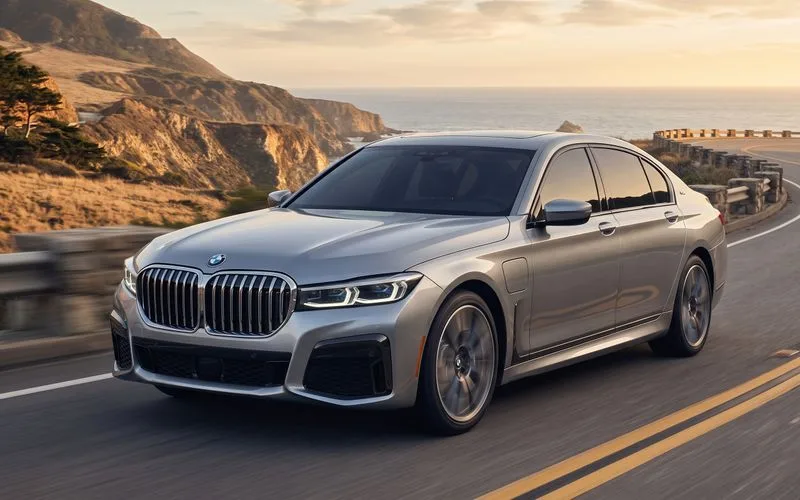 BMW 7 SeriesFull-Size Luxury SedanBetter at: Driving engagement
Costs more once equipped but offers hands-free Highway Assistant, a plug-in 750e and full i7 EV, and a chassis that rewards driving rather than just isolating you from it.
Compare 3.21B+
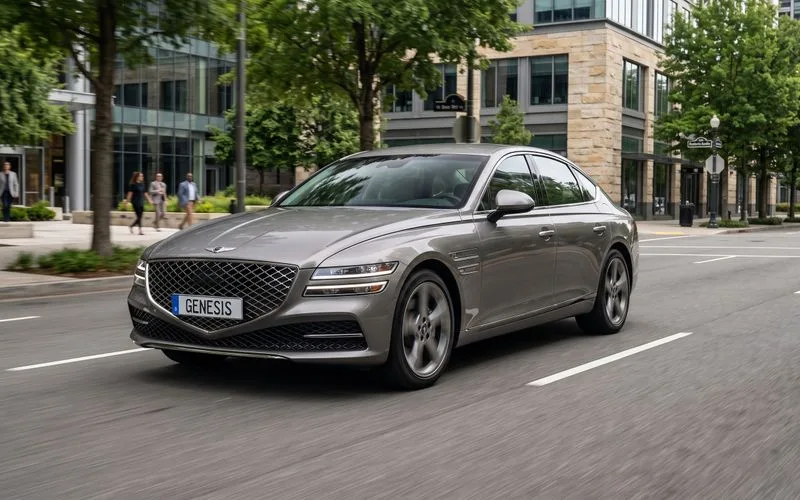 Genesis G80Mid-Size Luxury SedanBetter at: Value
Delivers most of the G90's design, materials and standard-safety story for tens of thousands less, with better resale and newer infotainment including wireless CarPlay.
Compare 3.20B+
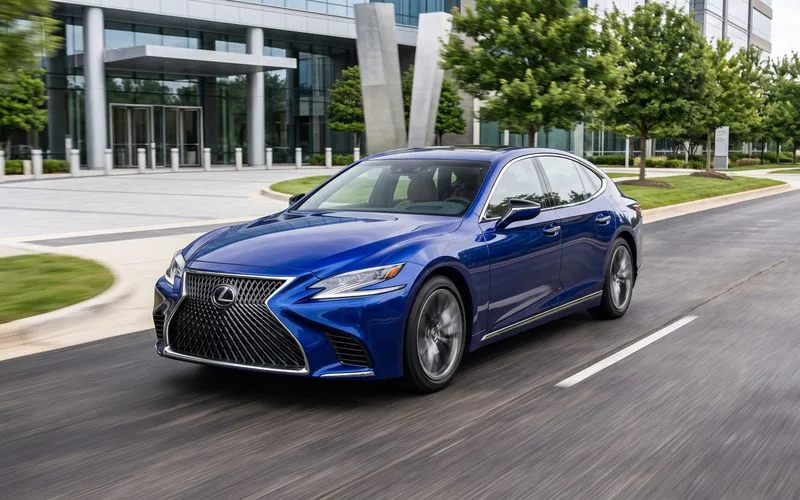 Lexus LSFull-Size Luxury SedanBetter at: Resale value
The safer long-term bet — stronger predicted reliability, roughly 47% five-year value retention against the G90's 37%, and a hybrid powertrain option to cut the fuel bill.
CompareHow it's evolved
10 scored model years · 2017–2026
Subject scores by year
Hover or tap a score to see what moved it versus the year before. A corner mark flags a big swing.
| Year | Performance | Efficiency | Safety | Space | Cost | Reliability | Tech | Use-case | Driving | Value |
|---|---|---|---|---|---|---|---|---|---|---|
| 2026 | 72 | 23 | 78 | 79 | 29 | 78 | 80 | 55 | 72 | 75 |
| 2025 | 71 | 19 | 74 | 73 | 29 | 67 | 80 | 53 | 68 | 74 |
| 2024 | 71 | 19 | 78 | 73 | 29 | 66 | 83 | 53 | 68 | 78 |
| 2023 | 71 | 19 | 79 | 73 | 29 | 63 | 80 | 52 | 68 | 77 |
| 2022 | 71 | 12 | 78 | 77 | 28 | 62 | 62 | 47 | 63 | 63 |
| 2021 | 68 | 13 | 80 | 77 | 28 | 59 | 62 | 47 | 63 | 67 |
| 2020 | 66 | 28 | 80 | 79 | 38 | 62 | 63 | 48 | 62 | 65 |
| 2019 | 66 | 16 | 62 | 80 | 28 | 74 | 55 | 48 | 63 | 66 |
| 2018 | 66 | 16 | 68 | 80 | 40 | 63 | 59 | 47 | 60 | 72 |
| 2017 | 65 | 18 | 68 | 80 | 42 | 66 | 53 | 45 | 64 | 69 |
Compare two years
Best fit & conditions
Higher scores mean a better fit for that use case. Learn more about use-case fit →
Subject profile
Detailed scoring by subject
1Performance & PowertrainMid-pack among this car's ten categories.2.47C+
Volume trim is the 3.3T Premium; the 5.0 Ultimate V8 is the upper trim available with more power.
3.3T V6 peak torque figure for the volume trim; V8 Ultimate trim makes marginally more.
No single manufacturer-quoted 0-60 figure; instrumented third-party tests cluster around 5.0-5.6s for the 3.3T with the V8 not meaningfully quicker in most tests.
Reviewers consistently praise the refined, isolated character of the 3.3T V6 with the 8-speed automatic, though several note mild turbo lag from a stop or when passing.
The 8-speed automatic with Genesis 'Smart Shift and Drive Control' is described as smooth-shifting and eager to kick down without hesitation, appropriate for a flagship luxury sedan.
Genesis HTRAC AWD is available as an option across both the 3.3T and 5.0 trims (RWD is standard), giving broad but not universal AWD availability with a conventional torque-split system rather than off-road-oriented sophistication.
Two gas engine choices (3.3T twin-turbo V6, 5.0L naturally aspirated V8) cover the lineup, but there is no hybrid, PHEV, or EV variant for 2018.
2Efficiency & RangeThe G90's lowest-graded category.0.00F
EPA combined figure for the volume 3.3T Premium trim; identical across RWD and AWD for the V6.
EPA city figure for the volume 3.3T trim.
EPA highway figure for the volume 3.3T trim, at the low end of the sedan band given the car's size and weight.
Derived from the EPA combined MPG and the manufacturer-specified fuel tank capacity for the 3.3T trim.
EPA annual fuel cost estimate at standard assumptions; premium fuel requirement plus the car's weight push it above the sedan band ceiling.
Both the 3.3T and 5.0 engines require premium unleaded gasoline, adding meaningfully to running costs for a high-mileage owner.
3SafetyOne of the G90's strongest categories.2.60C+
NHTSA has never published a crash-test rating for any model year of the first-generation G90 (2017-2022), including 2018; it is a low-volume flagship of the kind the agency routinely skips, the same treatment as the 7 Series, S-Class and A8. Per the framework definition of this item, 0 is the value for a vehicle never rated by NHTSA — a sentinel for absent data, not a zero-star crash result.
The 2018 G90 earned IIHS Top Safety Pick+ with Good ratings across all six crashworthiness measures (small overlap front driver and passenger side, moderate overlap front, side, roof strength, head restraints & seats) plus Good headlights and a Superior front crash prevention rating — a slightly stronger published result than the 2017 model year, which split headlights Acceptable/Good by trim.
The G90 continues its no-options-list ADAS strategy for 2018: automatic emergency braking with pedestrian detection, Smart Cruise Control with full stop/start, Smart Blind Spot Detection, Lane Keep Assist, rear cross-traffic alert, driver attention alert and a 360-degree camera are standard on both the 3.3T Premium and 5.0 Ultimate — nothing in this suite is trim-gated, which remains ahead of most rivals in this peer set for the model year.
IIHS rated the standard AEB system Superior for vehicle-to-vehicle front crash prevention, avoiding a collision entirely in both the 12 mph and 25 mph tests. The 2018 rating page does not publish a separate pedestrian AEB sub-score for this model year even though pedestrian detection is standard manufacturer equipment, so the top band (which requires a documented nighttime pedestrian result) is not fully confirmed.
Smart Blind Spot Detection and rear cross-traffic alert are standard on every 2018 trim, which is the segment-leading part of this score, but the system remains alert-only (mirror indicator and audible warning) rather than active steering/braking intervention, so it falls short of the top band.
Lane Keep Assist offers a standard drift-warning mode and an Active mode that centers confidently at highway speed, an unusually capable system for the era, though it still requires periodic steering-wheel input and lacks the smoothing of later Genesis Highway Driving Assist generations — unchanged from the 2017 launch behavior.
Smart Cruise Control brings the car to a complete stop from highway speed and resumes automatically, standard on every 2018 trim, and reviewers describe it working smoothly combined with Lane Keep Assist in both stop-and-go and steady highway traffic.
There is no hands-free highway driving system on the 2018 G90 at any trim — Lane Keep Assist and Smart Cruise Control both require regular steering-wheel contact. Genesis's Highway Driving Assist did not arrive until later model years, so no counterpart to Super Cruise or BlueCruise existed on the 2018 G90.
IIHS rates the LED projector headlights Good, curve-adaptive with high-beam assist — but the published 2018 test explicitly covers the Ultimate-trim hardware (labeled "3.3T Ultimate" and "5.0 Ultimate" on the IIHS page) rather than the 3.3T Premium volume trim, and 2018 Genesis literature lists only 3.3T Premium and 5.0 Ultimate as the two actual trims that year. Since 2017's otherwise-identical generation split Acceptable (3.3T Premium, HID) from Good (5.0 Ultimate, LED), and no 2018-specific source confirms the Premium trim's headlight hardware changed, this is scored as likely Good-on-upper-trim/uncertain-on-volume-trim rather than confirmed Good fleet-wide.
Reviewers describe good natural sightlines from the large glass area and a moderately raked windshield, plus a standard 360-degree camera system praised as class-leading for clarity, both unchanged from the car's 2017 launch specification.
IIHS rates LATCH ease of use Acceptable: two rear seating positions have complete LATCH hardware with a third tether-only position, but the lower anchors sit too deep in the seat bight for easy access even though attachment forces are manageable — the same anchor-depth issue found on the 2017 model.
4Space & ComfortThe G90's best-graded category.3.41B+
Standard 5-passenger configuration on the volume 3.3T Premium trim; no factory 4-seat executive package for 2018.
Tall greenhouse and low seating position give front-seat headroom well above the sedan norm.
Long-wheelbase full-size flagship platform gives class-leading front legroom.
Sloping roofline trims rear headroom somewhat versus front, but still comfortable for a luxury sedan.
Generous but mid-pack rear legroom for a full-size luxury sedan class that includes long-wheelbase rivals.
Trunk volume is competitive for a full-size luxury sedan, mid-band for the segment.
Standard wireless charging pad and a reasonably sized console/glovebox (with CD/DVD player) cover the basics without any standout innovation.
22-way power driver's seat and 16-way front passenger seat with heating/ventilation are repeatedly praised for long-haul comfort front and rear.
Standard adaptive suspension delivers a buttery-smooth, stable ride reviewers single out as a segment strength, with body control that holds up at speed.
Reviewers note little road or wind noise reaching the cabin, consistent with a flagship sedan's sound insulation package.
Tri-zone automatic climate control, heated/ventilated front seats and a heated steering wheel are standard on the volume Premium trim; heated rear seats and additional rear amenities are reserved for the higher Ultimate trim.
5Cost of OwnershipOne of the G90's weakest categories.0.66F
Entry trim for the 2018 G90 is the 3.3T Premium; Genesis's launch-era pricing strategy included destination in the advertised MSRP to undercut German rivals.
HTRAC AWD is the more commonly ordered configuration on the V6 Premium trim in the US full-size luxury segment, making it the representative volume build.
Genesis's Hyundai-derived running gear and factory-covered early years keep projected 5-year upkeep well under the segment average.
As a new, unproven flagship brand in 2018, the G90 depreciates roughly in line with the full-size luxury segment (segment average retention ~45%), slightly better than average despite Genesis's lack of resale history.
Genesis launched with a class-leading basic warranty, exceeding the 4-year terms typical of German rivals.
Genesis's 10-year/100,000-mile powertrain coverage is roughly double what luxury rivals typically offer.
2018 G90 buyers received 3 years/36,000 miles of complimentary scheduled maintenance plus Genesis's launch-era 'At Your Service' white-glove program — pickup-and-delivery for service visits, loaner vehicles, and remote/valet delivery — a set of perks well above rivals' basic roadside assistance.
$71,845 volume-trim price minus its estimated resale value after 5 years (47.3% retained, or about $33,983) leaves about $37,862 in depreciation. Add the projected $2,822 in 5-year maintenance and repairs, and owning this vehicle for 5 years costs about $40,684 in total.
6Reliability & QualityMid-pack among this car's ten categories.2.24C
Consumer Reports' 2018 G90 reliability page returns "No Detailed Data Available" — the model's low US sales volume falls short of the 200-400 owner samples CR needs per model year, so there is no direct predicted-reliability score, and J.D. Power had not yet published a predicted-reliability rating for the nameplate at this point. In the absence of a survey verdict, the observable signals are mixed: four separate NHTSA recalls reach this model year (three of them fire-risk, powertrain-adjacent campaigns), which weighs against a first-year read that would otherwise lean on the brand's strong contemporaneous J.D. Power Initial Quality Study showing.
Genesis was only in its second full model year as an independent brand in 2018, but it went on to rank #1 among ALL brands (not just luxury) in J.D. Power's 2020 U.S. Vehicle Dependability Study (89 PP100) in its first eligible year, and topped J.D. Power's Initial Quality Study in both 2019 and 2020 — an unusually strong dependability trajectory for a brand still building its 2018-era track record.
The 2018 G90 (3.3T) carries four separate NHTSA campaigns, three of them fire-risk: a starter-solenoid water-intrusion short that can ignite an engine-compartment fire (2017-2019 G90), a turbocharger oil supply pipe seal leak onto the exhaust manifold (fire risk, specifically 2017-2018 G90, recall began Oct 2019), and the later turbocharger oil feed pipe deterioration/leak campaign (fire risk, 2017-2022 G90). A fourth, non-fire recall covers windshield and rear-window glass installed with incorrect primer, which can reduce bonding strength and risk glass detachment. Three fire-risk campaigns plus a glass-detachment safety recall on one model year is a repeated pattern in safety-relevant systems, not an isolated minor issue.
The 2018 G90's 3.3L twin-turbo V6 (Lambda II) and optional 5.0L V8 (Tau) draw on Hyundai/Kia engine families with years of prior use elsewhere in the lineup, giving them a reasonably proven base, but the G90 application specifically carries generation-wide owner reports of coolant weeping from the water pump/thermostat housing and the turbocharger oil supply/feed pipe fire-risk recalls described above, keeping this short of a clean durability record. Forum consensus across the Genesis community still rates the Lambda II 3.3T as the more reliable long-term choice versus more complex modern turbo/hybrid designs elsewhere in the segment.
Reviewers consistently rated the first-generation G90's cabin as class-leading for the price in this unchanged model year: genuine Nappa leather, real wood and metal trim (developed with Italy's Pasubio leather house), and soft-touch surfaces on nearly every surface, undercutting German full-size luxury rivals on price while matching much of their perceived quality — with a few contemporaneous reviews noting isolated painted-plastic brightwork as the only knock.
Contemporary reviews described 2018 G90 assembly as tight and competitive with pricier European rivals, but the generation carries a well-documented panoramic-sunroof issue (under-torqued frame bolts causing creaks, rattles and wind noise) and intermittent power-trunk latch misalignment — real, recurring assembly-quality complaints spanning this model year that keep it out of the top tier.
In 2018 Genesis had no dedicated standalone US retail stores — the G90 was sold and serviced through roughly 850 Hyundai-affiliated locations authorized to carry the brand, a broad but non-dedicated footprint that Hyundai itself was actively restructuring mid-year (planning to cut authorized locations toward a smaller set of dedicated dealers before ultimately keeping the wider Hyundai-dealer arrangement). Genesis partly offset the lack of a dedicated luxury service experience with a complimentary valet pickup/delivery service bundled with every new vehicle.
Genesis draws on Hyundai's large existing parts supply chain, keeping parts reasonably available despite the G90's low sales volume, and complimentary maintenance (3 years/36,000 miles) plus a 5-year/60,000-mile bumper-to-bumper and 10-year/100,000-mile powertrain warranty offset early ownership costs. Independent cost-to-own data for the platform runs below the luxury-sedan average, though the marque's independent-shop familiarity was still building at this point in the brand's history.
7Technology & InfotainmentMid-pack among this car's ten categories.1.98C-
12.3-inch center touchscreen standard across the 2018 G90 lineup, large for its era.
The rotary-knob-controlled system is described as easy to use with quick responses and straightforward menus, though the graphics and software feel dated next to newer touchscreen-first rivals.
Apple CarPlay and Android Auto are standard but wired-only from the factory in 2018; wireless projection required aftermarket interfaces, so it was not offered on any trim.
Built-in navigation with voice controls is functional but unremarkable; most owners lean on phone projection for daily use.
A 17-speaker Lexicon premium audio system with Dolby Digital/DTS processing is a genuine flagship-level standout, widely praised in period reviews.
The cluster pairs analog gauges with a 7-inch TFT display rather than a fully configurable digital instrument panel, placing it mid-pack for the era.
2018-era Hyundai/Genesis infotainment had no meaningful over-the-air update capability for vehicle software; map updates, where offered, were handled via USB/dealer rather than true OTA.
The Genesis Intelligent Assistant/Blue Link app covers remote start, lock/unlock, locate and surround-view access, but functionality is subscription-dependent after the initial trial and the app is less polished than newer digital-key systems.
Standard wireless phone charging plus front, rear and console-cubby USB ports give solid coverage, though ports are legacy USB-A rather than fast USB-C.
Proximity keyless entry/ignition, remote start via the companion app, and a hands-free power trunklid are all standard on the volume Premium trim.
A multi-view/surround-view camera system plus front and rear parking sensors are standard, giving strong parking assistance for the class.
Head-up display is standard on the volume 3.3T Premium trim, not reserved for a range-topping model.
8Use-Case FitOne of the G90's weakest categories.1.16D
Wide rear doors and generous rear legroom ease car-seat installation and loading, but a flagship-luxury cabin with soft-close doors and low sills is not purpose-built for family logistics the way a crossover is.
Automatic emergency braking with pedestrian detection, blind-spot monitoring with rear cross-traffic alert, lane keep assist and driver attention alert are all standard on the volume Premium trim, a strong safety package at the price point families would actually buy.
Quiet cabin, tri-zone climate and ample rear seat space suit multi-hour family trips well, though rear-seat entertainment and amenities are thinner than on true family-oriented SUVs/minivans.
Smooth adaptive suspension, a refined 8-speed automatic and standard Smart Cruise Control with stop/start make traffic driving relaxed and low-fatigue.
The twin-turbo 3.3-liter V6 requires premium fuel and posts EPA figures typical of a full-size luxury sedan (roughly high-teens city/high-20s highway), making per-mile commuting costs well above segment-average economy cars.
A large full-size sedan footprint and a wide 39-ft-plus turning circle work against easy urban parking, though the standard surround-view camera and sensors offset some of the difficulty.
As a full-size luxury sedan the G90 carries no towing rating and a conventional trunk rather than any cargo-hauling capacity — it is not a work vehicle.
The G90 has no fleet or commercial-duty reputation and is engineered as a luxury flagship rather than a hard-use vehicle.
No tie-downs, onboard power outlets for tools, or upfit ecosystem exist for a flagship luxury sedan.
Standard adaptive cruise control, a quiet, smooth-riding cabin, comfortable heated/ventilated power seats and a large fuel tank make the G90 an excellent highway mile-eater.
An available AWD (HTRAC) system helps in poor weather, but low ground clearance, no roof rails/rack provisions and road-biased tires leave it with little genuine off-pavement or adventure capability.
A conventional 15.7 cu ft trunk with no split-folding rear seats on the volume trim limits flexibility for bulky gear versus SUVs or hatchbacks in the same price range.
9Driving ExperienceMid-pack among this car's ten categories.2.06C
Reviewers consistently note noticeable body roll in corners and on highway ramps; the G90 is secure but not composed or engaging when pushed, prioritizing comfort over agility.
Car and Driver described the electrically assisted steering as relatively hefty with secure on-center tracking and a modicum of feedback, while other reviewers found it overly light on curvy roads — precise enough but not rewarding.
A 122-foot 60-0 mph stopping distance is adequate but unremarkable for the class, with pedal feel tuned for comfort rather than outright bite.
The twin-turbo 3.3-liter V6 paired with an 8-speed automatic delivers smooth, well-calibrated power delivery with a brisk 5.3-second 0-60 time and no notable driveline harshness.
The twin-turbo V6 is quiet and unobtrusive under normal driving, consistent with reviewer notes of minimal road/wind/powertrain noise reaching the cabin.
A full-size flagship sedan's long wheelbase results in a wide turning circle at the poor end of the sedan normalization band.
The 22-way power driver's seat, power tilt-and-telescoping heated steering wheel, and memory settings give excellent adjustability, with controls well laid out around the center console knob.
The G90 is engineered as a serene, comfort-first cruiser rather than a driver's car; reviewers find it pleasant and refined but not engaging or memorable to drive.
10Value & Market PositionOne of the G90's strongest categories.2.85B-
Even the entry 3.3T Premium comes standard with Nappa leather, heated/ventilated front seats, adaptive cruise, surround-view camera, and a head-up display — content that S-Class, 7 Series and A8 rivals charge thousands extra for, or reserve for higher trims.
At roughly $69K–$75K, the G90 delivers V8 flagship-adjacent size, materials, and tech that cost $100K+ from Mercedes, BMW, or Audi — the segment's most-cited value proposition in period reviews.
Only two trims (3.3T Premium, 5.0 Ultimate) each with RWD/AWD, versus the deep trim ladders and option books of the S-Class or 7 Series — simple but take-it-or-leave-it.
Genesis was a fledgling standalone brand in 2018 with total US monthly volume sometimes under 1,000 units across the whole lineup; the G90 was a slow seller even within that small total, well behind established flagships.
Genesis had only just spun off from Hyundai as its own luxury marque; the G90 was well regarded by reviewers but lacked the brand cachet and resale confidence of established German and Japanese luxury flagships.
To build volume for a new brand, Genesis dealers commonly offered substantial incentives, lease cash, and negotiability on the G90 in 2018 — a clear buyer-side benefit even though it reflects soft demand.
The G90 launched in the US for the 2017 model year, so 2018 is only its second US model year on a then-new platform — current and not due for a redesign for several more years (facelift landed for MY2020).
The 2018 G90 earned an IIHS Top Safety Pick+ and an AutoPacific President's Award for owner satisfaction, and drew favorable reviews for comfort and value, but it was not a comparison-test winner against the S-Class or 7 Series.