
The verdict
A mixed-report full-size luxury sedan, strong on space and held back by efficiency.
The 2019 Genesis G90 is a full-size luxury sedan that trades German and Japanese flagship badge prestige for a lot more car per dollar — think S-Class-level cabin space and materials at $69,350 to start, roughly $20,000 under rivals. The twin-turbo V6 is smooth and the ride is hushed, but you're giving up real ground on running costs (20 MPG combined on premium fuel) and resale value, and this first-generation car has no Apple CarPlay or Android Auto at all. It's the pick for a shopper who wants flagship comfort and a strong reliability record without flagship brand cachet, not for anyone glued to their phone's mapping app or worried about trade-in value.
Jump to scoresStrengths
- Cavernous, hushed cabin built for comfort
- Flagship features for well under flagship money
- Class-leading warranty and predicted reliability
What holds it back
- No Apple CarPlay or Android Auto — at all
- Thirsty and expensive to fuel
- Steep depreciation erases the value-per-dollar advantage
Top alternatives
Cars shoppers cross-shop with the Genesis G90 3.51A-
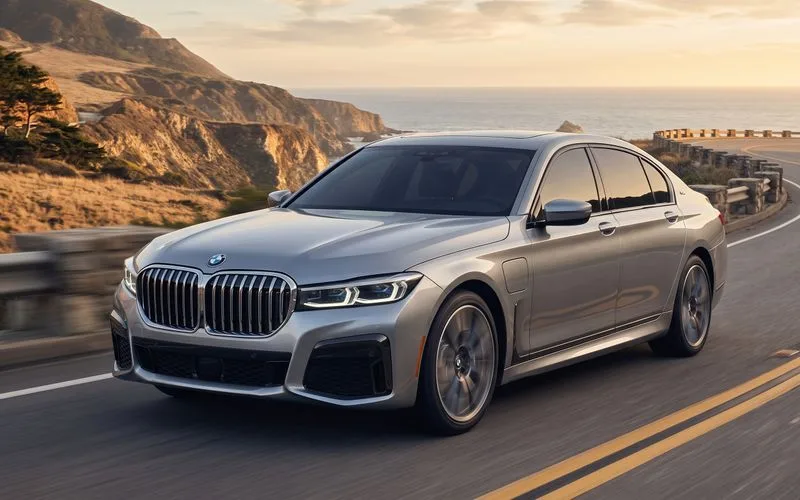 BMW 7 SeriesFull-Size Luxury SedanBetter at: Driving engagement
Costs more once equipped but offers hands-free Highway Assistant, a plug-in 750e and full i7 EV, and a chassis that rewards driving rather than just isolating you from it.
Compare 3.21B+
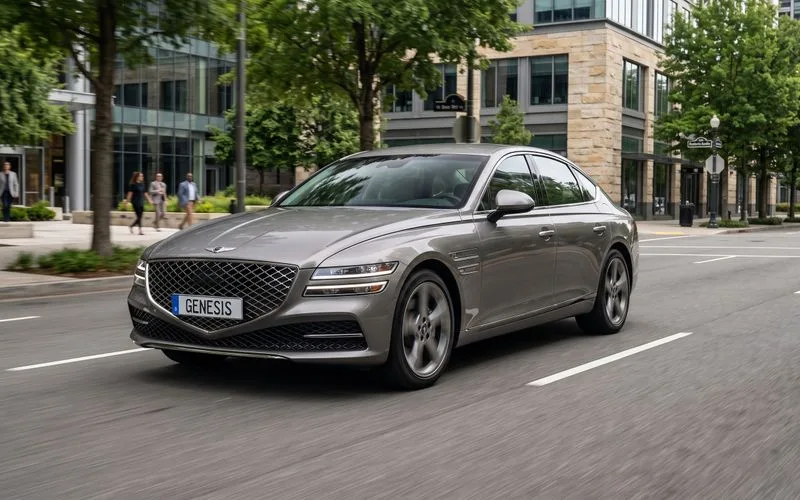 Genesis G80Mid-Size Luxury SedanBetter at: Value
Delivers most of the G90's design, materials and standard-safety story for tens of thousands less, with better resale and newer infotainment including wireless CarPlay.
Compare 3.20B+
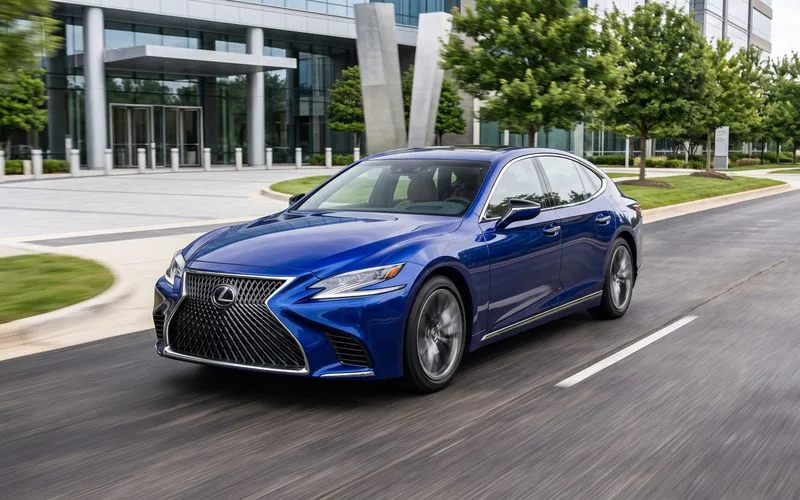 Lexus LSFull-Size Luxury SedanBetter at: Resale value
The safer long-term bet — stronger predicted reliability, roughly 47% five-year value retention against the G90's 37%, and a hybrid powertrain option to cut the fuel bill.
CompareHow it's evolved
10 scored model years · 2017–2026
Subject scores by year
Hover or tap a score to see what moved it versus the year before. A corner mark flags a big swing.
| Year | Performance | Efficiency | Safety | Space | Cost | Reliability | Tech | Use-case | Driving | Value |
|---|---|---|---|---|---|---|---|---|---|---|
| 2026 | 72 | 23 | 78 | 79 | 29 | 78 | 80 | 55 | 72 | 75 |
| 2025 | 71 | 19 | 74 | 73 | 29 | 67 | 80 | 53 | 68 | 74 |
| 2024 | 71 | 19 | 78 | 73 | 29 | 66 | 83 | 53 | 68 | 78 |
| 2023 | 71 | 19 | 79 | 73 | 29 | 63 | 80 | 52 | 68 | 77 |
| 2022 | 71 | 12 | 78 | 77 | 28 | 62 | 62 | 47 | 63 | 63 |
| 2021 | 68 | 13 | 80 | 77 | 28 | 59 | 62 | 47 | 63 | 67 |
| 2020 | 66 | 28 | 80 | 79 | 38 | 62 | 63 | 48 | 62 | 65 |
| 2019 | 66 | 16 | 62 | 80 | 28 | 74 | 55 | 48 | 63 | 66 |
| 2018 | 66 | 16 | 68 | 80 | 40 | 63 | 59 | 47 | 60 | 72 |
| 2017 | 65 | 18 | 68 | 80 | 42 | 66 | 53 | 45 | 64 | 69 |
Compare two years
Best fit & conditions
Higher scores mean a better fit for that use case. Learn more about use-case fit →
Subject profile
Detailed scoring by subject
1Performance & PowertrainOne of the G90's strongest categories.2.45C+
The volume 3.3T Premium trim's twin-turbo V6 is rated 365 hp; the step-up 5.0 Ultimate V8 offers more power as an option.
Twin-turbo V6 delivers strong low-end torque typical of turbocharged luxury sedans in this class.
Edmunds' instrumented test of the 2019 G90 3.3T recorded 5.5 seconds to 60 mph, mid-pack for a full-size luxury sedan of this era.
The 3.3L twin-turbo V6 delivers smooth, punchy power and the cabin stays supremely quiet under load, with minimal perceptible turbo lag.
The 8-speed automatic shifts smoothly with enhanced shift logic and sport-mode mapping, though some reviewers noted it doesn't always downshift quickly enough for passing.
AWD (HTRAC) is offered as a roughly $2,500 option across both the 3.3T Premium and 5.0 Ultimate trims (RWD standard), giving broader basic all-wheel-drive availability than later model years, though still without dedicated terrain modes or low-range hardware.
The 2019 G90 offers two gasoline engine choices (3.3L twin-turbo V6, 5.0L naturally aspirated V8) but no hybrid, PHEV, or EV variant, covering mainstream needs without electrification breadth.
2Efficiency & RangeThe G90's lowest-graded category.0.00F
EPA combined rating for the volume 3.3T Premium trim; a full-size twin-turbo luxury sedan posts below-average combined economy for the segment.
EPA city figure for the volume 3.3T Premium trim.
EPA highway figure for the volume 3.3T Premium trim, at the low end of the sedan normalization band.
Computed from the 20 MPG combined EPA rating and the 21.9-gallon fuel tank; a large tank offsets modest fuel economy for real-world range.
EPA estimate at standard assumptions; premium-fuel requirement and modest MPG push this above typical sedan running costs, though the turbo V6 trim is the cheapest configuration to run.
Premium unleaded is required across all 2019 G90 configurations (both 3.3T and 5.0 engines), adding real cost on top of already modest MPG for the segment.
3SafetyMid-pack among this car's ten categories.2.18C
NHTSA's vehicle detail search for the 2019 Genesis G90 (both 4 DR RWD and 4 DR AWD configurations) lists Overall, Frontal Crash, Side Crash and Rollover ratings all as "NA" — the agency never crash-tested this low-volume flagship. 0 is used as the sentinel for an untested vehicle, not a zero-star result; large luxury flagships (7 Series, A8, LS) are routinely untested by NHTSA for the same low-volume reason.
IIHS awarded the 2019 G90 its Top Safety Pick+ designation on the strength of Good ratings in all six crashworthiness evaluations (small overlap front driver and passenger side, moderate overlap front, side, roof strength, head restraints/seats) plus a Good headlight rating — squarely the top scoring band.
Genesis's 2019 model-year update confirms the full suite — forward collision-avoidance with pedestrian detection, lane keep assist, smart cruise control with stop & go, blind-spot collision warning with rear cross-traffic warning, driver attention alert, and a 360° around-view monitor — is standard across the G90 lineup with no trim gating, which the brand itself marketed as the most comprehensive active/passive suite among premium luxury sedans at the time.
IIHS rated front crash prevention Superior, with the system avoiding a collision entirely in both the 12 mph and 25 mph vehicle-to-vehicle tests; the pedestrian-detection system also avoided a low-speed pedestrian strike and reduced impact speed in the high-speed scenario, though IIHS's published summary doesn't separately break out a nighttime pedestrian result for this model year.
Blind-spot collision warning, lane-change assist and rear cross-traffic collision warning are standard equipment fleet-wide, and rear cross-traffic includes active automatic braking (not alert-only) when a side collision risk is detected while reversing.
The 2019 G90 carries Lane Keep Assist (warning plus corrective steering input) standard, but Genesis's Highway Driving Assist — the system that adds true lane-centering — is absent from the 2019 model-year equipment list and reviewers of the era noted the lane-keeping behavior "needs some refinement," consistent with a functional-but-unpolished implementation rather than confident centering.
Smart Cruise Control with Stop & Go is standard and covers the full speed range including stop-and-go traffic, but the 2019 model year has no integrated highway-assist/lane-centering pairing (that arrived on later G90 model years), so it scores as capable standalone ACC rather than a combined system.
No hands-free highway driving system is offered on the 2019 G90 — Hands-On Detection requires the driver's hands on the wheel whenever a driver-assist system is active, and Genesis's later hands-off-adjacent Highway Driving Assist had not yet arrived for this model year.
IIHS rated the standard-fit LED projector headlights (curve-adaptive with high-beam assist) Good on the 2019 G90, and the feature is not trim-gated — it's the same headlight hardware across the lineup.
Forward visibility is strong — large windows, a wide windshield and low-mounted door mirrors — but J.D. Power APEAL study feedback specifically flagged rearward visibility and lane-change sightlines as weak points, and the shorter rear window is mildly limiting. The standard around-view monitor compensates for some of this but doesn't fully offset the reviewer-noted blind zones.
LATCH lower anchors are tucked into the rear outboard seat creases, which review commentary flags as slightly harder to locate and clip into than a fully exposed anchor, but the G90's wide rear door openings make maneuvering a car seat into place notably easier than in a tighter sedan.
4Space & ComfortThe G90's best-graded category.3.45B+
Standard 5-passenger configuration across all 2019 G90 trims (3.3T and 5.0 Ultimate); no long-wheelbase or 4-seat executive package offered in the US market for this model year.
Front headroom is generous for the segment, aided by the standard sunroof's package not eating meaningfully into headroom.
Front legroom is among the largest in the full-size luxury sedan class, reflecting the G90's long wheelbase.
Rear headroom is competitive for a full-size luxury sedan despite the standard panoramic sunroof.
Rear legroom is solid but not class-leading against long-wheelbase flagship rivals; reviewers note generous room for two, workable for three across.
Trunk volume is mid-pack for the full-size luxury segment.
Center console and rear seat control panel offer competitive everyday storage, but the G90 has no standout storage innovation versus rivals with giga-consoles or dedicated device bins.
Reviewers repeatedly praise all-day comfort front and rear, citing generous cushioning and heated/ventilated seating; standard on both 3.3T and 5.0 trims.
Consistently described as supple and steady over broken pavement, trading some ultimate body control for comfort; reviewers place it just below the Mercedes S-Class benchmark.
Acoustic glass and heavy sound insulation deliver a notably quiet cabin at speed, cited as a highlight versus rivals.
Heated and ventilated front seats, heated rear seats, heated steering wheel, and remote climate pre-conditioning via Genesis Connected Services are standard; ventilated/power rear seats added on the 5.0 Ultimate.
5Cost of OwnershipOne of the G90's weakest categories.0.00F
Entry trim base MSRP for the 2019 model year, carryover pricing ahead of the MY2020 facelift.
3.3T Premium is the higher-volume engine choice for the G90 and AWD (HTRAC) is common in the vehicle's core Northeast/Midwest luxury markets; 5.0 Ultimate trims add $2,000-4,500 more.
Low out-of-pocket total is driven largely by Genesis's 3-year/36,000-mile complimentary scheduled maintenance covering most of the early ownership period; post-warranty repair costs on the twin-turbo V6/V8 are the main year 4-5 expense.
Flagship non-German luxury sedans depreciate steeply; industry estimates put G90 5-year depreciation in the 47-53% loss range with faster subsequent decline (a real 2019 unit had lost ~69-71% of original MSRP by roughly 6-7 years old), consistent with front-loaded luxury-sedan depreciation curves.
Genesis's standard 2019 new-vehicle bumper-to-bumper coverage, well above the segment norm of 4yr/50k.
Genesis's powertrain coverage is best-in-class for the segment, doubling the typical 5yr/60k luxury norm.
Genesis included 3 years/36,000 miles of complimentary scheduled maintenance plus a 3-year complimentary Genesis Service Valet (white-glove pickup/drop-off for every service visit) and roadside assistance for the warranty term — a stronger included-ownership package than any German rival at the time.
$71,850 volume-trim price minus its estimated resale value after 5 years (38% retained, or about $27,303) leaves about $44,547 in depreciation. Add the projected $2,822 in 5-year maintenance and repairs, and owning this vehicle for 5 years costs about $47,369 in total.
6Reliability & QualityOne of the G90's strongest categories.2.99B-
The 2019 G90 carried a top predicted-reliability rating and the Genesis brand backed it with class-leading quality scores in the same window, so this specific model year is well corroborated rather than an inference from later years.
By 2019 Genesis had only 3-4 model years on the road, but every quality study it appeared in during that window placed it first among all brands, a stronger and more consistent showing than most-established luxury rivals manage.
The 2019 G90 (3.3T) is covered by two NHTSA recalls tied to the twin-turbo V6: a starter-solenoid water-intrusion fire risk and a left turbocharger oil feed pipe that can deteriorate and leak — both safety-relevant powertrain issues rather than trivial fit-and-finish bulletins, even though the total recall count is low.
The Lambda II 3.3T twin-turbo V6 used in the volume 2019 G90 trim is a newer forced-induction design without a long high-mileage track record, and it carries a specific turbo oil feed pipe recall; owner consensus treats it as adequate day-to-day but views the older, simpler 5.0 V8 as the safer long-term bet.
Reviewers consistently praised the soft Nappa leather, real wood and metal trim as rich for the price point, with the main knock being that some brightwork is painted plastic rather than genuine metal — a minor deduction from a near class-leading showing.
No systemic assembly complaints turned up for the 2019 model year, and Genesis's strong 2019 J.D. Power Initial Quality Study result corroborates solid factory assembly, but a few reviewers flagged rough edges on interior plastic trim pieces, keeping it out of the top tier.
Genesis was still building out standalone retail in 2019 — dealer points were sparse and concentrated in larger metros compared to established luxury networks — though the brand partly offset this with a complimentary pickup-and-delivery service valet included on every new G90.
As a low-volume flagship the G90 doesn't have Camry-level parts abundance or aftermarket support, but it shares much mechanical architecture with higher-volume Hyundai/Kia products, and independent repair-cost data puts typical annual upkeep well below rival flagship sedans.
7Technology & InfotainmentGrades below the middle of the scale.1.69D
The 12.3-inch center display was unusually large for 2019 and standard across the G90 lineup, not trim-gated.
The large screen and remote-controller-plus-buttons layout is usable and well laid out, but the underlying software menu logic was already dated versus newer rivals' systems in 2019.
The first-generation G90 (2017-2019 in the US) does not support Apple CarPlay or Android Auto at all, wired or wireless; the feature only arrived with the redesigned second-generation G90 for MY2020. Only aftermarket retrofit interfaces exist.
Native navigation is functional and voice destination entry works, but the voice assistant lacks natural-language conversational ability common on newer systems; most owners lean on it only because CarPlay/Android Auto isn't available.
The standard-fit 17-speaker Lexicon surround-sound system is a genuine premium-audio highlight of the car.
The G90 pairs analog gauges with a 7-inch color LCD trip/multi-info display rather than a fully configurable digital cluster, putting it behind rivals already offering full digital gauge clusters in 2019.
2019-era Genesis infotainment had no meaningful over-the-air update capability for the vehicle or infotainment software; map updates, if any, required a USB/dealer process.
Genesis Connected Services (Connected Care/Remote/Guidance) provides remote start with climate preconditioning, lock/unlock, vehicle locate, and destination send-to-car via smartphone app, though full functionality requires an ongoing subscription after the initial trial.
Wireless phone charging and front/rear USB ports are standard, though USB-C was not yet in wide use in 2019 so ports are of an older, slower USB-A standard.
Proximity smart-key entry and push-button start are standard, with app-based remote start/lock via Connected Services extending the convenience beyond key-fob range.
A standard surround-view camera system plus front and rear parking sensors give strong parking assistance across the lineup, backed by an IIHS 'Superior' front-crash-prevention rating.
A full-color head-up display is standard equipment across the 2019 G90 lineup rather than reserved for a top trim.
8Use-Case FitOne of the G90's weakest categories.1.18D
Wide rear doors and a genuinely roomy back seat make loading car seats and kids reasonably easy, but the G90 isn't purpose-built for family duty the way a 3-row SUV or minivan is.
Forward collision-avoidance with pedestrian detection, blind-spot collision warning with rear cross-traffic warning, lane keep assist, and adaptive cruise with stop-and-go are all standard, not upsell options, and IIHS rated the front crash prevention system 'Superior.'
Heated/ventilated rear seating, generous rear leg/headroom, a quiet cabin, and an optional rear-seat entertainment system on the 5.0 Ultimate make it a strong multi-hour family cruiser despite its modest trunk.
The smooth, refined 3.3T V6 and composed low-speed ride make it relaxing to drive daily, though its large footprint is a mild penalty in dense urban commuting.
A twin-turbo V6 full-size luxury sedan requiring premium fuel with EPA ratings in the high-teens/low-20s city MPG range is expensive to run relative to mainstream commuter cars.
A large full-size sedan footprint and a wide 39.2-ft turning circle make tight urban parking a stretch, though the standard surround-view camera and sensors mitigate it somewhat.
The G90 is a flagship luxury sedan with no towing rating and no cargo/work-oriented configuration; it is not meaningfully work-capable.
Built and trimmed as a luxury flagship rather than a fleet/work vehicle, with no fleet-duty reputation established for the nameplate.
No tie-downs, onboard power outlets for tools, or upfit ecosystem exist for this vehicle class.
A quiet, plush ride, comfortable seating, adaptive cruise with stop-and-go, and a roughly 400+ mile highway tank range make the G90 an excellent long-haul cruiser.
HTRAC all-wheel drive is available, but low ground clearance, low-profile tires, and no roof-rack/towing provisions leave the G90 firmly pavement-bound.
A fixed 15.7 cu ft trunk with no fold-down rear seats or roof rails limits it to conventional luggage; bulky gear has nowhere else to go.
9Driving ExperienceMid-pack among this car's ten categories.2.25C
Optional rear-wheel steering gives the G90 responsive turn-in for its size, and handling is described as poised, but reviewers are clear it is not a sports sedan.
Steering is precise enough for confident cruising but is tuned for light, isolated luxury-car effort rather than genuine feedback.
No specific braking criticism appears in period reviews; large sedan brakes are adequate for the car's mission without being a standout.
The 3.3-liter twin-turbo V6 paired with an 8-speed automatic is repeatedly described as smooth, punchy, and refined, on par with rival flagship powertrains.
The turbocharged V6 is quiet and well isolated under load, contributing to the car's supremely quiet cabin.
At 39.2 ft, the G90's turning circle sits near the wide end of the sedan normalization band, reflecting its large full-size footprint.
Power-adjustable seats with a wide range, a low beltline for good sightlines, and logically placed controls (remote knob plus physical buttons) give a comfortable, easy-to-adapt driving position.
The G90 is explicitly positioned and reviewed as a refined, quiet highway cruiser rather than an engaging or enthusiast-oriented sedan.
10Value & Market PositionMid-pack among this car's ten categories.2.45C+
Even the base 3.3T Premium came standard with Nappa leather, heated/ventilated front seats, a panoramic sunroof, 12.3-inch display, HTRAC AWD availability, and a full suite of driver-assist tech that rivals charge thousands extra for as options.
At $69,350-$76,350 the G90 delivers S-Class/7 Series-level cabin materials, ride comfort and standard tech for roughly two-thirds the price of those rivals, a widely-cited value proposition in period reviews.
Just two trims (3.3T Premium, 5.0 Ultimate), each offered in RWD or AWD — a narrow, take-it-or-leave-it lineup versus rivals like the S-Class or 7 Series that span dozens of trim/engine/wheelbase combinations.
2019 US sales were 2,239 units, only modestly up from 2,136 in 2018 and well down from the 2017 launch-year peak of 4,398 — a small fraction of established flagship rivals' volumes.
Genesis was still a young, unproven standalone luxury brand in 2019 lacking the cachet of Mercedes/BMW/Lexus, but it was rapidly building credibility — Genesis was the No. 1 brand in the 2019 J.D. Power Initial Quality Study and the J.D. Power APEAL study, and topped AutoPacific's Vehicle Satisfaction Award.
As a slow-selling flagship trying to build volume, G90 dealers commonly offered substantial negotiating room and lease/finance incentives well beyond what German rivals typically discounted, a documented pattern in period buying guides.
2019 was a pure carryover year with no changes from 2018, mid-way through the first generation (2017-2022) and immediately preceding the MY2020 exterior facelift — current but visibly the pre-refresh look.
Consistently well-reviewed — Consumer Reports called it able to 'challenge the world's best,' and U.S. News ranked it #1 in its 2019 Luxury Large Cars category — but it wasn't a Car and Driver 10Best pick or outright comparison-test winner over the S-Class, which it was noted to fall short of on outright ride isolation.