
The verdict
A mixed-report full-size suv, strong on space and held back by efficiency.
The 2024 Suburban is the last year before the 2025 refresh, and it does the one thing almost nothing else does: seat eight adults and still swallow 41.5 cu ft of luggage behind a raised third row, with 144.7 cu ft available when the seats fold. That space, an 8,300-lb tow rating and a genuinely comfortable long-wheelbase ride are the whole argument. The bill comes due at the pump and on the title — 16 MPG combined and roughly $3,900 a year in fuel on the volume 5.3L V8 4WD, a $69,695 volume-trim sticker and about $40,200 in depreciation plus upkeep over five years. Safety credentials are the soft spot for a family vehicle: 4 stars overall from NHTSA with 3 stars for rollover, poor-rated headlights and a poor front-crash-prevention result on the identical Tahoe hardware, plus blind-spot alert and adaptive cruise that aren't standard until the Premier trim.
Jump to scoresStrengths
- Cargo space nothing short of a van can match
- A third row adults can actually use
- Tows 8,300 lbs and makes it easy
What holds it back
- Fuel economy at the very bottom of the scale
- Expensive to buy and expensive to leave
- Safety credentials fall short of the family mission
Top alternatives
Cars shoppers cross-shop with the Chevrolet Suburban 2.79B-
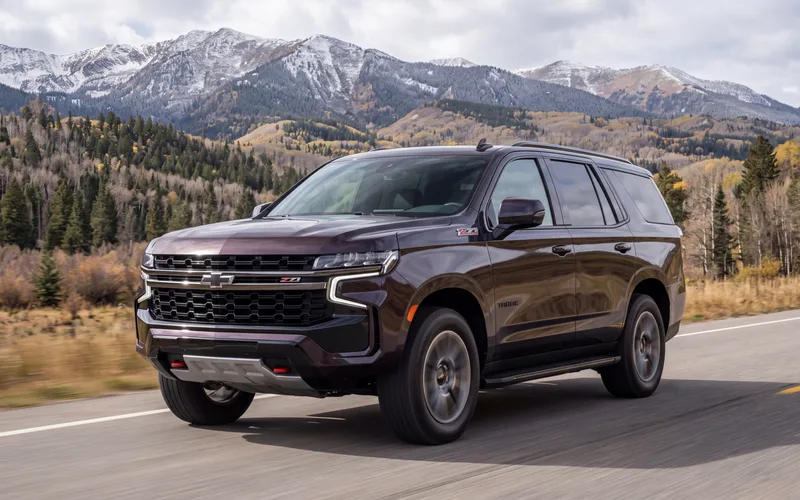 Chevrolet TahoeFull-Size SUVBetter at: Value & maneuverability
Identical vehicle 15 inches shorter for about $3,000 less — the right call unless you truly need the extra 16 cu ft behind the third row.
Compare 2.92B-
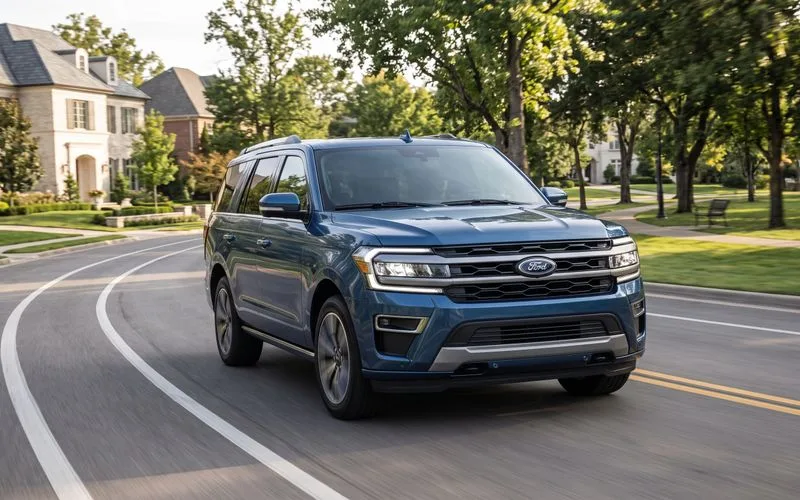 Ford ExpeditionFull-Size SUVBetter at: Towing & performance
Tows 9,600 lbs, is quicker and returns better mileage, and won the segment's most recent comparison test.
Compare 2.87B-
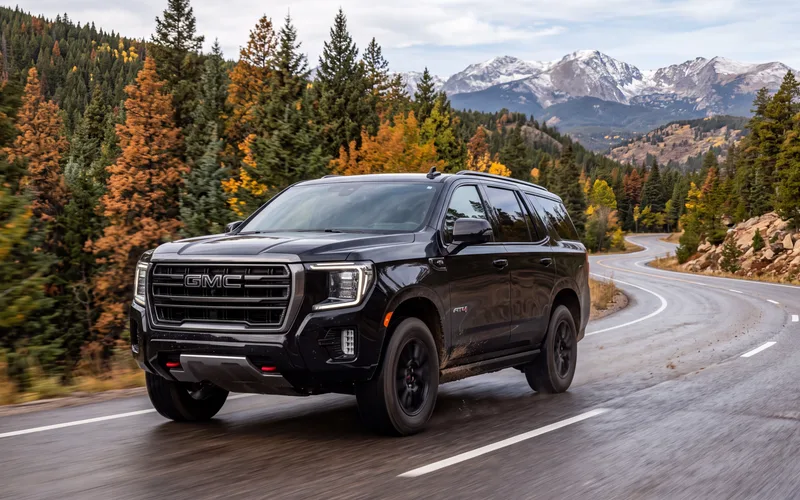 GMC YukonFull-Size SUVBetter at: Interior quality
The same T1XX SUV with a materially nicer cabin and Denali-grade comfort features the Suburban can't be optioned with.
CompareHow it's evolved
10 scored model years · 2017–2026
Subject scores by year
Hover or tap a score to see what moved it versus the year before. A corner mark flags a big swing.
| Year | Performance | Efficiency | Safety | Space | Cost | Reliability | Tech | Use-case | Driving | Value |
|---|---|---|---|---|---|---|---|---|---|---|
| 2026 | 67 | 31 | 65 | 88 | 30 | 62 | 83 | 74 | 58 | 75 |
| 2025 | 65 | 21 | 69 | 88 | 22 | 61 | 83 | 73 | 60 | 74 |
| 2024 | 65 | 22 | 56 | 88 | 26 | 60 | 75 | 72 | 58 | 67 |
| 2023 | 65 | 22 | 54 | 88 | 31 | 60 | 75 | 72 | 59 | 67 |
| 2022 | 65 | 22 | 49 | 88 | 33 | 57 | 74 | 70 | 59 | 68 |
| 2021 | 65 | 25 | 46 | 90 | 35 | 57 | 65 | 69 | 60 | 73 |
| 2020 | 63 | 26 | 40 | 80 | 37 | 52 | 47 | 57 | 55 | 59 |
| 2019 | 62 | 26 | 40 | 74 | 25 | 63 | 50 | 59 | 52 | 59 |
| 2018 | 61 | 37 | 39 | 74 | 40 | 52 | 46 | 59 | 53 | 60 |
| 2017 | 61 | 38 | 38 | 81 | 38 | 54 | 36 | 57 | 50 | 63 |
Compare two years
Best fit & conditions
Higher scores mean a better fit for that use case. Learn more about use-case fit →
Subject profile
Detailed scoring by subject
1Performance & PowertrainMid-pack among this car's ten categories.2.38C+
The volume LT carries the 5.3L L84 EcoTec3 V8 at 355 hp, standard on LS/LT/RST/Z71/Premier and unchanged for 2024 — the last model year of the pre-refresh twelfth generation. The 6.2L L87 V8 (standard on High Country, optional on RST/Z71/Premier) tops the range at 420 hp.
The 5.3L V8 peaks at 383 lb-ft @ 4,100 rpm. Both optional engines reach 460 lb-ft, the Duramax doing so from 1,500 rpm — the best low-end pull in the 2024 lineup for moving a ~5,800 lb body-on-frame SUV.
Two independent instrumented results put the 5.3L/4WD twelfth-generation Suburban at 7.6 s — roughly seven tenths behind the short-wheelbase Tahoe on the same drivetrain, which is what an extra 15 inches and ~300 lb cost. Mid-to-slow for the full-size class and well behind the twin-turbo Expedition.
The naturally aspirated small-block V8 gives immediate, lag-free low-rpm response, and Dynamic Fuel Management cylinder deactivation is largely imperceptible at steady cruise. Held out of the 80+ tier because the 5.3L sounds coarse and works audibly hard under full throttle in a vehicle this heavy, and DFM re-activation is occasionally felt at light load.
The 10L80 10-speed automatic — shared with Silverado, Tahoe and Yukon — shifts smoothly, downshifts decisively, and holds gears sensibly in tow/haul mode. The one recurring complaint is mild hunting between the closely spaced top ratios at part-throttle highway speeds; there are no harsh or clumsy shifts.
8,300 lb maximum conventional rating properly equipped — 2WD, the 5.3L V8 and the Max Trailering Package, which adds cooling, an integrated trailer brake controller and hitch guidance. That clears the 8,000 lb SUV band ceiling, so the item maxes out; only the Expedition and Wagoneer tow meaningfully more.
Four-wheel drive is optional on every 2024 trim and standard on the Z71, using a two-speed transfer case with a real 4-Lo range, with Autotrac automatic mode on upper trims for set-and-forget all-weather traction. Short of the top tier only because no locking differential is offered anywhere in the lineup.
The Z71 gives the 2024 Suburban genuine light-duty credibility — standard 4WD with 4-Lo, skid plates, off-road-tuned suspension, all-terrain tires, hill descent control and a high-approach front fascia, with Air Ride Adaptive Suspension available for on-demand lift. It stays mid-band because the 134.1-inch wheelbase wrecks breakover angle and trail maneuverability, and no locker or factory lift is offered.
Three genuinely distinct powertrains — 5.3L V8, 6.2L V8 and 3.0L Duramax turbodiesel — cover mainstream, maximum-power and long-haul-efficiency buyers, broader than most full-size rivals. Capped mid-band because nothing in the 2024 range is electrified: no hybrid, PHEV or EV Suburban exists.
2Efficiency & RangeThe Suburban's lowest-graded category.0.00F
EPA rates the volume 5.3L V8 4WD Suburban at 16 MPG combined — a ~5,800 lb body-on-frame V8 with cylinder deactivation as its only efficiency aid, sitting at the very bottom of the gas-SUV band. Only the Duramax diesel escapes the basement, at 22 MPG in the same 4WD configuration.
City economy is where the Suburban's mass tells hardest: Dynamic Fuel Management trims light-load consumption but cannot offset stop-start work in the longest SUV GM sells, leaving it a single point above the band floor.
The 10-speed automatic and cylinder deactivation make highway cruising the gas Suburban's best case, but 4WD hardware and a large frontal area cost two full MPG against the 2WD version and leave the volume configuration below the 20 MPG band floor.
The Suburban's 28-gallon tank — four gallons more than the Tahoe's — turns bottom-of-class economy into respectable cruising range, the one place this powertrain finishes above mid-pack. The Duramax stretches past 600 miles between fills.
At the EPA's standard assumptions the volume 4WD 5.3L burns roughly 940 gallons a year and lands beyond the top of the SUV cost band. Even the diesel's 22 MPG buys back nothing at current diesel prices — it costs the same or more per year than the V8 it replaces.
The volume 5.3L V8 runs on 87-octane regular and the Duramax on ubiquitous #2 diesel, so the mainstream buyer never pays a grade premium. Requirements are mixed rather than uniformly cheap only because the 6.2L V8 — standard on High Country, optional on RST/Z71/Premier — calls for premium.
3SafetyOne of the Suburban's weakest categories.1.75C-
NHTSA tested the 2024 Suburban directly and rated it 4 stars overall in both RWD and 4WD form: 5 stars in every side-impact measure and 5 stars driver-side frontal, dragged down by a 4-star passenger-side frontal and the 3-star rollover score (21.2-21.9% rollover risk) typical of a tall body-on-frame full-size SUV.
IIHS has never crash-tested this twelfth-generation Suburban — its Suburban file stops at the 2020 model — so the read comes from the mechanically identical Tahoe, whose 2023-26 ratings mix Good small-overlap and Good updated-side results with an outright Poor in the updated moderate-overlap front test, where the second-row occupant measures fall short. No Top Safety Pick award, and a Poor in one of the three core crashworthiness tests puts it in the low band rather than the middle one.
Chevy Safety Assist is standard on all six 2024 trims — Automatic Emergency Braking, Front Pedestrian Braking, Forward Collision Alert, Lane Keep Assist with Lane Departure Warning, Following Distance Indicator and IntelliBeam auto high beams. The three items that separate a good suite from a basic one are all missing from the base and mid trims: Lane Change Alert with Side Blind Zone Alert, Rear Cross Traffic Alert and Adaptive Cruise Control only become standard at Premier, leaving LS, LT, RST and Z71 buyers to option them.
The only published front-crash-prevention testing of this hardware is damning: the twin Tahoe's standard system earned Poor in the IIHS vehicle-to-vehicle 2.0 evaluation and Marginal for pedestrian detection, ratings that explicitly cover the 2023-24 model years. Roughly three tons of curb weight lengthens real-world stopping distances further, and nothing in the 2024 Suburban's sensor set differs from the tested Tahoe.
Lane Change Alert with Side Blind Zone Alert and Rear Cross Traffic Alert are alert-only systems with no steering or braking intervention, and they are standard only from Premier upward — an unusually late point in the range for a vehicle whose 225-inch length makes blind-zone coverage more valuable than it is on shorter SUVs. Trailer-aware blind-zone coverage requires the advanced trailering content.
Standard Lane Keep Assist with Lane Departure Warning is a corrective nudge rather than sustained centering, and true lane centering arrives only with Super Cruise — which in 2024 is confined to the Advanced Technology Package on Premier and High Country. Every buyer below those trims gets a basic intervention system only.
When fitted, GM's full-speed-range Adaptive Cruise Control handles stop-and-go traffic smoothly and pairs well with Super Cruise on the trims that carry both. The limitation is access rather than quality: ACC is an extra-cost option through most of the 2024 range and standard only at the top, so the representative volume trim does not necessarily have it.
Super Cruise itself is the mature end of the market — hands-free operation with automated lane change on a mapped network that GM announced in February 2024 would grow from roughly 400,000 to 750,000 miles of North American road via over-the-air updates. What holds the score below the top band is access: for 2024 it is an extra-cost package on the two most expensive trims only, so most Suburbans on dealer lots cannot be had with it.
The tested twin's headlamps rate Poor — LED reflector low and high beams with no curve-adaptive function — and that rating is scoped to exactly the 2023-24 model years the Suburban shares this front-end lighting with. Standard IntelliBeam high-beam assist helps on unlit roads but does not repair the beam pattern itself.
The commanding driving position and deep glass give an excellent forward view, but roughly 15 inches more body behind the rear axle than a Tahoe puts a great deal of sheetmetal where the driver cannot see it, and the D-pillars are thick. HD Surround Vision and the Rear Camera Mirror compensate genuinely well — but they are upper-trim items in 2024, so the base and mid configurations rely on sightlines alone.
This is the category's clear strength and it is measured, not inferred: IIHS rates the identical interior's child-seat anchors Good and credits it with extra usable positions beyond the required minimum. Wide rear-door openings and a tall roofline make installation easy, the second-row bench allows three across, and the Suburban's extra length means rear-facing seats fit behind adults without negotiation.
4Space & ComfortThe Suburban's best-graded category.3.97A+
The volume LT seats eight with the standard second-row bench; captain's chairs drop it to seven, and the front bench available on the lower trims takes it to nine. Any of those tops the SUV normalization band.
The upright greenhouse shared with the Tahoe puts front headroom at the top of the SUV band; the optional sunroof costs roughly 1.7 in. Unchanged from the 2021 redesign through 2024.
Front legroom sits at the very top of the SUV band with seat travel that suits tall drivers, unchanged across the twelfth generation.
Solid mid-band second-row headroom for a full-size SUV; the sunroof commonly optioned on Premier and High Country takes it to roughly 37.1 in.
The independent rear suspension adopted in the 2021 redesign freed up limousine-grade second-row legroom that tops the SUV band. It matches the Tahoe — the Suburban's extra 15 in of body goes to the third row and cargo hold, not row two.
This is the Suburban's signature advantage over the Tahoe: 36.7 in of third-row legroom and 38.2 in of headroom make the way-back genuinely adult-usable for a full road trip, with third-row USB ports and vents and power fold-and-slide second-row access on upper trims. Reviewers who put six-footers back there report real space, with the caveat that comfort tapers by row.
Behind-second-row volume runs past the top of the SUV band, and the 41.5 cu ft still free behind a raised third row exceeds what many mid-size SUVs offer with their third row folded — the figure that actually matters when eight seats are occupied.
With both rear rows folded onto a flat floor the Suburban offers one of the largest cargo holds of any non-commercial SUV sold in the US, far past the top of the normalization band.
A deep multi-tier center console, large door pockets, an under-floor bin behind the third row, six USB ports and an available 120V outlet make this a very practical cabin, with wireless charging standard from LT up. There is no headline innovation on the order of Ford's Pro Power onboard AC or a front trunk, so it lands in the competitive-not-standout band.
Broad, well-cushioned front buckets with power adjustment and lumbar on the volume LT plus comfortable second-row seating earn steady praise for long-haul use, and leather is standard from LT up. No Suburban trim offers massage — unlike Escalade and Yukon Denali — and reviewers note that the leather quality is the main thing separating a High Country from the LT most buyers get, which caps it below the segment leaders.
The independent rear suspension plus a 134.1-in wheelbase — 13 in longer than the Tahoe's — gives the Suburban the more settled, less pitch-prone ride of the two and a far calmer one than solid-axle body-on-frame rivals. The volume LT still rides on conventional steel springs and is composed rather than plush; Magnetic Ride Control and Air Ride Adaptive Suspension, which deliver the real compliance, are upper-trim content.
Active noise cancellation, an acoustic-laminated windshield and heavy body insulation keep highway drone well suppressed, and the 5.3L V8 stays distant at light load. Wind rustle around the large mirrors above 75 mph and more road roar than a Yukon Denali — which gets extra acoustic glass the Suburban LT does not — keep it just short of the class best.
Tri-zone automatic climate control is standard from the base LS, and the volume LT adds heated front seats and wireless charging as standard, with ventilated front and heated second-row seats arriving on Premier and High Country. Remote start is standard across the range. It sits below Escalade and Navigator because ventilation and a heated wheel are trim-walk or package items rather than volume-trim standard, and no massage is offered anywhere.
5Cost of OwnershipOne of the Suburban's weakest categories.0.00F
The 2024 Suburban opens with the LS 2WD at $59,200 before a $1,995 destination freight charge, putting the cheapest possible Suburban just under the $65,000 top of the SUV base-MSRP band — extended-length full-size SUVs simply start where most SUVs stop.
LT is the mainstream volume rung and LT 4WD lists at $67,700 before the $1,995 destination charge; the real-world Suburban mix skews upward from there (Edmunds flags Z71 4WD at $71,295 delivered as its most-popular configuration), so this is the low end of what buyers actually pay.
Three independent projections cluster between roughly $3,300 and $4,800; the small-block 5.3L V8 and 10L80 ten-speed are high-volume GM truck hardware with cheap, widely stocked parts, but the generation's AFM lifter and torque-converter-shudder history argues for the upper end of that range rather than the lower.
Suburban resale sits mid-pack for the class — steadier than the Ford Expedition but short of the GMC Yukon XL and well short of the Toyota Sequoia, and the high sticker of upper trims means even average percentage retention translates into large dollar losses.
GM's standard 3/36 new-vehicle limited warranty sits at the floor of the segment band — no better than the Ford Expedition or Jeep Wagoneer, and materially behind Hyundai/Kia's 5/60 or Genesis's 5/60.
Standard GM 5/60 powertrain coverage, the low end of the band and half the 10-year/100,000-mile term Hyundai, Kia and Mitsubishi offer — a notable gap given this generation's AFM lifter and transmission-shudder record.
The 2024 Chevrolet package is one complimentary scheduled maintenance visit (oil change plus multi-point inspection) in the first year, 5-year/60,000-mile roadside assistance and courtesy transportation tied to the powertrain term, and short OnStar/Connected Services trials. Solid basics, but a single free service visit trails Toyota's 2-year ToyotaCare on the Sequoia and BMW's 3-year plan, and there is no charging credit or concierge tier of the sort Wagoneer Client Services provides.
$69,695 volume-trim price minus its estimated resale value after 5 years (49% retained, or about $34,151) leaves about $35,544 in depreciation. Add the projected $4,700 in 5-year maintenance and repairs, and owning this vehicle for 5 years costs about $40,244 in total.
6Reliability & QualityMid-pack among this car's ten categories.2.05C
The two major forecasters genuinely disagree on this vehicle, so it lands mid-band. Consumer Reports rates the 2024 Suburban outright below average — 'less reliable than other cars from the same model year' — with an unusually broad trouble-spot map spanning climate, electrical accessories, engine electrical, fuel system, brakes, suspension/steering, drive system, in-car electronics and transmission (both minor and major). J.D. Power is materially kinder, scoring predicted reliability 78/100 (its 'Average' band) and placing the mechanically identical Tahoe first in Large SUV in both its 2024 Initial Quality and Vehicle Dependability studies. 2024 is the fourth and final year of the pre-refresh twelfth generation, so there is no first-year risk on the hardware — but maturity has not moved CR's verdict, and the breadth of CR's flagged systems is what keeps this below the Yukon twin rather than level with it.
Chevrolet's 2024-era dependability record is split down the middle depending on whose survey you read, and the honest answer is mid-pack with real upside. J.D. Power ranked Chevrolet third overall in its 2024 Vehicle Dependability Study at 174 PP100 (tied with MINI, up from fifth in 2023) and second overall in the 2024 Initial Quality Study at 160 PP100 — a strong two-study showing. Consumer Reports' 2024 brand rankings put Chevrolet 20th of 30 with a brand score of 43, in the lower third. Averaging a top-three finish against a bottom-third finish is what mid-pack means; this is a brand-level judgment, so it carries across the other 2024 Chevrolets in this dataset.
The recall count is genuinely low — NHTSA lists just two campaigns against the 2024 Suburban, against seven for the 2024 Ford Expedition — but one of them is as serious as recalls get. 25V274 covers connecting-rod and crankshaft manufacturing defects in the 6.2L L87 V8 (22,162 Suburbans of the ~597,000-vehicle GM population), with engine inspection or outright replacement as the remedy, and NHTSA reopened the matter as a recall query in January 2026 after 36 owners reported engine failures on vehicles that had already received the fix. The second, 24V674, is minor: an eBCM software noncompliance with FMVSS 135 that suppressed the low-brake-fluid warning lamp, fixed over the air. Two things keep this out of the failing band — the volume LT's 5.3L L84 is outside the engine campaign entirely, and the brake item is a software patch. What keeps it below the Silverado is the unresolved TSB load underneath: 10L80 shudder and valve-body bulletins running to 25-NA-334 for 2021-2024 Suburban/Tahoe, plus long-running DFM lifter-noise bulletins.
A proven architecture carrying a specific, well-documented defect. The volume LT's 5.3L L84 is a small-block V8 with decades of high-mileage service behind it and is the single most familiar engine in American independent shops — but the Dynamic Fuel Management version fitted here has widely reported collapsed-lifter and camshaft-wear failures running $1,500-$4,000 to repair, and there is no non-DFM alternative below it. The 10L80 ten-speed is mechanically sound but carries persistent steady-speed shudder and harsh-cold-shift bulletins, and Consumer Reports flags major as well as minor transmission problems on this specific model year. The optional 6.2L L87 is worse still, being the subject of the 2024-model-year connecting-rod recall whose remedy NHTSA is now re-investigating. The 3.0L Duramax LM2 inline-six (277 hp in 2024, before the 2025 refresh's 305 hp LZ0) has the cleanest record of the three but sells in small numbers. Scored a shade under the Yukon twin because the Suburban's extra ~300 lb and 13 inches of wheelbase ask more of the same DFM 5.3L and the same transmission.
2024 is the last year before the 2025 refresh that was explicitly aimed at this weakness, so the Suburban is being judged on the pre-refresh cabin. Reviewers grant that it is a real improvement over the notoriously cheap Suburbans that preceded it, with soft-touch surfaces on the upper dash and genuinely plush leather and wood on High Country, but the consensus verdict is that it neither looks nor feels as expensive as the sticker — U.S. News puts even the base GMC Yukon's interior ahead of the Chevrolet's on presentation, and the volume LT still carries extensive hard plastics on the door tops, lower dash and second- and third-row surfaces, of which a 134-inch-wheelbase Suburban simply has more square footage than anything else in the family. Competitive for a full-size SUV at the price, clearly below the Escalade and the Expedition Platinum, and a full step below what the same nameplate offers from 2025 on.
Assembly quality is the strongest part of this vehicle's reliability picture. 2024 is the fourth year of the same dashboard, switchgear and infotainment out of Arlington Assembly, so the launch-year rattles of 2021 have been worked through, and the objective initial-quality evidence is good: Chevrolet finished second overall in J.D. Power's 2024 IQS and the mechanically identical Tahoe led the Large SUV class. Held short of the top band by the complaints that do persist across the generation — interior rattles, third-row and cargo-area trim alignment, and infotainment glitches — which the Suburban's longer body and much larger cargo bay give more surface area to appear on than the Tahoe has.
Chevrolet runs the single most widespread franchised dealer network in the United States at roughly 2,880 locations, so a Suburban owner is rarely far from factory service — a real advantage over the ~1,500-location Buick-GMC channel that supports the mechanically identical Yukon XL, and the decisive one in the rural and small-market America where full-size SUVs sell heavily. It is held out of the very top band only by service satisfaction, which J.D. Power's customer-service data places around the mainstream-brand average rather than at the top of the charts.
The Suburban sits on the deepest parts channel in the American market — it shares the T1XX architecture, the small-block V8s and the 10L80 transmission with the Tahoe, Yukon, Escalade and the Silverado/Sierra pickups, so OEM supply is abundant, the aftermarket is enormous and the powertrain is the one every independent shop already knows. Mainstream Chevrolet trim also keeps body and interior parts cheaper than Denali- or Escalade-tier equivalents. What pulls it below the Silverado is running cost rather than availability: full-size-SUV consumables are genuinely expensive (20-22-inch tires, large brakes, and Magnetic Ride or air-leveling hardware on upper trims), estimated annual repair cost runs above the full-size SUV average, and the long-wheelbase rear body panels, quarter glass and longer driveline are Suburban-specific rather than shared with the much higher-volume Tahoe shell.
7Technology & InfotainmentOne of the Suburban's strongest categories.3.10B
2024 is the last pre-refresh year of the twelfth generation: the volume LT carries the 10.2-inch Chevrolet Infotainment 3 Premium display and the base LS an 8.0-inch unit. The 17.7-inch freeform panel arrives only with the 2025 mid-cycle refresh, so the 2024 car sits mid-band where the 2026 maxes out.
Chevrolet Infotainment 3 is a fast, plainly organized system with shortcut tiles, and the 2024 dash keeps a real volume knob plus hard keys for climate and drive modes — reviewers consistently rate it easy to live with. It is held mid-band because the 10.2-inch panel is small next to what refreshed rivals were already shipping and the graphics were visibly dated by 2024.
Wireless Apple CarPlay and wireless Android Auto are standard on every 2024 Suburban trim including the base LS — one of the few things this pre-refresh car does as well as its 2026 replacement. GM's decision to drop phone projection applies to its Ultium EVs, not the gas full-size SUVs.
The volume LT and above run Google built-in, so Google Assistant handles natural-language commands and Google Maps is the embedded navigation with live traffic — a factory nav genuinely worth using instead of phone projection. It scores below the refreshed car because the base LS goes without it and the cloud features lapse into a paid connected-services plan after the trial.
A nine-speaker Bose system is standard on the volume LT, replacing the LS's six-speaker setup, and the High Country steps up to the Bose Performance Series that reviewers rate as genuinely strong in this large, quiet cabin. Very good rather than reference-grade next to Escalade and Yukon Denali Ultimate.
A 12.3-inch reconfigurable digital instrument cluster is standard on LT and above, so the volume configuration gets a full-digital, easy-to-read gauge display; the base LS keeps analog dials with a smaller driver information center. Crisp and configurable, with fewer layout choices than the German luxury full-sizers.
The twelfth-generation Suburban rides on GM's Vehicle Intelligence Platform electrical architecture, which supports true module-level over-the-air updates to infotainment, driver-assist and vehicle software rather than maps only. GM ships them less often and with fewer added features than Tesla or Rivian.
The myChevrolet app with GM Remote Access covers remote start, lock/unlock, vehicle locate, fuel and tire status and diagnostics — the core set, reliably. It sits below the refreshed car because remote commands are subscription-gated once the trial lapses and the pre-refresh electrical architecture does not offer the phone-as-key digital key that came later.
Six USB ports are standard from the base LS and reach all three rows, wireless phone charging is standard from LT upward, and a 120V household outlet is available — appropriate provisioning for a seven- to nine-seat hauler, and the extra length means third-row occupants reach their own ports rather than sharing forward ones.
Keyless Open and Start plus remote start are standard on the volume trims and a power liftgate comes with LT, with hands-free liftgate operation on higher trims and packages. Short of the top band because there is no phone-as-key on this pre-refresh car.
HD Surround Vision with up to 13 camera views is available and standard on High Country, joined by front and rear Park Assist, a Rear Camera Mirror and Advanced Trailering System views including transparent-trailer — genuinely necessary equipment on a 225.7-inch vehicle, where the camera mirror also restores the sightline a loaded third row destroys. Rated just below the refreshed car because surround view is not standard on the volume LT.
A color head-up display is offered on the 2024 Suburban but is High Country content, so the volume LT buyer cannot get it without climbing to the top of the range — squarely the 'limited to top trims' band.
8Use-Case FitOne of the Suburban's strongest categories.2.85B-
Tall, square rear door apertures, standard running boards on most trims and 42.0 in of second-row legroom make rear-facing seats easy to fit and kids easy to load, and unlike the Tahoe there is a genuine 41.5 cu ft behind a raised third row, so a full-size stroller goes in without folding anything. Third-row access is the usual full-size compromise — a tall step-in younger kids need help with — and power-release second and third rows are upper-trim rather than LT content.
Chevy Safety Assist is standard on every 2024 trim — and 2024 specifically upgraded the automatic emergency braking with improved pedestrian detection on LS and LT, which is the right content at the price families actually pay, alongside a rear seat reminder. The credentials behind it are the weak part: 4 stars overall from NHTSA with a 3-star rollover result, no IIHS Top Safety Pick, poor-rated headlights, and blind-spot/rear cross-traffic coverage that is not standard at the bottom of the range.
This is the Suburban's signature use case: the independent rear suspension and 134.1-in wheelbase deliver 36.7 in of third-row legroom and 38.2 in of headroom, so adults ride back there for hours, and 41.5 cu ft behind that row means eight people's luggage fits without a roof box. Tri-zone climate is standard, USB ports serve all three rows, heated second-row seats and rear-seat entertainment are available, and active noise cancellation keeps the cabin quiet enough for cross-row conversation.
The 5.3L V8 and 10L80 ten-speed are smooth and lag-free from rest, the independent rear suspension absorbs broken pavement far better than solid-axle rivals, and the high seating position and light steering make it less intimidating in traffic than the dimensions suggest. But 225.7 in of vehicle never disappears — lane changes, drive-throughs and parking structures all take planning — and on the volume LT there is no Super Cruise to take the sting out of a congested commute, since 2024 restricts it to Premier and High Country.
The volume 5.3L V8 4WD returns 15/18/16 mpg city/highway/combined and roughly $3,900 a year in fuel at EPA's 15,000-mile assumption — a genuinely expensive way to commute alone, and worse than the shorter Tahoe on the same drivetrain. The 3.0L Duramax is the mitigation at 20/26/22-23 mpg, and consumables are at least cheap and universally stocked through GM's full-size parts channel.
At 225.7 in long the Suburban is one of the largest non-commercial vehicles sold in the US: it overhangs standard 18-foot bays, its 43.3 ft curb-to-curb turning circle turns three-point turns into five-point turns, and its 75.7-in height rules out many urban garages outright. Available HD Surround Vision, park assist and the Rear Camera Mirror are good aids and keep this out of the bottom band, but they manage the problem rather than solve it.
An 8,300 lb maximum conventional tow rating properly equipped — a few hundred pounds less in 4WD — plus roughly 1,700 lbs of payload covers most travel trailers, car haulers and family boats, and the Advanced Trailering System with an integrated brake controller, hitch guidance and transparent-trailer camera views makes hooking up and reversing genuinely easy. The 144.7 cu ft load bay is closer to a cargo van than an SUV. It stops short of the top band because the Expedition tows more and because an enclosed carpeted floor cannot do what a pickup bed does with dirty or oversized loads.
The Suburban is the default fleet full-size SUV — government, law-enforcement, airport livery and black-car operators run this exact body-on-frame chassis, 5.3L V8 and 10L80 to very high mileage behind the deepest parts and service network in the segment. The deduction is powertrain-specific and lands squarely on this model year: 2024 sits inside the population covered by GM's 6.2L L87 connecting-rod/crankshaft campaign, and L84/L87 Dynamic Fuel Management lifter failures are the generation's leading owner complaint, so 'fleet-proven' here means well-supported when it breaks rather than unusually unlikely to break.
The upfit ecosystem is the strength: the fleet and livery industry supports the Suburban with consoles, partitions, equipment mounts, lighting and rack systems, and the extra 15 inches over a Tahoe gives converters a load bay long enough for real equipment. Factory provisions are decent rather than rich — cargo tie-downs, an under-floor bin, roof rails, a factory hitch with the trailering package and an available 120V outlet — but there is no bed, no washable work-grade interior on volume trims and nothing like GMC's MultiPro tailgate.
A 28-gallon tank against 18 highway mpg gives roughly 450 miles between stops on the volume 4WD V8 and past 600 on the Duramax, and the cabin is properly isolated — active noise cancellation and acoustic-laminated glass standard, with the long wheelbase and independent rear suspension smothering expansion joints. What keeps it out of the top band on this model year is that the two things that would make it a great mile-eater are both out of reach on the volume LT: Super Cruise is Premier/High Country content in 2024, and the adaptive dampers and multi-contour seats belong to the same trims.
The Z71 makes a credible basecamp vehicle out of it — standard 4WD with a two-speed transfer case and real low range, skid plates, all-terrain tires, hill descent control and a high-approach fascia — and 8,300 lbs of tow rating handles any camper or toy hauler a family is likely to own. The long-wheelbase body is the honest limit: breakover angle and rear overhang on a 134.1-in wheelbase make anything past a rough forest road a bad idea, which is why the shorter Tahoe rates higher on identical hardware.
Nothing without a commercial van badge swallows gear like this: 144.7 cu ft onto a completely flat floor with both rear rows folded, 93.8 cu ft behind the second row and 41.5 cu ft behind a raised third row, so a family of eight travels with all its luggage instead of choosing between people and cargo. Power-folding rear rows on upper trims, an under-floor bin, roof rails and a factory hitch cover the bulky cases a roof box or trailer would otherwise handle.
9Driving ExperienceMid-pack among this car's ten categories.1.87C-
The 2024 Suburban is the long-wheelbase Tahoe (134.1 in vs 120.9 in) and shares the independent rear suspension introduced with the 2021 redesign, which controls body motions far better than the live-axle generation it replaced — reviewers repeatedly note how well it disguises its heft. The extra 13 in of wheelbase calms pitch over big highway inputs but adds mass and overhang, so cornering agility trails the Tahoe's, and the volume LT runs plain coil springs with passive dampers since Magnetic Ride Control and Air Ride Adaptive Suspension are upper-trim content.
The variable-effort electric rack shared across Tahoe, Suburban and Yukon is accurate, sensibly weighted for the mass and easy to hold a lane with — several 2024 reviews call it pleasingly direct — but it is essentially devoid of on-center feedback, the platform's most consistently criticized dynamic trait. The longer body makes responses feel slower still than in the Tahoe.
Large four-wheel ventilated discs carried over from the Tahoe give a firm, progressive pedal that reviewers describe as grippy and drama-free, but they are stopping several hundred pounds more vehicle, and instrumented 60-0 mph results for the current-generation GM full-size SUVs sit around the mid-130-ft mark with the long-wheelbase cars at the far end. Confidence-inspiring in normal use; fade appears under sustained downhill running or with a trailer, where the Suburban's ratings make it more likely to matter.
The volume LT's 5.3L L84 V8 (355 hp / 383 lb-ft) with the 10L80 ten-speed is linear off idle with largely imperceptible shifts, and the calibration is a genuine strength. But it is the ordinary engine in the range moving the heaviest body in the family, so response is adequate rather than effortless, and Dynamic Fuel Management transitions become noticeable when the engine is working. The 6.2L V8 (420 hp) and the 2024 Duramax I6 (277 hp / 460 lb-ft from 1,500 rpm) both suit the mass better.
The small-block V8 has a pleasant subdued burble under load and settles to near-silence at a cruise, helped by standard active noise cancellation and an acoustic-laminated windshield. The LT does without the acoustic side glass and extra deadening that make a Yukon Denali notably hushed, so low-frequency DFM drone is more audible at light throttle. Still inoffensive, and better isolated than truck-based rivals running coarser forced-induction engines.
Published 2024 spec tables give 43.3 ft curb-to-curb across LS, RST, Z71 and High Country alike, and there is no short-wheelbase Suburban, so that is the volume configuration. It falls outside the entire SUV normalization band (34–42 ft), which zeroes the item — a fair reflection of a vehicle that needs a three-point turn where most SUVs need none.
Commanding forward sightlines, a tall hip point and easy ingress are longstanding strengths, and the pre-refresh dash is the more button-rich of the two layouts — physical climate, volume and drive-mode controls sit beside a high-mounted 10.2-inch screen and a legible 12.3-inch digital cluster. The volume LT gives up the 16-way seats and power-adjustable pedals of Denali-grade rivals, and the extra 13 in behind the driver worsens the over-the-shoulder view and makes the vehicle harder to place.
V8 rumble and genuinely effortless interstate cruising give the Suburban real road-trip character, and reviewers are surprised how manageable it feels even in city traffic. But it is a roughly 6,000 lb body-on-frame family hauler with numb steering, passive dampers on the volume trim and a 43.3 ft turning circle; nobody takes the long way home in one, and no enthusiast recommends it as a driver's vehicle.
10Value & Market PositionMid-pack among this car's ten categories.2.50C+
The $61,195 LS covers the basics well — 10.2-inch touchscreen, newly standard wireless Apple CarPlay/Android Auto for 2024, an upgraded Chevy Safety Assist suite with improved pedestrian-detection AEB, tri-zone climate, power liftgate and eight-passenger seating — but at that price it is still cloth seats, no heated seats and no adaptive cruise, and the diesel or 6.2L V8, Super Cruise, air suspension and Magnetic Ride all live behind higher trims or option packs. The Toyota Sequoia includes its hybrid powertrain at every price point by comparison.
Measured in usable space and capability per dollar the Suburban is strong — independent rear suspension, up to nine seats, class-leading cargo volume behind the third row and a genuine three-engine choice including the 3.0L Duramax, for less than a Jeep Wagoneer L or a comparable Yukon XL. Value erodes upward, though: High Country reaches $79,895 delivered and the options that separate it from an LT are the expensive ones.
Six trims spanning nearly $19,000 — LS, LT, RST, Z71, Premier, High Country — each available 2WD or 4WD, with three powertrains (5.3L V8, 6.2L V8, 3.0L Duramax diesel), bench or captain's-chair second rows and a deep option catalog. Among the widest, best-spaced ladders in any segment; the only real gap is that Z71 forces 4WD.
The Suburban is the volume leader among extended-length full-size SUVs and, with the Tahoe, gives Chevrolet control of roughly two-fifths of the mainstream full-size segment. The trajectory is what holds the score short of the top band: calendar-2024 sales fell about 20 percent year over year through the first three quarters before a 30 percent Q4 rebound ahead of the refreshed 2025.
Chevrolet itself is a neutral mainstream brand without the aspirational pull of Land Rover or the reliability halo of Toyota, but the Suburban nameplate carries unusual equity of its own — the longest-running automotive nameplate in the world, the default choice for large families, fleets, livery and government use. That recognition supports mid-pack resale rather than premium resale.
Real but modest money was on the hood through 2024 — subsidized long-term financing most months, $1,000 cash back in select markets, a $1,000 Costco member incentive, a $2,000 conquest/loyalty allowance late in the year and a national LT 4WD lease. Enough to negotiate with, but nothing resembling the fire-sale discounting that follows a slow seller, and top trims still transact close to sticker.
2024 is the fourth year of the twelfth generation (launched for 2021) and the last before its mid-cycle refresh — the only change of substance was the standardization of wireless phone mirroring and an upgraded AEB calibration, with one paint colour deleted. Buyers in 2024 knew the 2025 was arriving with a 17.7-inch screen, a revised interior, a more powerful Duramax and highway-speed AEB, which is exactly the redesign-risk this item penalizes.
Consistently well-regarded and the repeat pick for the family-hauler use case, but not a comparison-test sweeper: reviewers reliably credit the space, ride and towing while flagging the size, the cheap-feeling cabin plastics relative to price, and mid-pack reliability. That reads as the upper end of the 'well-reviewed, rarely the outright class pick' band.