
The verdict
A struggling full-size suv, strong on space and held back by technology.
The 2017 Chevrolet Suburban is a body-on-frame full-size SUV built around one job: hauling up to eight people and their gear farther than almost anything else on sale, with 121.7 cu ft of max cargo room, adult-usable three-row seating, and up to 8,300 lbs of towing capacity. Its 5.3L V8 is smooth and the cabin is notably quiet, but that capability comes at a real cost — 18 MPG combined, a 3-year/36,000-mile warranty at the bottom of the segment, and documented AFM lifter and transmission reliability complaints. IIHS never crash-tested this generation, and its driver-assist suite (no adaptive cruise, no hands-free driving) already looked thin even for 2017. It's best suited to big families and tow-heavy buyers who prioritize space and capability over efficiency, safety documentation, or cutting-edge tech.
Jump to scoresStrengths
- Class-leading cargo and passenger space
- Genuine 8,300-lb towing capacity
- A third row adults can actually use
What holds it back
- Poor fuel economy and high running cost
- No completed crash-test rating from IIHS
- Thin driver-assistance suite even for its era
Top alternatives
Cars shoppers cross-shop with the Chevrolet Suburban 2.79B-
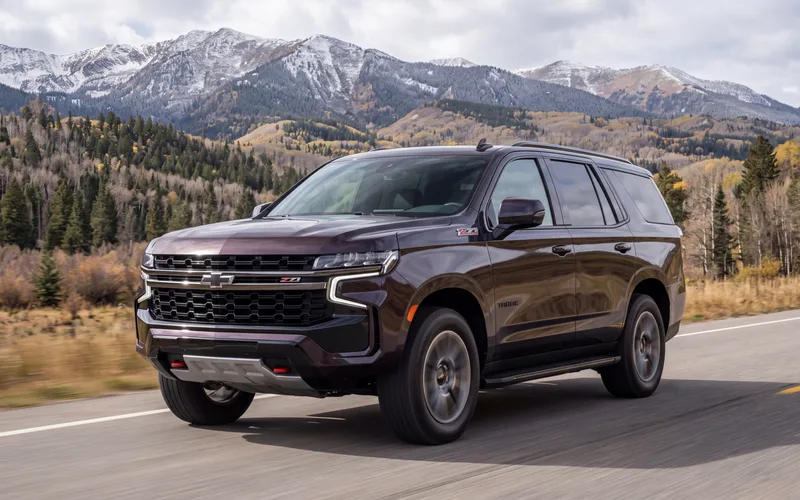 Chevrolet TahoeFull-Size SUVBetter at: Value & maneuverability
Identical vehicle 15 inches shorter for about $3,000 less — the right call unless you truly need the extra 16 cu ft behind the third row.
Compare 2.92B-
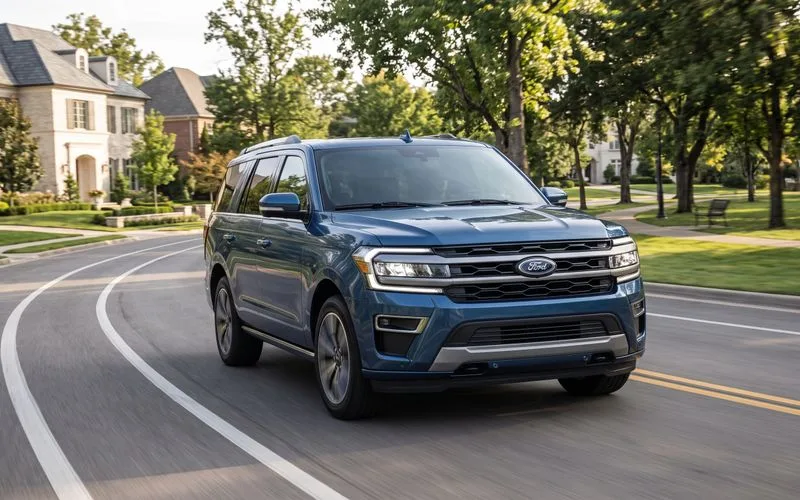 Ford ExpeditionFull-Size SUVBetter at: Towing & performance
Tows 9,600 lbs, is quicker and returns better mileage, and won the segment's most recent comparison test.
Compare 2.87B-
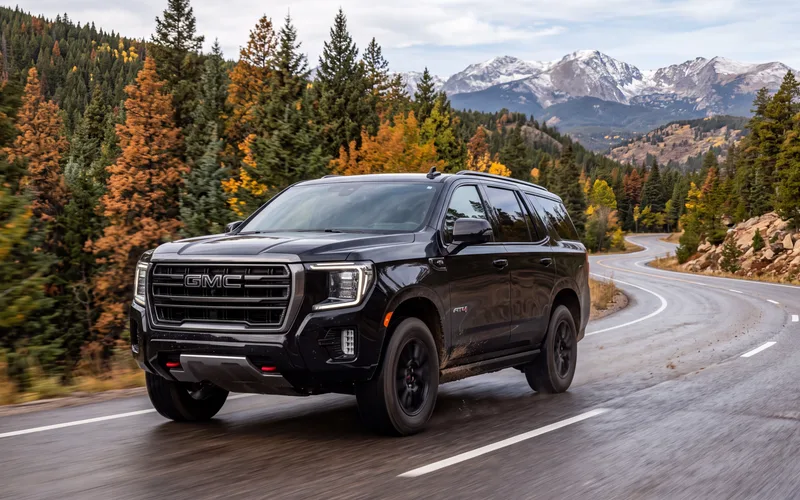 GMC YukonFull-Size SUVBetter at: Interior quality
The same T1XX SUV with a materially nicer cabin and Denali-grade comfort features the Suburban can't be optioned with.
CompareHow it's evolved
10 scored model years · 2017–2026
Subject scores by year
Hover or tap a score to see what moved it versus the year before. A corner mark flags a big swing.
| Year | Performance | Efficiency | Safety | Space | Cost | Reliability | Tech | Use-case | Driving | Value |
|---|---|---|---|---|---|---|---|---|---|---|
| 2026 | 67 | 31 | 65 | 88 | 30 | 62 | 83 | 74 | 58 | 75 |
| 2025 | 65 | 21 | 69 | 88 | 22 | 61 | 83 | 73 | 60 | 74 |
| 2024 | 65 | 22 | 56 | 88 | 26 | 60 | 75 | 72 | 58 | 67 |
| 2023 | 65 | 22 | 54 | 88 | 31 | 60 | 75 | 72 | 59 | 67 |
| 2022 | 65 | 22 | 49 | 88 | 33 | 57 | 74 | 70 | 59 | 68 |
| 2021 | 65 | 25 | 46 | 90 | 35 | 57 | 65 | 69 | 60 | 73 |
| 2020 | 63 | 26 | 40 | 80 | 37 | 52 | 47 | 57 | 55 | 59 |
| 2019 | 62 | 26 | 40 | 74 | 25 | 63 | 50 | 59 | 52 | 59 |
| 2018 | 61 | 37 | 39 | 74 | 40 | 52 | 46 | 59 | 53 | 60 |
| 2017 | 61 | 38 | 38 | 81 | 38 | 54 | 36 | 57 | 50 | 63 |
Compare two years
Best fit & conditions
Higher scores mean a better fit for that use case. Learn more about use-case fit →
Subject profile
Detailed scoring by subject
1Performance & PowertrainOne of the Suburban's strongest categories.2.10C
Single powertrain across the whole 2017 Suburban lineup (LS/LT/Premier, 2WD or 4WD): the 5.3L EcoTec3 V8. No 6.2L option existed for Suburban until the following generation.
Same 5.3L EcoTec3 V8 across all 2017 trims.
Full-size, ~5,700 lb body-on-frame SUV with 355 hp; instrumented test result is the most credible figure available since GM does not publish a 0-60 spec.
Reviewers consistently describe the 5.3L V8 as seamlessly competent, quiet and smooth, with Active Fuel Management cylinder deactivation that is imperceptible in normal driving; it never feels strained even under load.
The 6-speed automatic (Hydra-Matic 6L80) shifts smoothly and keeps the engine in its power band, but by 2017 it trailed the 8/10-speed units rivals like the Expedition and Sequoia were adopting, and can feel busy under heavier loads or towing.
Max Trailering Package (2-speed transfer case on 4WD, upgraded cooling, load-leveling suspension) adds roughly 2,000 lbs over the base rating; the highest published figure is 2WD with the package.
4WD is an option across LS/LT/Premier (not standard) with a single-speed transfer case; a 2-speed transfer case with low range comes only with the Max Trailering or Z71 Off-Road packages, so the more sophisticated setup isn't universal.
The Z71 Off-Road package (4WD LT only) adds all-terrain tires, underbody skid plates, off-road suspension tuning, a 2-speed transfer case and hill descent control — genuine light-duty capability but no locking differentials, no height-adjustable air suspension, and only offered on one trim/drivetrain combination.
One engine (5.3L V8) and one transmission (6-speed automatic) for the entire 2017 model year — no turbo, hybrid, diesel or electrified option, and no 6.2L V8 (that came in the next generation).
2Efficiency & RangeGrades near the bottom of the scale.0.51F
EPA combined rating for the 4WD 5.3L V8 configuration, the volume trim; 2WD rates 1 MPG higher.
EPA city rating for the 4WD configuration.
EPA highway rating for the 4WD configuration.
31-gallon tank was standard across the 2015-2019 Suburban generation; range computed by EPA from the combined MPG rating.
EPA's standard annual cost estimate for the 4WD configuration; high fuel cost is expected for a heavy, body-on-frame full-size SUV.
Runs on regular unleaded across every trim and is flex-fuel capable (E85), giving owners a cheaper alternative fuel option with no premium requirement anywhere in the lineup.
3SafetyOne of the Suburban's weakest categories.0.50F
NHTSA tested the 2017 Suburban 1500 and awarded 4 stars overall, with a perfect 5 stars in side-impact and 4 stars frontal crash protection, offset by a below-average 3-star rollover result typical of a tall body-on-frame SUV.
IIHS did not perform full crashworthiness testing (small overlap, moderate overlap front, side, roof strength, head restraints) on the 2017 Suburban, so it earned no Top Safety Pick/Pick+ award and carries no independent Good/Acceptable structural ratings; the only IIHS-published result is a Marginal LATCH ease-of-use score, and NHTSA's 3-star rollover is the sole other red flag on record.
The volume LT trim comes standard with forward collision alert, lane-departure warning, and (new for 2017) automatic low-speed braking paired with the forward collision system, but blind-spot monitoring, rear cross-traffic alert and true lane-keep assist all remain locked to an optional Luxury/Enhanced Driver Alert package on LT and are only standard on the top Premier trim.
The standard system on LT is a low-speed automatic front braking backstop tied to the forward collision alert, not a full-speed-range AEB system, IIHS notes the front crash prevention entry 'meets the requirements for forward collision warning' but lists autobrake as not tested, and there is no pedestrian detection at all on this generation.
Blind-spot monitoring and rear cross-traffic alert are alert-only (no active steering or braking intervention) and are standard only on the top Premier trim, sold as part of an optional Luxury package on the volume LT trim.
LT includes lane-departure warning as standard equipment, but that is an alert-only system; corrective lane-keep assist is bundled into the optional Enhanced Driver Alert package, and this GM generation offers no true lane-centering feature at any trim.
Adaptive cruise control was not offered on the volume LT trim and was a rare, limited-availability option even on the top Premier trim for this generation of Suburban/Tahoe/Yukon, with no combined highway-assist feature offered at all.
No hands-free highway driving system was available on any 2017 Chevrolet Suburban trim; GM's Super Cruise did not exist yet in any product and would not debut until the 2018 Cadillac CT6.
IIHS did not publish a specific headlight test result for the 2017 Suburban, but IIHS headlight evaluations of this era found the large majority of tested trims across the industry rated Marginal or Poor, and this generation of full-size GM SUV (Tahoe/Suburban/Yukon) was not among the standouts; no adaptive/matrix headlight technology was offered.
The Suburban's tall seating position and abundant glass area give reviewers a generally favorable view of outward visibility, aided by a standard rearview camera and rear parking sensors, though the tall hood and thick rear pillars around the third row limit sightlines somewhat; power-folding, auto-dimming mirrors are optional rather than standard on the volume trim.
IIHS rated the 2017 Suburban's LATCH ease-of-use Marginal overall: only 2 of 5 rear seating positions carry complete lower-anchor-and-tether hardware, with the remaining 3 positions offering tether anchors only, making multi-car-seat installs more difficult despite the vehicle's generous cabin space.
4Space & ComfortThe Suburban's best-graded category.3.50A-
The volume LT trim ships with a 60/40 second-row bench for 8-passenger seating; buyers could substitute second-row captain's chairs for a 7-passenger layout or a front bench for a 9-passenger max.
Front headroom figure is consistent across aggregated spec listings for the 2017 Suburban.
Front legroom figure is consistent across aggregated spec listings for the 2017 Suburban.
Second-row headroom is 39.1 in, with the more space-constrained third row at 38.5 in — both generous by SUV norms thanks to the Suburban's tall roofline.
Second-row legroom of 39.7 in is class-generous, and even the third row (36.7 in) beats most three-row SUVs thanks to the Suburban's extra-long wheelbase versus the shorter Tahoe.
At 36.7 in of legroom and 38.5 in of headroom, the Suburban's third row is genuinely adult-usable rather than a token perch — the extended wheelbase over the Tahoe is this vehicle's signature advantage — and the optional Luxury package's power-folding 2nd/3rd row seats ease access.
Cargo volume behind the second row (third row folded) is 76.7 cu ft, near the top of the full-size SUV class.
Maximum cargo volume with all rear rows folded is 121.7 cu ft, among the largest figures in the full-size SUV segment.
Console, door-pocket and cargo-area storage are generous by class norms, but as a body-on-frame SUV with a full-size spare mounted under the cargo floor, the Suburban lacks the underfloor storage bins unibody rivals offer, and there is no standout storage innovation for this generation.
Front seats draw consistent praise for long-haul comfort, but base LS/LT cloth seats are basic, with leather, heating and ventilation reserved for higher trims and the Premier package.
The base suspension is composed on smooth roads but described as stiff and jiggly at low speed over rough pavement; the optional adaptive Magnetic Ride Control suspension (Premier) noticeably smooths the ride, while the optional 22-inch wheels degrade it further.
Reviewers repeatedly single out the cabin as exceptionally quiet at speed, a genuine highlight versus other full-size SUVs of its generation.
Tri-zone automatic climate control is standard across trims, but heated second-row seats, a heated steering wheel and wireless charging are bundled only into the optional LT Luxury package, and ventilated front seats are Premier-exclusive — richer comfort tech is gated well above the base LS.
5Cost of OwnershipOne of the Suburban's weakest categories.0.49F
Entry LS 2WD trim MSRP for the 2017 model year, the base configuration of the full-size K2XL-platform Suburban.
LT 4WD is the best-selling Suburban configuration for family/tow buyers who want mid-trim comfort features plus 4WD.
RepairPal rates the Suburban's average annual repair cost at $944 (11th of 14 full-size SUVs, 'poor' ownership cost) with above-average repair frequency/severity including reported transmission issues; adding routine V8/4WD service (oil, transfer case, brakes) over 5 years pushes the combined total toward the upper end of the segment band.
CarEdge puts the Suburban's 5-year depreciation at roughly 44%, i.e. about 56% residual value, benefiting from its truck-based platform and steady demand versus car-based rivals, though estimates vary by source and trim/mileage assumptions.
Standard GM limited warranty for the 2017 model year, at the floor of the full-size SUV segment band.
Standard GM powertrain warranty for 2017, at the floor of the segment band (well short of the 10-year/100,000-mile coverage some rivals offered).
Chevrolet's 2017 Complete Care program covered two scheduled oil changes and tire rotations for 2 years/24,000 miles plus 24/7 roadside assistance and OnStar trial services — a short included-maintenance window with basic roadside support, not a multi-year all-inclusive plan.
$58,155 volume-trim price minus its estimated resale value after 5 years (56% retained, or about $32,567) leaves about $25,588 in depreciation. Add the projected $8,500 in 5-year maintenance and repairs, and owning this vehicle for 5 years costs about $34,088 in total.
6Reliability & QualityGrades below the middle of the scale.1.59D
J.D. Power's predicted reliability rating for the 2017 Suburban is a poor 2.5 out of 5, and Consumer Reports' owner-reported data for this K2XX-generation model shows below-average reliability with documented transmission, electrical, and in-car electronics trouble spots.
Chevrolet placed 8th among all brands in J.D. Power's 2017 U.S. Vehicle Dependability Study at 142 PP100 — a solidly upper-third result, though still well behind the segment's dependability leaders, so it lands above mid-pack rather than top-5.
The 2017 model year carries 4 NHTSA recall campaigns, the most serious being a seat-belt pretensioner/airbag-sensing-module software defect (16V651000) that under certain driving conditions could prevent frontal airbag and seat belt pretensioner deployment in a crash — a genuine occupant-safety issue, not a nuisance recall. It's compounded by a non-compliant convex outside mirror recall (17V033000, FMVSS 111) and a power brake assist/vacuum campaign shared with the following model year (19V645000), so the count and severity sit above 'typical' recall activity.
The 5.3L EcoTec3 V8 (L83) paired with the 6L80 6-speed automatic is a well-documented mixed case: the Active Fuel Management (AFM) cylinder-deactivation system on this engine family has a widely reported pattern of hydraulic lifter collapse and camshaft damage, typically surfacing between 80,000-120,000 miles, alongside owner reports of 6L80 transmission failures requiring full replacement. The base architecture is otherwise capable of high mileage with diligent maintenance, but the AFM failure pattern is a real, recurring red flag for this generation.
Period reviews consistently praise the 2017 Suburban's cabin as a genuine step up for the segment — soft-touch trim, artful shapes and material choices reviewers describe as more appropriate for a luxury sedan than a full-size SUV, especially on LT and Premier trims.
Contemporary press and owner reviews are notably positive on assembly quality ('fit and finish top notch,' a quiet, well-sealed cabin at highway speed), but Consumer Reports' owner-reported data for this generation still flags in-car electronics and electrical-accessory faults, keeping this from a top-tier score despite the strong first impressions.
Chevrolet runs the largest dealer network of any brand in the US, giving Suburban owners dense, nationwide access to sales and service, including in rural markets where full-size SUVs sell heavily.
Parts commonality across the high-volume GM full-size SUV/truck family (Suburban/Tahoe/Yukon/Silverado/Sierra) keeps routine parts cheap and universally stocked, and the aftermarket is huge — but higher-content trims add costly failure points (AFM-related engine repairs, magnetic-ride suspension components, 6L80 transmission work) that have driven owner-reported repair bills into the thousands, keeping this from being a cheap vehicle to fix when something major goes wrong.
7Technology & InfotainmentThe Suburban's lowest-graded category.0.39F
The 8-inch Chevrolet MyLink color touchscreen was standard equipment across the LS, LT and Premier trims for the 2017 model year, with no larger option offered.
MyLink's menu structure is straightforward and usable but was already a generation behind rival systems by 2017, with middling responsiveness rather than best-in-class polish.
Apple CarPlay and Android Auto were standard through the 8-inch MyLink system on all 2017 Suburban trims, but only in wired form — wireless phone projection did not exist on any GM vehicle at this point (it arrived years later), so despite universal standard availability the connection method itself scores low against a wireless-focused bar.
MyLink's voice commands handle basic phone and audio functions adequately but lag more natural systems of the era, and built-in turn-by-turn navigation is bundled only with the Premier trim (or an options package on LT), so most volume-trim buyers relied on phone-projected maps instead.
The base Chevrolet audio system is adequate but unremarkable, while the Premier trim's 10-speaker Bose premium system is well regarded and a genuine step up.
The gauge cluster uses analog speedometer and tachometer dials with only a small color driver information display between them — this generation predates GM's move to a configurable full-digital cluster.
The 2017 Suburban had no whole-vehicle over-the-air software update capability; navigation map updates were handled manually via a purchased USB/SD update, not OTA.
OnStar RemoteLink / the Chevrolet app supported remote start, remote lock/unlock, vehicle locate and basic diagnostics — functional core remote features, but gated behind an OnStar subscription after an initial trial period.
Two USB-A ports are standard up front with additional USB ports added when the rear-seat entertainment option is fitted, plus multiple 12V outlets across the rows and an available wireless charging pad on the LT Luxury package — reasonably equipped for its era but limited to dated USB-A, with no USB-C.
Remote keyless entry and remote engine start are standard even on the base LS, but true proximity (push-button) keyless ignition access is bundled into the optional Luxury package on LT and standard only on Premier, so full keyless convenience isn't universal across the lineup.
A rearview camera and rear parking sensors are standard on every trim including LS, with front parking sensors added by the Luxury package, but no surround/360-degree camera system was offered on the Suburban for 2017.
No head-up display was offered on any 2017 Suburban trim, including the range-topping Premier.
8Use-Case FitMid-pack among this car's ten categories.1.80C-
Wide door openings, a low step-in height for its class, generous second-row space and a cavernous cargo hold make daily loading of kids, car seats and gear easy, though LATCH hardware is only complete on two of five rear seating positions.
The volume LT trim comes with forward collision alert and lane-departure warning, but blind-spot monitoring and rear cross-traffic alert require the optional Luxury package (standard only on Premier), and IIHS never completed crashworthiness testing on this generation — safety credentials are real but incomplete at family-friendly price points.
Exceptional second- and third-row space, a genuinely usable third row, tri-zone climate control and an exceptionally quiet cabin make the Suburban well suited to multi-hour family road trips, with rear-seat entertainment available as an option.
The smooth V8/6-speed powertrain and quiet cabin make highway commuting relaxed, but the Suburban's nearly three-ton mass and full-size footprint bring real fatigue in stop-and-go traffic and tight spaces versus smaller commuters.
The 5.3L V8 returns roughly 16 city/23 highway EPA MPG with a large fuel tank, making per-mile running costs well above average commuter vehicles even by full-size SUV standards.
At over 224 inches long with a roughly 43-foot curb-to-curb turning circle, the Suburban is genuinely cumbersome in tight urban parking and garages; standard rear camera and sensors help but don't offset the sheer footprint.
Standard towing tops out at 6,000-6,300 lbs, rising to 8,000-8,300 lbs with the Max Trailering package, giving genuine capacity for trailers, boats and work loads, though there is no cargo bed for hauling loose materials.
The Suburban shares its body-on-frame platform and drivetrain with the fleet-proven Silverado, giving it a generally solid durability reputation, though this 2015-2020 generation has documented owner complaints around AC compressor and other component issues that keep it short of a top-tier fleet-durability score.
Standard roof cargo rails and a factory trailer hitch/wiring harness provide basic utility, but with no cargo bed and no dedicated upfit ecosystem, the Suburban is far less jobsite-practical than a pickup and offers limited tie-down or onboard-power provisions.
A quiet cabin, comfortable front seats and a roughly 31-gallon fuel tank support long highway stints between stops, though driver-assist features that reduce fatigue (adaptive cruise, lane centering) were rare options rather than standard equipment.
Four-wheel drive is available and towing capacity supports hauling boats, campers or toy trailers, but the Suburban lacks an off-road-focused trim (no Z71-equivalent for this generation) or the ground clearance/underbody protection of a true adventure vehicle.
121.7 cu ft of maximum cargo space with power-folding second- and third-row seats (Luxury package) and a standard roof-rail/hitch combination make the Suburban exceptionally capable of swallowing bulky gear.
9Driving ExperienceGrades below the middle of the scale.1.36D
Reviewers describe the Suburban as surprisingly composed and stable for its size, with sound body control and no excessive lean, but the sheer bulk of a nearly three-ton body-on-frame SUV keeps it well short of genuinely agile.
Steering is accurate enough to place the vehicle confidently but is numb and light, typical of a truck-based full-size SUV of this era rather than offering genuine road feedback.
Braking is adequate for a nearly three-ton vehicle but not a standout; no instrumented stopping-distance data specific to the 2017 model year was found, so this reflects segment-typical expectations for a heavy body-on-frame SUV.
The 5.3L V8 paired with a 6-speed automatic is well calibrated with smooth, predictable power delivery and no notable complaints about rough shifts or tip-in behavior.
The V8 is audible under hard acceleration with a pleasant, unobtrusive character, while the cabin stays notably quiet at cruise — inoffensive rather than silent.
The Suburban's extended wheelbase gives it a wide curb-to-curb turning circle of roughly 43 feet, worse than the SUV normalization band's upper bound and reflecting genuinely poor low-speed maneuverability for its size.
A commanding, high seating position gives good outward sightlines despite the vehicle's size, with adjustable seats and a tilt/telescoping wheel (heated/power on Luxury package) supporting a range of drivers, though ingress/egress requires a real step up without the optional running boards.
The Suburban is engineered as a comfortable, quiet cruiser rather than a driver's vehicle — pleasant and confidence-inspiring for its size but not something enthusiasts seek out for the 'long way home.'
10Value & Market PositionOne of the Suburban's strongest categories.2.23C
Base LS includes a rearview camera, Chevrolet MyLink touchscreen, tri-zone climate control and trailering hardware standard, but cloth seats and a relatively basic infotainment suite versus loaded rivals — competitive but not class-leading for the price.
The Suburban undercuts the extended-length Ford Expedition EL on price while offering more third-row and cargo space, giving it a real space-per-dollar advantage even though its powertrain and reliability lag some rivals.
Three trims (LS/LT/Premier) each offered in 2WD or 4WD, plus a heavier-duty 2500 series with the 6.0L V8 for fleet/tow use, giving a wide spread from work-oriented to fully loaded.
The Suburban, alongside its Tahoe sibling, dominated the full-size SUV segment in this era, with the two GM nameplates combining for roughly half of segment sales and the Suburban leading the extended-length sub-segment outright.
Chevrolet is a mainstream, value-oriented brand rather than an aspirational one, but the Suburban nameplate itself carries strong heritage and loyalty as the longest continuously produced nameplate in the industry, giving it a stronger halo than the brand average.
Full-size GM SUVs of this era regularly carried factory rebates and dealer discounts (routine for a high-volume, high-MSRP body-on-frame SUV), giving buyers real negotiating room without the vehicle being scarce or over-MSRP.
The 2017 model year sits three years into the eleventh (K2XL) generation that began for 2015, current and recently updated but past its newest-on-the-market phase — solidly mid-cycle.
Reviewers (Car and Driver, Edmunds, U.S. News) consistently praised the Suburban's cabin quietness, luxury feel and cargo/passenger room, but flagged below-average predicted reliability, modest towing for the class and unremarkable driving dynamics — well-reviewed without being the comparison-test pick.