
The verdict
A mixed-report full-size suv, strong on space and held back by efficiency.
The 2023 Suburban is the most space you can buy without a commercial van badge: 144.7 cubic feet with the rear rows folded, 41.5 cubic feet still free behind a raised third row, and a third row adults can actually sit in on a long drive. It tows up to 8,300 lbs, rides quietly on the independent rear suspension this generation adopted in 2021, and started at $56,995 — roughly $4,000 less than the 2024 would. The bill comes due at the pump and in the driveway: 16 MPG combined and about $3,900 a year in fuel on the volume 5.3L V8 4WD, a 43.3-foot turning circle that defeats ordinary parking lots, and a safety file with no IIHS award, Poor-rated headlights and a Poor automatic-braking result on the identical Tahoe. Buy it for the space and the towing, and go in knowing 2023 was the year blind-spot alert and adaptive cruise still cost extra on the volume LT.
Jump to scoresStrengths
- Cargo space nothing else in the segment matches
- Limousine-grade room in every row
- Tows and hauls like a truck, from the base trim up
What holds it back
- Fuel economy at the very bottom of the scale
- Expensive to own, with warranty coverage at the class floor
- Weak crash-test and crash-avoidance credentials
Top alternatives
Cars shoppers cross-shop with the Chevrolet Suburban 2.79B-
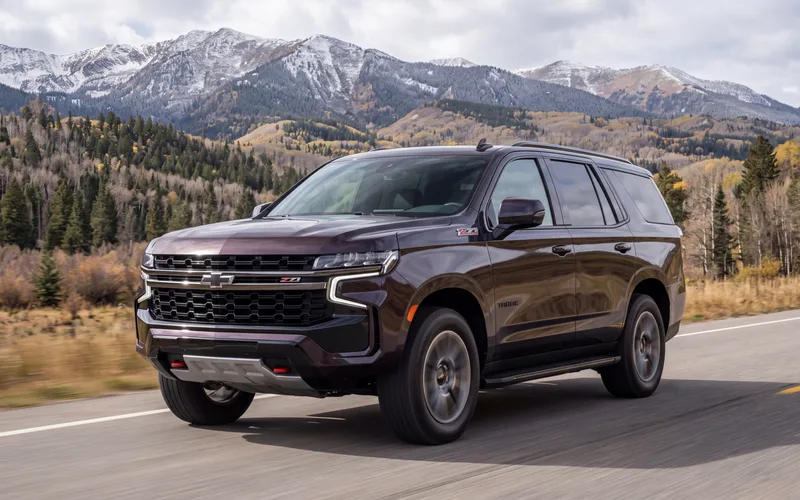 Chevrolet TahoeFull-Size SUVBetter at: Value & maneuverability
Identical vehicle 15 inches shorter for about $3,000 less — the right call unless you truly need the extra 16 cu ft behind the third row.
Compare 2.92B-
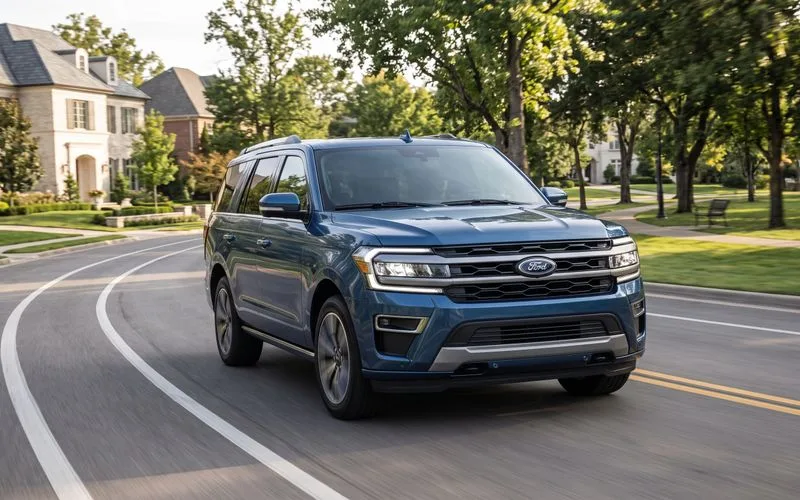 Ford ExpeditionFull-Size SUVBetter at: Towing & performance
Tows 9,600 lbs, is quicker and returns better mileage, and won the segment's most recent comparison test.
Compare 2.87B-
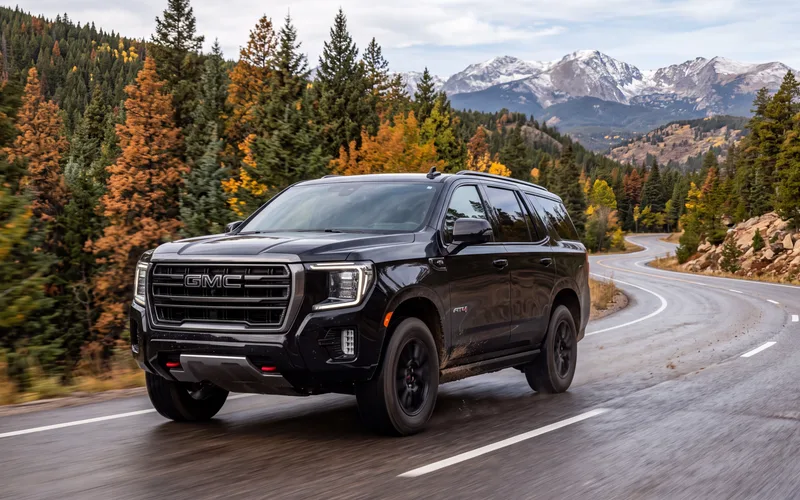 GMC YukonFull-Size SUVBetter at: Interior quality
The same T1XX SUV with a materially nicer cabin and Denali-grade comfort features the Suburban can't be optioned with.
CompareHow it's evolved
10 scored model years · 2017–2026
Subject scores by year
Hover or tap a score to see what moved it versus the year before. A corner mark flags a big swing.
| Year | Performance | Efficiency | Safety | Space | Cost | Reliability | Tech | Use-case | Driving | Value |
|---|---|---|---|---|---|---|---|---|---|---|
| 2026 | 67 | 31 | 65 | 88 | 30 | 62 | 83 | 74 | 58 | 75 |
| 2025 | 65 | 21 | 69 | 88 | 22 | 61 | 83 | 73 | 60 | 74 |
| 2024 | 65 | 22 | 56 | 88 | 26 | 60 | 75 | 72 | 58 | 67 |
| 2023 | 65 | 22 | 54 | 88 | 31 | 60 | 75 | 72 | 59 | 67 |
| 2022 | 65 | 22 | 49 | 88 | 33 | 57 | 74 | 70 | 59 | 68 |
| 2021 | 65 | 25 | 46 | 90 | 35 | 57 | 65 | 69 | 60 | 73 |
| 2020 | 63 | 26 | 40 | 80 | 37 | 52 | 47 | 57 | 55 | 59 |
| 2019 | 62 | 26 | 40 | 74 | 25 | 63 | 50 | 59 | 52 | 59 |
| 2018 | 61 | 37 | 39 | 74 | 40 | 52 | 46 | 59 | 53 | 60 |
| 2017 | 61 | 38 | 38 | 81 | 38 | 54 | 36 | 57 | 50 | 63 |
Compare two years
Best fit & conditions
Higher scores mean a better fit for that use case. Learn more about use-case fit →
Subject profile
Detailed scoring by subject
1Performance & PowertrainMid-pack among this car's ten categories.2.38C+
2023 is the third model year of the twelfth-generation Suburban (2021– ) and a carry-over year mechanically: the volume LS/LT carries the 5.3L L84 EcoTec3 V8 at 355 hp, with the 6.2L L87 V8 at 420 hp topping the range. Mid-pack output for a full-size SUV, well behind the Expedition's twin-turbo V6.
The 5.3L V8 peaks at 383 lb-ft @ 4,100 rpm — adequate rather than abundant for a ~5,600 lb body-on-frame SUV. Both optional engines reach 460 lb-ft, the Duramax delivering it from low rpm for the best unstressed pull in the 2023 lineup.
Consumer Reports' instrumented 2023 Suburban road test returns 7.6 s to 60 mph on the 5.3L — roughly seven tenths adrift of the shorter Tahoe on the same drivetrain, which is what an extra 15 inches of wheelbase and several hundred pounds cost. Mid-to-slow for the full-size class.
The naturally aspirated small-block gives immediate, lag-free low-rpm response and Dynamic Fuel Management cylinder deactivation is largely imperceptible at cruise. Held below the 80+ tier because the 5.3L sounds coarse and audibly works when asked to move this much vehicle, and DFM re-activation is occasionally felt at light throttle.
The 10L80 10-speed automatic — shared with Silverado, Tahoe and Yukon — shifts smoothly, downshifts decisively and holds gears sensibly in tow/haul mode. The recurring complaint is mild hunting between the closely spaced top ratios at part-throttle highway speeds; nothing harsh or clumsy.
8,300 lb maximum conventional rating properly equipped — 2WD, the 5.3L V8 and the Max Trailering Package, which adds cooling, an integrated trailer brake controller and hitch guidance. That clears the 8,000 lb SUV band ceiling, so the item maxes out; only the Expedition and Wagoneer tow meaningfully more.
Four-wheel drive is optional on every 2023 trim and standard on the Z71, using a two-speed transfer case with a genuine 4-Lo range and Autotrac automatic mode on upper trims for set-and-forget all-weather traction. Short of the top tier only because no locking differential is offered anywhere in the lineup.
The Z71 gives the 2023 Suburban real light-duty credibility — standard 4WD with 4-Lo, skid plates, off-road-tuned suspension, all-terrain tires, hill descent control and a high-approach front fascia, with four-corner Air Ride Adaptive Suspension available for on-demand lift. It stays mid-band because the 134.1-inch wheelbase wrecks breakover angle and trail maneuverability, and no locker or factory lift is offered.
Three genuinely distinct powertrains — 5.3L V8, 6.2L V8 and 3.0L Duramax turbodiesel — cover mainstream, maximum-power and long-haul-efficiency buyers, broader than most full-size rivals. Capped mid-band because nothing in the 2023 range is electrified: no hybrid, PHEV or EV Suburban exists.
2Efficiency & RangeThe Suburban's lowest-graded category.0.00F
EPA rates the volume 5.3L V8 4WD Suburban at 16 MPG combined — a ~5,600 lb body-on-frame V8 whose only efficiency aid is cylinder deactivation, sitting at the very bottom of the gas-SUV band. Only the Duramax diesel escapes the basement, at 22 MPG in the same 4WD configuration.
City economy is where the Suburban's mass tells hardest: Dynamic Fuel Management trims light-load consumption but cannot offset stop-start work in the longest SUV Chevrolet sells, leaving it a single point above the band floor.
The 10-speed automatic and cylinder deactivation make highway cruising the gas Suburban's best case, but 4WD hardware and a large frontal area cost a full MPG against the 2WD version and leave the volume configuration below the 20 MPG band floor.
The Suburban's 28-gallon tank — four gallons more than the Tahoe's — turns bottom-of-class economy into respectable cruising range, the one place this powertrain finishes above mid-pack. The Duramax stretches past 600 miles between fills.
At the EPA's standard assumptions the volume 4WD 5.3L burns roughly 940 gallons a year and lands beyond the top of the SUV cost band. The diesel's 22 MPG buys back nothing at diesel prices — it costs the same or more per year than the V8 it replaces.
The volume 5.3L V8 runs on 87-octane regular and the Duramax on ubiquitous #2 diesel, so the mainstream buyer never pays a grade premium. Requirements are mixed rather than uniformly cheap only because the 6.2L V8 — standard on High Country, optional on upper trims — calls for premium.
3SafetyOne of the Suburban's weakest categories.1.61D
NHTSA tested the 2023 Suburban in both drivelines and rated each 4 stars overall: 5 stars across every side-impact measure including the pole test and 5 stars driver-side frontal, pulled down by a 4-star passenger-side frontal and the 3-star rollover result that a tall body-on-frame full-size SUV effectively cannot avoid.
IIHS has never crash-tested this twelfth-generation Suburban — its Suburban file stops at the 2020 model and there is no 2023 entry — so the read comes from the mechanically identical Tahoe on the same T1XX platform. That car posts Good in the driver-side small overlap, original moderate overlap and updated side tests, but only Acceptable in the passenger-side small overlap and an outright Poor in the updated moderate-overlap front test, where the rear-passenger measures fall short. No Top Safety Pick award of any kind, and a Poor in one of the three core crashworthiness evaluations puts it in the low band rather than the middle one.
Chevy Safety Assist is standard on all six 2023 trims — Automatic Emergency Braking, Forward Collision Alert, Lane Keep Assist with Lane Departure Warning, Following Distance Indicator, Front Pedestrian Braking and IntelliBeam auto high beams. The three features that separate a comprehensive suite from a basic one are all absent below the top trims: blind-zone and rear cross-traffic alert arrive only in the optional Driver Alert Package on LS/LT/RST/Z71, and Adaptive Cruise Control is an extra-cost item that was on production constraint for much of the model year, so even some High Country examples left the plant without it.
The only published front-crash-prevention testing of this hardware is poor: the twin Tahoe's standard system earned Poor in the IIHS vehicle-to-vehicle 2.0 evaluation and Marginal for pedestrian detection. Roughly three tons of curb weight lengthens real-world stopping distances further, nothing in the 2023 Suburban's sensor set differs from the tested Tahoe, and the enhanced AEB and Rear Pedestrian Alert upgrades are extra-cost rather than standard content.
Lane Change Alert with Side Blind Zone Alert and Rear Cross Traffic Alert are alert-only systems with no steering or braking intervention, and on the 2023 car they are bundled into an optional Driver Alert Package on the four lower trims — a late point in the range for a vehicle whose 225-inch length makes blind-zone coverage more valuable than it is on a shorter SUV. Trailer-aware blind-zone coverage requires the separate advanced trailering content.
Standard Lane Keep Assist with Lane Departure Warning is a corrective nudge rather than sustained centering, and true lane centering exists only inside Super Cruise — which for 2023 was confined to Premier and High Country and, as Chevrolet's own spec sheet conceded, was not actually orderable when the model year opened. Every buyer below those two trims gets a basic intervention system and nothing more.
GM's full-speed-range Adaptive Cruise Control is a capable stop-and-go system when fitted, and reviewers of 2023 Suburbans so equipped rated it well on long highway runs. The problem for this model year is access rather than behavior: ACC is an extra-cost option throughout the range and sat under production constraint from the July 2022 start of build, with affected vehicles — including some High Country examples — delivered with plain electronic cruise control instead, which is a step below where the 2024 car landed.
Super Cruise itself is the mature end of the hands-free market — true hands-off operation with automated lane change on a mapped network — and 2023 was the first model year the Suburban could be had with it at all. Two things hold the score below the top band: it was restricted to the Premier and High Country trims, and its first-year rollout was badly constrained, unorderable at launch and only reaching the expanded ~400,000-mile road network on vehicles built from October 2022 onward.
The tested twin's headlamps rate Poor across every trim — LED reflector low and high beams with no curve-adaptive function — and the Suburban carries the same front-end lighting hardware for 2023. Standard IntelliBeam high-beam assist helps on unlit roads by automating the high beams but does nothing to repair the beam pattern the rating actually measures.
The commanding seating position and deep side glass give an excellent forward and lateral view, but roughly fifteen inches more body behind the rear axle than a Tahoe puts a great deal of sheetmetal where the driver simply cannot see it, and the D-pillars are thick. HD Surround Vision and the Rear Camera Mirror compensate genuinely well where fitted, but both are optional on the 2023 car, so the base and mid configurations are left relying on sightlines and a single reversing camera.
This is the category's clear strength and it is measured rather than inferred: IIHS rates the identical interior's child-seat anchors Good+, crediting it with three rear positions carrying complete LATCH hardware plus three further positions with tether anchors — more usable positions than the standard requires. Wide rear-door openings and a tall roofline make installation easy, the second-row bench takes three across, and the Suburban's extra length behind the axle means rear-facing seats fit without negotiating the front seats backward.
4Space & ComfortThe Suburban's best-graded category.4.00A+
Chevrolet's own 2023 spec table gives the seating menu by trim: LS seats 8 with a 9-passenger option, LT/RST/Z71 seat 8 with a 7-passenger option, and Premier/High Country seat 7 with an 8-passenger option. The volume LT's eight seats sit at the top of the SUV normalization band.
The upright greenhouse shared with the Tahoe puts front headroom past the top of the SUV band; the available dual-pane panoramic sunroof costs 1.9 in. Unchanged from the 2021 redesign.
Front legroom sits at the very top of the SUV band, with a 10-way power driver's seat and power lumbar standard even on the base LS. Carried over unchanged through the twelfth generation.
Solid mid-band second-row headroom for a full-size SUV; the panoramic sunroof commonly optioned on Premier and High Country takes it to 37.5 in, which is where most upper-trim examples actually sit.
The independent rear suspension adopted in the 2021 redesign freed up limousine-grade second-row legroom that tops the SUV band. It matches the Tahoe exactly — the Suburban's extra 15 in of body goes to the third row and the cargo hold, not to row two.
This is the Suburban's signature advantage over the Tahoe: 36.7 in of third-row legroom and 38.2 in of headroom — unaffected by the sunroof — make the way-back genuinely adult-usable, with its own climate vents and two USB ports. Held just below the top tier by two real caveats: Consumer Reports found the third-row cushion sits so close to the floor that it gives very little thigh support, and on the volume LT the second row is manual-folding, so the power-release access that makes climbing in easy requires the Luxury or Signature package.
Behind-second-row volume runs well past the top of the SUV band, and the 41.5 cu ft still free behind a raised third row exceeds what many mid-size three-row SUVs offer with their third row folded — the figure that actually matters when seven or eight seats are occupied.
With both rear rows folded flat the Suburban offers one of the largest cargo holds of any non-commercial SUV sold in the US, far beyond the top of the normalization band. Fold-flat second- and third-row seats are standard from the base LS.
Better provisioned than the segment average in a way that is verifiable from the order guide rather than inferred: every 2023 trim ships with eight USB ports spread across all three rows, a 12-volt socket and TWO 120-volt household outlets — one behind the center console, one in the cargo bay — plus a Cargo Management System, capless fueling and fold-flat rear rows. The volume LT's console has a storage area with a removable tray, and the power-sliding center console with drawer and secure storage is standard on Premier and High Country. It stays short of the top band because there is no single headline innovation on the order of a front trunk or GMC's MultiPro tailgate.
Consumer Reports found the front seats wide, roomy and supportive and the optional second-row captain's chairs generously sized, and the volume LT gets leather-appointed front and second-row seating with heated 10-way power front buckets, power lumbar and driver memory as standard. Three things cap it below the segment leaders: the third row has very little thigh support, no Suburban trim offers massage, and 2023 specifically de-contented the steering wheel from leather-wrapped to simulated leather across the whole range.
The four-wheel independent suspension plus a 134.1-in wheelbase — 13 in longer than the Tahoe's — give the Suburban the more settled, less pitch-prone ride of the two and a far calmer one than solid-axle body-on-frame rivals. The volume LT runs the passive 'Premium Smooth Ride' setup, which Consumer Reports judged good at absorbing bumps while still preferring the Premier's Magnetic Ride Control for steadiness; the 22-inch wheels widely fitted from RST up noticeably coarsen it.
Among the quietest things in the segment: solar-absorbing glass with an acoustic-laminated windshield and deep-tinted rear windows is standard on every trim, and the naturally aspirated 5.3L stays distant at light load. Consumer Reports called the cabin as hushed as many luxury sedans. Held just below the top band because the volume LT does without the extra acoustic side glass and deadening of a Yukon Denali, so low-frequency Dynamic Fuel Management drone is audible at part throttle.
The basics are unusually generous for 2023: tri-zone automatic climate control with separate rear air conditioning and a remote vehicle starter system are standard on every trim including the base LS, and the volume LT adds heated front seats, wireless charging and a hands-free power liftgate as standard. It sits below Escalade and Navigator because the three features that define the luxury tier are all trim-walk items — the automatic heated steering wheel and heated second-row seats need the Luxury Package on LT/RST/Z71, ventilated front seats are effectively High Country content, and no trim offers massage.
5Cost of OwnershipOne of the Suburban's weakest categories.0.00F
The 2023 Suburban opened at $56,995 delivered for the LS 2WD with the 5.3L V8 — pricing rose $500 across the board versus 2022 — which is roughly $4,200 below where the 2024 model would start, and close enough to the $65,000 top of the SUV base-MSRP band that an extended-length full-size SUV still lands in the bottom fifth of the band.
LT 4WD is the mainstream volume rung and the configuration GM itself advertised nationally on the 2023 lease, listing at $65,495 delivered at launch and about $67,295 after the mid-year price and destination increase. Real transactions skew upward from there into RST, Z71 and Premier territory.
The 2023 car is mechanically unchanged from 2022 — the same L84 5.3L/L87 6.2L V8s and LM2 Duramax on the same 10-speed automatic — so upkeep tracks the generation: high-volume GM truck hardware with cheap, widely stocked parts, pulled toward the upper end of the estimates by the AFM lifter and torque-converter-shudder record. Edmunds' page for the 2023 now projects $9,091 over five years, but that clock starts on a three-year-old, out-of-warranty truck rather than on a new one, so it is measuring a different window than this item asks for.
Suburban retention is mid-pack for the class — steadier than the Ford Expedition, short of the GMC Yukon XL and well short of the Toyota Sequoia — and the 2023 is tracking marginally ahead of the nameplate curve, holding 62.5% of its new price at three years old against 61.0% for the generic three-year-old Suburban. Even average percentage retention still translates into a large dollar loss off a $65,000 sticker.
GM's standard 3/36 new-vehicle limited warranty sits at the floor of the segment band — level with the Ford Expedition and Jeep Wagoneer, and materially behind Hyundai/Kia's 5/60.
Standard GM 5/60 powertrain coverage — the low end of the band and half the 10-year/100,000-mile term Hyundai, Kia and Mitsubishi offer, which matters given this generation's lifter and transmission-shudder history.
The 2023 package is one complimentary scheduled-maintenance visit in the first year of ownership (oil and filter change, tire rotation, multi-point inspection), 5-year/60,000-mile 24/7 roadside assistance with Courtesy Transportation, and short OnStar and Connected Services trials. The basics are solid and the roadside term runs with the powertrain warranty, but a single free service visit trails Toyota's two-year ToyotaCare on the Sequoia, and there is no concierge tier of the sort Jeep's Wagoneer Client Services provides.
$65,495 volume-trim price minus its estimated resale value after 5 years (50% retained, or about $32,748) leaves about $32,748 in depreciation. Add the projected $4,800 in 5-year maintenance and repairs, and owning this vehicle for 5 years costs about $37,548 in total.
6Reliability & QualityMid-pack among this car's ten categories.2.03C
The two major forecasters disagree on this vehicle, which is what lands it mid-band rather than at either extreme. Consumer Reports rates the 2023 Suburban outright below average — 'less reliable than other cars from the same model year' — while J.D. Power scores predicted reliability 78/100, the middle of its 70-80 'Average' band, and named the mechanically identical Tahoe best in Large SUV in both the 2023 Initial Quality Study and the 2023 Vehicle Dependability Study. 2023 is the third year of the twelfth generation and mechanically a carry-over (the only real changes were paint, wheels, packages and the addition of Super Cruise on Premier/High Country), so the launch-year risk of 2021 is behind it — but the generation's structural weak points, DFM lifters on the small-block V8s and 10L80 shudder, are not year-specific and are exactly what CR's owner data keeps flagging.
Chevrolet's 2023-era standing splits by survey, and mid-pack is the honest average. J.D. Power's 2023 Vehicle Dependability Study put Chevrolet third among mass-market brands at 162 PP100 against a 186 PP100 industry average — up from tenth the year before — with the Tahoe among four Chevrolet/GMC segment award winners; the 2023 Initial Quality Study placed Chevrolet fifth of 33 brands. Consumer Reports ran the other way, dropping Chevrolet ten places to 20th in its November 2022 reliability rankings, the report that faced 2023 buyers. A top-five finish averaged against a bottom-third finish is mid-pack with real upside; this is a brand-level judgment and carries across the other 2023 Chevrolets in this dataset. Scored a point above the 2024 entry because the 2023 VDS result (162 PP100, third) was stronger than 2024's (174 PP100, tied third).
Four NHTSA campaigns against the 2023 Suburban — twice the 2024 car's two, and the extra ones are the mechanical kind. 23V642 covers improperly heat-treated rear suspension outer control arm bolts that can break and misalign a rear wheel, a hard-parts campaign unique to 2023 among recent Suburbans, and 25V274 pulls 2023 into the 6.2L L87 connecting-rod/crankshaft recall whose remedy NHTSA has since escalated to an Engineering Analysis after hundreds of post-repair failures. The other two are software: the 22V903 daytime-running-lamp FMVSS 108 noncompliance and 24V674's eBCM failure to light the low-brake-fluid warning, both fixable over the air. Two things hold this out of the outright-failing band: the volume LT's 5.3L L84 sits outside the engine campaign entirely, and 2023 escaped 26V085, the 10-speed control-valve recall that can lock the rear wheels — that one is 2022-only. Underneath the campaigns sits the generation's unresolved TSB load: 10L80 shudder and valve-body bulletins covering 2021-2024 Suburban/Tahoe, plus long-running DFM lifter-noise bulletins.
A proven architecture carrying a specific, well-documented defect, unchanged from 2022 — 2023 is a carry-over powertrain year. The volume LT's 5.3L L84 is a small-block V8 with decades of high-mileage service behind it and is the engine every independent shop in the country already knows, but the Dynamic Fuel Management version fitted here has widely reported collapsed-lifter and camshaft-wear failures running $1,500-$4,000 to repair, and there is no non-DFM alternative below it. The 10L80 ten-speed is mechanically sound but carries persistent steady-speed shudder and harsh cold-shift bulletins. The optional 6.2L L87 is the weak link, being the subject of the connecting-rod recall now under federal Engineering Analysis; the 3.0L Duramax LM2 inline-six (277 hp here, before the 2025 refresh's 305 hp LZ0) has the cleanest record of the three but sells in small numbers. Scored level with the 2024 car: the hardware is identical and the 2022-only transmission control-valve recall that 2023 avoided is offset by owner reports of oil consumption on this model year.
2023 is squarely inside the pre-refresh cabin — the 2025 mid-cycle update that was explicitly aimed at this weakness is two years away. Reviewers grant that the twelfth generation is a real improvement over the notoriously cheap Suburbans before it, with soft-touch surfaces on the upper dash and genuinely plush leather and wood on High Country, but the consensus verdict is that some cabin materials still feel cheap and the interior does not look or feel as expensive as the sticker at the top of the range. The volume LT carries extensive hard plastics on the door tops, lower dash and second- and third-row surfaces, of which a 134-inch-wheelbase Suburban has more square footage than anything else in the family, and the base LS is plainly basic — cloth, grey plastic, the older infotainment. Competitive for a full-size SUV at the price, clearly below the Escalade and Expedition Platinum, a step below the post-2025 Suburban.
Assembly quality is the strongest part of this vehicle's reliability picture. 2023 is the third year of the same dashboard, switchgear and infotainment out of Arlington Assembly, so the launch-year rattles of 2021 have largely been worked through, and the objective initial-quality evidence is good: Chevrolet finished fifth of 33 brands in J.D. Power's 2023 IQS and the mechanically identical Tahoe led the Large SUV class. Held short of the top band by complaints that persist across the generation — interior rattles, third-row and cargo-area trim alignment, and infotainment and camera glitches — which the Suburban's longer body and much larger cargo bay give more surface area to appear on than the Tahoe has. A point under the 2024 car purely on generation maturity.
Chevrolet runs the single most widespread franchised dealer network in the United States at roughly 2,880 locations, so a Suburban owner is rarely far from factory service — a real advantage over the ~1,500-location Buick-GMC channel that supports the mechanically identical Yukon XL, and the decisive one in the rural and small-market America where full-size SUVs sell heavily. For a 2023 car now out of bumper-to-bumper warranty, that density also means dealer service competes with a huge independent base rather than being the only option. Held out of the very top band by service satisfaction, which J.D. Power's customer-service data places around the mainstream-brand average rather than at the top of the charts.
The Suburban sits on the deepest parts channel in the American market — it shares the T1XX architecture, the small-block V8s and the 10L80 transmission with the Tahoe, Yukon, Escalade and the Silverado/Sierra pickups, so OEM supply is abundant, the aftermarket is enormous and the powertrain is the one every independent shop already knows. Mainstream Chevrolet trim also keeps body and interior parts cheaper than Denali- or Escalade-tier equivalents. What pulls it below the Silverado is running cost rather than availability: RepairPal puts estimated annual repair cost well above the full-size SUV average and flags both repair frequency and severity as higher than normal, full-size-SUV consumables are genuinely expensive (20-22-inch tires, large brakes, Magnetic Ride or air-leveling hardware on upper trims), and the long-wheelbase rear body panels, quarter glass and longer driveline are Suburban-specific rather than shared with the much higher-volume Tahoe shell.
7Technology & InfotainmentOne of the Suburban's strongest categories.3.09B
2023 is the third pre-refresh year of the twelfth generation: the volume LT carries the 10.2-inch Chevrolet Infotainment 3 Premium display and the base LS an 8.0-inch Infotainment 3 unit. The 17.7-inch freeform panel does not arrive until the 2025 mid-cycle refresh, so the 2023 car sits mid-band where the 2026 maxes out.
Chevrolet Infotainment 3 Premium is a quick, plainly organized system with shortcut tiles and Google built-in underneath it, and the pre-refresh dash keeps a real volume knob plus hard keys for climate and drive modes — reviewers consistently rate the 2023 car easy to live with and the screen well placed high on the dash. Held mid-band because the 10.2-inch panel was already small against refreshed rivals by 2023 and the graphics were visibly aging.
Wireless Apple CarPlay and wireless Android Auto are standard on every 2023 Suburban trim, attached to both head units — so even the base LS with the 8-inch screen projects wirelessly. GM's decision to drop phone projection applies to its Ultium EVs, not the gas full-size SUVs.
The volume LT and everything above it run Google built-in, so Google Assistant handles natural-language commands and Google Maps is the embedded navigation with live traffic — a factory nav genuinely worth using rather than something owners bypass for their phone. Short of the top band because the base LS goes without it entirely and the cloud features lapse into a paid connected-services plan once the included trial ends.
A nine-speaker Bose system is standard on the volume LT — and on RST and Z71 — replacing the LS's six-speaker setup, with Premier and High Country stepping up to the Bose Centerpoint 10-speaker surround system that plays well in this large, quiet cabin. Very good rather than reference-grade next to the Escalade's AKG or a Yukon Denali Ultimate.
This is a part-digital cluster, not a full one, and Chevrolet's own order guide says so: LT and above get a '12-inch diagonal multi-color digital display WITH analog speedometer and tachometer' — a large reconfigurable colour panel flanked by real needles — while the base LS makes do with a 4.2-inch driver information display. Legible and configurable in its centre section, so squarely the partial-digital band; the full-digital curved panel in this family belongs to the Escalade, and the Suburban does not get one until the 2025 refresh.
The twelfth-generation Suburban rides on GM's Vehicle Intelligence Platform electrical architecture, which supports true module-level over-the-air updates to infotainment, driver-assist and vehicle software rather than maps only — and 2023 produced a concrete demonstration of it, with Super Cruise's compatible road network doubling from the 200,000 miles printed in the brochure to more than 400,000 by OTA update. GM still ships updates less often and with fewer added features than Tesla or Rivian.
The myChevrolet app with GM Remote Access covers remote start, lock/unlock, vehicle locate, fuel and tire status and diagnostics reliably, and Chevrolet Connected Access gives up to ten years of standard connectivity for vehicle diagnostics and dealer maintenance notifications at no charge. Held mid-band because the remote command package is subscription-gated once the trial lapses and this pre-refresh electrical architecture offers no phone-as-key digital key.
Near the top of the segment and documented rather than assumed: eight USB ports are standard on every trim and reach all three rows — two in the centre stack, two in the console, two on the back of the console for row two and two in the third row — alongside a 12-volt socket and two 120-volt household outlets, one behind the console and one in the cargo bay. Wireless charging is standard from the LT up, and an available Wi-Fi hotspot serves seven devices. Short of a perfect score only because the ports are a mix of USB-A and USB-C rather than uniformly fast USB-C.
Full keyless convenience is standard range-wide: Keyless Open and Start with extended-range remote keyless entry and a remote vehicle starter system are on every trim including the base LS, and the volume LT adds a hands-free programmable power liftgate with emblem projection plus Universal Home Remote. Kept out of the top band because there is no phone-as-key on this pre-refresh car and the base LS liftgate is manual.
Exactly the equipment a 225.7-inch vehicle needs, and the standard content is better than the segment norm: Front and Rear Park Assist and a rear vision camera are standard on every trim, HD Surround Vision feeds up to 13 available camera views including transparent-trailer and top-down, and 2023 newly added Enhanced Automatic Parking Assist and Reverse Automatic Braking through the Advanced Technology Package. Rated below the refreshed car because surround view still is not standard on the volume LT — it rides in the Luxury Package — and the Rear Camera Mirror that restores the sightline a loaded third row destroys is High Country content.
The hardware itself is good — a 15-inch diagonal multi-color head-up display, large and genuinely informative — but it is top-trim content: standard on High Country, a package option on Premier, and not orderable at all on LS, LT, RST or Z71. The volume buyer cannot have it, which is squarely the 'limited to top trims' band.
8Use-Case FitOne of the Suburban's strongest categories.2.87B-
Tall, square rear door apertures, standard assist steps on every trim and 42.0 in of second-row legroom make rear-facing seats easy to fit and kids easy to load, and unlike the Tahoe there is a genuine 41.5 cu ft behind a raised third row, so a full-size stroller goes in without folding anything away. IIHS rates the anchors Good+. The compromises are the usual full-size ones: a tall step-in to the third row that younger kids need help with, and on the volume LT a manual-folding second row — power-release access is a Luxury or Signature package item.
Chevy Safety Assist — AEB, front pedestrian braking, lane keep assist, forward collision alert, IntelliBeam and following-distance indicator — plus a Rear Seat Reminder and Teen Driver are standard on every 2023 trim, which is the right content at the price families actually pay. The credentials and the options sheet are the weak parts: 4 stars overall from NHTSA with a 3-star rollover result, no IIHS Top Safety Pick, poor-rated headlights, and the three features a family most wants on top — blind-spot alert, rear cross-traffic alert and adaptive cruise — all cost extra below Premier, with ACC under production constraint for the first months of the model year.
This is the Suburban's signature use case and the 2023 order guide makes the case on standard content alone: tri-zone automatic climate with separate rear air conditioning, eight USB ports reaching all three rows and two 120-volt household outlets are standard on every trim, the third row has 36.7 in of legroom so adults ride back there for hours, and 41.5 cu ft behind that row means eight people's luggage fits without a roof box. An available Rear-Seat Media System adds dual 12.6-inch screens, two Bluetooth headphones and two HDMI ports, and Consumer Reports found the cabin quiet enough to be mistaken for a luxury sedan's.
The 5.3L V8 and 10-speed automatic are smooth and lag-free from rest, the independent rear suspension absorbs broken pavement far better than solid-axle rivals, and the high seating position with light steering makes the Suburban less intimidating in traffic than its dimensions suggest. But 225.7 in of vehicle never disappears — lane changes, drive-throughs and parking structures all take planning — and on this model year the relief a congested commute would want is out of reach: Super Cruise was confined to Premier and High Country and, by Chevrolet's own admission, not actually orderable when the model year opened, while adaptive cruise was an extra-cost option on constraint.
The volume 5.3L V8 4WD returns 15/19/16 mpg city/highway/combined and roughly $3,900 a year in fuel on EPA's 15,000-mile assumption — a genuinely expensive way to commute, and worse than the shorter Tahoe on the same drivetrain. The 3.0L Duramax is the real mitigation at 20/26/22 mpg, and consumables are at least cheap and universally stocked through GM's full-size parts channel.
At 225.7 in long, 81.1 in wide and 75.7 in tall the Suburban is one of the largest non-commercial vehicles sold in the US: it overhangs standard 18-foot bays, its 43.3 ft curb-to-curb turning circle turns three-point turns into five-point turns, and its height rules out many urban garages outright. Standard Front and Rear Park Assist with available HD Surround Vision, up to 13 camera views and the newly added Enhanced Automatic Parking Assist keep it out of the bottom band, but they manage the problem rather than solve it.
An 8,300 lb maximum conventional tow rating properly equipped — 8,000 lbs in 4WD — plus 1,750–1,759 lbs of payload covers most travel trailers, car haulers and family boats, and the standard trailering equipment (hitch platform, 7-way sealed connector, 2-inch receiver, Hitch Guidance, trailer sway control, Tow/Haul mode) means even a base LS is ready to pull. The 144.7 cu ft load bay is closer to a cargo van's than an SUV's. It stops short of the top band because the Expedition tows more, the integrated trailer brake controller requires two stacked packages, and an enclosed carpeted floor cannot do what a pickup bed does with dirty or oversized loads.
The Suburban is the default fleet full-size SUV — government, law-enforcement, airport livery and black-car operators run this exact body-on-frame chassis, 5.3L V8 and 10L80 to very high mileage behind the deepest parts and service network in the segment, and a mechanical limited-slip differential plus an external engine oil cooler and transmission oil cooler are standard. The deduction is powertrain-specific and lands on this model year: 2023 sits inside the population covered by GM's 6.2L L87 connecting-rod/crankshaft campaign, and L84/L87 Dynamic Fuel Management lifter failures are the generation's leading owner complaint, so 'fleet-proven' here means well-supported when it breaks rather than unusually unlikely to break.
Better factory provisioning than the segment gets credit for: two 120-volt household outlets and a 12-volt socket, a Cargo Management System, bright roof rack side rails and the full trailering hardware are all standard on every trim, so an LS fleet unit arrives able to run tools and carry a rack. The upfit ecosystem is the real strength — the fleet and livery industry supports the Suburban with consoles, partitions, equipment mounts and lighting, and the extra 15 inches over a Tahoe gives converters a load bay long enough for real equipment. It stays mid-band because there is no bed, no washable work-grade interior on any trim and nothing like GMC's MultiPro tailgate.
A 28-gallon tank gives roughly 450 miles between stops on the volume 4WD V8 and past 600 on the Duramax, and the cabin is properly isolated — acoustic-laminated windshield and solar-absorbing glass standard, with the 134.1-in wheelbase and independent rear suspension smothering expansion joints; Consumer Reports called it as hushed as a luxury sedan and the front seats wide and supportive. What keeps it out of the top band on this model year is that everything that would make it a great mile-eater is out of the volume LT's reach: Super Cruise is Premier/High Country content and was barely orderable, adaptive cruise was an extra-cost option on constraint, and the adaptive dampers belong to the upper trims.
The Z71 makes a credible basecamp vehicle out of it — a 2-speed Autotrac transfer case with real low range, Hill Descent Control, a front skid plate, all-terrain tires, red recovery hooks and a high-approach front fascia, with Four-Corner Air Ride Adaptive Suspension available for on-demand lift — and 8,300 lbs of tow rating handles any camper or toy hauler a family is likely to own. Two standard 120-volt household outlets and standard roof rails matter more for camping than any badge. The long-wheelbase body is the honest limit: breakover angle and rear overhang on a 134.1-in wheelbase make anything past a rough forest road a bad idea, which is why the shorter Tahoe rates higher on identical hardware.
Nothing without a commercial van badge swallows gear like this: 144.7 cu ft with both rear rows folded flat, 93.8 cu ft behind the second row and 41.5 cu ft behind a raised third row, so a family of seven or eight travels with all its luggage instead of choosing between people and cargo. Fold-flat second- and third-row seats are standard from the base LS, with power-release and power-folding rear rows on upper trims, and standard roof rails plus the standard 2-inch hitch receiver cover the bulky cases a roof box or trailer would otherwise handle.
9Driving ExperienceMid-pack among this car's ten categories.1.94C-
The 2023 Suburban is the long-wheelbase Tahoe (134.1 in vs 120.9 in) on the same four-wheel independent suspension introduced with the 2021 redesign, which controls body motions far better than the live-axle generation it replaced — reviewers report no moments needing correction and note how well it disguises its heft. The extra 13 in of wheelbase calms pitch over big highway inputs but adds mass and overhang, so cornering agility trails the Tahoe's, and the volume LT runs the passive 'Premium Smooth Ride' setup because Magnetic Ride Control is standard only on Premier and High Country.
The variable-effort electric rack shared across Tahoe, Suburban and Yukon is accurate and sensibly weighted for the mass — U.S. News calls it well-weighted and responsive — and its strong straight-ahead stability is a genuine asset when towing. But it is essentially devoid of on-center feedback, the platform's most consistently criticized dynamic trait, and the longer body makes responses feel slower still than in the Tahoe.
The best instrumented evidence on this model year is genuinely good: Edmunds stopped a 2023 Suburban from 60 mph in 122 ft and called the braking power and composure impressive for a large three-row SUV, and reviewers describe a firm, progressive pedal. Two things hold it below the top band — the tested car was a High Country on 22-inch wheels while the volume LT rides on 18s, and these brakes are arresting roughly 6,000 lbs, so fade appears under sustained downhill running or with a trailer, where the Suburban's ratings make it more likely to matter.
The volume LT's 5.3L L84 V8 (355 hp / 383 lb-ft) with the 10L80 ten-speed is linear off idle with largely imperceptible shifts, and the calibration is a genuine strength of the car. But it is the ordinary engine in the range moving the heaviest body in the family, so response is adequate rather than effortless at 7.6 s to 60 mph, and Dynamic Fuel Management transitions become noticeable when the engine is working. Both the 6.2L V8 (420 hp) and the 3.0L Duramax (460 lb-ft from 1,500 rpm) suit the mass better.
The naturally aspirated small-block has a pleasant subdued burble under load and settles to near-silence at a cruise, helped by the acoustic-laminated windshield and solar-absorbing glass standard on every trim — Consumer Reports found the cabin hushed enough to pass for a luxury sedan's. The LT does without the extra acoustic side glass and deadening that make a Yukon Denali notably quieter, so low-frequency Dynamic Fuel Management drone is audible at light throttle. Inoffensive, and better isolated than truck-based rivals running coarser forced-induction engines.
Published 2023 spec tables give 43.3 ft curb-to-curb, and there is no short-wheelbase Suburban, so that is the volume configuration. It falls outside the entire SUV normalization band (34–42 ft), which zeroes the item — a fair reflection of a vehicle that needs a three-point turn where most SUVs need none.
Commanding forward sightlines, a tall hip point and easy ingress over standard assist steps are longstanding strengths, and the pre-refresh dash is the more button-rich of the two layouts — physical climate, volume and drive-mode controls sit beside a high-mounted 10.2-inch screen and a legible 12-inch driver display flanked by analog gauges. Two deductions: the volume LT keeps a manual tilt-and-telescopic column, since the power column and mirror/column memory need the Luxury Package, and the extra 13 in behind the driver worsens the over-the-shoulder view and makes the vehicle harder to place.
V8 rumble and genuinely effortless interstate cruising give the Suburban real road-trip character, and reviewers are repeatedly surprised how manageable it feels in traffic for its size. But it is a roughly 6,000 lb body-on-frame family hauler with numb steering, passive dampers on the volume trim and a 43.3 ft turning circle; nobody takes the long way home in one, and no enthusiast recommends it as a driver's vehicle.
10Value & Market PositionMid-pack among this car's ten categories.2.53C+
The $56,995 LS covers the fundamentals — 10.2-inch touchscreen, Chevy Safety Assist, tri-zone climate, power liftgate, eight-passenger seating — but at that price it is cloth seats, wired phone mirroring, no heated seats and no adaptive cruise, and 2023 actually de-contented the cabin by swapping the leather-wrapped steering wheel on every retail trim for simulated leather. Two things push the other way: adaptive cruise and enhanced AEB were unbundled from the Premium packages into standalone options, so a mid-trim buyer could finally get them without a five-figure package, and Super Cruise became orderable for the first time. The Toyota Sequoia still includes its hybrid powertrain at every price point by comparison.
Measured in usable space and capability per dollar the 2023 is the strongest year of this generation so far: independent rear suspension, up to nine seats, class-leading cargo volume behind the third row and a genuine three-engine choice including the 3.0L Duramax, all for roughly $4,000 less than the same configuration would cost a year later. Value still erodes upward — a 4WD High Country with the 6.2L reaches $80,595 and the options that separate it from an LT are the expensive ones.
Six retail trims plus a commercial/fleet model spanning nearly $24,000 — LS, LT, RST, Z71, Premier, High Country — each available 2WD or 4WD except the 4WD-only Z71, with three powertrains, bench or captain's-chair second rows and a deep option catalogue. Among the widest, best-spaced ladders in any segment; the diesel reached every trim from LS to High Country, which is unusually democratic for a $1,000 engine option.
Calendar 2023 was a growth year: the Suburban was the best-selling extended-length full-size SUV in the US and grew while the segment's shape shifted around it, and together with the Tahoe gave Chevrolet roughly two-fifths of the mainstream full-size segment. The only thing holding this short of the top band is a soft finish — Q4 volume fell 37 percent year over year as buyers began waiting on the refreshed model.
Chevrolet itself is a neutral mainstream brand without the aspirational pull of Land Rover or Toyota's reliability halo, but the Suburban nameplate carries unusual equity of its own — the longest-running automotive nameplate in the world and the default choice for large families, fleets, livery and government use. That recognition supports mid-pack resale rather than premium resale.
A weak year for the buyer. Full-size SUV supply was still tight and GM put almost nothing on the Suburban's hood: for much of 2023 the only national offer was a lease, with GM Authority repeatedly noting that no other incentives were available, while the Silverado alongside it carried $6,000–$10,500 in cash. A $1,000 Costco member incentive and a $2,000 conquest/loyalty allowance appeared for eligible buyers, but top trims transacted at or near sticker — this is the low end of the 'occasional modest incentives' band.
2023 is the third model year of the twelfth generation launched for 2021, so the T1 platform, independent rear suspension and 10.2-inch infotainment were all still current — squarely mid-cycle rather than aging. It also gained the year's one genuinely headline feature in Super Cruise. The mark against it is redesign risk: the mid-cycle refresh was publicly expected for 2024 (it ultimately arrived for 2025 with a 17.7-inch screen, revised interior and a stronger Duramax), so 2023 buyers were knowingly buying ahead of a known update.
Consistently well-regarded and the repeat pick for the family-hauler use case, but not a comparison-test sweeper: reviewers reliably credit the space, ride quality and towing while flagging the sheer size, cabin plastics that read cheap against the price, and mid-pack reliability. That is the upper end of the 'well-reviewed, rarely the outright class pick' band.