
The verdict
A struggling full-size suv, strong on space and held back by efficiency.
The 2020 Suburban is the last year of the old body before the 2021 redesign, and it is a specialist: almost nothing sold that year hauls people and stuff like it does — 121.7 cu ft of cargo with the rear rows down, eight seats, and up to 8,300 lbs of towing. The price of that is paid every week at the pump, because the volume 5.3L V8 4WD is rated 14 MPG city and 16 MPG combined, roughly $3,900 a year in fuel. The rest of the car is dated rather than broken: an 8-inch screen with wired-only CarPlay, a six-speed automatic on the engine most buyers got, adaptive cruise locked to the top Premier trim, and no IIHS crash testing of any kind on this generation. Buy it for the space, the 496-mile range from its 31-gallon tank, and the deep end-of-cycle discounts — not for running costs or safety tech.
Jump to scoresStrengths
- Cargo and passenger space almost nothing else matches
- Serious towing, ready to hook up from the factory
- A big tank buys real road-trip range
What holds it back
- Fuel costs are the worst part of owning one
- Driver-assist tech is thin, and the good stuff is locked to the top trim
- No independent crash testing on this generation at all
Top alternatives
Cars shoppers cross-shop with the Chevrolet Suburban 2.79B-
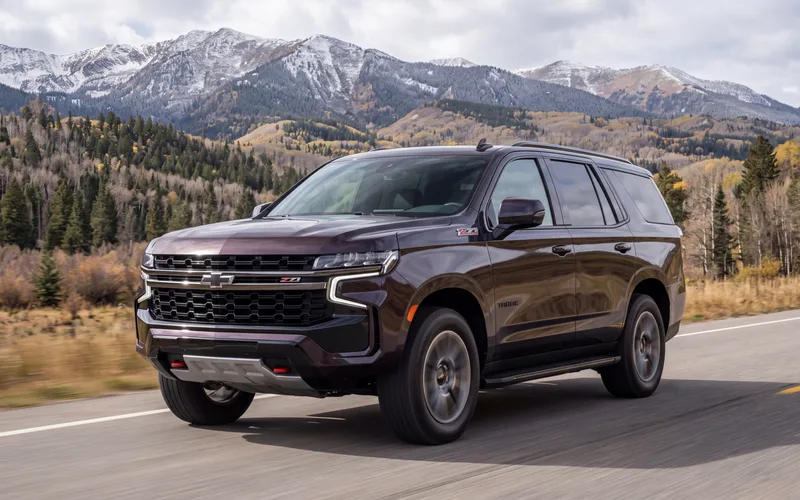 Chevrolet TahoeFull-Size SUVBetter at: Value & maneuverability
Identical vehicle 15 inches shorter for about $3,000 less — the right call unless you truly need the extra 16 cu ft behind the third row.
Compare 2.92B-
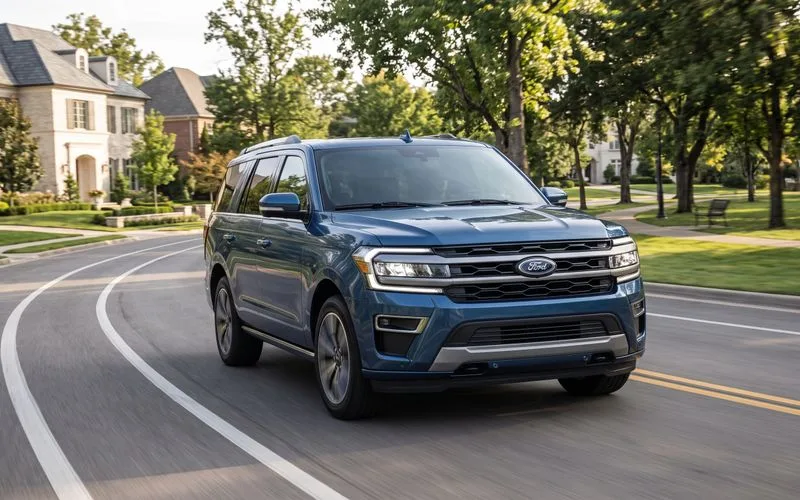 Ford ExpeditionFull-Size SUVBetter at: Towing & performance
Tows 9,600 lbs, is quicker and returns better mileage, and won the segment's most recent comparison test.
Compare 2.87B-
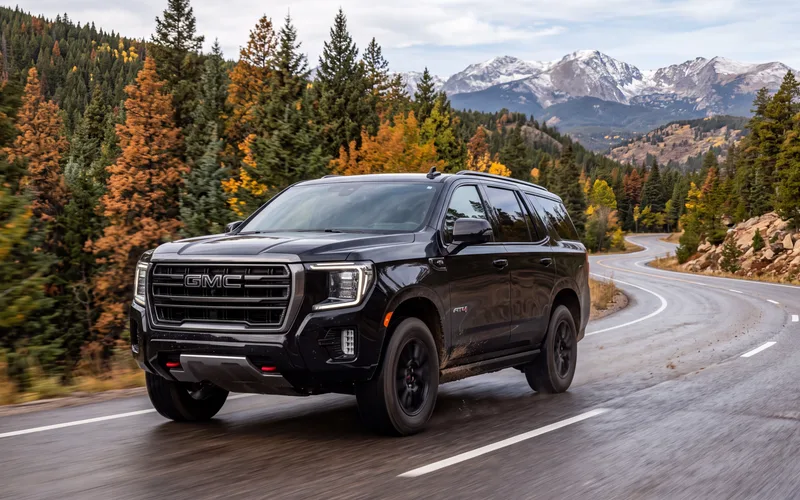 GMC YukonFull-Size SUVBetter at: Interior quality
The same T1XX SUV with a materially nicer cabin and Denali-grade comfort features the Suburban can't be optioned with.
CompareHow it's evolved
10 scored model years · 2017–2026
Subject scores by year
Hover or tap a score to see what moved it versus the year before. A corner mark flags a big swing.
| Year | Performance | Efficiency | Safety | Space | Cost | Reliability | Tech | Use-case | Driving | Value |
|---|---|---|---|---|---|---|---|---|---|---|
| 2026 | 67 | 31 | 65 | 88 | 30 | 62 | 83 | 74 | 58 | 75 |
| 2025 | 65 | 21 | 69 | 88 | 22 | 61 | 83 | 73 | 60 | 74 |
| 2024 | 65 | 22 | 56 | 88 | 26 | 60 | 75 | 72 | 58 | 67 |
| 2023 | 65 | 22 | 54 | 88 | 31 | 60 | 75 | 72 | 59 | 67 |
| 2022 | 65 | 22 | 49 | 88 | 33 | 57 | 74 | 70 | 59 | 68 |
| 2021 | 65 | 25 | 46 | 90 | 35 | 57 | 65 | 69 | 60 | 73 |
| 2020 | 63 | 26 | 40 | 80 | 37 | 52 | 47 | 57 | 55 | 59 |
| 2019 | 62 | 26 | 40 | 74 | 25 | 63 | 50 | 59 | 52 | 59 |
| 2018 | 61 | 37 | 39 | 74 | 40 | 52 | 46 | 59 | 53 | 60 |
| 2017 | 61 | 38 | 38 | 81 | 38 | 54 | 36 | 57 | 50 | 63 |
Compare two years
Best fit & conditions
Higher scores mean a better fit for that use case. Learn more about use-case fit →
Subject profile
Detailed scoring by subject
1Performance & PowertrainOne of the Suburban's strongest categories.2.26C
2020 is the final model year of the eleventh-generation (K2UC) Suburban that began in 2015, and a mechanical carry-over: the volume LS/LT run the 5.3L L83 EcoTec3 V8 at 355 hp @ 5,600 rpm. The 420 hp 6.2L L86 is restricted to the Premier trim, so most Suburbans sold are mid-pack for output in the full-size class.
The 5.3L peaks at 383 lb-ft @ 4,100 rpm, which has to move a ~5,650 lb body-on-frame SUV — sufficient rather than plentiful, and it has to be revved to find it. Only Premier buyers reach the 6.2L's 460 lb-ft.
Instrumented testing of the 5.3L K2-generation Suburban clusters around 7.1–7.2 s to 60 mph — mid-pack for a full-size SUV and slightly quicker than the heavier twelfth-generation car despite the older 6-speed, because the 2015–2020 body is lighter. The Premier's 6.2L is roughly a second faster.
The naturally aspirated direct-injection small-block responds instantly with no turbo lag and pulls cleanly from low rpm, which suits the Suburban's mass better than a small boosted engine would. Held below the top tier because Active Fuel Management's 8-to-4 cylinder transitions are audible and occasionally felt at light throttle, and the 5.3L sounds coarse and strained when asked to accelerate this much vehicle hard.
The volume 5.3L is still tied to GM's 6L80 six-speed automatic in 2020 — smooth and unobtrusive in ordinary driving, but with wide ratio spacing that leaves it a beat slow to kick down and working harder than the 10-speed rivals had already moved to. Only the Premier's 6.2L gets the 10-speed, so the configuration most buyers take is the dated one.
8,300 lbs properly equipped — 2WD, the 5.3L V8 and the Max Trailering Package, which brings air-leveling rear suspension, an integrated trailer brake controller and heavy-duty cooling. That clears the 8,000 lb SUV band ceiling, so the item maxes out; the gap between package and no package is large, at 6,300 lbs unequipped.
Four-wheel drive is optional on every 2020 trim — LS, LT and Premier alike — through a two-speed transfer case with a real 4-Lo range, and Autotrac automatic mode is available for set-and-forget all-weather traction. Short of the top tier because no locking differential or torque-vectoring rear axle is offered anywhere in the lineup.
The Z71 Off-Road Package gives the 2020 Suburban genuine light-duty credibility — off-road-tuned suspension, all-terrain tires on 18-inch wheels, skid plates, a high-capacity air filter, hill descent control, recovery hooks and the two-speed active transfer case. It stays mid-band because the 130-inch wheelbase and 7.9 inches of ground clearance wreck breakover angle and trail maneuverability, there is no locker or factory lift, and Z71 is a package rather than a purpose-built trim.
Two engines, both naturally aspirated gas V8s of the same architecture, and the larger one is locked to the top trim — there is no efficiency-oriented, diesel or electrified choice anywhere in the 2020 range. The 3.0L Duramax that broadened the lineup arrived with the 2021 redesign, so this final eleventh-generation year is the narrowest recent Suburban.
2Efficiency & RangeThe Suburban's lowest-graded category.0.00F
EPA rates the volume 5.3L 4WD Suburban at 16 MPG combined — a ~5,650 lb body-on-frame V8 whose only efficiency aid is Active Fuel Management cylinder deactivation, with no automatic stop/start and only six transmission ratios, sitting at the floor of the gas-SUV band. The 2WD version does measurably better at 18 MPG.
City economy is the Suburban's worst case and it sits at the very bottom of the band: 14 MPG for the volume 4WD configuration. With no automatic stop/start in 2020, the V8 idles through every light, and cylinder deactivation cannot help a vehicle this heavy get moving from rest.
Steady-state cruising is where cylinder deactivation earns its keep, and the 4WD 5.3L manages 21 MPG highway — a point above the SUV band floor and, notably, two better than the heavier twelfth-generation car on the same displacement. The 6.2L 2WD is actually the highway-economy champion of the 2020 range at 23 MPG thanks to its 10-speed.
The 31.0-gallon tank — three gallons larger than the 2021-on redesign's — is what rescues this powertrain: bottom-of-class economy still buys roughly 496 miles between fills in the volume 4WD configuration, and close to 560 in 2WD. Range is the one line in this category where the 2020 Suburban beats the segment median.
At EPA's standard assumptions the volume 4WD 5.3L burns roughly 940 gallons a year, landing beyond the top of the SUV cost band even on regular fuel. Choosing the Premier's 6.2L adds nearly $1,000 a year because it wants premium as well as more of it.
The volume 5.3L V8 runs on 87-octane regular and many 2020 units are additionally E85 flex-fuel capable, so the mainstream buyer never pays a grade premium and has a second fuel option. Requirements are mixed rather than uniformly cheap only because the Premier's 6.2L V8 calls for premium — a top-trim-only exposure, narrower than in later model years.
3SafetyOne of the Suburban's weakest categories.0.67F
NHTSA tested both 2020 Suburban drivelines and rated each 4 stars overall: 5 stars in every side-impact measure except the 4-star pole test, 4 stars in both frontal seats, and the 3-star rollover result a 224-inch body-on-frame SUV effectively cannot avoid. The agency's own equipment record for this car lists forward collision warning and lane departure warning as Optional rather than Standard, which is the defining ADAS fact of the model year.
The IIHS never ran a single crashworthiness test on the eleventh-generation Suburban. Its 2018, 2019 and 2020 rating pages carry no small overlap, moderate overlap, side, roof strength or head restraint result at all — only a LATCH evaluation and an untested front-crash-prevention entry — and neither does the equivalent 2020 Tahoe page, so there is no same-generation twin to read through either. That leaves six model years of a full-size family SUV with no independent structural evidence and no award of any kind, and what related evidence exists points the wrong way: the closest K2XX-architecture vehicle the Institute did test, the 2016-18 Silverado 1500 crew cab, rated only Marginal in driver-side small overlap even after GM reinforced the frame and door-hinge pillar welds for 2016. Untested with a known concern on the nearest related structure is the low band, not the middle one.
On the volume LT the Enhanced Driver Alert Package is standard, so Forward Collision Alert, Low Speed Forward Automatic Braking, Lane Keep Assist with Lane Departure Warning, Safety Alert Seat and IntelliBeam all come fitted — a real core suite. Everything above that core is gated, though: Lane Change Alert with Side Blind Zone Alert and Rear Cross Traffic Alert are standard only on Premier, Adaptive Cruise Control is a Premier-only extra-cost option that additionally requires the Head-Up Display, the base LS gets none of the driver-alert content unless the package is ordered, and pedestrian detection is not offered at any price on any trim. A suite whose collision intervention works only at low speed, cannot see pedestrians, and leaves blind-spot coverage and adaptive cruise to the top trim sits in the low band by 2026 standards even though the LT itself is not bare.
This is the weakest point in the category. The 2020 Suburban's autobrake is Low Speed Forward Automatic Braking — a city-speed system, not the full-speed-range automatic emergency braking the redesigned 2021 car would get — and IIHS records pedestrian front crash prevention as flatly 'Not available' on this vehicle, so there is no day or night pedestrian capability to rate. The Institute never evaluated the autobrake itself: its front-crash-prevention entry credits the optional system with meeting the forward collision warning requirement and states outright that autobrake was not tested. On a roughly 5,800 lb SUV, an intervention that only operates at low speed and cannot detect a person is basic by any current measure.
Lane Change Alert with Side Blind Zone Alert and Rear Cross Traffic Alert are warning-only — a mirror icon and a Safety Alert Seat buzz, with no steering or braking intervention and no trailer-aware coverage — and they are standard only on the Premier, optional on LT, and effectively out of reach on LS. On a vehicle 224 inches long with a rear overhang that puts a great deal of bodywork outside the mirrors, alert-only coverage that the volume trim has to pay extra for is a middling result at best.
Lane Keep Assist with Lane Departure Warning is standard on the volume LT and on Premier through the Enhanced Driver Alert Package, but optional on the LS, and it is a corrective nudge triggered at the lane marking rather than sustained centering. No lane centering and no highway-assist layer is available on the 2020 Suburban at any trim or price — a Premier buyer gets exactly the same nudge system the LT does.
GM's radar Adaptive Cruise Control is a competent long-haul system on the trims that can have it, but on the 2020 Suburban almost nobody could: it is extra-cost, unavailable below the top Premier trim, and carries a Head-Up Display prerequisite on top of that, so the volume LT cannot be ordered with adaptive cruise at any price. There is no highway-assist layer above it either, so even a fully specified Premier gets adaptive cruise working alone rather than an integrated system.
No hands-free driving is offered on the 2020 Suburban at any trim or price. Super Cruise existed inside GM for 2020, but only on Cadillac — the CT6 — and it did not reach a Chevrolet full-size SUV until the 2023 model year, three years after this car was built.
The IIHS never rated the eleventh-generation Suburban's headlights in any model year, so there is no direct measurement — but the surrounding evidence is consistently poor. The nearest K2XX-architecture vehicle the Institute did evaluate, the 2016-18 Silverado 1500 crew cab, rated Poor, and the Institute's later verdict on the successor generation's lamps was Poor as well for excessive glare and weak right-side low-beam reach, so the concern spans both sides of this car in time. Volume trims run halogen projector low beams (H11 low / 9005 high), and IntelliBeam automates the high beams on LT and Premier without doing anything to the beam pattern a rating actually measures.
The high hip point, upright glasshouse and deep side windows give a genuinely commanding forward and lateral view, and the greenhouse on this generation is airier than the 2021 redesign that followed. Against that, 224.4 inches of body — about twenty more than a Tahoe, nearly all of it behind the rear axle — puts a large volume of sheetmetal where the driver has no sightline, and the D-pillars are thick. Camera compensation is thinner than on later years: rear park assist and a rear vision camera are standard from LT up and Premier adds front sensors, but HD Surround Vision and the Rear Camera Mirror are extra-cost, so a volume LT reverses on a single camera and a bumper beeper.
The space is excellent and the hardware is not. IIHS rates this interior's child-seat anchors Marginal: only two rear positions carry complete LATCH hardware, with three further positions offering a tether anchor alone, and although the lower anchors themselves are shallow and easy to work around, every tether anchor sits in a hard-to-find location on the seatback with other hardware nearby that can be confused for it. What pulls the score back to workable is sheer room — wide rear door openings, a tall roofline, three rows and enough length behind the axle that a rear-facing seat fits without pushing the front seats forward — so multiple seats go in easily once you have found the right anchors.
4Space & ComfortThe Suburban's best-graded category.3.43B+
2020 Suburban LT seats 8 in its standard configuration with second-row bench; captain's chairs drop it to 7.
Front headroom figure for the 2020 Suburban (unchanged carry-over year within the 2015-2020 K2XX generation).
Front legroom figure for the 2020 Suburban, class-leading for the full-size SUV segment.
Second-row headroom for the 2020 Suburban.
Second-row legroom for the 2020 Suburban; the pre-2021-redesign K2XX body has noticeably less 2nd/3rd-row room than the redesigned 2021 model.
Third row has real legroom (34.5 in) and headroom (38.5 in) so two adults physically fit, but reviewers consistently note the cushions are thin and flat, making it usable for kids or short adult trips rather than long-haul adult seating.
Cargo volume behind the second row with the third row folded flat, for the 2020 (pre-redesign, standard-length) Suburban.
Maximum cargo volume with 2nd and 3rd rows folded flat; a segment-leading figure even before the larger 2021 redesign.
Competitive but not standout: underfloor and hidden storage compartments, flat-folding seats and a large console are present, but the 2020 model predates the 'vault'-style under-floor storage and multi-level console GM introduced on the redesigned 2021 Suburban/Tahoe.
Front and second-row seats are widely praised for long-haul comfort, but the third row's thin, flat cushions pull the overall rating down from segment-leading.
Composed on smooth roads but the solid rear-axle suspension (carried through the 2015-2020 K2XX generation) causes the rear of the cabin to shimmy and shake over ripples and minor road imperfections.
Acoustic laminated glass is standard and reviewers describe the cabin as notably quiet at speed for the segment.
Tri-zone automatic climate control is standard across the line; heated front seats arrive on LT, with heated/ventilated front seats, heated 2nd row and a heated wheel reserved for upper trims (Premier/High Country) — solid but not universal across the lineup.
5Cost of OwnershipOne of the Suburban's weakest categories.0.41F
Entry LS trim, 2WD, is the cheapest configuration for the 2020 model year; 4WD adds roughly $3,000.
LT is the best-selling mid-level trim for the Suburban lineup, and most buyers add the $3,000 4WD option.
CarEdge's combined maintenance-and-repair estimate runs below the SUV-segment average; Edmunds' separate maintenance-only true-cost-to-own figure is higher, reflecting a different (dealer-rate) methodology.
Estimates vary by source and mileage assumption; CarEdge's forecast implies roughly half of MSRP retained after 5 years, consistent with full-size SUV norms.
Standard GM basic warranty, unchanged for the 2020 model year — at the low end of the segment band.
Standard GM powertrain warranty — at the low end of the segment band versus rivals offering 10-year coverage.
Chevrolet's 2020-model-year coverage is minimal by segment standards: one complimentary scheduled maintenance visit (oil change, tire rotation, inspection) in year one, roadside assistance for 5 years/60,000 miles tied to the powertrain warranty, and a short OnStar connected-services trial — short included maintenance plus basic roadside, no multi-year plan or standout perks.
$61,090 volume-trim price minus its estimated resale value after 5 years (50% retained, or about $30,545) leaves about $30,545 in depreciation. Add the projected $3,307 in 5-year maintenance and repairs, and owning this vehicle for 5 years costs about $33,852 in total.
6Reliability & QualityGrades below the middle of the scale.1.48D
The 2015-2020-generation Suburban carried below-average predicted reliability through most of this run, driven by AFM lifter failures on the 5.3L V8 and early 10-speed automatic complaints; 2020 sits at the end of this generation with the issues well documented rather than resolved.
Chevrolet sits in the bottom third of Consumer Reports' brand reliability rankings for this era, though it improved year over year; a large, varied lineup makes it hard for strong models (Bolt) to offset weak ones (Malibu, Silverado 1500).
The 2020 Suburban carries a moderate recall count including one fire-risk-adjacent fuel pump recall and a tire-defect recall tied to an aftermarket-sold tire, both remedied under warranty; not a systemic powertrain or safety-system pattern, but not a clean sheet either.
The 5.3L EcoTec3 V8 is a mature small-block architecture with a long high-mileage history, but this generation's Active Fuel Management lifters are a well-known failure point, and the 10-speed automatic paired with it has documented shudder and premature-failure complaints in the 100k-150k mile range.
Reviewers describe the cabin as upscale with good material quality for the price on mid-to-upper trims (Premier, RST), though the base LS/LT trims lean on more hard plastic and a few tech touches (backup camera resolution, audio system) drew criticism.
No widespread pattern of rattles or panel-gap complaints surfaced for the 2020 model year specifically; assembly quality is treated as generally solid but unremarkable for a full-size GM SUV, consistent with mid-pack initial-quality outcomes for the brand in this period.
Chevrolet runs one of the largest dealer networks in the US, giving Suburban owners dense nationwide service access even though service-satisfaction scores for the brand are only average rather than exceptional.
Parts are widely available and inexpensive thanks to platform-sharing with the Tahoe, Yukon, Escalade and Silverado, but actual annual repair costs and the frequency/severity of repairs run above average for the class, netting out to a middling score.
7Technology & InfotainmentGrades below the middle of the scale.1.16D
The 2020 Suburban is the last model year of the 11th generation before the all-new 2021 redesign, and carries the same 8-inch Chevrolet Infotainment System touchscreen across every trim with no larger-screen option, well below the 10-15+ inch screens rivals were moving to.
The Chevrolet Infotainment System (MyLink-based) on this outgoing-generation Suburban is logically laid out with physical volume/tuning knobs and shortcut buttons, but reviewers of the era routinely called the graphics and menu structure dated next to newer full-size SUV rivals, and the small 8-inch screen feels cramped for a vehicle this size.
Apple CarPlay and Android Auto are standard on every 2020 Suburban trim, but only via wired USB connection — GM's wireless CarPlay/Android Auto rollout began with the 2021 model year, so no configuration of the 2020 Suburban offers it.
Built-in voice recognition handles basic phone/audio/climate commands adequately but isn't natural-language, and factory navigation is an available option (standard on Premier, optional lower trims) that most owners bypass in favor of phone-projected maps via CarPlay/Android Auto.
Base 6-speaker audio is adequate, and the available Bose premium system (10 speakers including a Richbass subwoofer, with AudioPilot, CenterPoint and SurroundStage processing) is a genuine step up and well-regarded for the segment.
The gauge cluster is analog with a small trip-computer readout on base/mid trims; only the Premier trim (and only with the 6.2L Performance Package) gets an upgraded 8-inch color Driver Information Center between the gauges, and even that is not a full-width digital cluster.
The 2020 Suburban's infotainment stack (pre-2021 redesign, pre-Ultifi) had no meaningful whole-vehicle OTA update program; connectivity was limited to OnStar telematics services, with map/software updates typically requiring a dealer visit or USB/SD update rather than seamless OTA delivery.
The myChevrolet app (via OnStar) provides remote start/stop, remote lock/unlock, vehicle locate, and diagnostics, but full remote functionality requires an active, typically-paid OnStar plan after the initial trial period rather than being free indefinitely.
USB ports are provided for front and second-row occupants (no USB-C at this generation, all legacy USB-A) with a household-style 110V AC outlet available; a wireless charging pad is available on upper trims, but third-row occupants have no dedicated charging.
Keyless open and push-button start are standard from LT up (LS retains a traditional key), with remote start included, and a power liftgate is available — solid but not class-leading, and no phone-as-key feature exists on this generation.
A rearview camera is standard, and HD Surround Vision (360-degree camera) plus rear park assist sensors are available, but the surround system is limited to upper trims and lacks the parking-automation features newer rivals offer.
A head-up display exists only bundled inside the Premier trim's optional 6.2L Performance Package, alongside the stronger V8, adaptive cruise, and upgraded driver display — it is not a standalone option even on the top trim, making it far more restricted than a typical 'top trim only' HUD offering.
8Use-Case FitMid-pack among this car's ten categories.1.87C-
Wide door openings, a tall roofline and three full rows make it physically easy to wrangle kids and gear, and there's enough length behind the front seats that a rear-facing infant seat fits without pushing the front seats forward. The hardware undercuts that: IIHS rates the LATCH anchors Marginal on this generation — only 2 rear positions carry complete lower-and-tether hardware, 3 more get a tether anchor only, and the tether anchors themselves sit in a 'hard-to-find location' with other hardware nearby that can be confused for the anchor. Stroller-friendly cargo is solid (76.7 cu ft behind the 2nd row) but this is a plainer package than the 2022+ redesign, which the calibration table shows scoring notably higher on the same item.
The volume LT gets a real core suite standard (the Enhanced Driver Alert Package: forward collision alert, low-speed automatic braking, lane keep assist, safety alert seat), but everything a family actually leans on daily sits above that: blind-spot and rear cross-traffic alert are Premier-standard/LT-optional, adaptive cruise is Premier-only and additionally requires the Head-Up Display, and pedestrian detection isn't offered on any trim at any price. NHTSA's own equipment record lists forward collision warning and lane departure warning as merely Optional (reflecting the base LS), and the car nets only a 4-star overall NHTSA rating with a 3-star rollover result and zero IIHS testing or awards of any kind across this entire generation. A family shopping the volume trim gets a decent floor and has to pay extra for the features that would move the needle.
The front two rows are genuinely long-haul comfortable — 45.3 in of front legroom, a quiet cabin thanks to standard acoustic laminated glass, and tri-zone automatic climate with rear vents. The third row is where it falls short of the top band: real legroom (34.5 in) and headroom (38.5 in) mean two adults physically fit, but the cushions are widely described as thin and flat, workable for kids or a short trip rather than hours on the interstate. Climate and comfort content is also trim-gated — heated seats start at LT, but heated/ventilated seats, heated 2nd row and a heated wheel are reserved for Premier — so a family in the volume trim doesn't get the full package.
The naturally aspirated 5.3L is smooth and lag-free at low speed and the high seating position gives good sightlines for a vehicle this size, but the volume trim is saddled with the outgoing 6-speed automatic — a beat slower to kick down than the 10-speed rivals had already adopted — and the solid rear axle means the back of the cabin shimmies over broken pavement that an independent-rear rival soaks up. Nothing on this model year reduces daily fatigue either: no adaptive cruise below Premier (and even then it needs the HUD option), no hands-free driving at any price, and 224.4 inches of body to place in traffic and driveways every day.
This is a genuinely expensive vehicle to commute in. The volume 5.3L 4WD returns just 14 MPG city — the worst-case commuting number since there's no automatic stop/start in 2020 to save fuel at every light — and 16 MPG combined, translating to roughly $3,900 a year in fuel at EPA's standard assumptions. Consumables are at least cheap thanks to regular-octane fuel and GM's broad parts network, but the core running cost is at the bottom of the SUV band on every efficiency metric measured.
At 224.4 in long and roughly 80.5 in wide with a curb-to-curb turning circle near 43 ft, the Suburban is genuinely oversized for city driving and tight garages, and this model year has thinner camera/sensor coverage than later cars: a rearview camera is standard, but front/rear park sensors and HD Surround Vision are extra-cost, and the volume LT reverses on a single camera and a bumper beeper rather than a full sensor suite. There's no automated parking assist of any kind at any trim.
8,300 lbs maximum tow rating (2WD, 5.3L, with the Max Trailering Package) and 1,690 lbs of payload cover the great majority of travel trailers, boats and utility trailers a buyer will actually own, and standard trailering hardware — 7-way sealed connector, 2-inch receiver, 7-wire harness — means even a base LS arrives ready to hook up without dealer add-ons. 121.7 cu ft of max cargo volume is closer to a van's load bay than a typical SUV's. It falls short of the top band because the unequipped tow rating drops sharply to 6,000-6,300 lbs without the package, there's no integrated trailer brake controller on lower trims, and an enclosed carpeted cargo area can't take the abuse a pickup bed shrugs off.
The Suburban has decades of fleet, government and livery use behind this exact body-on-frame architecture and small-block V8 family, backed by the largest dealer network in the segment for parts and service — genuine durability pedigree. But this specific generation's drivetrain has real, well-documented weak points rather than a clean bill of health: Active Fuel Management lifter failures on the 5.3L and shudder/premature-failure complaints on the 6-speed automatic paired with the volume engine, with RepairPal ranking the Suburban 11th of 14 full-size SUVs on repair frequency and severity and an above-average annual repair cost. 'Should hold up with care' is a more accurate read than 'fleet-proven' for this exact powertrain pairing.
Standard trailering hardware and a large, flat-folding cargo area give a fleet buyer a usable base, and GM's full-size platform has a mature upfit and livery-conversion ecosystem behind it (consoles, partitions, equipment mounts). It's a lighter package than later Suburbans, though: this generation predates the two-outlet 120V setup and dedicated Cargo Management System GM added with the 2021+ redesign, so onboard power and factory tie-down/organization features are more basic, and there's no washable work-grade interior offered on any trim.
A 31-gallon tank is this model year's genuine long-haul strength — roughly 496 miles between fills even at bottom-of-class economy, beating the smaller tank on the redesigned 2021+ car — and the cabin is well isolated at speed thanks to standard acoustic laminated glass. What holds it back from the top band is the same driver-assist gap seen elsewhere: no adaptive cruise below Premier (and even then bundled with the HUD requirement), no hands-free driving at any trim, and front seats that are comfortable for two rows but not universally praised for all-day endurance.
The Z71 Off-Road Package makes a credible case for light-duty adventure use — a two-speed active transfer case with real 4-Lo, hill descent control, all-terrain tires, skid plates and recovery hooks — and 8,300 lbs of towing plus 121.7 cu ft of max cargo covers most trailers, kayaks and gear a family would bring along. It stops at mid-band because the 130-inch wheelbase and 7.9 in of ground clearance limit breakover angle and true off-road maneuverability, there's no locking differential offered on any 2020 trim, and Z71 is an options package rather than a dedicated off-road trim, so most Suburbans on the road in 2020 don't have any of this equipment.
121.7 cu ft with both rear rows folded and 76.7 cu ft behind the 2nd row are segment-leading figures even for this pre-redesign generation, so bulky gear and full luggage loads both fit without a roof box. The standard trailering receiver adds a hitch-mounted cargo carrier or bike rack as an easy option. It sits below the newer Suburban's near-perfect score here because this generation lacks power-folding rear seats (manual fold only on the volume trim) and the more elaborate underfloor storage GM introduced with the 2021+ redesign — flexibility is more manual effort than one-touch convenience.
9Driving ExperienceGrades below the middle of the scale.1.67D
Final year of the eleventh-generation (2015-2020, GMT K2XX) body-on-frame Suburban; reviewers find it planted and never top-heavy for a ~5,600 lb SUV, with the available Magnetic Ride Control (standard on Premier) improving body control, but the underlying character is ponderous rather than agile — secure but unremarkable.
Lowered to the boundary of the 'vague/overly light' band: reviewers describe the steering as not merely numb but overly light AND sluggish in its responses, which is more than the 'precise enough but numb' 50-79 description — it still places the vehicle accurately enough for its size, which keeps it off the lower band.
Reviewers consistently praise the brakes as strong and confidence-inspiring for the vehicle's mass, bringing it to a stop without upsetting stability, though pedal feel is unremarkable rather than sporty. No instrumented 70-0 figure for the 2020 5.3L was located.
Corrected trim mapping: for 2020 the volume LT carries the 5.3L EcoTec3 V8 (355 hp/383 lb-ft) with the dated 6-speed automatic — the 10-speed came only with the optional 6.2L V8 (420 hp/460 lb-ft) on the RST Performance Edition and Premier, not as an LT option. The V8 is smooth and unstressed (0-60 roughly 7.2-7.7 sec) but the 6-speed and Active Fuel Management cylinder deactivation are a step behind rivals already on 10-speeds, so the volume configuration scores below the prior estimate that assumed the 10-speed.
Raised: the prior 48 let a subset defect define the item. This item measures engine noise character under load and vibration through the controls, and reviewers describe the cabin as exceptionally quiet with acoustic laminated glass and an unobtrusive V8. The 'Chevy Shake' aluminum-driveshaft vibration does name the 2015-2020 Suburban and is a real discount at highway speed, but GM's own filing counts 109 complaints across all affected models — a subset defect that belongs primarily to reliability, not a characterization of how the drivetrain normally sounds and feels. AFM cylinder-deactivation drone is the more universal minor complaint.
Corrected from 42.8 ft to the figure multiple spec databases carry for the 2020 Suburban. At 43.0 ft it sits outside the worst end of the SUV normalization band (34-42 ft) and clamps to 0 — a genuine consequence of grading a 224-inch, 130-inch-wheelbase full-size SUV against a band calibrated across all SUVs.
Commanding, above-traffic seating position with wide seat/wheel adjustability (12-way power driver's seat) and controls within easy reach; the tall hood does compromise close-in forward visibility and the column-mounted gear selector draws complaints.
Easy and unintimidating to drive for its size, with a V8 that sounds good under throttle, but it is a tool for hauling people and cargo — ponderous handling and light, numb steering keep it firmly in appliance territory.
10Value & Market PositionOne of the Suburban's strongest categories.1.94C-
Base LS (~$51,700) is decently equipped for comfort and connectivity — 8-inch Chevrolet Infotainment touchscreen, Apple CarPlay/Android Auto, Wi-Fi hotspot, six-speaker audio, tri-zone automatic climate, remote start, Teen Driver, rear camera and rear park assist — but the active-safety essentials are not included: forward collision alert, low-speed automatic emergency braking, lane keep assist and side blind zone alert were all optional or reserved for higher trims, while the same-price 2020 Expedition made Ford Co-Pilot360 (AEB, blind-spot, rear cross-traffic, auto high beams) standard across its lineup. Paying extra for collision avoidance on a $50k+ family SUV in 2020 pulls this below segment parity.
The Suburban's class-leading third-row space, cargo volume and up to ~8,300 lb towing deliver more usable capability per dollar than anything else at the price, and the extended-wheelbase rivals (Expedition MAX, Yukon XL) both open higher — but the aging K2XX cabin electronics, optional-only driver assists and a Premier that climbs to ~$65k make it a practicality bargain rather than an outright value leader.
Three core trims (LS, LT, Premier) each in 2WD or 4WD, but the configuration menu is wider than the trim count suggests: an RST appearance treatment, a Z71 Off-Road package (off-road suspension, two-speed transfer case, hill descent, skid plates, 18-in. all-terrains), a Premier-only RST 6.2L Performance Package (+$2,720) that swaps in the 420-hp 6.2L V8, 10-speed automatic and performance Magnetic Ride Control, and a 4WD-only Suburban 3500HD fleet variant in 1LS/1LT. Still short of Expedition's five-trim retail ladder, with no standalone flagship tier, and 2020 actually trimmed choice by deleting the LT Signature and All-Season packages.
Suburban volume fell to 33,644 units in calendar 2020 from 51,928 in 2019 — roughly a 35% drop as COVID-19 and the twelfth-generation changeover drained inventory — and on its own the nameplate trails both the Tahoe and the Expedition (Q1 2020: Suburban 9,495, Tahoe 20,403, Expedition 19,790). The franchise position is nonetheless commanding: Tahoe/Suburban together took 41% of the segment in Q1 and 44% in Q2 2020, with GM's three nameplates near 60%, and the Suburban remains the long-wheelbase leader over Expedition MAX and Yukon XL. A steady, entrenched seller in a trough year rather than a declining one.
Chevrolet is a mainstream, high-volume brand rather than an aspirational marque, but the Suburban nameplate carries outsized heritage as the longest continuously-produced automobile nameplate in the world and a loyal following among large families, tow-rig buyers, fleets and livery operators — genuine goodwill without a premium halo.
2020 brought unusually deep buyer-side discounts as GM cleared outgoing-generation stock ahead of the 2021 redesign and answered the COVID-19 demand shock — 10% off MSRP in July (about $7,553 cash back on a Premier) under the Open Road event, over $5,000 cash in May, plus Costco and first-responder programs on top.
2020 is the final model year of the 2015–2020 eleventh generation on the outgoing K2XX platform, and a pure carry-over one — no mechanical or interior changes, only deleted paint/packages and new wheel finishes — with the all-new independent-rear-suspension twelfth generation already announced for 2021. About as end-of-cycle as a model year gets, and buyers knew it.
Reviewers rated the 2020 Suburban respectable but rarely the class pick — U.S. News 7.7/10, KBB 4.3/5 expert, The Car Connection 6.0/10, and Edmunds summing it up as capable and quiet but "getting on in age." It was a finalist for U.S. News' 2020 Best Large SUV for Families without winning it, and period comparisons favored the Expedition on ride and cabin technology while crediting the Suburban on space and towing; no major 2020-specific award wins.