

The verdict
A capable mid-size luxury sedan, strong on safety and held back by efficiency.
The 2023 Genesis G80 is the value play in the mid-size luxury sedan class: $50,595 delivered buys a 300-hp rear-drive sedan with a 14.5-inch screen, a genuinely class-leading interior, a 5-star NHTSA rating and a driver-assist suite that German rivals still charged extra for. Back it with a 5-year/60,000-mile bumper-to-bumper warranty, 10 years of powertrain coverage and three years of free maintenance with valet pickup, and the front of the transaction is close to unbeatable. The catches are real, though — 26 MPG on premium fuel costs about $3,000 a year, five-year resale lands near 45% (below the luxury-midsize average), and the four-cylinder in this specific model year sits inside a documented piston-ring oil-consumption window. Buy it if you want maximum car for the money and plan to keep it; think harder if you trade every three years.
Jump to scoresStrengths
- Warranty and ownership perks nothing else in the class matches
- Five-star safety with everything standard on the base car
- An interior that punches thousands of dollars above its sticker
What holds it back
- Premium fuel and middling MPG make it expensive to run
- Depreciation gives back much of the bargain
- The volume trim is missing hardware the 2024 car made standard
Top alternatives
Cars shoppers cross-shop with the Genesis G80 3.27B+
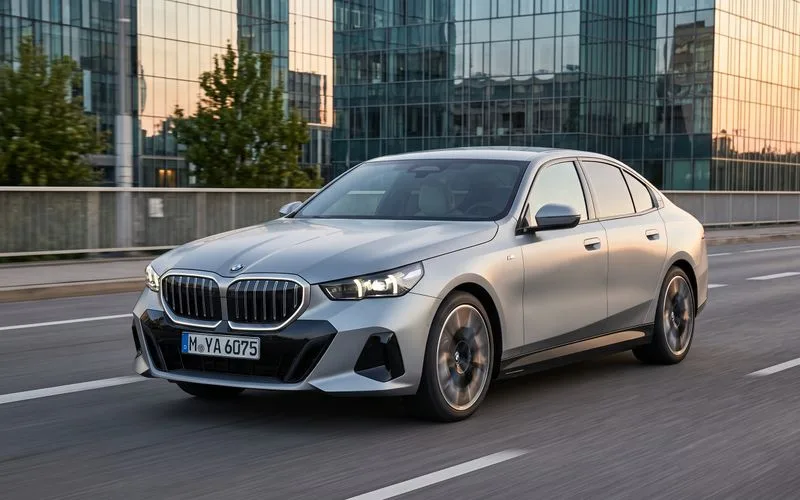 BMW 5 SeriesMid-Size Luxury SedanBetter at: Driving dynamics
The closest direct rival at almost the same money, and it beats the G80 on driving engagement, trunk space, hands-free highway assist and resale value.
Compare 3.11B
3.11B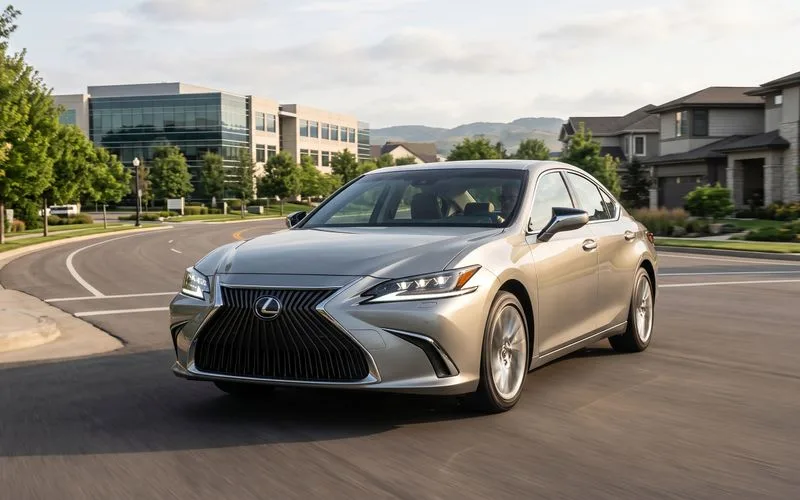 Lexus ESMid-Size Luxury SedanBetter at: Running costs
A hybrid powertrain at roughly 43 MPG on regular fuel and the best resale in the segment make it far cheaper to own, if you can live with front-wheel drive and a less special cabin.
Compare 2.87B-
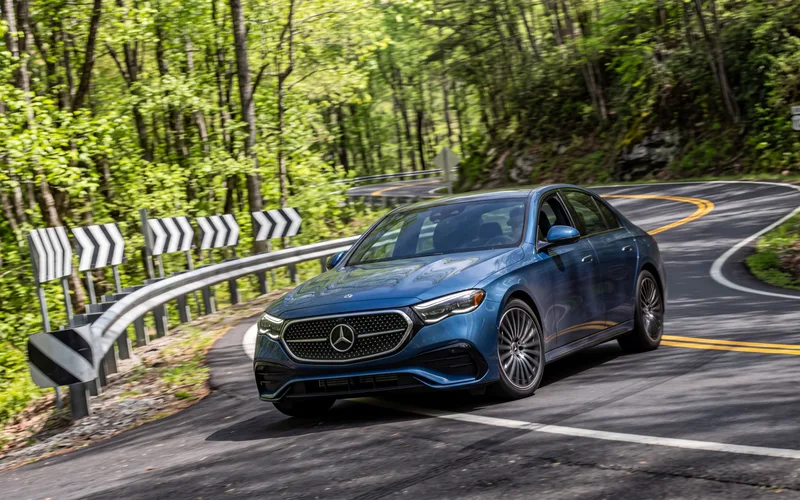 Mercedes-Benz E-ClassMid-Size Luxury SedanBetter at: Brand prestige
For buyers who want the luxury badge and the brand cachet the Genesis emblem still lacks, with comparable comfort — at a higher price and a much higher repair bill.
CompareHow it's evolved
10 scored model years · 2017–2026
Subject scores by year
Hover or tap a score to see what moved it versus the year before. A corner mark flags a big swing.
| Year | Performance | Efficiency | Safety | Space | Cost | Reliability | Tech | Use-case | Driving | Value |
|---|---|---|---|---|---|---|---|---|---|---|
| 2026 | 65 | 37 | 83 | 75 | 33 | 78 | 86 | 59 | 71 | 79 |
| 2025 | 64 | 25 | 74 | 76 | 33 | 71 | 81 | 55 | 70 | 75 |
| 2024 | 65 | 29 | 82 | 74 | 48 | 69 | 70 | 56 | 68 | 73 |
| 2023 | 65 | 33 | 80 | 72 | 49 | 66 | 69 | 55 | 67 | 74 |
| 2022 | 60 | 30 | 82 | 74 | 46 | 71 | 63 | 48 | 67 | 73 |
| 2021 | 58 | 31 | 83 | 72 | 58 | 68 | 65 | 49 | 61 | 76 |
| 2020 | 54 | 25 | 77 | 74 | 62 | 74 | 46 | 45 | 65 | 67 |
| 2019 | 55 | 25 | 76 | 74 | 57 | 71 | 46 | 45 | 65 | 69 |
| 2018 | 55 | 30 | 74 | 70 | 64 | 66 | 50 | 49 | 65 | 70 |
| 2017 | 54 | 28 | 76 | 69 | 66 | 60 | 46 | 48 | 64 | 72 |
Compare two years
Best fit & conditions
Higher scores mean a better fit for that use case. Learn more about use-case fit →
Subject profile
Detailed scoring by subject
1Performance & PowertrainMid-pack among this car's ten categories.2.37C+
2023 is a carry-over year within the RG3 generation (the facelift was not revealed until December 2023, for 2024), so the Smartstream 2.5L turbo four continues as the volume engine at 300 hp. Mid-band output for a mid-size luxury sedan — clear of the 255 hp fours in the BMW 530i and Mercedes E 350, short of the Audi A6 55 TFSI's 362 hp V6.
The 2.5T's 311 lb-ft is on tap from 1,650 rpm, which is what lets a sub-4,000 lb rear-drive sedan feel effortless at part throttle on a modest displacement. Above the 295 lb-ft four-cylinders in the 530i and E 350, below the A6 55 TFSI's 406 lb-ft.
Verified runs of the RG3 2.5T rear-driver bracket 5.3–5.7 s, so ~5.6 s is the representative figure for the volume configuration and the AWD car is a tenth or two behind it. That is level with the Mercedes E 350 and BMW 530i and about a second off the Audi A6 55 TFSI quattro.
Isolation is the G80's signature and reviewers put its NVH suppression at or near the top of the mid-size luxury class, helped by an unobtrusive stop-start system. But the volume car is a four-cylinder in a segment where BMW and Mercedes still sold inline-sixes: it shows mild off-idle lag and sounds strained when worked hard, which keeps it just below the top tier.
Every 2023 G80 uses a conventional 8-speed torque-converter automatic with shift-by-wire and paddles; it is smooth, decisive and free of hunting, closer in character to Mercedes' 9G-TRONIC than to a dual-clutch. It gives up some outright crispness to the ZF 8HP in the BMW 5 Series under hard use, and manual mode is functional rather than engaging.
For 2023 HTRAC all-wheel drive is still a $3,150 option on the 2.5T rather than standard equipment (it is standard on the 3.5T Sport) — the last model year before Genesis made AWD standard across the US G80 range in 2024. The system itself is sophisticated, rear-biased and drive-mode-variable with torque vectoring, so it scores well; what holds it below the 2024 car is that the volume configuration leaves the showroom rear-drive unless the buyer pays for it.
2023 is the year the nameplate's span widened to three genuinely distinct powertrains — 2.5L turbo I4, 3.5L twin-turbo V6 and the newly launched battery-electric Electrified G80 — a gas-to-BEV range under one badge that BMW and Mercedes split into separate i5 and EQE nameplates and that the gas-only US Audi A6 did not attempt. The absence of any hybrid or plug-in middle step is what keeps it out of the top band.
2Efficiency & RangeThe G80's lowest-graded category.0.18F
26 MPG combined from a rear-drive turbo four with an 8-speed automatic and no electrification beyond auto stop-start — a point better than the AWD car that replaced it as the only configuration in 2024. Respectable among gas mid-size luxury sedans but well behind the hybridized Lexus ES and the electrified entries that set the segment's efficiency pace.
22 MPG city is where the gas G80 gives up the most ground: there is no electric creep and no regenerative braking, so stop-and-go running leans entirely on auto stop-start. Dropping the AWD hardware buys nothing in town — RWD and AWD 2.5Ts rate identically at 22 city — and hybrid rivals in the class comfortably better this figure.
32 MPG highway is the gas G80's best showing and the clearest reason to take the rear-driver over the AWD car, which loses two MPG there. Still only mid-band for a segment whose sedans normalize to 45 MPG at the top, and the premium-fuel basis blunts the benefit at the pump.
The RG3 G80 carries a 17.2-gallon (65 L) tank, which at the 26 MPG combined rating gives roughly 447 miles between fills and about 550 miles at a steady highway pace. Useful rather than exceptional touring range — the modest tank stops the car converting decent highway economy into genuinely long legs.
Middling economy on a premium-grade basis compounds into a high running cost: EPA puts the volume 2.5T rear-driver at $3,000 a year at 15,000 miles, near the top of the sedan cost band even before the V6's $4,100. This is the weakest line in the category and the main reason the G80 grades poorly on efficiency despite unremarkable-rather-than-bad MPG.
Premium is recommended, not required: Genesis specifies 91 octane (R+M)/2 for rated output but the owner documentation explicitly permits 87 octane regular at reduced performance, so owners have a cost escape hatch that premium-required German rivals do not offer. It sits mid-band rather than higher because EPA rates the car on premium and that is the basis of the $3,000 annual figure.
3SafetyThe G80's best-graded category.3.46B+
NHTSA rated the 2023 G80 a full 5 stars overall, with 5 stars in the combined frontal and side evaluations and 5 stars for rollover on a 10.1% rollover probability with a 'No Tip' dynamic result. The only sub-5 component is the 4-star driver-side frontal barrier result, which does not pull the composite down. AWD and RWD listings return identical figures.
Every IIHS crashworthiness test the G80 has actually taken comes back Good — driver- and passenger-side small overlap front, original moderate overlap front, roof strength (5.26 strength-to-weight) and head restraints & seats — and the car carries a Top Safety Pick+ badge. It sits at the very bottom of the top band, four points below the 2024 car, for one concrete reason: that badge is the **2022** award, granted under superseded criteria. The 2023 G80 does not appear on IIHS's 2023 award list at all, because it has no result in the updated side test (which 2023 criteria require) and none in the updated moderate overlap front test that grades rear-passenger protection. The award is real; the two hardest modern tests are simply unanswered for this model year.
Every feature this criterion names — AEB, adaptive cruise, lane keeping, blind-spot monitoring and rear cross-traffic — is standard on the base 2.5T Standard before a single option box, alongside Lane Following Assist, Intelligent Speed Limit Assist, Safe Exit Assist, Driver Attention Warning, front and rear Parking Distance Warning, High Beam Assist and ten airbags. That is a comprehensive suite in a segment where German rivals still charge for blind-spot monitoring. It lands just below the 2024 car's 95 because 2023 is the year Genesis shipped plain Highway Driving Assist rather than HDA 2, and because the camera hardware (Surround View Monitor, Blind-Spot View Monitor), Remote Smart Parking Assist, Parking Collision-Avoidance Assist–Reverse, Advanced Rear Occupant Alert and Forward Attention Warning all wait for the Sport Prestige package.
Under the IIHS protocols in force for this model year the standard system posts the strongest set of results in the G80's run: Superior vehicle-to-vehicle (collisions avoided outright at both 12 and 25 mph), Superior daytime vehicle-to-pedestrian (crossing child, crossing adult and parallel adult all avoided or heavily mitigated), and Advanced at night with high-beam-assist credit. It stops short of the top of the band because the same camera-and-radar hardware, when IIHS later ran it against the tougher updated pedestrian protocol on the mechanically identical 2024 car, graded only Acceptable — so the Superior results reflect an easier test, not headroom above it.
Coverage is near the top of the class because it intervenes rather than merely warns, and all of it is on the base car: Blind-Spot Collision-Avoidance Assist applies corrective braking when a lane change threatens, Rear Cross-Traffic Collision-Avoidance Assist brakes autonomously in reverse, and Safe Exit Assist stops occupants opening a door into passing traffic. It stops short of the very top only because the Blind-Spot View Monitor — the live camera feed into the cluster that is the distinctive part of the Genesis system — is Sport Prestige equipment, not volume-trim equipment.
Lane Keeping Assist and Lane Following Assist are standard and the centering is confident enough on straight interstate work, but 2023 is the down-spec year: Genesis pulled Highway Driving Assist 2 from G80 production in March 2022 over the semiconductor shortage, so this model year has no signal-initiated automatic lane change and no machine-learning calibration — capability the 2021 car had and the 2024 car got back as standard. Reviewers of this generation also report the centering ping-ponging between the markers on tighter highway curves. Functional keeping and centering with occasional wander is squarely the middle band.
Smart Cruise Control with Stop & Go is full-speed-range and standard on every trim, paired with standard Intelligent Speed Limit Assist and Highway Driving Assist, so the volume 2.5T gets navigation-aware speed adjustment and lane centering with nothing optioned. It sits at the top of the middle band rather than in the top band purely because of what 2023 lost: with HDA 2 deleted for chip supply, the system reverts to the first-generation behaviour — no automatic lane change, no machine-learning adaptation of following distance, and slower response to vehicles cutting in — and reviewers of this generation note the ACC is slow to resume speed after a slowdown.
No 2023 G80 trim or package offers hands-free highway driving at any price. Highway Driving Assist is explicitly a hands-on system that monitors steering-wheel torque, nags and disengages. That is a real competitive gap in a segment where Cadillac was already selling Super Cruise and Tesla supervised FSD; the small non-zero score credits a capable hands-on assist, not any hands-free capability.
IIHS rates the LED projector headlights Acceptable on every trim, so there is no upgrade that buys a Good rating — uniformly Acceptable across the range is the definition of the middle band. The measured detail is mixed: low beams are only fair on the straightaway left edge and inadequate on the gradual left curve, with no glare penalties, and there is no curve-adaptive function. Standard High Beam Assist earns back some credit and is what pulls the nighttime pedestrian AEB result up to Advanced.
Natural sightlines are average: front and side glass is generous, but the fashionable low roofline gives narrow rear glass and thick rear pillars, and reviewers consistently flag pinched vision over the rear three-quarters. Camera compensation is thinner on the car most people buy than the nameplate's reputation suggests — the volume 2.5T Standard gets only a rearview camera with dynamic guidelines and front/rear Parking Distance Warning, while the Surround View Monitor and Blind-Spot View Monitor that would cover the obscured zones are Sport Prestige equipment. Scored for the volume trim, that is mid-band.
IIHS rates the LATCH hardware Acceptable rather than Good — the usual luxury-sedan pattern, where the lower anchors take some digging out of the seat bight even though nothing nearby can be mistaken for an anchor and it is easy to manoeuvre around them. Working in its favour are generous rear legroom for the class and wide-opening rear doors that make the seat itself easy to load. As a five-seat sedan with only two fully-equipped positions and a contoured centre seat, three-across is impractical.
4Space & ComfortOne of the G80's strongest categories.2.86B-
Every 2023 G80 is a five-seat sedan with a three-place rear bench and center armrest; no four-seat executive configuration is offered in the US. Top of the 4–5 seat sedan band.
Genesis publishes both figures, so the framework's without-sunroof basis applies: 39.4 in, near the top of the 36–40 in sedan band. Unusually, the panoramic-roof build is quoted higher (41.1 in) thanks to its recessed headliner — and in 2023 that roof is an Advanced-package item rather than standard equipment.
42.2 in sits mid-band in the 40–44 in sedan range — ample for tall drivers without being a standout, because the 118.5 in wheelbase is packaged in favour of rear-seat room and trunk length rather than front stretch-out space.
Quoted on the same without-sunroof basis as the front figure for internal consistency, 37.6 in lands upper-middle in the 35–39 in sedan band. The G80's fastback roofline costs rear occupants crown clearance relative to the more upright E-Class.
38.7 in on a 118.5 in wheelbase is genuinely adult-accommodating and competitive with the German mid-size establishment, though well short of the long-wheelbase G90 in the same showroom. Worth noting the battery-electric G80 gives up nearly three inches here — the gas car being scored does not.
13.1 cu ft is the G80's clearest packaging compromise — low in the 10–20 cu ft sedan band and noticeably behind the roughly 15 cu ft trunks of the BMW 5 Series and Mercedes E-Class, a direct consequence of the fastback tail and rear-biased cabin.
Everyday storage is competent but conservative and, for 2023, thinner than the car's price suggests: a modest console under the rotary controller, usable door bins, four USB ports and a single 12V outlet, with no underfloor trunk well and no onboard AC power. The wireless device charger is Sport Prestige equipment, so the volume 2.5T Advanced buyer does not even get a charging pad.
Wide, softly padded seats with power four-way lumbar standard, and owners report multi-hour stints without fatigue — the front chairs are a genuine strength. It sits a notch below the later cars because in 2023 ventilated front seats are an Advanced-package item rather than standard, and the power cushion extension, bolster adjustment and Ergo Motion massage are confined to Sport Prestige.
The multi-link chassis is tuned soft and long-wave-comfortable and reviewers describe the 2.5T as riding smoothly, but 2023 is the year the volume car does it on passive dampers: Electronically Controlled Suspension with Road Preview is listed as not available on the 2.5T at all, arriving only with the 3.5T and the EV. That is a real gap against the 2024 car, where adaptive damping became standard across the range, and it costs the 2023 2.5T some body control over big inputs and some polish over sharp edges on the 19-inch Advanced wheels.
Isolation is the RG3 G80's signature and it is repeatedly cited as one of the quietest cabins in the class, with front acoustic laminated glass standard on every trim. Two things keep it off the top: Active Noise Control – Road is not offered on the 2.5T for 2023, and the four-cylinder itself sounds strained when worked hard.
The volume 2.5T AWD Advanced is well equipped — heated front and rear seats and a heated wheel come with AWD, and ventilated fronts, three-zone climate, a panoramic roof and power/manual rear sunshades come with the Advanced package — but that is the point: in 2023 almost all of it has to be bought. The base 2.5T RWD Standard has heated fronts and dual-zone climate and little else, whereas the 2024 car makes ventilated seats, heated rear seats and a heated wheel standard fleet-wide.
5Cost of OwnershipOne of the G80's weakest categories.1.30D
2023 is the last G80 model year with a rear-drive entry car — HTRAC all-wheel drive is a $3,150 option rather than standard equipment, which it becomes for 2024 — so the 2023 lineup opens $5,055 below the 2024 car's $55,650 entry point. At $50,595 delivered it sits inside the framework's $22,000–$55,000 sedan band rather than past its ceiling, and it undercuts every German mid-size rival's 2023 sticker.
The volume configuration is the 2.5T with all-wheel drive and the $4,700 Advanced package — the step that adds the panoramic moonroof, ventilated front seats, Lexicon audio, leatherette seating and 19-inch wheels most G80 buyers take, on the drivetrain most of them order. At $58,445 delivered it clears the framework's $58,000 sedan ceiling and scores 0, but it is $1,905 cheaper than the equivalent 2024 car and several thousand under a comparably equipped 530i xDrive or E 350 4MATIC.
Two factory programs do most of the work: complimentary scheduled maintenance covers years one through three, and the 5-year/60,000-mile bumper-to-bumper warranty absorbs nearly every repair until roughly year four at 15,000 miles annually. What is left is the 40k–75k service interval plus early post-warranty repairs on premium fuel, 19-inch tires and a turbocharged powertrain — far below the German mid-size set in this dataset (5 Series $8,000, A4 $8,000, Giulia $14,163) and only modestly above mainstream sedans. The RG3 powertrain, service schedule and warranty are identical to the 2024 car, so the same figure carries.
Depreciation is where the G80's value argument unwinds, and the 2023 car now has three years of observed data behind the projection rather than a forecast alone. Genesis's short US history, a shrinking luxury-sedan market and the very large factory incentives that arrived in 2024 — after 2023 cars were sold — have pushed used values below where the percentage retention of an established German or Japanese badge would sit. Published five-year estimates disagree by ten points, so 45% is taken near the midpoint and nudged below the 2024 car's 46% because the observed trajectory is tracking the pessimistic end.
The Hyundai-group 5-year/60,000-mile bumper-to-bumper term tops the framework's 3–5 year sedan band outright. Against the 4 yr / 50,000 mi coverage every German rival offered for 2023, that is an extra year and 10,000 miles of no-cost repairs on a car whose parts and labour rates are otherwise luxury-priced — and it is the single largest reason the maintenance line above lands where it does.
Ten years and 100,000 miles on the engine, transmission and drivetrain tops the framework's 5–10 year sedan band and more than doubles the four-year powertrain terms Audi, BMW and Mercedes offered for 2023. The catch is in the fine print: it is an original-retail-owner benefit that does not transfer, so a second owner gets only the remainder of the 5 yr / 60,000 mi term — part of why the resale line above is weak.
The best ownership-perks package in the mid-size luxury sedan class, and 2023 is the model year that made it slightly better than the 2024 car's: Genesis Connected Services became complimentary with no expiration date for original owners of 2023-and-newer vehicles, rather than a trial that lapses. On top of that sit 3 years/36,000 miles of complimentary scheduled maintenance including oil changes and, for the same period, Genesis Service Valet — a retailer collects the car for scheduled service or warranty work and leaves a courtesy loaner, so routine servicing costs the owner neither money nor a dealer trip. Genesis Concierge (at-home test drives, inventory sourcing) rounds it out. It clears the segment because no German rival included scheduled maintenance at all for 2023.
$58,445 volume-trim price minus its estimated resale value after 5 years (45% retained, or about $26,300) leaves about $32,145 in depreciation. Add the projected $4,200 in 5-year maintenance and repairs, and owning this vehicle for 5 years costs about $36,345 in total.
6Reliability & QualityMid-pack among this car's ten categories.2.43C+
The two authorities split, and for this model year the negative signal is the more direct one. Consumer Reports' page for the 2023 G80 states outright that it "is less reliable than other cars from the same model year" — the same verdict it gives the 2024 car and materially worse than the "about average" it gives the 2025 — while listing five NHTSA recalls against it. J.D. Power points the other way: the G80 was named Best Upper Midsize Premium Car in the 2023 U.S. Initial Quality Study, its third consecutive segment win. The reconciliation is the same one that applies to the 2024: the J.D. Power award measures defects reported at 90 days, CR's survey captures the whole ownership period, and the faults that dog this generation — in-car electronics, fuel-system hardware — surface well after the IQS window closes. This scores two points under the 2024 car because the 2023 carries double its recall count and falls inside the 2.5T piston-ring production window (see 6.1.3 and 6.1.4). Mixed-to-negative signals put it in the middle band, below the BMW 3 Series (72.9) and Mercedes C-Class (69.4) and far below the Lexus IS (86.1). NHTSA complaint volume is genuinely low — 7 complaints logged for the 2023 model year — which is what keeps it from scoring lower.
Genesis's dependability signals point in opposite directions, and this is a brand-level fact, so it is scored the same here as on the other G80 model years. The contemporaneous picture for a 2023 car is actually the weaker end of the brand's record: Genesis had ranked highest among premium brands in Initial Quality from 2017 through 2020 and second in 2021, but in the 2023 IQS it fell out of the premium top three entirely (Alfa Romeo 143, Porsche 167, Cadillac 170 PP100 against a 192 PP100 industry average). It has since recovered — 184 PP100 and third premium in 2024, 151 PP100 and second overall in 2026. Three-year dependability is the deteriorating side: Genesis scored 144 PP100 and second among premium brands in the 2023 VDS but 208 PP100 in the 2026 VDS, third among premium brands yet below the 204 PP100 industry average — and the 2026 VDS is the study whose cohort this 2023 car belongs to. Consumer Reports is harsher still, ranking Genesis 21st of 26 brands at 33/100 with no model rated average-or-better. Strong on day 90, below-average at year three is mid-pack across an ownership cycle, not the "consistently top-5" the 80+ tier requires.
This is the clearest place the 2023 separates from the 2024, and it separates downward: four NHTSA campaigns reach the 2023 G80 against two for the 2024, and three of the four carry a real injury or crash consequence rather than being convenience fixes. 23V094000 is the most serious — front seat-belt pretensioners whose micro gas generator can detach and explode on deployment, projecting metal fragments into the cabin, across 65,517 vehicles. 24V282000 is a low-pressure fuel pump whose impeller deforms in hot weather and seizes, cutting fuel to the engine and causing a sudden loss of drive power (31,440 vehicles); the 2023 is in scope while the earlier 23V630000 campaign for the same failure covers only 2021–2022. On top of those sit 25V105000, the instrument-panel display software failure that costs the speedometer and warning indicators, and 26V229000, a fuel leak at the fuel-pipe/fuel-rail connection with fire risk. Two independent fuel-delivery campaigns plus a restraint-system defect is more than routine activity, and the display recall is part of the brand-wide in-car-electronics weakness CR flags. What holds this at the bottom of the typical band rather than in the failing band is that nothing here is a systemic engine, transmission or structural defect, all four have free dealer remedies, and owner complaint volume for the model year is only 7.
The volume 2023 G80 runs the 2.5L Smartstream T-GDI four (300 hp / 311 lb-ft) through the 8-speed automatic, RWD or AWD, and this model year sits squarely inside the engine's worst production window. Units built from 2021 to early 2023 are documented as prone to abnormal oil consumption — up to roughly a quart per 1,000 miles — traced to a piston-ring design that compromises the seal between piston and bore, letting oil into the combustion chamber and leaving carbon on the piston crown and ring land, with misfires, knock and power loss downstream. The piston and ring were reportedly redesigned mid-2023, which is precisely why the 2024 car scores higher on this item and the 2023 does not: a given 2023 G80 may be either side of that change and a buyer cannot tell from the model year. Other family issues on record include loose connecting-rod bolts and Integrated Thermal Management Module failures from around 30,000 miles. The engine is still a clear improvement on the notorious Theta II family with no systemic catastrophic failure mode, the 3.5L Lambda III twin-turbo V6 on upper trims has broad Hyundai-group service without a systemic fault, and the 10-year/100,000-mile powertrain warranty backs an original owner — but an unproven design caught in a known ring-wear window belongs below the midpoint of the middle band.
The cabin is the G80's signature strength and this pre-facelift RG3 interior is the same one the 2024 car carries — a separate 12.3-inch digital cluster and 14.5-inch touchscreen, not the 27-inch OLED panel. Note the year boundary: Wikipedia dates the RG3 facelift to "the 2024 model year," but that is the Korean schedule and the US received it as MY2025, so nothing in the 2023-to-2024 span changes the materials. What drives the score is unaffected by the display hardware anyway — the mix of leather, synthetic leather, open-pore wood and brushed aluminium reads as genuinely class-leading, and the G80 undercuts its German rivals by thousands of dollars, which is what makes the materials exceptional for the price rather than merely competitive at it. Scored level with the 2024 and two points under the 2025, where the facelift's redesigned dashboard, centre stack and console lifted perceived quality further.
The strongest evidence on this car is model-specific rather than brand-level: the G80 was named Best Upper Midsize Premium Car in the J.D. Power 2023 Initial Quality Study, its third consecutive segment win, which is a direct statement about assembly consistency on this nameplate in this exact model year. It scores a point under the 2024 G80 for a specific reason — that year the segment win came alongside a strong brand result (184 PP100, third premium), whereas in 2023 the nameplate won its segment while Genesis as a whole dropped out of the premium top three, so the model-level and brand-level signals diverge here in a way they do not on the 2024. Holding it further from the top of the band are defects owners report that are physical rather than electronic: Edmunds' RG3 test car developed a popping noise over bumps and at full lock that "really marred the luxury experience," and CR's trouble spots for this generation include noises and leaks — rear armrest squeaks, trunk rattles — alongside the in-car electronics complaints. The pretensioner recall is a supplier defect rather than an assembly one and is scored under 6.1.3, not here.
Coverage is the weak link and it is a brand fact rather than a model-year one: Genesis operates roughly 85 dedicated standalone retail facilities in the US against roughly 240 dedicated Lexus stores and 350–380 Mercedes-Benz and BMW dealerships, with the rest of the lineup sold through 200-plus independent, typically Hyundai-affiliated retailers — so a buyer outside a major metro may have no dedicated Genesis service point nearby. The offset for a new Genesis is substantial and standard rather than optional: complimentary Service Valet for 3 years/36,000 miles collects the car, performs scheduled maintenance or warranty work and returns it, which removes most of the density penalty for owners inside the valet radius. This scores two points under the 2024 and 2025 cars for one concrete reason: a 2023 G80 bought new has passed the three-year mark, so its valet and complimentary-maintenance coverage has lapsed and the owner now faces the thin network directly. The 10-year/100,000-mile powertrain warranty and 5 years of unlimited-mileage roadside assistance still apply. Network growth is real but recent, so the footprint disadvantage remains the current condition.
Running costs are genuinely low for a luxury sedan because the mechanical hardware is shared across the Hyundai group: RepairPal puts Genesis brand average annual maintenance at $524, Edmunds projects roughly $845 in the first year after the factory warranty expires — under $1,000/yr, cheap for the class — and CarEdge estimates a 19.65% chance of a major repair in five years, about 9% better than segment peers. The 10-year/100,000-mile powertrain warranty still covers the expensive failures on a 2023 car, and the four open recalls are all free dealer remedies rather than owner cost. The cap below the top band is that unshared parts are expensive and dealer-only: Genesis-specific body panels, trim and glass have essentially no aftermarket, and brand volume is too low to have produced one. Scored level with the 2024 and a point above the 2025 for the same reason the 2024 is — the pre-facelift car uses a conventional 12.3-inch cluster and 14.5-inch screen rather than the facelift's 27-inch OLED assembly, which is among the most expensive single out-of-warranty parts on the later car. Confidence is MEDIUM because these figures are brand- and nameplate-level rather than 2023-specific.
7Technology & InfotainmentMid-pack among this car's ten categories.2.69C+
The 14.5-inch panel is standard across the 2023 range — not a package item — and is among the widest displays in the mid-size luxury class. This is the pre-facelift RG3 layout; the 27-inch single OLED panel was not revealed until December 2023 for the 2024 model year.
Crisp graphics, quick response and a sensible tile structure, with climate kept on its own hardware panel rather than buried in menus. The complaint is the primary input: the wide screen sits far forward on the dash, so most interaction routes through a centre rotary controller that reviewers find awkward until learned — and it sits next to an almost identical rotary shifter, which reviewers admit to grabbing by mistake.
Apple CarPlay and Android Auto are standard on every 2023 trim but wired only — there is no wireless projection anywhere in the range, including the $72k 3.5T Sport Prestige. That is the textbook middle band and a real demerit at this price when far cheaper Hyundai and Kia models shipped wireless projection the same year.
Native navigation is standard on every trim rather than an upcharge, with Connected Routing pulling live server-side route data and annual/over-the-air map updates. The server-based voice assistant handles natural-language navigation, climate and radio commands well enough that reviewers recommend it as the workaround for the rotary controller, but it is a step behind BMW's and Mercedes' assistants for conversational range.
The base car starts with a 12-speaker premium system where most rivals start with six or eight, and the volume configuration — 2.5T Advanced — steps up to the 21-speaker Lexicon with a 14-channel amplifier, Kevlar-cone midranges, under-seat subwoofers and a five-speaker soundbar centre channel. Both are well reviewed and the quiet cabin flatters them.
The 2023 volume car is only part-digital: an 8-inch display flanked by analog gauges. The 12.3-inch 3D full-digital cluster is confined to the Sport Prestige trims at the top of each engine line, so the 2.5T Advanced buyer — the volume configuration — cannot have it at any price short of a $10,800 package jump. Squarely the 'full digital on upper trims only' band.
The 2023 G80 receives over-the-air navigation-map and multimedia updates over its own modem through Genesis Connected Services, which clears the no-OTA floor and spares owners the USB-and-dealer routine. It is not whole-vehicle OTA — in 2023 Genesis's broader vehicle-software OTA was still rolling out from the GV60, and chassis, ADAS and powertrain controllers are not updated this way — so it sits in the infotainment/maps-only band.
Genesis Connected Services through the Genesis Intelligent Assistant app covers the full set — remote start with climate, lock/unlock, vehicle locate, alerts, destination send-to-car and a remote view of the car's surroundings — and Genesis has since made the subscription complimentary for the life of the 4G network for 2023-and-newer first owners rather than charging after year three. Genesis Digital Key adds phone-as-key but only from Sport Prestige upward, which keeps it out of the top band.
Four USB ports across both rows plus one 12V outlet covers the basics and no more. This is the pre-facelift interior: a mix of USB-A and USB-C rather than fast USB-C throughout, no household AC outlet anywhere in the gas range (V2L is an Electrified G80 feature only), and the wireless charging pad is Sport Prestige equipment, so the volume Advanced car has none.
Proximity key with push-button start, a hands-free smart trunk that opens automatically on approach, power-folding auto-dimming mirrors with logo puddle lamps and remote start via fob and app are all there on the volume car. Two things hold it below the ceiling: Digital Key phone-as-key is gated to Sport Prestige, and the power trunk/power door closure arrive with the Advanced package rather than as standard equipment.
Rearview camera with dynamic guidelines and forward-and-reverse parking distance warning are standard, which is solid coverage. The genuinely impressive kit — Surround View Monitor, Blind-Spot View Monitor, reverse parking collision-avoidance and Remote Smart Parking Assist that walks the car into a space from the fob — is all Sport Prestige equipment on the 2.5T, so the volume Advanced buyer has no path to a 360-degree view.
A head-up display exists for 2023 but is not available on the 2.5T at all — it is listed only for the 3.5T and the Electrified G80, and on the gas V6 only in the top Sport Prestige package. Since the 2.5T is the volume engine, the large majority of 2023 G80 buyers cannot order one at any price, which puts this at the bottom of the 'top trims only' band and arguably against the floor.
8Use-Case FitOne of the G80's weakest categories.1.70C-
Wide rear door openings, 38.7 in of rear legroom and 57.1 in of rear shoulder room make installing a seat and buckling a child easy, and Safe Exit Assist is standard. What holds it mid-band is the 13.1 cu ft trunk — a full-size stroller plus a week's gear is a genuine squeeze — plus LATCH hardware reviewers rate as usable rather than exemplary, and an Advanced Rear Occupant Alert that in 2023 is Sport Prestige equipment.
The safety case is strong exactly where this item looks — on the trim families actually buy. NHTSA awards five stars overall to both the RWD and AWD 2023 G80, and the base 2.5T already carries forward collision-avoidance, lane keeping and following assist, blind-spot and rear cross-traffic avoidance, Highway Driving Assist, Safe Exit Assist and ten airbags with nothing to option. A point below the 2024 car only because rear-occupant alert is upgraded rather than standard here.
The volume 2.5T AWD Advanced sets up well for a long haul with four aboard: heated rear seats (with AWD), three-zone climate and power/manual rear sunshades from the Advanced package, and one of the quietest cabins in the class. The ceiling is luggage and amenities — 13.1 cu ft of trunk with no folding rear seatback means careful packing, and there are no rear screens and no rear USB-C fast charging.
This is the G80's strongest mission. The 2.5T's 311 lb-ft from 1,650 rpm makes traffic effortless, the eight-speed torque-converter automatic is smooth and unobtrusive, stop-start is well disguised, and Highway Driving Assist with lane centering plus stop-and-go cruise are standard on every trim — genuinely low-fatigue commuting. Slightly behind the later cars because the 2023 2.5T rides on passive dampers, so broken urban pavement reaches the cabin more than it does with the adaptive setup.
26 MPG combined rear-drive (25 with the AWD most buyers add) on required premium fuel works out to roughly $3,000–$3,100 a year at 15,000 miles — expensive per mile even by luxury-sedan standards, with no hybrid anywhere in the 2023 gas lineup to soften it. Consumables are premium-priced too: the Advanced package's staggered 245/275 19-inch all-seasons are not cheap to replace.
At 196.7 in long and 75.8 in wide with a 38.1 ft turning circle, the G80 is a large car to thread through a city, and the volume 2.5T Advanced gets only a rearview camera and parking sensors — the Surround View Monitor and Remote Smart Parking Assist that would make it easy are Sport Prestige items, and the rear-wheel steering that shortens the turning radius is exclusive to the 3.5T AWD Sport Prestige. Light steering and good forward sightlines keep it manageable rather than awkward.
Genesis publishes no tow rating for the US G80 and offers no factory hitch; with 13.1 cu ft of sealed trunk, 5.5 in of ground clearance and no load-carrying provisions, it is not a work vehicle in any sense this item measures. Above the floor only because a lockable trunk and optional AWD can move sales samples or a toolbag in a pinch.
The Smartstream 2.5T and the eight-speed automatic are proven across a large Hyundai/Genesis fleet and the 10-year/100,000-mile powertrain warranty signals real confidence, but every surface an occupant touches is leatherette, leather, piano black or wood — there is no wipe-clean or wear-friendly interior option, and Genesis has no fleet or commercial presence to draw a durability reputation from.
Effectively nothing here: no onboard AC power on the gas car, no bed or open cargo area, no tie-down system beyond a trunk-floor hook or two, no roof rails, no hitch and no upfit ecosystem. A luxury sedan with a sealed fastback trunk is the opposite of what this item rewards.
A natural mile-eater: near-class-leading quietness with acoustic laminated glass, wide well-padded seats with power lumbar and (on the Advanced volume trim) ventilation, and Highway Driving Assist with lane centering on every trim to take the edge off a long stint. Range is good — roughly 447 miles combined from 17.2 gallons rear-drive, about 550 at the highway rating — and it trails the 2024 car only for want of adaptive damping on the interstate.
2023 is the last year before HTRAC all-wheel drive became standard, so the volume car leaves the showroom rear-drive unless the buyer pays $3,150 — the all-weather credential this item rewards is optional rather than given. Beyond that it is pavement-bound: 5.5 in of ground clearance, staggered performance tire sizes, no tow rating for toys, no roof rails and no camping-oriented power.
13.1 cu ft is a small trunk for a 196.7-inch car, the fastback tail narrows the aperture, and the rear seatback does not fold flat in the volume configuration — a ski pass-through is the extent of the expansion. With no roof rails and no hitch, bulky gear simply has nowhere to go.
9Driving ExperienceMid-pack among this car's ten categories.2.50C+
Secure and composed rather than agile. The multi-link chassis and (optional) rear-biased HTRAC keep body motions tidy and the car corners with ease, but the 2023 volume 2.5T does it on passive dampers — Electronically Controlled Suspension with Road Preview is a 3.5T/EV feature this year — and at roughly two tons with a comfort-first tune it never approaches the BMW 5 Series or Cadillac CT5 for eagerness. Reviewers are explicit that even the Sport-badged cars are not sport sedans.
The rack-mounted variable-gear-ratio electric system is accurate and nicely weighted for cruising and makes a big car easy to place. It is also close to feedback-free — reviewers reach for 'effortless' and 'precise' rather than 'communicative', which is the textbook description of the precise-but-numb band.
Ventilated discs front and rear give strong, repeatable stops and the pedal is dependable, but it is tuned for smoothness over bite — initial travel is soft by sport-sedan standards. A notch below the later cars because in 2023 the monobloc front calipers are an upgrade item on the 2.5T (they come with the Sport Prestige package) rather than standard equipment, and there is no instrumented 2023 2.5T stopping distance to argue the rating higher.
A conventional torque-converter eight-speed paired with a torque-rich 2.5T produces clean, decisive shifts with no hunting, and the stop-start system restarts unobtrusively. Deducted for the mild off-idle lag inherent to a single-turbo four in a heavy car — the inline-sixes in the 530i and E 450 respond more immediately.
At a cruise the powertrain is essentially inaudible behind the G80's excellent isolation and there is no vibration through the wheel or pedals. The character under load is the limitation: worked hard the 2.5T four sounds strained and slightly coarse, and unlike the 3.5T it cannot be had with Active Noise Control – Road for 2023.
38.1 ft is poor within the 34–40 ft sedan band, a direct consequence of the 118.5 in wheelbase and wide 245-section front tires. Only the top 3.5T AWD Sport Prestige gets rear-wheel steering to shorten it, so the volume 2.5T lives with the full figure — noticeable in parking garages and three-point turns.
A wide adjustment range — power seats with four-way power lumbar, a power tilt-and-telescoping wheel (heated with AWD) and memory with Smart Posture Care standard — suits a broad range of body sizes, and keeping climate on its own panel is the right ergonomic call. The demerits are the fastback roofline's effect on ingress and rearward sightlines, and a 14.5-inch display mounted far enough forward that the console rotary becomes the primary input — a rotary sited next to a near-identical rotary shifter that testers admit to grabbing by mistake.
The G80 is engineered to insulate rather than involve, and it succeeds — but that is the opposite of what this item asks. The volume 2.5T has no memorable soundtrack, steering feedback is muted, and on 2023's passive dampers the chassis rewards smoothness rather than commitment; it is a car you arrive in relaxed, not one you take the long way home in. The 3.5T Sport is more entertaining without changing the verdict.
10Value & Market PositionOne of the G80's strongest categories.3.03B
The G80 is the standard-equipment benchmark of the mid-size luxury sedan class, and $50,595 buys a 14.5-inch infotainment screen, a 12.3-inch digital cluster, Apple CarPlay/Android Auto, heated front seats, a power rear sunshade and the full collision-avoidance suite — content BMW, Audi and Mercedes still billed for in thousand-dollar packages for 2023. It falls short of the 2024 car on two specific counts rather than in general character: all-wheel drive is a $3,150 option instead of standard equipment, and it brings the heated steering wheel and heated rear seats with it, while Highway Driving Assist 2 was pulled from the G80 in March 2022 over the semiconductor shortage and had not returned for 2023.
Standout bang-for-buck, and by a wider margin than the 2024 car manages: a 300-hp rear-drive G80 with a class-leading interior and the full driver-assist suite opened at $50,595 delivered when a BMW 530i, Audi A6 45 TFSI and Mercedes E 350 all started in the high fifties, and the 375-hp 3.5T Sport with standard AWD at $66,345 undercut their six-cylinder equivalents by five figures. Stack on the industry's best warranty and three years of included maintenance and the front of the transaction is close to unbeatable. What keeps it out of the very top band is the back end: five-year retention below the luxury-midsize average hands part of that saving back at trade-in.
The widest the RG3 G80 range ever got. Two gas engines, both rear- and all-wheel drive on the 2.5T, Advanced and Sport Prestige package steps on each, and — new for 2023 — the battery-electric Electrified G80, spanning $50,595 to $80,920. That is a genuine spread of budgets and characters, and specifically better than 2024, which deleted rear-wheel drive outright and left buyers no lighter, cheaper configuration. It still scores short of the top band because Genesis sells sealed package rungs rather than à la carte options, there is no hybrid step between the gas and electric ends, and the Electrified G80 launched in only eight states.
A small seller, but 2023 is the nameplate's best year of the RG3 generation and the only one trending up: 5,340 US deliveries, a 27% gain on 2022's 4,194, before sliding back to 4,155 in 2024. That still leaves it a niche product in a shrinking segment and about a third of the 16,214 the first-generation car managed in 2017, and the brand's own growth was going to the GV70 and GV80 rather than the sedan. Scored above the 2024 car on the strength of the trajectory rather than the absolute number.
Genesis had earned real professional respect by 2023 — top premium brand in the 2022 J.D. Power Initial Quality Study, highest-ranked brand of any kind for tech innovation in the 2023 Tech Experience Index, widely admired design language and a concierge-style ownership model — but had not converted it into badge equity. Cross-shoppers rated the car above its German rivals on quality and below them on status, and the resale data shows which of the two the market pays for; the brand also slipped from first among premium marques in the 2022 IQS to behind Alfa Romeo in the 2023 study. A clear step above Infiniti, a clear step below BMW and Audi.
Occasional modest incentives — and the weakest year of the generation for a buyer, because 2023 straddled the end of the inventory shortage. Genesis offered $2,000 limited-term bonus cash toward a captive-financed 36-month lease in early 2023, small military/first-responder/college-grad cash, and roughly $1,000 of year-end bonus cash, with some trims and regions carrying no offer at all. Real money, but an order of magnitude below the $9,250 lease cash the same car attracted a year later, and new-car transaction prices only crossed back below sticker industry-wide in March 2023.
Squarely mid-cycle, and the best position in the generation to buy from. The RG3 launched for MY2021, so 2023 is year three of a modern, current design, and the year actually added something material rather than running the previous car forward: the Electrified G80 joined the lineup and the 2.5T Sport Prestige gained a 12.3-inch 3D cluster and a revised multimedia controller. Crucially, the facelift was not revealed until 14 December 2023 and did not reach the US until the 2025 model year — a 2023 buyer had no publicly known replacement pending, unlike the 2024 buyer.
Warmly and consistently reviewed, with hard credentials behind the praise: the G80 was named Best Upper Midsize Premium Car in the J.D. Power 2023 U.S. Initial Quality Study — its third consecutive win in the class — the gas sedan carried an IIHS Top Safety Pick+ awarded on the 2022–23 list, and the new Electrified G80 earned its own 2023 Top Safety Pick+. NHTSA rates the car five stars overall. Critics single out the interior design and materials, the ride isolation and the value. It is rarely the outright winner of a comparison test, though: it gives up steering feel and chassis polish to a 5 Series and running costs to a Lexus ES, so it typically finishes a strong second.