

The verdict
A mixed-report mid-size luxury sedan, strong on safety and held back by efficiency.
The 2017 G80 is Genesis's debut mid-luxury sedan: a quiet, well-built cruiser that undercuts BMW, Mercedes and Lexus on price while matching or beating them on standard equipment and warranty coverage. It's held back by a thirsty 22-MPG V6, tighter rear legroom than segment leaders, and a reliability record dented by two separate fire-risk recalls. Best suited to buyers prioritizing comfort, safety scores, and ownership peace of mind over efficiency, rear-seat space, or brand prestige.
Jump to scoresStrengths
- Segment-leading warranty and ownership perks
- Top-tier crash safety with standard driver-assist tech
- Upscale cabin materials for the money
What holds it back
- Thirsty V6 and below-average efficiency
- Tight rear-seat legroom for the segment
- Reliability concerns and fire-risk recalls
Top alternatives
Cars shoppers cross-shop with the Genesis G80 3.27B+
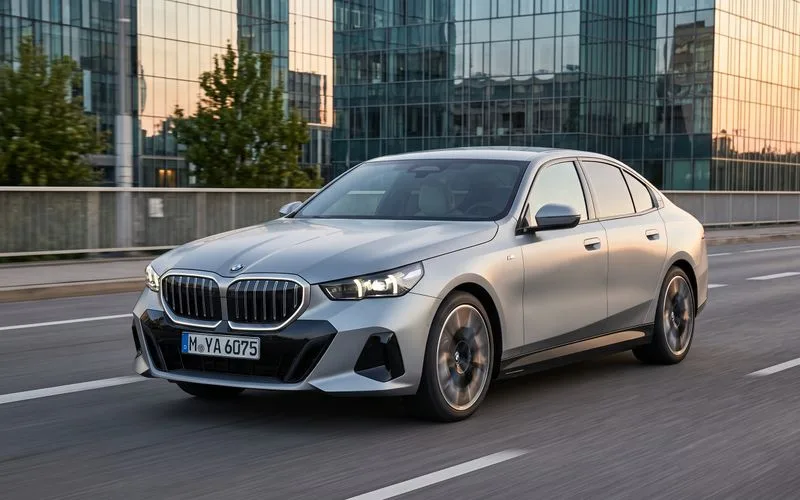 BMW 5 SeriesMid-Size Luxury SedanBetter at: Driving dynamics
The closest direct rival at almost the same money, and it beats the G80 on driving engagement, trunk space, hands-free highway assist and resale value.
Compare 3.11B
3.11B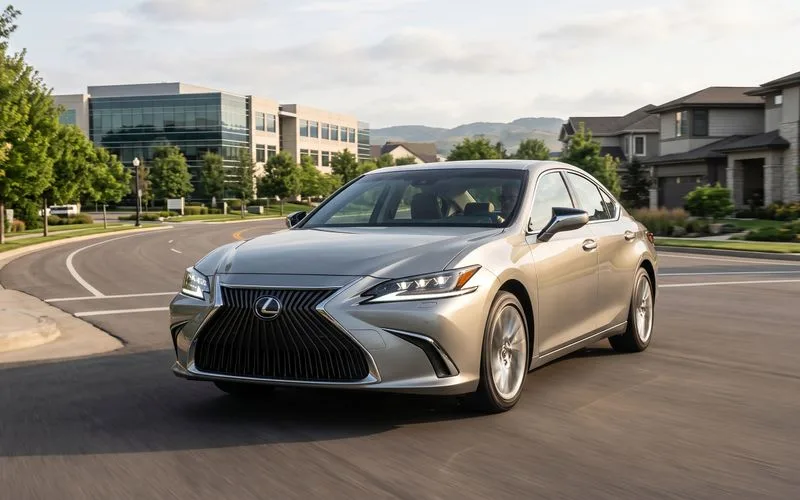 Lexus ESMid-Size Luxury SedanBetter at: Running costs
A hybrid powertrain at roughly 43 MPG on regular fuel and the best resale in the segment make it far cheaper to own, if you can live with front-wheel drive and a less special cabin.
Compare 2.87B-
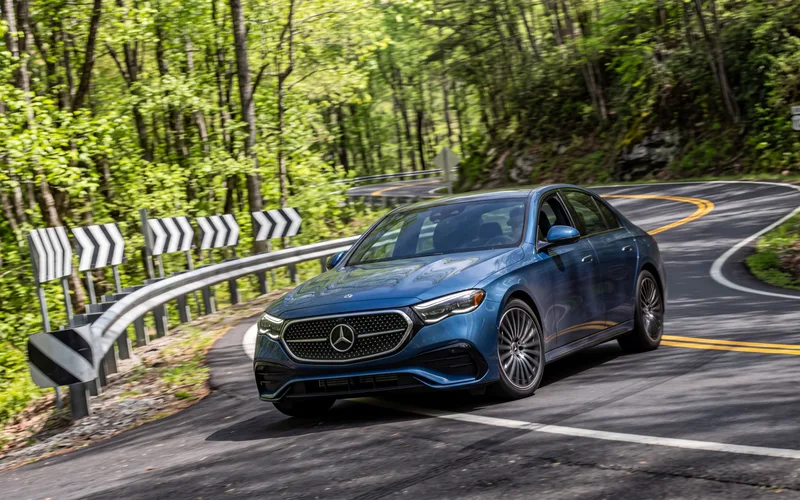 Mercedes-Benz E-ClassMid-Size Luxury SedanBetter at: Brand prestige
For buyers who want the luxury badge and the brand cachet the Genesis emblem still lacks, with comparable comfort — at a higher price and a much higher repair bill.
CompareHow it's evolved
10 scored model years · 2017–2026
Subject scores by year
Hover or tap a score to see what moved it versus the year before. A corner mark flags a big swing.
| Year | Performance | Efficiency | Safety | Space | Cost | Reliability | Tech | Use-case | Driving | Value |
|---|---|---|---|---|---|---|---|---|---|---|
| 2026 | 65 | 37 | 83 | 75 | 33 | 78 | 86 | 59 | 71 | 79 |
| 2025 | 64 | 25 | 74 | 76 | 33 | 71 | 81 | 55 | 70 | 75 |
| 2024 | 65 | 29 | 82 | 74 | 48 | 69 | 70 | 56 | 68 | 73 |
| 2023 | 65 | 33 | 80 | 72 | 49 | 66 | 69 | 55 | 67 | 74 |
| 2022 | 60 | 30 | 82 | 74 | 46 | 71 | 63 | 48 | 67 | 73 |
| 2021 | 58 | 31 | 83 | 72 | 58 | 68 | 65 | 49 | 61 | 76 |
| 2020 | 54 | 25 | 77 | 74 | 62 | 74 | 46 | 45 | 65 | 67 |
| 2019 | 55 | 25 | 76 | 74 | 57 | 71 | 46 | 45 | 65 | 69 |
| 2018 | 55 | 30 | 74 | 70 | 64 | 66 | 50 | 49 | 65 | 70 |
| 2017 | 54 | 28 | 76 | 69 | 66 | 60 | 46 | 48 | 64 | 72 |
Compare two years
Best fit & conditions
Higher scores mean a better fit for that use case. Learn more about use-case fit →
Subject profile
Detailed scoring by subject
1Performance & PowertrainGrades below the middle of the scale.1.63D
First-generation (DH) G80 launched Sept 2016 as a 2017 model with the 3.8L V6 as the standard/volume engine and an optional 5.0L V8.
Peak torque for the standard 3.8L V6; the optional 5.0L V8 makes 383 lb-ft.
Instrumented/press-cited 0-60 for the base 3.8 V6 RWD; the optional 5.0 V8 is markedly quicker.
Reviewers described both the 3.8 V6 and 5.0 V8 as delivering refined, hesitation-free power; the V8 in particular was called a 'smooth operator' with strong low-end punch, while the V6 is composed but less exciting.
The shared 8-speed automatic shifts smoothly and finds the right gear promptly on both engines, with no notable hunting or harshness reported by reviewers.
HTRAC AWD is optional only on the 3.8 V6 with basic torque-split operation and no low-range or terrain modes; the 5.0 V8 is RWD-only for 2017, so AWD is not available across the full trim range.
2017 G80 offers exactly two gas engines (3.8 V6, 5.0 V8) with no hybrid, PHEV, or EV variant — electrification did not arrive on this nameplate until the Electrified G80 years later.
2Efficiency & RangeThe G80's lowest-graded category.0.00F
EPA combined rating for the standard 3.8L V6 RWD configuration, the volume trim.
EPA city rating for the 3.8L V6 RWD volume trim.
EPA highway rating for the 3.8L V6 RWD volume trim.
EPA-derived total range on a full 20.3-gallon tank for the 3.8L V6 RWD volume trim.
EPA annual fuel cost estimate at 15,000 mi/yr and current fuel price assumptions for the 3.8L V6 RWD volume trim.
EPA lists the 3.8 RWD on regular unleaded, but Genesis and dealer guidance recommend premium octane for optimal performance on both the 3.8 and 5.0 engines — a soft recommendation rather than a hard requirement.
3SafetyThe G80's best-graded category.3.18B
NHTSA gave the 2017 Genesis G80 a perfect 5-star overall rating, with 5 stars in every individual test (frontal, side, rollover) for both RWD and AWD configurations.
The 2017 G80 earned IIHS Top Safety Pick+ with Good ratings across all six crashworthiness tests (small overlap front driver and passenger side, moderate overlap front, side, roof strength, head restraints) and a Superior rating for front crash prevention (avoided collision at both 12 and 25 mph). Only the headlight rating (Acceptable) kept it from a flawless sweep.
Genesis standardized a comprehensive ADAS suite across the entire 2017 G80 lineup (3.8, 3.8 AWD, 5.0) rather than gating it to upper trims: automatic emergency braking, blind-spot detection with rear cross-traffic alert and lane-change assist, lane keep assist/lane departure warning, and Smart Cruise Control with full stop-and-go were all standard.
IIHS rated the G80's front crash prevention Superior for vehicle-to-vehicle scenarios, avoiding collisions outright at both 12 and 25 mph test speeds. 2017 predates IIHS pedestrian AEB testing/ratings for this model, so nighttime/pedestrian performance is unverified rather than confirmed strong.
Blind-Spot Detection, Lane Change Assist, and Rear Cross-Traffic Alert were all standard fleet-wide with audible and haptic warnings, but the system is alert-only rather than adding active steering/braking intervention.
Lane Keep Assist and Lane Departure Warning were standard with haptic steering-wheel feedback and driver-adjustable steering intervention, but this is corrective lane-keeping rather than the smooth continuous lane-centering that later-generation systems offer.
Smart Cruise Control operates down to a full stop and resumes automatically, a genuinely capable full-speed-range ACC for 2017, but the G80 had no combined highway-assist mode pairing ACC with lane centering as a single supervised feature.
No hands-free supervised driving system (of the BlueCruise/Super Cruise/FSD-supervised type) was available on the 2017 G80; its most advanced feature was stop-and-go adaptive cruise paired with lane keep assist requiring hands on the wheel.
IIHS rated the 2017 G80's standard Bi-Xenon HID headlights with High-Beam Assist as Acceptable rather than Good, the one blemish keeping crashworthiness from a perfect sweep.
Contemporary reviews of the DH-generation G80 describe roughly average outward sightlines for a mid-size luxury sedan, with a standard rearview camera and available front/rear parking sensors on Ultimate trim helping compensate for thick rear pillars typical of the segment.
As a conventional 4-door mid-size luxury sedan with standard rear door openings, LATCH anchors are expected to be accessible but the trunk-like rear bench and lower door aperture typical of this segment make fitting multiple bulky car seats a modest compromise rather than effortless.
4Space & ComfortOne of the G80's strongest categories.2.65C+
The 2017 G80 is a 5-passenger sedan across all three trims (3.8 RWD, 3.8 AWD, 5.0 Ultimate RWD), its first year as a standalone Genesis-brand model.
Front headroom is near the top of the mid-size luxury sedan band; the standard power sunroof trims down the sunroof-equipped figure slightly.
Front legroom is generous, at the top of the sedan normalization band.
Rear headroom is good for the segment despite the sloping roofline of the DH-generation body.
Rear legroom is modest for a mid-size luxury sedan, trailing rivals like the E-Class and A6.
Trunk volume is mid-pack for the mid-size luxury sedan segment.
Conventional console bin, door pockets and a pass-through trunk; no standout storage innovation noted in period reviews.
Front seats are repeatedly described as roomy and well-cushioned for long drives; rear seat comfort is competent but less noteworthy given tighter rear legroom.
Ride is comfortable and composed in normal driving but doesn't absorb broken pavement quite as well as the segment's German leaders.
Multiple period reviews single out the G80's cabin as notably quiet at speed.
Heated front seats are standard with available ventilation, and HTRAC AWD models add standard heated rear seats and a heated steering wheel, but rear-wheel-drive volume trims only offer the heated wheel as an option.
5Cost of OwnershipMid-pack among this car's ten categories.2.49C+
2017 G80 launched with the 3.8 RWD as the entry trim; this undercuts German mid-luxury rivals by several thousand dollars.
The 3.8 AWD is reported as the best-selling 2017 G80 configuration, adding AWD over the RWD base.
RepairPal estimates ~$689/year average annual repair cost for the 2017 G80; the first 3 years/36,000 miles of scheduled maintenance are complimentary from Genesis, lowering out-of-pocket cost in the early ownership period.
iSeeCars places G80 5-year depreciation at ~54%, slightly worse than the luxury midsize category average (53.6%) due to the new brand's unproven resale track record in 2017.
Genesis's 2017 launch warranty package leads the mid-luxury segment, well past the 4yr/50,000mi typical of German rivals.
Inherited from Hyundai Motor Group's industry-leading powertrain coverage, roughly double the segment norm.
2017 G80 buyers receive 3 years/36,000 miles of complimentary scheduled maintenance plus Genesis's signature 'At Your Service' valet pickup-and-delivery servicing and roadside assistance — a genuine differentiator versus rivals charging for maintenance or offering only basic roadside coverage.
$43,900 volume-trim price minus its estimated resale value after 5 years (46% retained, or about $20,194) leaves about $23,706 in depreciation. Add the projected $3,400 in 5-year maintenance and repairs, and owning this vehicle for 5 years costs about $27,106 in total.
6Reliability & QualityMid-pack among this car's ten categories.2.06C
Consumer Reports rated the 2017 G80 below average for predicted reliability, with transmission minor issues (gear selector/linkage, transmission computer, sensor/solenoid, rough shifting, slipping, leaks) as the most commonly reported trouble spot; owner forums corroborate hard-shift complaints into 3rd/5th gear.
Genesis was too new to be included in JD Power's Vehicle Dependability Study during 2017/2018, but once eligible it ranked #1 overall in 2020 (89 PP100, measuring 2017-MY vehicles), highest-premium-brand in 2022, and #2 overall in 2023, before a single-year dip below average in 2024 — a strong multi-year standing overall.
The 2017 G80 has been the subject of two separate NHTSA fire-risk recalls — a 2021 campaign for ABS module internal shorting (2017-2020 G80) and a 2024 campaign for starter solenoid water intrusion (2017-2019 G80) — plus a Genesis TSB (21-AT-010HG) for automatic transmission solenoid replacement; two independent fire-risk campaigns on the same generation is more serious than typical recall activity.
The 3.8L Lambda V6 and 5.0L Tau V8 are long-serving, high-mileage-proven Hyundai/Genesis engine families with no systemic red flags, but the accompanying 8-speed automatic has a documented pattern of hard/rough shifting and solenoid failures on this generation, making the powertrain family's durability reputation mixed rather than clean.
Reviewers consistently praised the 2017 G80's cabin as class-competitive, citing open-pore wood and genuine metal inlays, soft-touch synthetic surfaces on most panels, and first-rate perforated leather — materials described as on par with any premium sedan in the segment.
Contemporary road tests described assembly as tight and consistent, with panels fitting 'with intense precision' matching premium-sedan rivals, though a few reviewers noted the G80 didn't quite unseat the segment's best on outright build quality.
In 2017 Genesis had not yet split into a standalone dealer network, selling and servicing the G80 through roughly 350 Genesis-participating Hyundai dealers plus additional Hyundai stores for service — thinner and less dedicated than long-established luxury rivals' networks, though it has since grown into standalone stores.
Shared Hyundai/Kia parts bins keep routine repair costs notably low for a luxury sedan (RepairPal estimates roughly $845/year in post-warranty repairs), though the G80's lower sales volume versus mass-market rivals means somewhat thinner independent/aftermarket parts support than segment norms.
7Technology & InfotainmentOne of the G80's weakest categories.1.07D
The volume 3.8 trim carries an 8-inch navigation touchscreen; the top 5.0 Ultimate package steps up to a 9.2-inch HD display.
Hyundai-derived system with a rotary controller plus touchscreen; usable day to day but unremarkable next to German rivals of the era.
2017 is the first model year Apple CarPlay and Android Auto are offered, standard (wired) on the 8-inch screen — but the feature is dropped entirely when a buyer steps up to the Ultimate package's 9.2-inch screen, an odd trade-off.
Built-in navigation and voice command are functional but basic for the era; most owners would default to phone projection once available.
The base system is adequate, but the Ultimate package's 17-speaker Lexicon system is a genuine premium-audio strength.
Base trims carry analog gauges with a small TFT information display; the Premium package's 7-inch driver information display is only a partial digital cluster, not a full configurable display.
No over-the-air software update capability exists on this generation; Blue Link connected services provide telematics but not vehicle-wide OTA updates.
Blue Link supports remote start, remote climate/defrost and vehicle status, but owner forums report recurring activation and reliability issues on early G80 model years.
USB and auxiliary ports are standard, but they are legacy USB-A, and wireless phone charging is not confirmed as available for the 2017 model year.
Smart key proximity entry with push-button start is standard, and app-based remote start is available via Blue Link.
A rear camera and parking sensors are standard equipment, but a high-resolution 360-degree surround camera system is not confirmed as available for this model year.
A full-color head-up display is offered only as part of the top Ultimate package, not on the volume 3.8 trim.
8Use-Case FitOne of the G80's weakest categories.1.20D
Rear doors open wide enough for car-seat access and LATCH anchors are standard, but modest rear legroom (35 in) and a conventional trunk opening make daily family logistics only average.
Automatic emergency braking, blind-spot detection with rear cross-traffic alert, lane keep assist with a haptic steering wheel, and smart cruise control with stop/go are all standard on every 2017 G80 trim, including the entry-level 3.8 — well ahead of typical segment gating in 2017.
A quiet, well-cushioned front cabin supports multi-hour trips, but modest rear legroom and a mid-pack 15.3 cu ft trunk limit space for gear with four aboard.
The G80 is tuned as a relaxed cruiser with smooth power delivery and light controls, well suited to daily traffic rather than a sport-sedan feel.
EPA-rated 22 MPG combined for the RWD 3.8 (19 combined AWD) is average-to-below for the mid-size luxury segment for a daily commute.
A 36.2-ft turning circle and a standard rearview camera make the mid-size sedan reasonably manageable to park despite its size.
A luxury sedan with no rated towing capacity and a conventional trunk; not designed for work duty.
Positioned as a luxury daily driver rather than a fleet or work vehicle; no reputation for hard-use durability in this context.
No tie-downs, rack ecosystem, onboard power outlets or washable work surfaces — a conventional luxury sedan interior.
A quiet cabin, comfortable front seats and a standard suite of driver-assist features (smart cruise, lane keep, AEB) make the G80 a capable highway mile-eater.
HTRAC all-wheel drive is available on the 3.8 AWD trim for foul-weather traction, but low sedan ground clearance and no roof-rack or towing provisions limit genuine outdoor/adventure use.
A conventional 15.3 cu ft trunk with a pass-through but no fold-flat second row or roof rails limits flexibility for bulky gear.
9Driving ExperienceMid-pack among this car's ten categories.2.35C+
The 2017 G80 is tuned for comfort over cornering; secure and composed but not agile. Unlike later model years, there was no turbocharged Sport trim in 2017 to sharpen the range.
Steering is quick and accurate (2.5 turns lock-to-lock) and responds precisely to inputs, but feedback is light and largely numb, consistent with the car's cruiser-oriented tuning.
No 2017-specific instrumented braking test was found; scored from the same-platform generation's typically solid, class-competitive stopping performance.
The 3.8L V6 and 8-speed automatic pair smoothly with well-judged shift calibration, described as a 'smooth, punchy powertrain' in period road tests.
The cabin is heavily insulated from powertrain noise and vibration; multiple period reviews single out the G80 as very quiet.
Turning circle is mid-pack for a mid-size luxury sedan (lower is better); figure carried from the identical DH-generation chassis shared across 2017-2019 model years.
Power-adjustable seat and steering wheel with a wide adjustment range and a conventional, driver-focused control layout; no notable ergonomic complaints found in period reviews.
The 2017 G80 is pleasant but not engaging; without a turbocharged Sport trim (introduced the following model year), the range leans fully toward comfort over driver enjoyment.
10Value & Market PositionOne of the G80's strongest categories.2.86B-
The base 2017 G80 3.8 includes leather seating, navigation, a power trunk, and a full suite of active safety features standard — content that BMW 5 Series and Mercedes E-Class buyers pay extra for at this price point.
At $42,350–$54,550, the G80 undercuts comparably equipped BMW 5 Series/Mercedes E-Class/Lexus GS trims by several thousand dollars while matching or exceeding their standard content, a core part of Genesis's 2017 value pitch as a new entrant.
Only three configurations for 2017 (3.8 RWD, 3.8 AWD, 5.0 Ultimate RWD) versus the far wider trim/engine/option matrices offered by established German and Japanese rivals.
About 16,214 US units sold in 2017 — a respectable ramp for a brand-new nameplate in its first full calendar year, but still well behind established mid-luxury sedan leaders.
Genesis had only just split from Hyundai as a standalone marque (2016), so the 2017 G80 carried little of the brand cachet or heritage prestige that BMW, Mercedes, Audi and Lexus buyers were purchasing into.
As a new brand fighting for showroom traffic, Genesis backed the 2017 G80 with aggressive lease cash and financing incentives, giving buyers real negotiating room versus segment leaders that moved at closer to sticker.
2017 is the debut model year of the first Genesis-branded G80 generation (launched late 2016), putting it at the very start of its product cycle with current platform tech.
The 2017 G80 was well reviewed — Edmunds scored it 8.3/10 and called it near the top of the luxury midsize class for ride quality and safety, and it earned IIHS Top Safety Pick+ status — but it wasn't typically the outright pick over established comparison-test winners like the E-Class or 5 Series.