

The verdict
A mixed-report mid-size luxury sedan, strong on safety and held back by efficiency.
The 2020 Genesis G80 is the last year of the original design, and it shows in the tech — an 8-inch screen, wired-only CarPlay, and no OTA updates — but the fundamentals are hard to beat for the money. It's a 5-star, Top Safety Pick+ sedan with a 10-year/100,000-mile powertrain warranty, a genuinely quiet and comfortable cabin, and a base price around $42,250, several thousand less than a comparably equipped BMW 5 Series or Mercedes E-Class. The tradeoffs are real: 21 mpg combined, essentially zero work/towing capability, and rear-seat and infotainment features that already trail the redesigned 2021 model. It's the pick for a buyer who wants luxury-sedan comfort and safety at a discount and doesn't care about having the newest screen.
Jump to scoresStrengths
- Top-tier crash safety and a full standard driver-assist suite
- Loaded for the money versus German rivals
- Class-leading warranty and cheap upkeep
What holds it back
- Thirsty for the class, and it costs real money over time
- No towing, hauling, or jobsite ability whatsoever
- Infotainment already feels dated
Top alternatives
Cars shoppers cross-shop with the Genesis G80 3.27B+
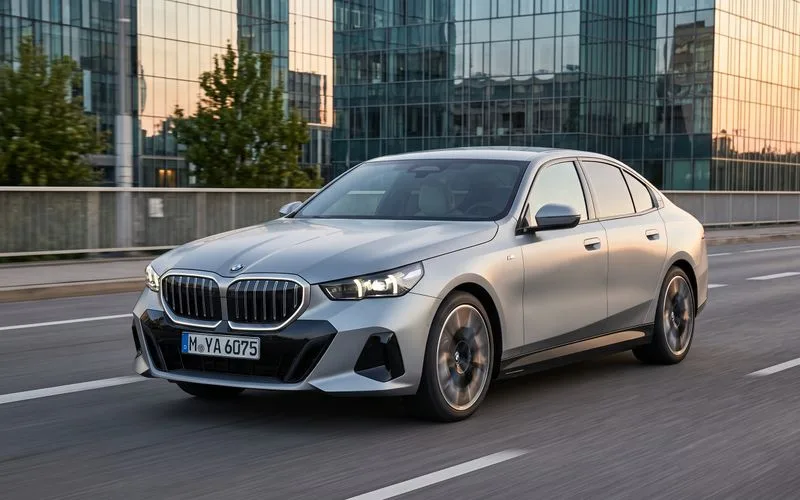 BMW 5 SeriesMid-Size Luxury SedanBetter at: Driving dynamics
The closest direct rival at almost the same money, and it beats the G80 on driving engagement, trunk space, hands-free highway assist and resale value.
Compare 3.11B
3.11B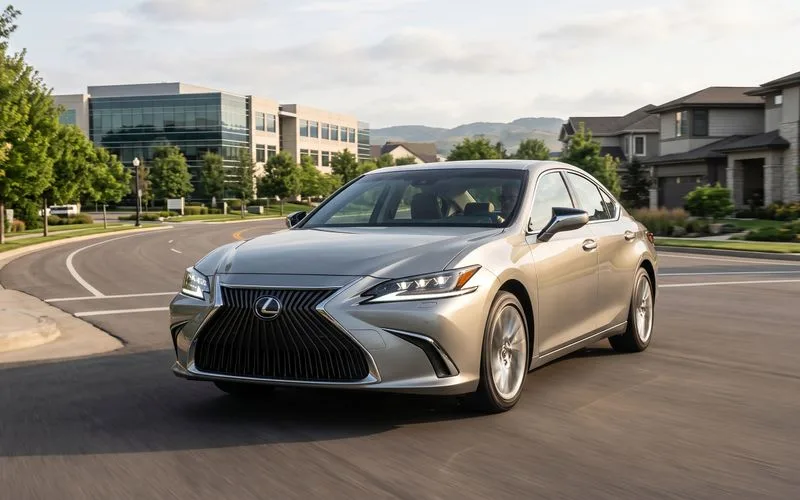 Lexus ESMid-Size Luxury SedanBetter at: Running costs
A hybrid powertrain at roughly 43 MPG on regular fuel and the best resale in the segment make it far cheaper to own, if you can live with front-wheel drive and a less special cabin.
Compare 2.87B-
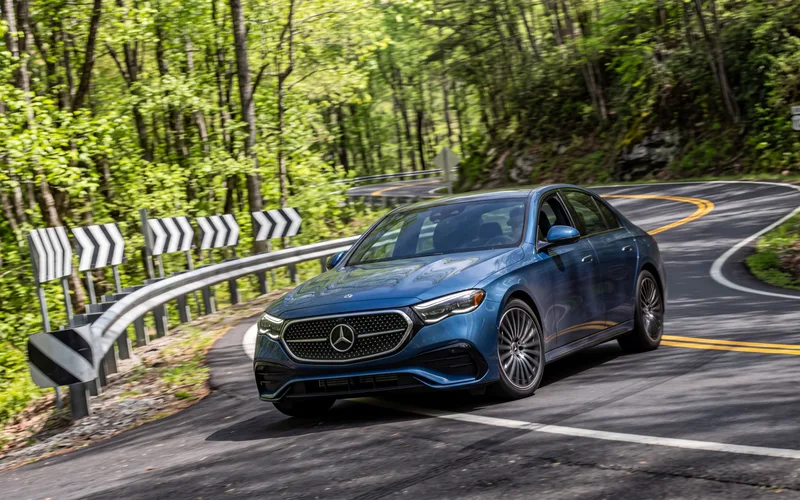 Mercedes-Benz E-ClassMid-Size Luxury SedanBetter at: Brand prestige
For buyers who want the luxury badge and the brand cachet the Genesis emblem still lacks, with comparable comfort — at a higher price and a much higher repair bill.
CompareHow it's evolved
10 scored model years · 2017–2026
Subject scores by year
Hover or tap a score to see what moved it versus the year before. A corner mark flags a big swing.
| Year | Performance | Efficiency | Safety | Space | Cost | Reliability | Tech | Use-case | Driving | Value |
|---|---|---|---|---|---|---|---|---|---|---|
| 2026 | 65 | 37 | 83 | 75 | 33 | 78 | 86 | 59 | 71 | 79 |
| 2025 | 64 | 25 | 74 | 76 | 33 | 71 | 81 | 55 | 70 | 75 |
| 2024 | 65 | 29 | 82 | 74 | 48 | 69 | 70 | 56 | 68 | 73 |
| 2023 | 65 | 33 | 80 | 72 | 49 | 66 | 69 | 55 | 67 | 74 |
| 2022 | 60 | 30 | 82 | 74 | 46 | 71 | 63 | 48 | 67 | 73 |
| 2021 | 58 | 31 | 83 | 72 | 58 | 68 | 65 | 49 | 61 | 76 |
| 2020 | 54 | 25 | 77 | 74 | 62 | 74 | 46 | 45 | 65 | 67 |
| 2019 | 55 | 25 | 76 | 74 | 57 | 71 | 46 | 45 | 65 | 69 |
| 2018 | 55 | 30 | 74 | 70 | 64 | 66 | 50 | 49 | 65 | 70 |
| 2017 | 54 | 28 | 76 | 69 | 66 | 60 | 46 | 48 | 64 | 72 |
Compare two years
Best fit & conditions
Higher scores mean a better fit for that use case. Learn more about use-case fit →
Subject profile
Detailed scoring by subject
1Performance & PowertrainGrades below the middle of the scale.1.66D
2020 is the final model year of the first-generation (DH-based) G80 before the RG3 redesign; the 3.8L GDI V6 is the standard/volume engine.
Peak torque for the standard 3.8L V6; the optional 3.3T twin-turbo and 5.0L V8 both make meaningfully more.
Car and Driver's instrumented test of the carryover 3.8 RWD powertrain (unchanged for 2020) recorded 6.6s to 60 mph; quicker with the optional turbo V6 or V8.
The naturally aspirated 3.8L V6 delivers smooth, quiet, unintrusive power with no turbo lag, but reviewers describe it as competent rather than exciting — adequate rather than effortless compared to the optional turbo engines.
The 8-speed automatic shifts smoothly and decisively across all three 2020 powertrains, reviewers noted no notable hunting or harshness.
HTRAC AWD is offered as an optional upgrade across all three 2020 trims (3.8, 3.3T Sport, 5.0 Ultimate) rather than standard, with basic torque-split operation and no low-range or terrain modes — typical luxury-sedan AWD, not off-road-oriented hardware.
2020 offers three distinct gas engines (3.8L V6, 3.3T twin-turbo V6, 5.0L V8) spanning mainstream to high-performance, but no hybrid, PHEV, or EV variant — the Electrified G80 did not arrive until 2023.
2Efficiency & RangeThe G80's lowest-graded category.0.00F
EPA combined rating for the standard 3.8L RWD configuration, the volume trim.
EPA city rating for the 3.8L RWD volume trim.
EPA highway rating for the 3.8L RWD volume trim.
EPA-derived total range on a full tank for the 3.8L RWD volume trim.
EPA annual fuel cost estimate at 15,000 mi/yr for the 3.8L RWD volume trim.
The 3.8L V6 is rated for regular unleaded (87 octane minimum per owner's manual), unlike the optional 3.3T and 5.0 engines which recommend premium — a real advantage for the volume trim over most rivals in this segment.
3SafetyThe G80's best-graded category.3.25B+
NHTSA's evaluation of the final model year of the first-generation (DH) G80 returned a 5-star overall result, with 5 stars in both frontal and side crash tests and a 5-star rollover rating, consistent across this generation's testing.
The 2020 G80 holds IIHS Top Safety Pick+ with Good ratings across every crashworthiness test — driver- and passenger-side small overlap front, moderate overlap front, side, roof strength and head restraints. A clean sweep of Good results plus the top award places it near the top of the band, matching the outgoing generation's typical performance.
Every 2020 G80, including the base 3.8L trim, ships standard with Forward Collision-Avoidance Assist with pedestrian detection, Blind-Spot Collision-Avoidance Assist, Rear Cross-Traffic Collision-Avoidance Assist, Lane Keeping Assist, and Smart Cruise Control with stop-and-go — nothing this criterion asks about is trim-gated on the outgoing DH-generation car.
IIHS rated the standard front crash prevention system Superior in the vehicle-to-vehicle test (avoiding collisions at both 12 and 25 mph) but only Advanced in the daytime pedestrian test, with performance varying by scenario rather than avoiding or substantially slowing in all of them. That mixed Superior/Advanced result keeps it out of the top of the band.
Blind-Spot Collision-Avoidance Assist and Rear Cross-Traffic Collision-Avoidance Assist are both standard on every 2020 trim and both intervene (corrective braking/steering) rather than merely alert. It falls just short of the very top because owners report the audible blind-spot alert cannot be disabled, a minor usability gripe on an otherwise comprehensive standard system.
Lane Keeping Assist with a haptic steering wheel is standard and provides lane-departure correction, but this outgoing DH-generation car predates the true lane-centering Highway Driving Assist II system that arrived with the redesigned 2021 G80 — it corrects drift at the lane edges rather than actively centering the car, a functionally simpler system than what the segment's newer entrants offer.
Smart Cruise Control with stop-and-go is standard across the 2020 range and reviewers describe it working smoothly in traffic, but the car lacks a highway-assist feature that combines adaptive cruise with lane centering and signal-activated lane changes — that integration arrives only with the redesigned 2021 model, so it sits in the middle of the band rather than near the top.
No 2020 G80 trim offers hands-free highway driving. The standard Lane Keeping Assist and Smart Cruise Control are both hands-on Level 2 systems with no supervised hands-free mode like Super Cruise or FSD, and this pre-redesign generation predates even Genesis's own later Highway Driving Assist II.
IIHS rates the base 3.8L trim's standard HID projector headlights Acceptable, while the LED projector headlights fitted to other trims rate Good. Since the volume 3.8L trim gets the Acceptable-rated unit standard, with the Good-rated LED unit only on upper trims, this lands squarely in the middle band.
Reviewers specifically call out thick front roof pillars as hampering outward visibility on this generation, a more pointed criticism than typical for the class. Standard blind-spot monitoring and cross-traffic tech mitigate the practical risk but don't fix the underlying sightline complaint, landing this below the class's better performers.
IIHS rates the 2020 G80's LATCH ease of use Marginal, with only two complete lower-anchor positions and one tether-only position, and anchors positioned too deeply within the seat structure to access easily — a clear step down from the segment's better performers and worse than this nameplate's own later (2021+) generation.
4Space & ComfortOne of the G80's strongest categories.3.00B
The outgoing first-generation G80 is a standard 5-seat mid-size luxury sedan across the 3.8, 3.3T Sport and 5.0 Ultimate trims, with no 4-seat executive configuration offered.
Front headroom is generous for the segment on the non-sunroof configuration; the sunroof-equipped cars (most volume-trim buyers with the standard glass roof) lose about 1.7 in.
Front legroom of 45.7 in is well above the sedan norm, reflecting the G80's long 119-in wheelbase and rear-drive-based architecture.
Rear headroom is solid for a mid-size luxury sedan, though the sloping rear roofline of this DH-generation body trims a bit versus the boxier RG3 successor.
35 in of rear legroom is competitive but not class-leading for a long-wheelbase mid-size luxury sedan; U.S. News notes rivals offer more rear space even though reviewers still called rear-seat headroom and legroom plentiful.
A 15.3 cu ft trunk sits in the upper-middle of the mid-size luxury sedan segment, ahead of many German rivals of the era.
The center console, door pockets and covered cubby ahead of the shifter are competitive but conventional for the class — no standout innovation like a dual-level console or expandable pass-through, and reviewers do not single out storage as a strength or weakness.
Reviewers consistently praised the standard 16-way power leather seats as striking 'a perfect balance of support and comfort,' with plush cushioning front and rear that holds up over long drives.
The G80 rides as a relaxed, comfortable highway cruiser that soaks up bumps regardless of wheel size, without the floatiness of an overly soft setup — reviewers rated its ride among the better in the class, just shy of the segment's very best.
Multiple professional and owner reviews single out the G80's isolation from road and wind noise as a strength rivaling costlier competitors, with only isolated individual complaints of window wind noise.
Standard dual-zone automatic climate control and heated leather seats are strong for the class, with heated/ventilated seats and a heated steering wheel available, but AWD-only bundling of the full front-and-rear heated package (RWD trims lack rear heated seats and heated wheel) keeps this from the top of the band.
5Cost of OwnershipMid-pack among this car's ten categories.2.17C
Entry trim is the 3.8L RWD; positioned roughly $10,000 below German mid-size luxury rivals at launch.
3.8 AWD is the volume configuration for US buyers given the segment's cold-climate demand, roughly $2,500 over 3.8 RWD base.
Genesis's included 3-year/36,000-mile complimentary maintenance holds down early-ownership spend, and RepairPal/CarEdge both place the G80 well under luxury-segment averages.
The G80 depreciates slightly faster than the midsize luxury class average, consistent with Genesis's still-developing resale reputation as a new brand in 2020.
Genesis's basic warranty is class-leading, beating the typical 4yr/50,000-mile luxury norm.
10-year/100,000-mile powertrain coverage for the original owner is best-in-class, well beyond the 5-10 year segment band ceiling.
Genesis included 3-year/36,000-mile scheduled maintenance plus its signature valet pickup-and-delivery service for scheduled maintenance and a loaner/courtesy vehicle, well beyond typical luxury-brand perks in 2020.
$47,050 volume-trim price minus its estimated resale value after 5 years (43% retained, or about $20,232) leaves about $26,819 in depreciation. Add the projected $2,500 in 5-year maintenance and repairs, and owning this vehicle for 5 years costs about $29,319 in total.
6Reliability & QualityOne of the G80's strongest categories.3.01B
The 2020 model year sits inside the run where Genesis, as a brand, topped J.D. Power's Vehicle Dependability Study, and independent trackers rate this specific model year 'Good' with a moderate complaint count — solid but not flawless given the two fire-risk recalls.
Genesis was the top-ranked brand in J.D. Power's 2020 Vehicle Dependability Study, a standing the brand has broadly sustained in the years since (top-luxury-brand finishes in the 2023 and 2025 studies too), making it a consistent front-runner rather than a one-year outlier.
Two NHTSA recalls touch the 2020 G80, and both are engine-compartment fire risks rather than trivial fixes: an ABS module short-circuit recall (2017-2020 G80, remedy a fuse replacement) and a left turbocharger oil feed pipe leak recall on 3.3T-equipped cars (2018-2020 G80). Neither is a repeated or systemic powertrain failure, but the fire-risk framing on both keeps this out of the top band.
The standard naturally-aspirated 3.8L Lambda V6 is a proven, high-mileage Hyundai/Genesis engine family with no red flags, but the optional (and higher-volume-trim-relevant) 3.3L turbo V6 is a newer design that drew its own oil-feed-pipe recall, so the powertrain family's reputation is mixed rather than uniformly strong.
Reviewers consistently praised the cabin's leather, soft-touch plastics, and available wood/carbon-fiber trim as punching above the G80's price point, calling out only that switchgear feel trails the pricier G90 and top European rivals — a class-leading-for-the-money result rather than a class-leading-outright one.
No pattern of rattles, panel-gap, or assembly complaints turned up in owner or press coverage for this generation, consistent with Hyundai Motor Group's generally strong initial-quality standing industry-wide during this period.
In 2020 Genesis was only a few years into standing up its own retail network, so dedicated Genesis studios were still sparse next to Lexus, BMW, or Mercedes-Benz — but the brand's complimentary Genesis Service Valet (pickup/loaner/return for the first 3 years or 36,000 miles) materially offsets that thinness for the ownership experience.
The G80 shares underlying components with high-volume Hyundai Motor Group vehicles, and independent repair-cost projections put it meaningfully below BMW 5 Series and Mercedes-Benz equivalents both in first-year-out-of-warranty repair cost and 5-year major-repair odds.
7Technology & InfotainmentOne of the G80's weakest categories.1.03D
The volume 3.8L trim ships with an 8-inch touchscreen with navigation; the larger 9.2-inch unit is reserved for the Premium and Ultimate packages, not standard equipment.
The carryover DH-generation infotainment system (rotary controller plus touchscreen) is logically laid out and easy to learn but noticeably dated by 2020 standards next to newer rivals' faster, higher-resolution systems — usable but unremarkable.
Apple CarPlay and Android Auto are standard across the 2020 G80 lineup, but only as wired connections — the factory head unit has no wireless projection, confirmed by the existence of third-party retrofit kits specifically marketed to add wireless CarPlay/Android Auto to 2017-2020 G80s.
Native navigation and voice command are functional on the standard/optional nav system, but this pre-redesign generation's voice assistant is a basic command-based system that most owners bypass in favor of phone-projected navigation and voice assistants.
A 7-speaker system is standard, but the available Lexicon 14-speaker surround system (Premium package, standard on 3.3T Sport) and 17-speaker Lexicon Quantum Logic system (5.0 Ultimate) are genuinely premium, well-regarded audio setups for the class.
The 2020 G80 (final year of the DH-based first generation) uses analog gauges flanking a roughly 7-inch TFT multi-information display rather than a fully configurable digital cluster — a clear step down from the all-digital cluster Genesis introduced with the redesigned 2021 G80/GV80.
This outgoing DH-generation G80 predates Genesis's broader over-the-air update rollout; period Genesis Connected Services for 2020 covered remote/telematics functions and periodic map-data refreshes rather than true whole-vehicle or infotainment OTA software updates.
Genesis Connected Services offers remote start, lock/unlock, vehicle locate and climate preset functions through a companion app, covering the core remote-function set, but the richer digital-key and subscription-free feature set of later Genesis/Hyundai apps was not yet in place for this generation.
A front console Qi wireless charging pad and front USB port(s) are available, but multiple owner reports confirm the rear seats have no USB charging ports at all, a real gap for rear passengers on a car this size.
Proximity smart-key entry and push-button start are standard across the 2020 lineup, and remote start is available through the Connected Services app and factory remote — solid, if not class-leading (no phone-as-digital-key on this generation).
A rearview camera and rear parking sensors are standard on every 2020 trim, with a Surround-View Monitor (360-degree camera) available on the 3.3T Sport and 5.0 Ultimate trims — solid mid-pack coverage that reserves the best parking aid for upper trims.
A full-color head-up display is standard on the 3.3T Sport and 5.0 Ultimate trims and available on the base 3.8 only via the Ultimate Package — so the volume 3.8 trim does not get it standard, keeping this out of the top band.
8Use-Case FitOne of the G80's weakest categories.0.99F
Rear doors and seats offer decent adult-sized space for buckling in kids, but IIHS rates this generation's LATCH ease-of-use Marginal — only two complete lower-anchor positions with anchors set too deep in the seat bight to reach easily — a genuine daily annoyance for car-seat families.
The 2020 G80 pairs a 5-star NHTSA overall rating and IIHS Top Safety Pick+ with a full standard ADAS suite (forward collision warning with automatic braking, blind-spot and rear cross-traffic alert, lane-keep assist, adaptive cruise) on every trim including the base 3.8 — strong safety credentials at the price point families actually buy.
A quiet, well-isolated cabin, plush 16-way power seats, and a 15.3 cu ft trunk make this a comfortable multi-hour family hauler, though rear-seat amenities (no rear USB ports, no rear climate zone) are thinner than newer rivals aimed squarely at families.
The smooth 8-speed automatic, isolated ride, and effortless V6 power make the G80 relaxing in traffic, though its full-size footprint (197 in long) and fast, feel-light steering make it feel bigger than a typical commuter sedan at low speeds.
EPA ratings of 18/26/21 mpg city/highway/combined for the volume 3.8L RWD trim are on the thirsty side even for a luxury mid-size sedan, translating to real per-mile commuting costs above segment norms.
A 36-ft curb-to-curb turning circle and standard rearview camera help around town, but the G80's long 119-in wheelbase and 197-in overall length make it feel large in tight urban parking versus more compact sedans; a 360-degree camera is reserved for upper trims.
As a rear-drive-based luxury sedan with no published towing rating and a conventional 15.3 cu ft trunk, the G80 offers essentially no work capability — it was never marketed or equipped for towing, hauling, or jobsite duty.
The G80's leather-trimmed, luxury-oriented cabin and lack of any fleet/commercial use history mean it has no meaningful track record or design intent for hard work use, though the mechanically related Hyundai Genesis/Equus platform has a reasonably proven drivetrain.
There are no tie-downs, onboard AC power outlets, rack provisions, or upfit ecosystem for this leather-and-wood luxury sedan — it offers essentially nothing toward jobsite or trade use.
A quiet cabin, comfortable seats, and a composed highway ride make the G80 a capable mile-eater, and standard adaptive cruise with lane-keep assist reduces fatigue, though its ~21-mpg combined economy means more fuel stops than efficiency-focused rivals on long trips.
Optional HTRAC AWD adds foul-weather traction, but there is no low-range, off-road driving mode, meaningful ground clearance, or roof-rack/towing provision — this is a pavement-bound luxury sedan with only modest all-weather margin over the base RWD car.
A 15.3 cu ft trunk with a conventional pass-through (no 60/40 fold data confirmed as standard across trims) handles normal luggage well but has no roof rails, hitch, or expandable cargo configuration for bulkier adventure gear.
9Driving ExperienceMid-pack among this car's ten categories.2.37C+
The G80 handles competently and securely but reviewers note it 'won't let you forget it's not a small car,' better suited to open roads than back-road carving; only the 3.3T Sport gets an adaptive suspension for sharper body control.
A fast 11.8:1 steering ratio makes the G80 turn in quickly, but reviewers explicitly note the steering lacks genuine road feel — quick response is prioritized over feedback, typical of comfort-oriented luxury sedans of this era.
No major complaints about brake feel or fade appear in period reviews of the outgoing DH-generation G80; pedal feel and stopping performance are described as competent and unremarkable for the class, without instrumented stopping-distance data located for this specific model year.
The naturally aspirated 3.8L V6 paired with the 8-speed automatic delivers smooth, lag-free power delivery with decisive, well-calibrated shifts across all three 2020 powertrains — refined if not thrilling.
The base V6 delivers power 'without an intrusive engine note,' and the well-isolated cabin further muffles powertrain noise, keeping this comfortably in the pleasant/inoffensive band.
A 36-ft turning circle is mid-pack for a mid-size luxury sedan, reflecting the G80's long 119-in wheelbase.
Standard 16-way power seats with a wide adjustment range, a clear analog gauge layout with a 7-inch information display, and good outward sightlines forward give most drivers an easy time finding a comfortable, well-positioned driving posture.
Reviewers rated the outgoing G80 respectably for performance thanks to its strong engine choices and 'creamy ride,' but its light, feel-free steering and comfort-first tuning mean it reads as pleasant rather than genuinely engaging — the 3.3T Sport trim is the exception that leans more toward enthusiast appeal.
10Value & Market PositionMid-pack among this car's ten categories.2.51C+
Even the base 3.8 RWD trim includes a full driver-assistance suite, head-up display availability, Lexicon audio on upper trims, leather seating and heated seats — content German rivals charge thousands more to match.
Across the range the G80 pairs a smooth V6 or potent V8, strong ride comfort and a loaded interior at a meaningfully lower price than BMW 5 Series, Mercedes E-Class or Audi A6 equivalents.
Three trims (3.8, 3.3T Sport, 5.0 Ultimate) each offered in RWD or AWD give six configurations spanning value to performance, but the lineup lacks the deep option/package granularity of established German rivals.
Despite strong reviews, the 2020 G80 was a slow seller in a soft first year for the young Genesis brand, well behind established German and Japanese luxury-sedan volumes.
Genesis had strong quality/dependability credentials (J.D. Power #1 premium brand for IQS and VDS in 2020) but was still a young, low-recognition brand without the aspirational cachet of BMW, Mercedes-Benz or Lexus among luxury buyers in 2020.
As a new brand pushing for volume in a slow sales year, Genesis dealers commonly offered aggressive lease deals and incentives on the G80 to compete with established luxury players, benefiting buyers.
2020 is the final model year of the first Genesis-branded G80 generation (dating to the 2017 rebrand of the Hyundai Genesis DH platform); an all-new second-generation (RG3) G80 was already confirmed and arrived for MY2021, making the 2020 car's platform and infotainment tech dated relative to what was imminent.
The 2020 G80 was consistently well-reviewed (near the top of luxury midsize rankings) and earned IIHS Top Safety Pick+, plus its brand swept major J.D. Power quality and dependability awards — strong critical standing even though it wasn't typically the outright comparison-test winner over German rivals.