

The verdict
A mixed-report full-size suv, strong on space and held back by ownership.
The 2023 Wagoneer is the year this SUV got good to drive: the new 420-hp Hurricane twin-turbo six replaced the V8 on Series II and above, cutting nearly two seconds from 0-60 mph (5.4 s) while adding 2 MPG. It pairs that with the roomiest cabin in the class — 42.7 in of second-row legroom, a genuinely adult third row, 116.7 cu ft of cargo — a 10,000-lb tow rating and an IIHS Top Safety Pick. What you pay for it is steep: $71,695 for a Series II 4x4, 19 MPG combined and $3,300 a year in fuel, and a Consumer Reports predicted-reliability score of 2 out of 5 on an engine that was brand new that year. Buy it for the space and the tow rating, negotiate hard, and go in knowing the warranty is only 3 yr/36,000 mi.
Jump to scoresStrengths
- The roomiest three-row cabin in the full-size class
- Tows 10,000 lbs and swallows 116.7 cu ft of cargo
- The new Hurricane six is quicker and smoother than the V8 it replaced
What holds it back
- It costs a fortune to own
- 19 MPG combined and $3,300 a year in fuel
- Reliability is the real risk, and 2023 is the riskiest year
Top alternatives
Cars shoppers cross-shop with the Jeep Wagoneer 2.92B-
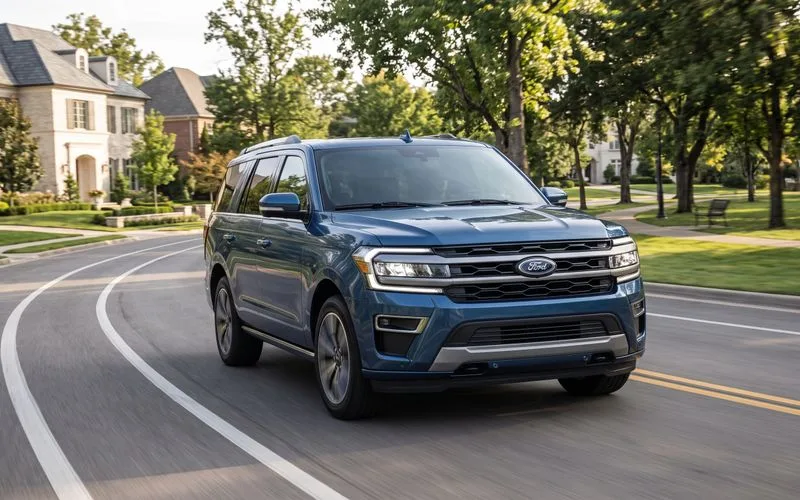 Ford ExpeditionFull-Size SUVBetter at: Overall value
Nearly the same size and mission with better reliability, better value per dollar, and onboard AC power the Wagoneer does not offer.
Compare 2.63C+
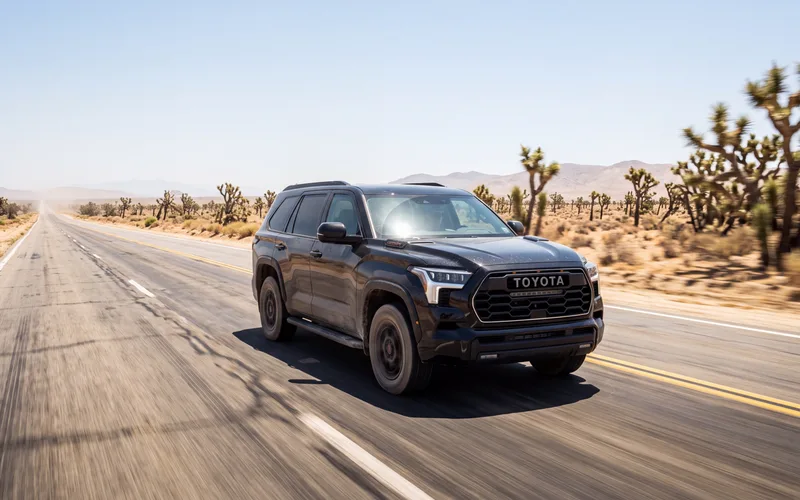 Toyota SequoiaFull-Size SUVBetter at: Reliability
A standard hybrid V6 and Toyota's dependability record fix the Wagoneer's two biggest problems — fuel cost and long-term risk.
Compare 2.79B-
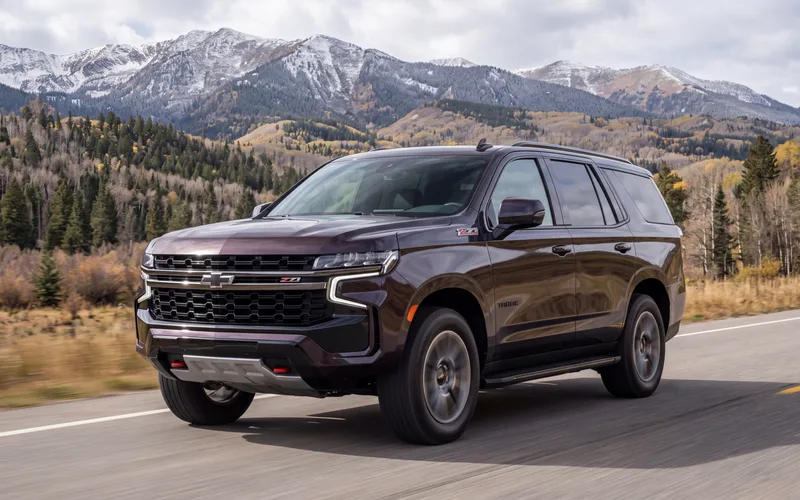 Chevrolet TahoeFull-Size SUVBetter at: Resale value
Costs less up front, holds its value far better, and is the safer financial choice if you plan to sell in five years.
CompareSubject scores by year
Hover or tap a score to see what moved it versus the year before. A corner mark flags a big swing.
| Year | Performance | Efficiency | Safety | Space | Cost | Reliability | Tech | Use-case | Driving | Value |
|---|---|---|---|---|---|---|---|---|---|---|
| 2026 | 77 | 32 | 68 | 85 | 14 | 54 | 79 | 70 | 66 | 64 |
| 2025 | 74 | 36 | 64 | 82 | 32 | 52 | 74 | 68 | 63 | 62 |
| 2024 | 75 | 36 | 69 | 82 | 24 | 48 | 73 | 68 | 61 | 68 |
| 2023 | 77 | 36 | 68 | 83 | 27 | 43 | 74 | 65 | 62 | 67 |
| 2022 | 66 | 22 | 66 | 83 | 23 | 40 | 74 | 63 | 59 | 57 |
Compare two years
Best fit & conditions
Higher scores mean a better fit for that use case. Learn more about use-case fit →
Subject profile
Detailed scoring by subject
1Performance & PowertrainOne of the Wagoneer's strongest categories.3.24B+
2023 is a change year: the 3.0L Hurricane twin-turbo I6 arrives and becomes standard on three of the four Wagoneer trims, leaving the 5.7L V8 only on the base car, so the Hurricane is the representative volume engine.
The Hurricane's 468 lb-ft arrives at a low 3,500 rpm and is 64 lb-ft up on the outgoing HEMI, which is what makes the smaller engine a credible replacement in a 6,000-lb SUV.
Instrumented figure for the 2023 Wagoneer Series II 4X4 with the Hurricane; the roughly two-second gain over the V8 car is the single biggest year-over-year change to this vehicle.
The twin-turbo I6 delivers strong, linear thrust with dual close-coupled turbos and direct injection minimizing lag, and reviewers of the 2023 Hurricane cars consistently describe smooth, consistent delivery; it loses points for the muted, characterless engine note relative to the HEMI it replaces and for modest off-idle turbo lag in a heavy body.
The ZF-derived TorqueFlite 8HP75 eight-speed is one of the better-regarded automatics in the class — wide 4.71–0.67 ratio spread, unobtrusive shifts and decisive kickdown — though with 468 lb-ft available it occasionally shuffles gears under part throttle.
A full 10,000-lb rating is the top of the full-size SUV field and far above the 8,000-lb ceiling of the SUV normalization band; the 3.92 axle is optional with the Hurricane, so the volume Series II needs the tow package to reach it.
Sophisticated hardware — a choice of single-speed full-time active 4x4 or a two-speed electronically shifted case with 2.64:1 low range, Selec-Terrain modes up to Rock, and an optional electronic limited-slip rear diff — but 4x4 is optional rather than standard, since the Wagoneer ships rear-drive at the base of the range.
Genuinely capable for a luxury full-sizer — up to 10.0 in of clearance and 25.0°/22.0°/24.0° approach/breakover/departure on the air suspension, low range, Rock mode and an available ELSD — but there is no dedicated off-road Wagoneer trim, and on the standard steel springs the numbers (8.3 in, 21.5°/18.5°/21.1°) are ordinary.
2023 is the one Wagoneer year with a real choice: the 392-hp 5.7L HEMI V8 with 48-volt eTorque assist on the base car and the 420-hp 3.0L Hurricane twin-turbo I6 above it — two distinct engines, but both are gasoline and the only electrification is a mild-hybrid belt-starter generator, with no hybrid, PHEV or EV Wagoneer offered.
2Efficiency & RangeOne of the Wagoneer's weakest categories.0.34F
Scoring the volume Series II 4x4 with the new Hurricane I6, which gains 2 MPG combined over the 5.7L V8 it replaces — real progress, but still poor against the gas-SUV band because this is a 6,000-lb body-on-frame full-sizer.
City economy is where the mass and frontal area (37.2 sq ft) hurt most; the Hurricane's cylinder count and stop-start recover only 1 MPG over the eTorque V8 here.
The biggest single gain from the engine swap — 3 MPG on the highway versus the V8 — helped by a 0.352 drag coefficient that is good for a box this size and a tall 0.67 eighth gear.
The best part of this category: a big 26.5-gallon tank turns mediocre economy into a genuinely long legs-stretching range, over 50 miles up on the V8 Wagoneer.
Running costs improve sharply on the Hurricane — $900/yr less than the V8 Wagoneer — but EPA still puts the Wagoneer $5,250 above an average new vehicle over five years.
Jeep recommends 89-octane mid-grade for the Hurricane but explicitly accepts 87-octane regular, so owners can run the cheap stuff at some cost in output — better than the premium-required Grand Wagoneer, worse than a plain regular-unleaded rating.
3SafetyMid-pack among this car's ten categories.2.59C+
2023 is the first model year of the WS generation NHTSA actually put through the program, so this is a directly measured result rather than a carried figure. Frontal and side are both strong at five stars overall, but a four-star passenger-side frontal result and a three-star rollover rating — 21.2% rollover risk on 4WD, 22.8% on RWD — hold the combined result to four stars, below the five that several full-size rivals carry. Worth noting the agency lists lane departure warning as 'Optional' rather than standard for this carline, consistent with the cheaper base Wagoneer trim that 2023 reintroduced below the volume Series II.
2023 is the first Wagoneer model year IIHS tested, and it carries a real award: Stellantis's own release names the '2023-24 Jeep Wagoneer' as a 2024 TOP SAFETY PICK, and the institute's ratings page states every result applies to 2023-25 models — so unlike the untested 2022 car, a 2023 buyer got a verified award. It was also the only one of the three large SUVs IIHS ran through the updated moderate overlap front test to earn anything, with the Expedition Marginal and the Tahoe Poor alongside it. Its own updated moderate overlap result is Marginal, however — the second-row dummy showed a fairly high chest-injury risk from high belt forces — which rules out the top band's 'TSP with all Good crash results' and is exactly why TSP+ was withheld. Everything else structural is Good (small overlap front driver and passenger, original moderate overlap, updated side), and seat belt reminders rate Marginal for a further small deduction.
The Monroney for a 2023 Wagoneer Series II 4X4 — the volume trim, and the one cat1/cat2 score for this year — prints the full core suite under standard equipment with no package qualifier: Adaptive Cruise-Control with Stop and Go, Active Lane-Management System, Full-Speed Forward-Collision Warning Plus, Pedestrian Emergency-Braking, Blind-Spot and Rear Cross-Path Detection, ParkView rear camera and ParkSense front and rear park assist with stop. Standard stop-and-go ACC plus standard BSM on a full-size SUV is top-band breadth. Two things keep it off the top of the band. The second tier is genuinely trim-locked — automatic high beams arrive with the Series III, and the 360-degree surround-view camera, head-up display, drowsy driver detection, traffic sign recognition and Intersection Collision Assist are all listed by Stellantis as available rather than standard. And 2023 specifically reintroduced a cheaper base Wagoneer below the Series II (5.7L V8, from roughly $59k), where the equipment is thinner; NHTSA's own entry for the 2023 carline lists lane departure warning as Optional, which is the best available signal that the lineup's true entry point does not carry the lane system the Series II does.
Pedestrian front crash prevention rates **Good** under the 2024 protocol that folds daytime and dark runs into one evaluation, and IIHS's results apply to the 2023 model year directly rather than being carried from a later one. Jeep's own account of the test is that the Full-Speed Collision Warning with Active Braking system performed equally well against a nighttime crossing adult and a daytime crossing child, which is the nighttime-pedestrian capability the top band asks for. What holds it just outside that band is the vehicle-to-vehicle side: under the tougher 2.0 protocol with its higher closing speeds and motorcycle and semi-trailer targets, the Wagoneer manages only Acceptable. Strong on the harder pedestrian test, mid-pack against other vehicles — and the hardware is standard on the volume trim, not a package.
Blind-Spot and Rear Cross-Path Detection is standard equipment on the volume Series II rather than bundled into a package, and it is paired with ParkSense front and rear park assist *with stop* — low-speed automatic braking on the sensors, so manoeuvring gets intervention rather than only a chime. That is the top of the middle band. It stops short of the upper band because the side coverage itself is alert-only: no steering or braking intervention against a vehicle in the blind zone, and no safe-exit alert for occupants opening a door into traffic. The 360-degree surround-view camera that would compensate for the pillar-created blind zones is an available item, absent from this trim's standard list.
The Active Lane-Management System — lane departure warning with lane keep assist — is standard on the Series II, so the volume 2023 Wagoneer keeps itself between the lines. True lane centering is the weaker half: Jeep delivers it as Active Driving Assist, the hands-on Level 2 pairing of the lane system with stop-and-go ACC, and it does not appear anywhere on the Series II standard-equipment list, making it an available feature this model year. Reviewers who have used the Stellantis lane system in the Wagoneer family describe it as genuinely useful in traffic and smooth rather than prone to ping-ponging, which keeps this comfortably mid-band, but a volume trim that warns and nudges without centering cannot reach the top band. Confidence is MEDIUM because the driving impressions come from family-level testing (Grand Wagoneer L) rather than an instrumented 2023 Wagoneer evaluation.
Adaptive Cruise-Control with Stop and Go is standard on the volume Series II — full-speed-range longitudinal control including a complete stop and resume in traffic, which is the substantive half of the top band and better than several full-size rivals that reserve stop-and-go for upper trims. The integration half is where 2023 falls short: the combined highway assist, Active Driving Assist, is an available feature rather than standard equipment this model year (it does not become standard on the Wagoneer family until 2025), so the volume trim gets refined cruise control without the lateral half working alongside it as one system. Reviewer accounts of the system itself are positive, describing it as a real stress-reducer on well-marked interstates.
There is no hands-free driving option on the 2023 Wagoneer at any trim or price. Stellantis flagged 'Hands-free Active Driving Assist' for late availability back at the WS generation's 2022 launch, but the system did not actually ship until February 2024, and then only on the Grand Cherokee and Grand Cherokee L in Overland and Summit trims — the Wagoneer and Grand Wagoneer did not get it until the 2025 model year. What a 2023 Wagoneer can be optioned with is the hands-on version, which Jeep itself frames as hands-on-wheel and eyes-on-road: a different capability from the one this item measures. Scored just above the floor rather than at zero because the camera-and-radar hardware and a mature hands-on Level 2 system exist as an option, so the gap is a software and mapping entitlement that had not reached this nameplate rather than a missing sensor set.
IIHS rates the 2023 Wagoneer's headlamps Good only in the variant equipped with high-beam assist; the base/Series II/Carbide variant without it is Acceptable. Automatic high beams are not fitted until the Series III, so the volume Series II ships with the Acceptable-rated setup and the Good rating is effectively a top-trim feature — the 2023 Series II Monroney lists LED headlamps with no automatic high-beam item anywhere on it. Acceptable is enough to satisfy the Top Safety Pick requirement that good-or-acceptable headlights be standard on every trim, which keeps this out of the bottom band, but this is the middle band's description almost verbatim: Good on upper trims, Acceptable on the one most people buy.
The Wagoneer gives a tall, commanding forward view and genuinely good sightlines to the front and sides — the upright glasshouse, tall square side windows and high hip point of a body-on-frame full-sizer — but the same architecture puts large roof pillars all around the vehicle, and those form real blind spots, with the view past the third-row head restraints the weakest angle. The camera compensation that would offset them is not standard where it matters: the volume Series II gets a ParkView rear camera and ParkSense front and rear sensors, while the 360-degree surround-view system is an available item on this model year. Average visibility with documented blind zones and only partial standard compensation on the trim most people buy.
Both a hardware rating and a hands-on test exist for this exact model year and they point the same way: real capability, imperfect execution. IIHS awards the LATCH hardware **Good+**, its best ease-of-use tier, with the '+' recognising attachment positions beyond the two the standard requires — three rear positions with complete hardware plus additional tether-only positions. Cars.com's 2023 Wagoneer Car Seat Check confirms the practical payoff: three car seats fit across the second row of the eight-passenger bench, the second row slides forward on a button for third-row access, and there is even a set of lower anchors in the third row. It lands below the top band on the strength of that same test's complaints — every configuration graded B, because the lower anchors sit high against the seat cushion in upholstery pockets and take real muscle to connect, the fixed head restraints do not adjust and will interfere once a convertible seat's back is raised for a taller child (and push a booster off the seatback), and the opening to the third row is tight.
4Space & ComfortThe Wagoneer's best-graded category.3.66A-
For 2023 Jeep made the 2/3/3 eight-passenger layout the standard configuration on the Wagoneer, with captain's chairs as the seven-seat option — the reverse of the Grand Wagoneer's arrangement.
The boxy full-size roofline gives the Wagoneer 41.3 in of front headroom, near the top of the SUV band and a full 2 in more than the sunroof-equipped Grand Wagoneer.
Front legroom of 40.9 in sits near the bottom of the SUV normalization band — the Wagoneer spends its 123-in wheelbase on the second and third rows rather than the front footwell.
Second-row headroom of exactly 40.0 in tops the SUV normalization band, a direct product of the upright greenhouse.
42.7 in of second-row legroom exceeds the top of the SUV band and is the figure behind Jeep's best-in-class second-row-legroom claim.
36.6 in of third-row legroom and 39.0 in of headroom make this one of the few three-row SUVs where adults genuinely fit in back, and 2023's standard 3-passenger bench means eight seats come as standard rather than as an option. It falls short of the top band because knee clearance is only 1.9 in and reviewers found climbing in takes some agility.
Cargo behind the second row is strong for the segment, and the 27.4 cu ft still available with all three rows up is the figure Jeep markets as best-in-class behind the third row.
Maximum cargo volume clears the top of the SUV normalization band, and the new-for-2023 Wagoneer L extends it further still for buyers who need it.
The flip-up lower touchscreen panel hides a deep console cavity with the wireless charging pad, the center console is genuinely large, and eight standard USB ports are well distributed, but the Wagoneer offers no segment-defining storage innovation on the order of GM's fold-through giga console.
Testers describe the Series II's Capri leather front seats as firm, supportive and long-haul friendly, with second-row comfort rated equally highly; heated and ventilated eight-way power front seats are standard on the volume trim.
The five-link independent rear suspension delivers ride comfort reviewers call excellent on the highway, but the volume Series II rides on steel coils with monotube load-levelling shocks — Quadra-Lift air suspension is a Series III item — and testers note rivals feel better planted when the road turns.
Cabin quietness is repeatedly called out as a strength, and 2023 improves on it at the volume trim: the Hurricane I6 that replaces the 5.7L V8 on Series II is described as calmer and quieter under load than the engine it supersedes.
The volume Series II ships with heated and ventilated power front seats, a heated techno-leather steering wheel, tri-zone automatic climate control and remote start — a rich standard set — with heated second-row seats moving up to Series III rather than being standard here.
5Cost of OwnershipThe Wagoneer's lowest-graded category.0.00F
The entry 2023 Wagoneer — the only trim still using the 392-hp 5.7L HEMI V8 with eTorque — listed at $61,595 before Stellantis' $2,000 destination charge, putting the cheapest way into the nameplate just under $64,000 and near the very top of the SUV price band.
Series II 4x4 is the volume configuration — it is the first rung with the new 420-hp Hurricane twin-turbo I6, and 4x4 dominates full-size Jeep sales. Two independent price tables agree on $69,695 before the $2,000 destination charge.
CarEdge projects about $744/yr ($3,720 over five years) of scheduled maintenance for the Wagoneer, but that line excludes unscheduled repairs on a second-year Stellantis WS platform with a heavy recall and electrical-complaint record. Wagoneer Client Services covers the first three years of scheduled service, pulling the early years toward zero, while heavy 20-/22-inch tires, a twin-turbo I6 and out-of-warranty electronics push years four and five well above the scheduled figure.
Two independent residual estimates bracket the Wagoneer at 47–51% retained at five years, and 2023 is the model year that first won its class outright on residuals. Even so, holding 49% of a $71,700 sticker still means roughly $36,600 of depreciation in absolute dollars, which is what the effective ownership cost prices in — and the heavy leftover discounting on 2023 stock erodes the real-world figure further.
Stellantis applies its standard 3-year/36,000-mile Basic Limited Warranty to the Wagoneer with no extension for the sub-brand's luxury positioning — the bottom of the segment band, and shorter than the 4-year terms of the German and Korean premium rivals a $72,000 Wagoneer is cross-shopped against.
The 5-year/60,000-mile powertrain term covering the Hurricane I6 (or the base car's 5.7L HEMI eTorque), the eight-speed automatic and the axles is the Stellantis standard and the floor of the 5–10 year segment band — Hyundai/Kia offer double it, and no mainstream full-size rival trails it.
Wagoneer Client Services — included at no cost for every 2023 retail buyer — is one of the richest ownership packages in the full-size class: complimentary scheduled maintenance for 3 years/36,000 miles, 24/7 roadside assistance with towing to a certified Wagoneer service centre, trip-interruption cover up to $1,000 per occurrence, first-day rental, and a dedicated Wagoneer ambassador for sales and service. That is materially more than the Jeep Wave program on a Grand Cherokee and far beyond the roadside-only provision of a Tahoe or Expedition; it stops short of the top of the band only because the maintenance window is three years rather than the Grand Wagoneer's five.
$71,695 volume-trim price minus its estimated resale value after 5 years (49% retained, or about $35,131) leaves about $36,564 in depreciation. Add the projected $6,000 in 5-year maintenance and repairs, and owning this vehicle for 5 years costs about $42,564 in total.
6Reliability & QualityOne of the Wagoneer's weakest categories.0.85F
Unlike the 2022 launch year, 2023 has an actual Consumer Reports verdict rather than an absence of data — and it is a bad one: 2 out of 5 predicted reliability, placing the Wagoneer 7th of the 8 large SUVs CR assessed. NHTSA's own complaint file for the model year is heavily concentrated in exactly the systems owners fear, with 47 of 105 complaints filed against ENGINE and 43 against ELECTRICAL SYSTEM. J.D. Power's initial-quality read on Jeep was genuinely better this year, which keeps this out of the bottom band, but the direction of the predicted-reliability evidence is consistent across sources.
2023 is the one year in this generation's window where Jeep climbed off the absolute floor: Consumer Reports moved it out of last place to second-to-last in the 2023 Brand Report Card, with Land Rover taking over the bottom spot — better than Jeep's dead-last finishes in both 2022 and 2024. J.D. Power's 2023 IQS also had Jeep at 19th and above industry average, up four places. That is still bottom-third standing on the multi-year dependability measure this item grades, but it is a real, documented improvement rather than a flat carry-over of the 2022 verdict.
NHTSA lists eight separate safety recalls against the 2023 Wagoneer — more than the six on the 2024 — and the mix is the problem as much as the count: two independent airbag campaigns (B-pillar trim fouling side-curtain deployment, and a steering-column clockspring weld that can stop the driver airbag firing), two separate FMVSS 111 rearview-camera non-compliances from different root causes, a third-row seat-belt buckle access defect, two exterior-trim detachment campaigns, and a transmission gear-indicator software fault carrying an explicit rollaway risk. Five of the eight are FMVSS non-compliances. Layered on top is a factory thermostat TSB for the Hurricane engine, so this is repeated, safety-relevant campaign activity rather than typical churn.
2023 is the model year the 3.0L Hurricane twin-turbo I6 entered the Wagoneer, standard on Series II, Carbide and Series III — the representative trim this scorecard describes — so the volume engine has precisely zero high-mileage track record, and the early record that exists is poor: a factory thermostat TSB for a ball-valve drive pin that can stick the thermostat closed and cause sudden overheating, with owner reports of failures as early as 800 miles, plus turbo oil leaks and cooling-system faults. The base Series I keeps the 5.7L Hemi eTorque, whose long-block is genuinely proven since 2003, but that half carries its own federal stalling investigation covering the same eTorque hardware. The proven ZF-derived 8-speed automatic is the one unambiguously solid element, which keeps this above the floor. This scores below both 2022 (proven Hemi standard) and 2024 (Hurricane with a year of field data).
The cabin is a real strength in absolute terms — reviewers describe a spacious, high-end interior with plush 12-way heated and cooled front seats, multiple screens and adult-usable space in all three rows. What holds it below a class-leading mark is that the criticism is specifically about value for the money: at Wagoneer pricing, critics found material selection somewhat disappointing relative to the price point, and it trails the German and Land Rover benchmarks it is cross-shopped against. This item grades material richness relative to price, and that is exactly where the Wagoneer gives ground.
Assembly consistency improved on the 2022 launch year but remains the weaker half of build quality. Owners report uneven exterior panel gaps, highway-speed vibration, rattling buttons and loosening trim, and the speaker-grille rattle is common enough that dealers have a TSB and updated parts for it. Two federal recalls exist specifically because door trim and quarter-window trim were not properly installed and can fall off the vehicle — assembly quality failing in the most literal sense. Against that, structural execution draws praise (reviewers note it avoids the wiggles and jitters typical of body-on-frame SUVs) and Jeep's 2023 IQS placement was above industry average, so this is scattered complaints rather than a wholesale failure.
Coverage is the genuine strength: Chrysler-Dodge-Jeep-Ram fields well over two thousand US franchised dealers, so a Wagoneer owner is rarely far from a service point — materially denser than the import luxury brands this SUV is priced against — and by 2023 the Wagoneer-certified dealer program (dedicated showroom space, trained 'Wagoneer Ambassadors', the brand's Ten Customer Promises service standards) was established rather than the narrow launch-year rollout of 2022. The offsetting weakness is that service satisfaction is mainstream, not luxury: industry service satisfaction slipped two points to 846 in the 2023 CSI study, Jeep has historically sat below the mass-market average, and buyers paying luxury prices still queue in ordinary CDJR service lanes under a standard 3-year/36,000-mile basic and 5-year/60,000-mile powertrain warranty with no extended luxury coverage.
The Wagoneer's body-on-frame DT-platform underpinnings are shared with the very high-volume Ram 1500, and Mopar's distribution plus the large CDJR dealer count mean common mechanical wear items are easy to source at ordinary prices. Working against that, projected costs run above segment norm and the 2023-specific picture is unusually exposed: the Hurricane engine was brand new this year, so its thermostats, turbos and cooling components had no aftermarket depth at all, and the thermostat repair alone is a 3–4 hour dealer job. RepairPal still reports insufficient data to quote a reliable model-year-specific figure, which itself reflects how thin the cost history is.
7Technology & InfotainmentOne of the Wagoneer's strongest categories.3.02B
The center display on every Wagoneer trim is 10.1 in — mid-pack for the segment — and the impressive '50 inches of total screen' figure Jeep markets is reached by adding the passenger display and rear-seat screens, not by growing the main one.
Uconnect 5 remains one of the better systems in the class — fast, logically laid out, with split-screen and physical climate controls retained below the display — and testers of the 2023 car found the screen easy to read at a glance with screen-based functions manageable.
Wireless Apple CarPlay and Android Auto are standard equipment on every 2023 Wagoneer trim, backed by a standard wireless charging pad — full marks apart from the reserve kept for systems with flawless multi-phone handoff.
Uconnect 5 carries natural-language voice recognition, built-in Amazon Alexa and Amazon Fire TV integration, and navigation is standard on the volume Series II, but as with most mainstream systems owners default to CarPlay or Android Auto for routing.
The volume Series II's standard nine-speaker Alpine premium system is competent rather than special; the genuinely excellent hardware is the optional McIntosh MX950 — 950 watts, 19 speakers and a 10-inch subwoofer — which is an extra-cost upgrade rather than volume-trim equipment.
A 10.25-inch frameless full-digital gauge cluster with roughly two dozen configurable layouts is standard across the Wagoneer range — modern and well-executed, though the 12.3-inch version is held back for the Grand Wagoneer.
Uconnect 5 does push over-the-air updates to the infotainment stack and maps over home Wi-Fi, but it is an infotainment-only pipe with no whole-vehicle feature delivery, and 2023 Wagoneer owners report updates arriving intermittently enough that dealer visits are often needed instead.
The Jeep/Uconnect app covers the core remote set — remote start, lock/unlock, vehicle locate and remote climate — but lacks a phone-as-key credential and is generally judged less polished and more subscription-dependent than FordPass or the GM apps it competes with.
Eight USB ports are standard — rising to eleven with the rear-seat entertainment package — split between USB-C and USB-A and distributed across all three rows, alongside a standard wireless charging pad and household-style outlets.
Proximity keyless entry, push-button start, remote start and a power liftgate are standard on the volume Series II, covering the full keyless-convenience expectation for the segment; the gap to the top band is the absence of any phone-as-key option.
Front and rear park assist with automatic stop is standard on the Series II alongside the rear camera, and a 360-degree Surround View camera plus Night Vision with pedestrian and animal detection are available — a strong suite, held out of the top band because surround view is an option rather than standard on a $65k-plus SUV.
A full-colour windshield head-up display of up to 10 inches with three selectable layouts is available on the Wagoneer, but it remains an option package rather than standard equipment on the volume Series II.
8Use-Case FitMid-pack among this car's ten categories.2.42C+
Wide rear door openings, 42.7 in of second-row legroom and a standard-for-2023 three-place second-row bench make daily kid logistics easy, and IIHS rates the child-seat anchors Good+ — the best possible result. It stops short of benchmark because the 22.8-in sill step height means small children need the running boards, and reaching the third row takes some agility.
Unlike the untested 2022 car, a 2023 buyer gets verified credentials — an IIHS Top Safety Pick and a 4-star NHTSA overall — with full-speed forward collision warning, blind-spot and rear cross-path detection and park assist standard on the volume Series II. Two things hold it below the top band: the updated moderate-overlap front result is only Marginal on second-row chest injury risk, and adaptive cruise, surround view and lane-keeping sit in option packages rather than standard.
This is the Wagoneer's strongest use case: an adult-usable third row, best-in-class second- and third-row legroom, 27.4 cu ft of cargo still free with all eight seats occupied, tri-zone climate, Amazon Fire TV rear entertainment and a quiet, comfortable highway ride.
2023 improves this materially at the volume trim: the Hurricane I6 gives lag-free power from a stop and smooth idle stop/start, and the commanding seating position and good outward visibility make traffic relaxed. The offsetting reality is a 5,825-lb, 214.7-in vehicle with a 40.2-ft turning circle, which is real work on tight streets.
The Hurricane lifts the volume trim to an EPA 19-20 mpg combined from the V8's 17-18, but that is still poor in absolute terms, midgrade fuel is recommended, and an independent test returned just 13.7 mpg against the 19 mpg label — a genuinely expensive vehicle to commute in.
At 214.7 in long, 83.6 in wide across the body and 94.0 in across the mirrors, with a 40.2-ft curb-to-curb turning circle from the manufacturer's own spec sheet, the Wagoneer is among the hardest vehicles in the SUV field to place in a city. Standard park assist and the available 360-degree camera help but do not shrink the footprint.
A best-in-class 10,000-lb tow rating when properly equipped, 1,510-1,610 lb of payload and Ram 1500-derived body-on-frame underpinnings give the Wagoneer far more hauling headroom than any unibody crossover; the Hurricane's 468 lb-ft at 3,500 rpm is 64 lb-ft up on the outgoing V8 for pulling under load.
The steel-frame DT-derived chassis is a sound foundation, and choosing the volume Series II for 2023 sidesteps the 5.7L eTorque stalling problem NHTSA later investigated on the V8 cars. But the Hurricane I6 was brand new for 2023 with no field history at all, and the WS platform has only two model years and a string of early recalls behind it — nothing here is fleet-proven.
As a leather-lined luxury three-row SUV the Wagoneer has essentially no jobsite provisions: no bed, no washable interior surfaces, no work-package hardware and no meaningful upfit ecosystem beyond a trailer hitch, roof rails and household outlets it shares with every rival.
A quiet, comfortable cabin with long-haul-friendly seats, available adaptive cruise with Active Driving Assist, and a 26.5-gallon tank that at the Hurricane's 23-24 mpg highway rating is good for roughly 600 highway miles between stops — the 2023 engine change adds about 60 miles of highway range over the V8.
Optional 4x4 with a 2.64:1 low range and Selec-Terrain, a 10,000-lb tow rating for toys, and up to 10.0 in of clearance on the air suspension make this a real gravel-road and trailhead vehicle. But there is no off-road Wagoneer trim, and the volume Series II on steel springs has only 8.3 in of clearance with a 21.1-degree departure angle behind a long rear overhang — fine for a forest road, not for a trail.
Cargo scales from 27.4 cu ft with all eight seats in use to 116.7 cu ft with both rear rows folded, backed by roof rails and a hitch — excellent bulky-gear flexibility. The 34.0-in load floor height on steel springs makes lifting heavy items in more of a chore than in a lower crossover.
9Driving ExperienceMid-pack among this car's ten categories.2.15C
Short-and-long-arm front and five-link independent rear suspension give a body-on-frame full-sizer better composure than its layout suggests, and testers call handling decent overall — but at roughly 5,825 lb this is secure rather than agile, and reviewers say the Tahoe and Expedition feel better planted when pushed.
The electric rack-and-pinion setup is geared a relaxed 16.7:1 with 3.2 turns lock-to-lock — accurate and easy to place for a vehicle this size, but comfort-calibrated and short on genuine road feedback, which is the norm for the class rather than a specific failing.
Large vented 14.88-in front rotors behind an eBooster electronic brake system haul the related Hurricane-powered Grand Wagoneer L down from 60 mph in 121 ft despite a 6,428-lb test weight — respectable for the mass — though Car and Driver's 190-ft stop from 70 mph on the same platform is only mid-pack, and the lighter standard-wheelbase Wagoneer should better both.
This is the single biggest driving change for 2023. The 420-hp Hurricane twin-turbo I6 that becomes standard on Series II is described as impressively smooth with lag-free power from a stop, it pairs well with the eight-speed automatic, and its idle stop/start is unobtrusive — a step up from the eTorque V8 it replaces, which was later the subject of an NHTSA stalling investigation.
The inherently balanced inline-six is quieter and more refined under load than the V8 it supersedes, with reviewers noting a refined sound and contributing to the cabin quietness the Wagoneer is praised for; it loses points only for a muted, characterless note that enthusiasts find less appealing than the HEMI's.
The manufacturer's own 2023 spec sheet puts the curb-to-curb turning diameter at 40.2 ft, near the wide end of the SUV normalization band — a direct consequence of the 123-in wheelbase and the width of the front tyres on a body-on-frame chassis.
A commanding seating position with 8.1 in of seat travel, eight-way power adjustment on the volume trim, and very good outward visibility, with physical climate controls kept below the touchscreen. The deductions are a 22.8-in sill step height that makes ingress a climb and testers' note that shorter drivers struggle to judge the front corners.
The Hurricane gives the 2023 Wagoneer genuinely quick straight-line pace — 5.4 seconds to 60 mph in a three-ton eight-seater — but the engine is deliberately tuned to work in the background, the chassis is comfort-first, and no reviewer recommends it to an enthusiast. Effortless and pleasant rather than engaging.
10Value & Market PositionMid-pack among this car's ten categories.2.51C+
The volume Series II is genuinely well kitted — 420-hp Hurricane I6, 10.1-inch Uconnect 5 touchscreen, 10.25-inch digital cluster, leather with heated and ventilated front seats, tri-zone climate, wireless CarPlay/Android Auto, adaptive cruise, parking sensors and blind-spot monitoring all standard — and the Wagoneer carried more standard driver-assistance content than a Tahoe or Expedition. What holds the score to mid-band is the base car: at roughly $63,600 delivered it still rides on 18-inch wheels with the older V8, and the genuinely desirable kit sits a $6,000 trim-walk away.
2023 is the year the Wagoneer's content-per-dollar improved most without the sticker moving much: Series II and above traded the 392-hp HEMI for the 420-hp Hurricane twin-turbo I6, cutting roughly two seconds from 0-60 and adding 2 MPG combined, while Series II 4x4 held at $71,695 delivered. Against that, the Wagoneer still asks several thousand more than a comparably equipped Tahoe or Expedition — and Stellantis effectively conceded the pricing was too high when it cut Wagoneer MSRPs by $3,000 to $5,685 for 2025 while adding content.
2023 is the broadest the nameplate ever got: three series (Wagoneer, Series II, Series III) plus the Series II Carbide appearance package, each in 4x2 or 4x4, and each newly available in the 12-inch-longer Wagoneer L body — roughly sixteen core configurations, with two distinct engines across the range and the Grand Wagoneer above. The gap is at the bottom, where there is no inexpensive fleet or work-grade entry point, so the ladder starts near $64,000.
Wagoneer volume fell to 29,150 units in calendar 2023 from 36,221 in 2022 — a roughly 20% decline in the nameplate's second full year, which is the wrong direction for a young model still building acceptance. It remains a real presence in the segment rather than a failure, but trails the Tahoe/Yukon/Expedition group by a wide margin, and dealer stock backed up badly enough to reach 172 days' supply.
Jeep is among the most recognized badges in America and the revived Wagoneer name carries real heritage, which the market rewarded in residual terms — ALG ranked it the best large SUV for value retention for 2023, and the year brought Hispanic Motor Press Luxury Vehicle of the Year and Texas Truck Rodeo honors. Working the other way, the Wagoneer sub-brand's premium pretensions were not universally accepted at these prices in only its second year, and owner sentiment lagged the critics badly.
Scored as buyer benefit, the 2023 Wagoneer is easy to buy well under sticker: with 172 days of supply on dealer lots, factory orders were routinely landing at 6% below MSRP on dealer discount alone and lot stock at 6-8% off including rebates, with leftover 2023s discounted harder still once the 2024s arrived. The caveat is that the discounting is a symptom of over-pricing and slow turn rather than deliberate generosity — Jeep was notably absent from best-incentive rankings, so the saving depends on negotiation rather than a posted program.
Only the second model year of the WS generation launched for 2022, and a substantive change year rather than a carry-over: the 420-hp Hurricane twin-turbo I6 arrived as standard on Series II and Series III, the extended-wheelbase Wagoneer L joined the range, and the Carbide package was added. Platform, screens and interior were all current with no redesign risk anywhere on the horizon.
One of the better-decorated large SUVs of its year: U.S. News scored it 8.2/10 and ranked it #1 among 2023 Affordable Large SUVs, ALG named it the large-SUV residual value leader for 2023, and it was the only one of three large SUVs IIHS tested to earn Top Safety Pick for 2023-24, with the Hurricane engine and the interior both picking up Texas Truck Rodeo honors. It is kept out of the top band by rarely being the outright pick over a Tahoe or Expedition in head-to-head comparison tests, by persistent criticism of fuel economy and infotainment glitches, and by owner sentiment (KBB 2.9/5) running far below the critics.