

The verdict
A mixed-report full-size suv, strong on space and held back by efficiency.
The 2022 Wagoneer is a genuinely spacious, tech-loaded three-row hauler that can tow up to 10,000 lbs and comfortably seat three adults in the third row — but its debut-year status shows: Jeep was Consumer Reports' worst-ranked brand that year, the 5.7L V8 drinks fuel at just 17 MPG combined ($4,150/yr), and the $71,995 volume trim depreciates fast on a thin 3-year/36,000-mile warranty. It's a strong pick for big families who tow and road-trip, but a risky one for anyone prioritizing running costs or a clean reliability record.
Jump to scoresStrengths
- Serious towing and hauling muscle
- Genuinely usable three-row cabin
- Fast, polished infotainment
What holds it back
- Thirsty V8 that's expensive to feed
- Rocky launch-year reliability record
- Steep price, weak resale, thin warranty
Top alternatives
Cars shoppers cross-shop with the Jeep Wagoneer 2.92B-
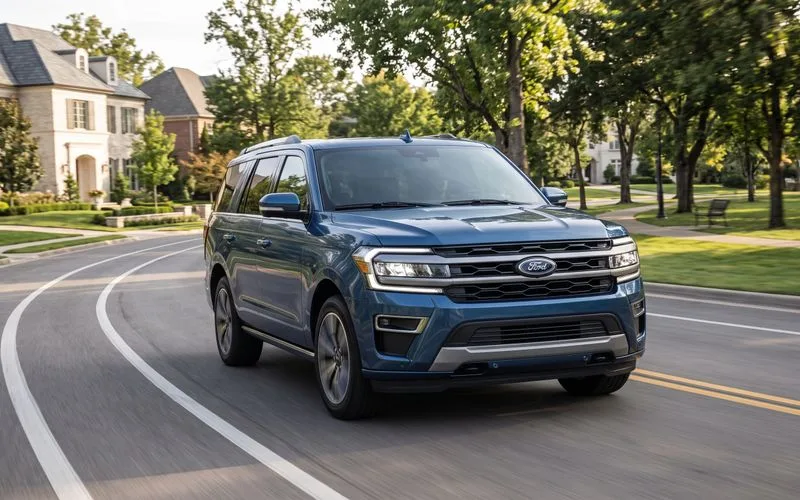 Ford ExpeditionFull-Size SUVBetter at: Overall value
Nearly the same size and mission with better reliability, better value per dollar, and onboard AC power the Wagoneer does not offer.
Compare 2.63C+
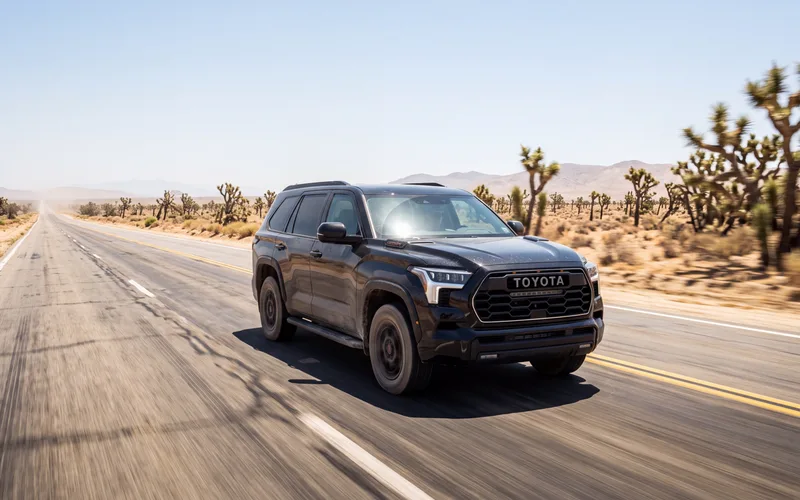 Toyota SequoiaFull-Size SUVBetter at: Reliability
A standard hybrid V6 and Toyota's dependability record fix the Wagoneer's two biggest problems — fuel cost and long-term risk.
Compare 2.79B-
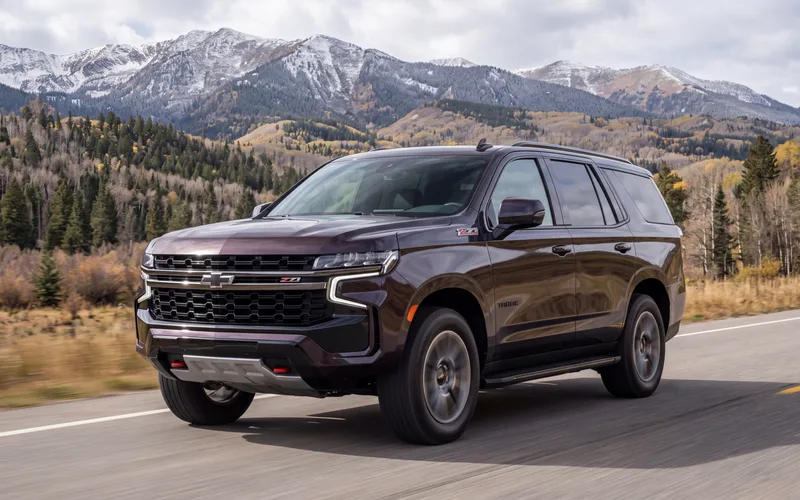 Chevrolet TahoeFull-Size SUVBetter at: Resale value
Costs less up front, holds its value far better, and is the safer financial choice if you plan to sell in five years.
CompareSubject scores by year
Hover or tap a score to see what moved it versus the year before. A corner mark flags a big swing.
| Year | Performance | Efficiency | Safety | Space | Cost | Reliability | Tech | Use-case | Driving | Value |
|---|---|---|---|---|---|---|---|---|---|---|
| 2026 | 77 | 32 | 68 | 85 | 14 | 54 | 79 | 70 | 66 | 64 |
| 2025 | 74 | 36 | 64 | 82 | 32 | 52 | 74 | 68 | 63 | 62 |
| 2024 | 75 | 36 | 69 | 82 | 24 | 48 | 73 | 68 | 61 | 68 |
| 2023 | 77 | 36 | 68 | 83 | 27 | 43 | 74 | 65 | 62 | 67 |
| 2022 | 66 | 22 | 66 | 83 | 23 | 40 | 74 | 63 | 59 | 57 |
Compare two years
Best fit & conditions
Higher scores mean a better fit for that use case. Learn more about use-case fit →
Subject profile
Detailed scoring by subject
1Performance & PowertrainMid-pack among this car's ten categories.2.47C+
Sole engine across all 2022 Wagoneer Series I/II/III trims: 5.7L V8 with 48-volt eTorque mild-hybrid assist.
Peak torque of the standard (and only) 5.7L eTorque V8.
Instrumented tests of the 5.7L V8 4x4 Wagoneer cluster around 7.2-7.3 seconds; this large body-on-frame SUV is not quick despite its power.
Reviewers consistently praise the eTorque V8 for smooth, seamless power delivery, including notably smooth auto stop/start restarts from the mild-hybrid system.
The 8-speed automatic (TorqueFlite 8HP75) is widely described as smooth and well-timed with imperceptible shifts.
Maximum tow rating when properly equipped with the factory tow package.
4x4 is optional (not standard) but widely available across all three trims, with a range of sophisticated systems from Quadra-Trac I up to Quadra-Trac II and Quadra-Drive II (electronic limited-slip rear diff), plus Selec-Terrain modes.
Capable 4x4 hardware and terrain modes but no dedicated off-road trim, no factory lockers as standard, and modest 8.3 in ground clearance (no adjustable air suspension on non-Grand Wagoneer) — light-duty off-road capability rather than genuine off-road credibility.
Single powertrain across the entire 2022 Wagoneer range: the 5.7L eTorque mild-hybrid V8, with no hybrid, PHEV, EV, or alternate-engine choice (that breadth arrived later, e.g. the 3.0L twin-turbo I6 on Grand Wagoneer in later years).
2Efficiency & RangeThe Wagoneer's lowest-graded category.0.00F
EPA combined rating for the 5.7L eTorque V8 4x4, the volume Jeep-branded configuration; 2WD is slightly better at 18 combined.
EPA city rating, 5.7L eTorque V8 4x4.
EPA highway rating, 5.7L eTorque V8 4x4; sits at the bottom of the full-size SUV band given the vehicle's mass and body-on-frame construction.
EPA-derived range from the 26.5-gallon fuel tank at the combined rating for the 4x4 configuration; the large tank offsets the modest MPG.
EPA annual fuel cost estimate at standard 15,000 mi/yr assumptions for the 4x4 V8; among the highest in the segment, above the full-size SUV band ceiling.
Midgrade (89 octane) fuel is recommended for the 5.7L eTorque V8 for best performance, though regular 87 octane is usable — a modest but real added running cost versus a regular-only vehicle.
3SafetyOne of the Wagoneer's strongest categories.2.49C+
NHTSA never tested the 2022 model year itself — both the 2WD and 4WD 2022 Wagoneer entries in the agency's own database are 'Not Rated' across every category. The very next model year on the unchanged WS-generation body-on-frame structure (2023, same 5.7L V8 base powertrain, no reported chassis or restraint-system change) scored 4 stars overall: 5-star frontal (5 driver / 4 passenger), 5-star side, and a 3-star rollover rating (21.2% risk 4WD, 22.8% RWD). Absent a structural change between the two model years, that figure is carried back as the best available estimate, but confidence is held to MEDIUM rather than HIGH because the exact 2022 vehicle was never itself put through the test.
IIHS has no test entry for the 2022 model year at all — its own Wagoneer ratings page states the results 'apply to 2023-25 models' and frames the nameplate as reintroduced with the 2023 model year, even though Jeep's own press kit and the registry's production record place the WS generation's launch, and retail sales, in model year 2022. Practically that means a 2022 Wagoneer buyer got no IIHS award of any kind — not the Marginal-in-one-test Top Safety Pick the identical-structure 2023-25 cars earned, nothing. On the (reasonable, given no reported structural change) assumption the 2022 body and restraint system are what was tested starting in 2023 — small overlap front Good/Good, moderate overlap original Good but the updated protocol Marginal, updated side Good, seat belt reminders Marginal, Top Safety Pick with TSP+ withheld over that Marginal result — this sits in the same territory as the tested years but is marked down from a nearly-TSP score to reflect that the actual 2022 car carries no verified award and no test data of its own.
In its launch year the Wagoneer (as distinct from Grand Wagoneer) was sold only in Series II and Series III — there was no cheaper base trim to strip equipment from — and both the Series II and Series III window stickers show the full core ADAS suite as standard, not optional: Adaptive Cruise-Control with Stop and Go, Active Lane-Management (lane departure warning + lane keep assist), Full-Speed Forward-Collision Warning Plus with Pedestrian Emergency-Braking, and Blind-Spot and Rear Cross-Path Detection, plus ParkView rear camera w/washer and ParkSense front/rear park-assist. That is comprehensive breadth standard on the entry trim of the entire lineup, better than several full-size rivals that reserve stop-and-go ACC or blind-spot monitoring for upper trims. Held just below the very top of the band because the second tier — automatic high-beam headlamps, the 360-degree surround-view camera, drowsy driver detection, traffic sign recognition and Intersection Collision Assist — is Series III-standard-or-optional-package equipment only, not present on the volume Series II.
IIHS's front-crash-prevention test data for the Wagoneer — pedestrian Good, vehicle-to-vehicle 2.0 Acceptable — covers the 2023-25 model years, not 2022 itself, and the underlying camera-and-radar hardware (Full-Speed Forward-Collision Warning Plus with Pedestrian Emergency-Braking) is the same equipment Stellantis's 2022 launch press kit describes as standard across the lineup, so the later result is carried back as the best estimate rather than treated as untested. That keeps this out of the top band — a real vehicle-to-vehicle weakness under the tougher 2.0 protocol — while the pedestrian result is genuinely strong. Consumer Reports' instrumented 2022 Wagoneer test separately recorded a long 149-ft stop from 60 mph, comparable to the Ford Bronco's, which is a braking-hardware concern rather than an AEB-software one but is a small additional reason not to score this higher.
Blind-Spot and Rear Cross-Path Detection is standard equipment on both 2022 trims, not a package add-on, and ParkSense front/rear sensors plus a back-up camera with washer come with it — real coverage on the entry trim of a full-size SUV. That is the top of the middle band. It stops short of the upper band because the coverage is alert-only: no steering or braking intervention against a vehicle in the blind zone, and no safe-exit alert for rear occupants opening a door into traffic; the 360-degree surround-view system that would add compensation is Convenience-Group-optional even on Series III, absent entirely from the volume Series II.
Active Lane-Management — lane departure warning paired with lane keep assist — is standard on both 2022 trims, so every Wagoneer that year keeps itself between the lines. True lane centering is the weaker half: Jeep's combined Level 2 system, Active Driving Assist (hands-on-wheel, eyes-on-road lane centering plus stop-and-go ACC), was offered as an available feature for the 2022 model year rather than standard equipment — it does not appear on either window sticker's standard-equipment list. Reviewer accounts of the Stellantis lane-centering system across the Wagoneer/Grand Cherokee family describe it as capable but occasionally intrusive, taking over more assertively than expected near lane lines and needing a quick manual correction alongside large trucks — enough to keep this solidly mid-band rather than top-band, and evidence is drawn from the family-level system rather than an instrumented 2022 Wagoneer test specifically.
Adaptive Cruise-Control with Stop and Go is standard on both 2022 trims — full-speed-range longitudinal control including a full stop and resume in traffic, with no lower trim to gate it behind, which is stronger footing than several later model years where a cheaper base trim reintroduced the option question. The integration half is where 2022 falls short of the top band: the combined highway assist, Active Driving Assist, is an available option rather than standard equipment, so the volume trim gets refined cruise control without the lateral half working as one integrated system. That keeps this just below the top band rather than in it.
There was no hands-free driving option on the 2022 Wagoneer despite Stellantis's own 2022 launch press kit flagging 'Hands-free Active Driving Assist' for 'late availability' that model year. The rollout never reached the Wagoneer family in 2022: Stellantis's first actual hands-free launch was February 2024, on the Grand Cherokee/Grand Cherokee L Overland and Summit only, and Wagoneer/Grand Wagoneer owner-forum and dealer sources place the Wagoneer's own first hands-free model year at 2025 — three years after the 2022 promise. Scored just above the floor rather than at zero because the camera-and-radar hardware and a mature hands-on Level 2 system (Active Driving Assist) were present as an option that year, so the gap is a software/mapping entitlement that never shipped for this nameplate rather than a missing sensor set.
LED headlamps are standard on both 2022 trims, but automatic high-beam assist — the feature IIHS's Good rating is conditioned on — is standard only on Series III and unlisted on the Series II sticker, meaning the volume trim ships with the Acceptable-rated headlamp hardware. IIHS's own headlight test data (Good with high-beam assist, Acceptable without) applies to the 2023-25 model years rather than 2022 directly, but the equipment split it describes — auto high-beam gated to the top trim — matches the 2022 window stickers exactly, so it is carried back as the best estimate. Good on the trim few volume buyers choose, Acceptable on the one most do: squarely the middle band.
Consumer Reports' own instrumented 2022 Wagoneer test found the tall, upright driving position gives commanding, wide-open sightlines to the front and sides through the 'extremely tall and square side windows,' but flagged 'large pillars all around the vehicle' that create real blind spots. Camera compensation on the volume Series II is limited to a back-up camera with washer and ParkSense sensors; the 360-degree surround-view system that would offset the pillar-created blind zones is a Series III Convenience Group option, not standard equipment on the entry trim. Average visibility with real, reviewer-documented blind zones and only partial standard compensation — squarely the middle band, and HIGH confidence because this is a direct instrumented review of the 2022 model year rather than a carried-over figure.
The 2022 Wagoneer has real hardware breadth — three complete LATCH positions across the second-row bench plus a fourth in the third row — and Cars.com's hands-on 2022 installation test successfully fit three car seats across the second row, with a car-seat-friendly second-row tilt that preserves third-row access. That is genuine multi-seat capability. It falls short of the top band because the same test found the lower anchors 'set up high against the seat cushion' and 'exposed in upholstery pockets,' requiring real effort ('a little muscle') to connect for both infant and convertible seats, and the fixed head restraints interfere once a convertible seat's back is raised for a taller child — Cars.com graded every configuration tested a B (one fit/room/connection issue per category). IIHS's Good+ LATCH hardware rating (best tier, bonus attachment positions) applies to the 2023-25 model years rather than 2022 directly, but the same generation and seating hardware make it a reasonable read on the 2022 car's anchor count; confidence is MEDIUM because the direct-effort complaint is 2022-specific hands-on evidence while the hardware-tier rating is carried from later years.
4Space & ComfortThe Wagoneer's best-graded category.3.64A-
Volume Series II trim comes standard with three-row bench seating for eight; second-row captain's chairs (7-passenger) are a no-cost option on some configurations.
Full-size body-on-frame SUV cabin gives generous front headroom, in the upper-middle of the segment band.
Front legroom sits mid-pack for the full-size SUV segment.
Second-row headroom is at the top of the SUV normalization band, reflecting the Wagoneer's tall, boxy full-size roofline.
Second-row legroom is excellent for the segment, supporting the vehicle's reputation as a genuine three-adult-third-row hauler.
The power-reclining third row is genuinely adult-usable — reviewers note it can comfortably seat three adults, unusual even among full-size SUVs — with 36.6 in of third-row legroom and easy access via the low step-in height and wide door openings.
Cargo volume behind the second row with the third row folded is strong for the segment.
Maximum cargo volume with all rear seats folded is competitive within the full-size SUV band.
The flip-up lower touchscreen reveals a deep hidden storage cavity with a wireless charging pad, and the center console is large, but the Wagoneer doesn't introduce a segment-defining storage innovation (e.g. a GM-style bench-to-console giga console).
Reviewers repeatedly praise all-row seat comfort — supportive, well-cushioned front seats and a genuinely usable, cushy third row — consistent with the model's family-road-trip-focused positioning.
Reviewers describe a settled, stable highway ride with an independent rear suspension smoothing broken pavement, but note pickup-truck-like jitteriness on rougher back roads with the standard steel-spring setup — the optional air suspension package improves this further but isn't standard on the volume Series II.
Active noise cancellation and a well-isolated cabin earn praise for a quiet, cocoon-like highway experience, a step above typical full-size SUV norms though not class-leading like the priciest luxury rivals.
Series II standard/available equipment includes heated and ventilated front and second-row seats, a heated steering wheel, tri-zone automatic climate control, and remote start — a rich comfort-feature set for the price point, though not quite the four-zone/rear-seat-touchscreen climate control reserved for higher Grand Wagoneer trims.
5Cost of OwnershipOne of the Wagoneer's weakest categories.0.00F
Entry Series I trim starting price for the 2022 model year.
Series II is the mainstream trim (adds Alpine 9-speaker audio, tri-zone climate, Nappa leather); 4x4 is the common configuration for a body-on-frame full-size SUV in this segment.
CarEdge class estimate for the Wagoneer nameplate; note this may understate real-world costs given the 2022 model's mixed reliability record (14 recalls, electrical/steering complaints).
CarEdge projects a Wagoneer retains about $32,800 of a ~$69,700 average new price after 5 years (~47%); iSeeCars independently estimates ~51% retention, better than the large-SUV class average of ~44%.
Standard Stellantis/Jeep basic limited warranty, at the low end of the segment band (segment leaders like Genesis/Kia/Hyundai offer longer).
Standard Stellantis powertrain coverage, at the bottom of the 5-10 year segment band.
Jeep Wave gives the first 3 oil changes and tire rotations free within the first 36 months (no mileage cap) plus a $60 rental allowance during warranty service, VIP event access and 24/7 roadside/trip-interruption support — a real but modest package versus rivals offering longer full-service complimentary maintenance.
$71,995 volume-trim price minus its estimated resale value after 5 years (47% retained, or about $33,838) leaves about $38,157 in depreciation. Add the projected $3,720 in 5-year maintenance and repairs, and owning this vehicle for 5 years costs about $41,877 in total.
6Reliability & QualityOne of the Wagoneer's weakest categories.0.67F
2022 is the debut model year of the all-new WS-generation Wagoneer, so there is no track record to predict from, and the early signals that do exist are poor: Consumer Reports named Jeep the worst car brand for 2022 overall, and owner-recommendation rates for the model itself are weak. This is a below-average prediction, not a mixed one — the launch-year evidence points the same direction across sources.
Consumer Reports placed Jeep dead last among all brands in its 2022 Brand Report Card — the single worst finish in the industry that year, not merely bottom-third — citing the new Grand Wagoneer/Wagoneer launch and the Gladiator among the drags on the score. That is the clearest possible bottom-of-the-pack signal for the exact year this vehicle launched.
NHTSA shows 9 recalls against the 2022 Wagoneer within its first few model years — an unusually high count for a debut vehicle — covering a second-row seat recliner strap that can bind, third-row seat belt buckles that can be inaccessible or damaged, improperly installed B-pillar trim that can block side-curtain airbag deployment, door trim that can detach, and a rearview-camera software fault (FMVSS 111). On top of the recalls, NHTSA opened a federal investigation (2024) into loss-of-power/stalling on 2022 5.7L eTorque Wagoneer and Ram 1500 trucks covering 150,000+ vehicles, and Quadra-Lift air suspension drew at least three separate TSBs (02-001-22, 08-044-22, 08-089-22) for height-sensor wiring shorts and 'Service Air Suspension' faults. This is repeated, safety-relevant recall activity plus an open federal probe, not a clean record.
The standard 2022 Wagoneer engine is the 5.7L Hemi V8 (392 hp/404 lb-ft) with eTorque mild-hybrid assist, paired to an 8-speed automatic — the Hemi long-block itself has run since 2003 and is a genuinely proven design, and the ZF-derived 8-speed has a solid record. That track record is undercut by the eTorque system specifically: NHTSA opened a federal investigation into 2022 MY 5.7L eTorque Wagoneer and Ram 1500 vehicles stalling and losing power at low speed, with roughly 80 owner complaints and 150,000+ vehicles covered — a real, documented red flag on the newer half of the powertrain rather than the base engine.
Reviewers describe the cabin as a genuine luxury environment for the money — open-pore wood, leather, and metal trim with 'few things you touch that are subpar' — which is a real strength of the launch model. It falls short of a class-leading mark because, unlike the later Wagoneer, the 2022 launch year had not yet collected the owner-satisfaction accolades (e.g. J.D. Power APEAL segment win) that would validate the reviewer praise with a broader data source.
As a first-model-year vehicle built on an all-new platform, assembly consistency lagged the interior's material quality: owners and reviewers report trim rattles, a loose headliner, inconsistent panel gaps, and highway-speed vibration, and CarComplaints logs 207 owner-reported problems for the 2022 model year with AC/heater, brakes and electrical among the most common. A federal recall for door and quarter-window trim that 'may not have been installed properly' and can detach (covering 2022-2025 MY) is an assembly-quality failure by definition, not just a subjective gripe.
Jeep did not simply sell the Wagoneer through its full ~2,000-plus-dealer CDJR network at launch — only stores that earned a J.D. Power Customer First award and committed to a dedicated Wagoneer showroom section, specially trained 'Wagoneer Ambassador' staff (90+ hours of training) and the brand's 'Ten Customer Promises' service standards were certified to sell and service it. That raises the floor on service quality per dealer but narrows the network at launch relative to Jeep's full footprint, and overall Jeep brand service satisfaction sat below the mass-market average in this era — a mixed picture rather than a clear strength.
The Wagoneer shares its body-on-frame DT-platform underpinnings with the high-volume Ram 1500, which should help mechanical-parts supply over time, but as a brand-new, low-volume, feature-dense launch vehicle in its first model year, Wagoneer-specific trim, electronics and body parts had not yet built the aftermarket depth or parts-pricing history of an established model — RepairPal notes it does not yet have enough data to quote a reliable annual cost for the 2022 model specifically. Combined with the documented electrical/infotainment fault rate, that points to a below-average, not typical, near-term ownership-cost picture.
7Technology & InfotainmentOne of the Wagoneer's strongest categories.3.00B
The volume Wagoneer Series II ships with a 10.1-inch Uconnect 5 touchscreen — mid-pack for the segment; the larger 12-inch unit is reserved for Grand Wagoneer trims.
Uconnect 5 is widely praised as fast and intuitive, with smooth, lag-free navigation and strong CarPlay integration — reviewers rank it among the best systems in the class.
Wireless Apple CarPlay and Android Auto are standard across Wagoneer trims via Uconnect 5, with reliable, rock-solid connectivity in testing.
Uconnect 5 includes natural-language voice recognition and built-in Amazon Alexa, plus standard native navigation, but most owners default to CarPlay/Android Auto navigation for daily use.
The standard audio system on the volume Series II Wagoneer is adequate but unremarkable; the acclaimed McIntosh MX950/MX1375 premium systems are optional upgrades reserved primarily for higher Series III and Grand Wagoneer trims, so the volume-trim baseline doesn't reach the segment's top tier.
A configurable 10.25-inch frameless digital gauge cluster is standard on the Wagoneer (a 12.3-inch unit is reserved for Grand Wagoneer), offering nearly two dozen customizable display menus — a strong, modern standard feature though not the largest in class.
Uconnect 5 supports over-the-air updates for infotainment software and maps, but the 2022 launch-year Wagoneer does not offer the broad whole-vehicle feature OTA capability of EV-first competitors — placing it in the infotainment/maps-only tier rather than full-vehicle OTA.
The Jeep companion app supports remote start, lock/unlock, and vehicle locate, covering the core remote functions expected of the segment, though Uconnect-brand apps of this era were commonly reported as less polished and more subscription-dependent than rivals like FordPass or the MyGMC app.
The Wagoneer offers eight standard USB ports (up to 11 with the rear-seat entertainment package) split across USB-C and USB-A for front and rear rows, plus a wireless charging pad — an abundant, well-distributed device-power setup.
Proximity keyless entry, push-button start, remote start, and a power liftgate are standard/widely available on the volume Series II trim, matching full-keyless-convenience expectations for the segment.
A standard rearview camera and parking sensors are backed by an available 360-degree Surround View camera with Night Vision pedestrian/animal detection — a strong parking-aid suite, though the surround camera and night vision are optional rather than standard on Series II.
A full-color, configurable windshield head-up display (up to 10 inches, with simple/standard/advanced layouts) is available on the Wagoneer, though it is an option rather than standard equipment on the volume Series II trim.
8Use-Case FitMid-pack among this car's ten categories.2.26C
Wide rear door openings, a low-enough step-in aided by available side steps, and abundant second-row space make loading kids and gear straightforward; LATCH anchors are provided across the second row. It falls short of segment-benchmark because captain's-chair configurations trade away one seating position and stroller-friendly cargo access, while the standard bench remains the family-practical choice.
Jeep advertised 120+ standard and available safety features including forward collision warning with active braking, blind-spot monitoring and trailer sway control, but IIHS had not yet crash-tested the 2022 model year, and several ADAS features are bundled into optional packages rather than standard on the volume Series II — a real but unverified and partly extra-cost safety proposition at launch.
Reviewers consistently single out the Wagoneer as an excellent family road-trip vehicle: quiet, stable highway ride, power-reclining and heated/ventilated seats across rows, rear entertainment options, and genuinely usable three-row seating for long-haul comfort.
A comfortable, high seating position and smooth eTorque-assisted powertrain make low-speed driving relaxed, but the Wagoneer's full-size body-on-frame footprint, weight (~5,960 lbs) and wide 38-ft turning diameter add real fatigue in dense traffic and tight streets compared with more compact crossovers.
EPA-rated 16/22/18 mpg (2WD) or 15/20/17 mpg (4WD) on midgrade fuel is well below segment norms for commuting cost, driven by the standard 5.7L V8 — a genuinely expensive vehicle to commute in relative to most SUV rivals.
At roughly 214 in long with a 38-ft turning diameter, the Wagoneer is among the largest vehicles in the SUV segment to park and maneuver; standard rear camera and available 360-degree surround view help but don't offset the sheer footprint in tight urban settings.
A 392-hp/404-lb-ft V8 and up to 10,000 lb of towing capacity (with the tow package; ~8,790 lb on the base configuration) give the Wagoneer serious hauling headroom for a passenger SUV, backed by genuine body-on-frame, Ram 1500-derived underpinnings rather than a unibody crossover's more modest limits.
The body-on-frame DT-platform chassis and long-proven 5.7L Hemi V8 give a mechanically sound foundation for work duty, but as an all-new launch-year vehicle the Wagoneer has no fleet track record, and documented early reliability issues (NHTSA investigation into eTorque stalling, multiple recalls) argue against assuming it will hold up unproven under hard use.
As a luxury-oriented three-row SUV, the Wagoneer offers little in the way of jobsite-specific provisions — no bed, no washable cargo liners as standard, and no meaningful upfit/rack ecosystem — beyond a trailer hitch and generic roof-rail tie-down points shared with the rest of the segment.
Highway comfort is a genuine strength — quiet cabin, supportive seats, and available ADAS reduce driver fatigue — and the 26.5-gallon tank gives roughly 400+ miles of highway range at the EPA-rated 20-22 mpg highway figure, offsetting the V8's thirst on long trips.
Optional 4x4, a torquey V8, and up to 10,000 lb of towing make the Wagoneer capable of hauling toys and handling gravel/light backcountry roads, but reviewers are explicit that its length and long rear overhang rule out serious off-roading — a road-trip-and-gravel adventure vehicle, not a trail rig.
A large cargo bay that expands from 27.4 to 116.7 cu ft with both rear rows folded, plus roof rails and a standard tow hitch capability, gives strong flexibility for bulky gear, though the folding mechanism and load floor aren't quite as flat or clever as segment-best rivals.
9Driving ExperienceMid-pack among this car's ten categories.2.00C
The independent rear suspension aids composure for a body-on-frame full-size SUV, but at nearly 6,000 lb curb weight the Wagoneer is secure rather than agile — reviewers describe competent, unremarkable dynamics typical of the segment, not engaging handling.
Rack-and-pinion steering is precise enough for daily use but, consistent with most comfort-tuned full-size American SUVs, offers little genuine road feedback — accurate but numb rather than communicative.
No instrumented stopping-distance data was found for the 2022 model specifically; given the vehicle's near-6,000-lb curb weight, adequate but unremarkable braking with a soft-to-firm pedal is the reasonable expectation for a full-size SUV in this class, absent evidence of any specific brake criticism.
The 5.7L V8 with eTorque mild-hybrid assist and an 8-speed automatic delivers strong, generally smooth response, with eTorque helping mask stop-start transitions — a genuine refinement plus, tempered by the documented eTorque-related stalling issue under NHTSA investigation on some 2022 units.
The V8 is reasonably well isolated under normal driving with acoustic measures contributing to the praised quiet cabin, though it becomes more audible under hard acceleration typical of a large-displacement engine at full throttle.
A 38-ft turning diameter sits at the wide end of the SUV normalization band, reflecting the Wagoneer's full-size, body-on-frame footprint.
A commanding, SUV-typical seating height, wide adjustability range, and well-organized controls (aided by the large touchscreen and physical climate controls) give good sightlines and comfortable ergonomics for a range of driver sizes, with side steps easing ingress/egress on taller configurations.
The Wagoneer is engineered as a comfort- and luxury-first family hauler rather than a driver's vehicle; it's pleasant and effortless but reviewers don't recommend it to enthusiasts seeking engagement — appliance-like competence rather than genuine driving enjoyment.
10Value & Market PositionMid-pack among this car's ten categories.1.83C-
Even the entry Series I comes standard with a 12-inch touchscreen, tri-zone climate control, and an extensive standard safety-tech suite (Edmunds noted the Wagoneer had the most standard safety features versus the Tahoe and Expedition), but the overall price is well above rivals for equivalent content.
Reviewers flagged the Wagoneer as roughly $10,000 pricier than top trims of its main full-size SUV rivals before its criticized $2,000 destination charge, and real-world fuel economy (~15 mpg observed) trails the class — content is strong but the price-to-content ratio underwhelms.
Three series (I/II/III) each offered in 4x2 or 4x4 and with a Carbide appearance package gives a reasonably wide, well-spaced range, though there is no true low-cost work/fleet trim the way domestic rivals offer.
36,221 Wagoneers sold in the US in 2022, a solid debut for an all-new nameplate re-entering the full-size SUV segment, though still well behind volume leaders like the Tahoe/Suburban and Expedition.
The revived Wagoneer name carries real heritage halo and was positioned as Jeep's flagship, but as an unproven new luxury sub-brand its image was still being established in 2022, and early quality complaints (14 recalls, electrical/steering issues) tempered the launch-year perception.
As a hot, supply-constrained launch-year vehicle during the chip-shortage era, 2022 Wagoneers commonly transacted at or near MSRP with limited factory incentives; some dealers even marked up the related Grand Wagoneer.
The 2022 model year is the debut of the all-new fourth generation (WS), built on the Ram 1500 (DT) chassis and revealed in March 2021 — as fresh as a nameplate can be.
Launch reviews praised the cabin materials, standard safety tech, and best-in-test 10,000-lb towing capacity (Edmunds comparison vs. Tahoe/Expedition), but knocked a glitchy infotainment system, poor fuel economy, and steep pricing; no major segment awards, and early reliability complaints further muted reception.