
The verdict
A struggling luxury off-road suv, strong on reliability and held back by efficiency.
The 2018 Lexus GX 460 is a genuine Land Cruiser Prado in a luxury suit: a 301-hp V8, a steel ladder frame, full-time four-wheel drive with low range, a 6,500-lb tow rating and the best reliability and resale record in the luxury three-row class. It is also, by 2018 standards, badly out of date — 16 MPG combined on required premium fuel ($4,850 a year), an 8-inch screen with no CarPlay or Android Auto, and an active-safety suite you could only get by buying the $63,530 Luxury grade and adding a $4,340 package. Buy it if you want something that will still be running in 2040 and can take you down a fire road to get there. Skip it if you commute, care about screens, or need real cargo room behind three rows — there are only 11.6 cu ft back there with everyone aboard.
Jump to scoresStrengths
- Reliability that is genuinely best-in-class
- Real off-road hardware, standard on every one
- Airy second row and seven seats standard
What holds it back
- It drinks premium fuel at 16 MPG
- Driver-assist safety is locked behind the top trim
- The tech was old in 2018 and much of it is now dead
Top alternatives
Cars shoppers cross-shop with the Lexus GX 2.40C+
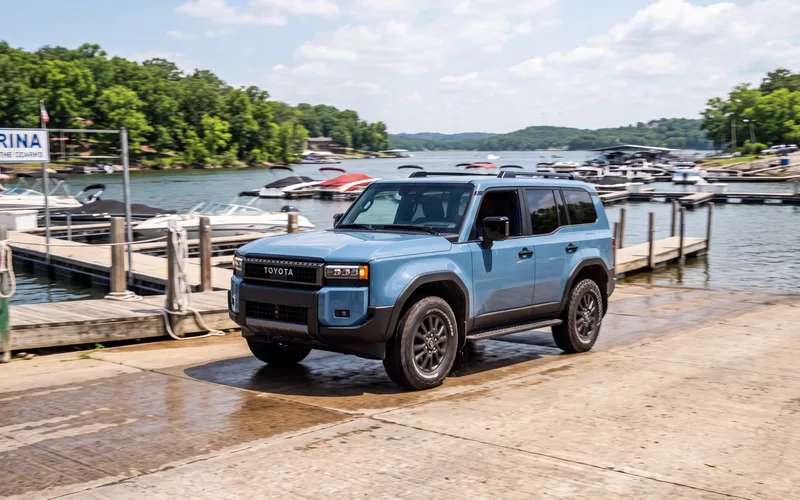 Toyota Land CruiserOff-Road SUVBetter at: Value and efficiency
The same platform and off-road hardware with a standard hybrid powertrain and a much lower price, giving up the GX's third row, nicer interior and bigger screen.
Compare 2.34C+
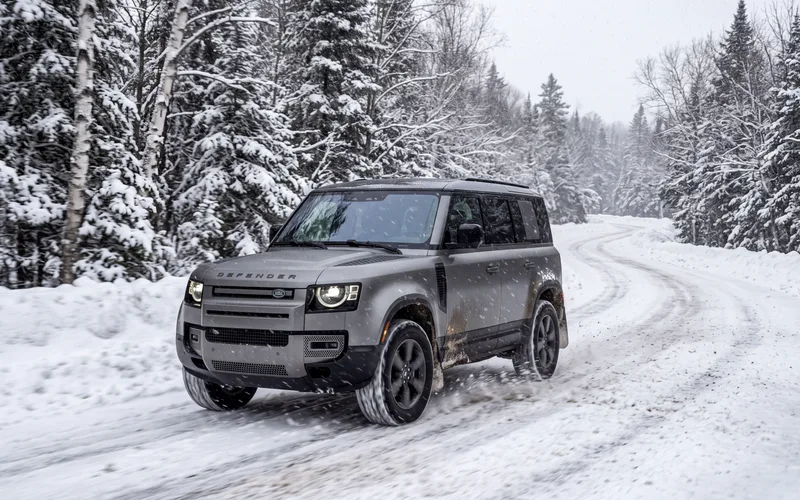 Land Rover DefenderLuxury Off-Road SUVBetter at: Ride comfort
The most direct luxury off-road rival, with a far better ride on air suspension and a plug-in option, at the cost of Lexus-grade reliability and resale.
Compare 2.88B-
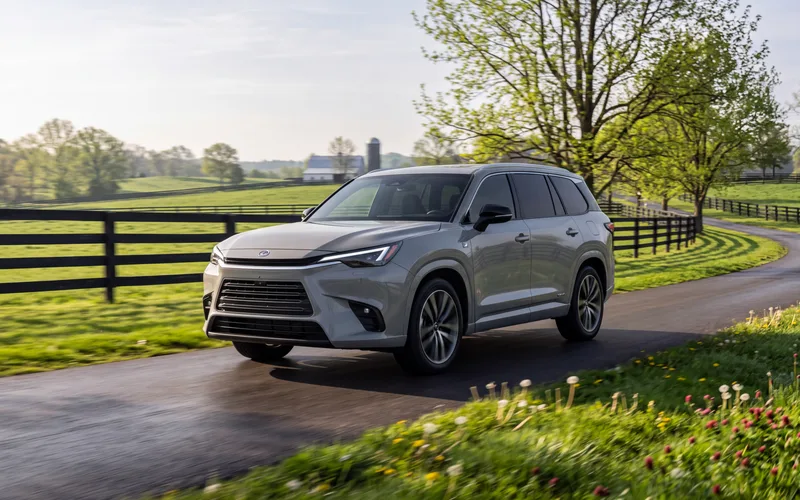 Lexus TXMid-Size Luxury SUVBetter at: Three-row space
If the third row and the fuel bill are what is bothering you, the TX is the same brand with adult-usable seating, hybrid and plug-in power and roughly double the MPG.
CompareHow it's evolved
10 scored model years · 2017–2026
Subject scores by year
Hover or tap a score to see what moved it versus the year before. A corner mark flags a big swing.
| Year | Performance | Efficiency | Safety | Space | Cost | Reliability | Tech | Use-case | Driving | Value |
|---|---|---|---|---|---|---|---|---|---|---|
| 2026 | 72 | 12 | 68 | 61 | 48 | 74 | 80 | 69 | 69 | 76 |
| 2025 | 73 | 12 | 68 | 63 | 50 | 67 | 80 | 65 | 67 | 77 |
| 2024 | 71 | 12 | 66 | 62 | 50 | 60 | 77 | 62 | 64 | 76 |
| 2023 | 57 | 10 | 47 | 57 | 56 | 89 | 47 | 60 | 57 | 61 |
| 2022 | 57 | 10 | 47 | 57 | 57 | 89 | 47 | 59 | 57 | 59 |
| 2021 | 56 | 10 | 47 | 55 | 58 | 90 | 34 | 54 | 59 | 59 |
| 2020 | 57 | 10 | 47 | 56 | 58 | 88 | 37 | 59 | 56 | 62 |
| 2019 | 57 | 10 | 35 | 56 | 57 | 86 | 35 | 56 | 57 | 58 |
| 2018 | 57 | 10 | 35 | 56 | 55 | 87 | 34 | 57 | 60 | 57 |
| 2017 | 57 | 10 | 32 | 55 | 61 | 85 | 33 | 55 | 59 | 59 |
Compare two years
Best fit & conditions
Higher scores mean a better fit for that use case. Learn more about use-case fit →
Subject profile
Detailed scoring by subject
1Performance & PowertrainOne of the GX's strongest categories.1.81C-
2018 is a carry-over year deep inside the second-generation GX (J150, 2010–2023) — the changes are trim-level only (standard Semi-Aniline bench seat on Luxury, captain's chairs added to the Sport Design Package), and the powertrain is untouched: the naturally aspirated 4.6-liter 1UR-FE V8 on the base GX 460, Premium and Luxury alike. 301 hp is respectable for a mid-size SUV but unremarkable against turbocharged rivals, landing in the lower-middle of the 150–550 hp SUV band.
Peak torque of 329 lb-ft arrives high at 3,500 rpm, characteristic of a naturally aspirated V8, so the GX feels less muscular off idle than turbocharged rivals making similar peaks from around 1,600 rpm. Mid-pack in the 130–500 lb-ft SUV band.
No publication instrumented a 2018 GX specifically, but the car is mechanically unchanged across the 2017–2020 window and is bracketed by two real tests: MotorTrend recorded 7.40 s (15.80 s quarter at 88.6 mph) in a 2017 Luxury and Car and Driver 7.20 s (15.60 s at 90.0 mph) in a 2020 Luxury. Adequate but unexceptional for the class — roughly 5,130 lb of curb weight and only six forward ratios blunt what the V8 delivers.
The naturally aspirated 1UR-FE is one of the smoothest, quietest engines fitted to any body-on-frame SUV: no turbo lag, no hybrid handoffs, linear throttle response and a muted V8 note under load — 2018 reviewers routinely single out the drivetrain's silkiness as the GX's most convincing luxury credential even while calling the package dated. It misses the top band only because the torque peak sits at 3,500 rpm, so real urgency requires a downshift rather than arriving instantly.
The A760F six-speed sequential-shift automatic shifts smoothly and rarely hunts, but by 2018 it was already a generation behind the 8- and 9-speed units in every luxury mid-size rival — the wide ratio spread makes it slow to find the right gear on a downshift and leaves the engine spinning at highway speed. Competent and unobtrusive rather than crisp; it scores marginally above the 2020 car only because the gap to the segment was narrower in 2018.
6,500 lbs is a strong rating for a mid-size SUV and sits near the top of the 1,000–8,000 lb band — a product of the steel perimeter frame, the V8's tall gearing and standard full-time four-wheel drive. It comfortably covers a mid-size boat or a two-horse trailer, though full-size body-on-frame rivals tow considerably more.
Full-time four-wheel drive is standard on every 2018 GX — there is no two-wheel-drive version — and the hardware is genuine truck equipment rather than a slip-and-grip system: a TORSEN torque-sensing limited-slip center differential splitting power 40:60 and electronically lockable, feeding a two-speed transfer case with low range, plus A-TRAC, Hill-start Assist and Downhill Assist Control. Almost nothing in the SUV field is better equipped; it sits a point under the later cars only because the terrain-mode software stack had not yet arrived.
Land Cruiser Prado underpinnings give the 2018 GX real credibility: a steel ladder frame, low range, a lockable TORSEN center diff, and the standard Kinetic Dynamic Suspension System that decouples the anti-roll bars for articulation (Lexus claims up to 50% less body lean). What holds it below the 2020-and-later cars is the terrain-management software: Crawl Control is confined to the Luxury grade's Driver Support Package, and Multi-Terrain Select and the Multi-Terrain Monitor were not offered in the US on the 2018 GX at all — both arrived with the 2020 Off-Road Package. Add modest 8.1 in of ground clearance, a 21-degree approach angle limited by the long front overhang, no front or rear locking differentials and no dedicated off-road variant, and it stays well clear of the top band.
A single powertrain across the entire 2018 range — the 4.6L V8 with the six-speed automatic and full-time 4WD, identical on GX 460, Premium and Luxury. No turbocharged alternative, no hybrid, no plug-in, no diesel, no drivetrain choice of any kind. That is the definition of the bottom band; electrified and twin-turbo options only arrived with the J250 GX 550 for 2024.
2Efficiency & RangeThe GX's lowest-graded category.0.00F
16 MPG combined sits at the floor of the gas-SUV band. The 2018 GX 460 stacks every economy penalty at once: a 4.6L naturally aspirated V8, only six forward ratios, roughly 5,130 lb of steel body-on-frame chassis, permanently engaged four-wheel drive, and no electrification or stop-start of any kind. Lexus's own marketing quoted 15/19; the EPA's certified 2018 figures are a point lower on the highway cycle.
15 MPG city is near the bottom of the gas-SUV band. With a large-displacement V8 hauling two and a half tons through a full-time 4WD driveline, no stop-start and nothing to recover braking energy, stop-and-go driving is where the GX is at its worst.
18 MPG highway falls below the band floor, and is a point worse than the later refreshed cars rate. The tall, brick-shaped body and the six-speed automatic's 0.586 top gear — no real overdrive by modern standards — leave little relief at a cruise: only three MPG separate city from highway.
A generous 23.0-gallon tank partly rescues the GX from its economy: 368 miles is below average for the SUV field but not disastrous, and it is the classic body-on-frame trade of a big tank offsetting low MPG. Note that this is 368 miles of 91-octane premium, so each fill is expensive as well as frequent.
At EPA's standard 15,000 mi/yr the GX burns roughly 940 gallons, and because Lexus specifies 91-octane premium every one of them is priced at the expensive pump. The result is among the highest running costs of any non-EV SUV in the dataset and sits well above the top of the cost band, flooring the item.
The EPA lists premium gasoline as required, not merely recommended, and Lexus specifies 91-octane unleaded for the 1UR-FE V8. That puts it squarely in the bottom band: premium runs roughly 60–80 cents a gallon above regular, and at 16 MPG combined the GX buys a lot of gallons. There is no hybrid, flex-fuel or plug-in path to soften the bill, and unlike the Toyota-badged Land Cruiser Prado sibling there is no regular-grade tune on offer.
3SafetyOne of the GX's weakest categories.0.28F
NHTSA never ran NCAP on the 2018 GX 460 — its own entry reads Not Rated on every measure. The only NCAP result the J150 generation ever produced came at the end of its run on the 2023 car, which shares the body-on-frame architecture and structure carried unchanged since 2010 (the 2020 refresh altered the grille, headlamps and interior, not the platform). Per the item's 'latest tested year of this generation' rule that four-star result is the figure, and its composition matters: a clean five in side impact against only three stars frontal on both driver and passenger, and three for rollover at a 25.6% calculated risk — the tall, high-CG body-on-frame penalty.
The IIHS has never crash-tested the GX 460 — not in 2018 and not once across the J150's 2010–2023 run. The Institute's 2018 GX 460 page carries only a LATCH ease-of-use grade and a front-crash-prevention line marked 'Not tested'; there is no small overlap result for either side, no moderate overlap, no side, no roof strength, no head restraint evaluation, and therefore no Top Safety Pick award of any kind. On this vehicle the blank is not neutral: the structure predates the small overlap test entirely, and the single independent frontal measurement the generation eventually did receive came back at three stars. Untested plus a below-average frontal result belongs in the bottom band.
2018 is two model years before Lexus made active safety standard on this vehicle, and it shows on the volume car. Buy the base or Premium GX and the standard driver-assist content is a reversing camera, stability control and ten airbags — nothing more. Of the five features the item asks about, AEB, adaptive cruise, lane departure alert and auto high beams all live inside a single Driver Support Package sold only on the $63,530 Luxury grade, and blind-spot monitoring is a stand-alone $800 option below that. So four of the five are not merely optional, they are unavailable at any price on the trims most buyers take. This is the textbook bottom-band case of significant safety features locked to upper trims; Lexus Safety System+ did not become standard here until 2020.
No 2018 GX 460 has autobrake unless its buyer specified the $4,340 Driver Support Package on the Luxury grade, so the representative Premium car has none at all — and even the cars that have it have never had it measured. IIHS lists the 2018 front crash prevention as not tested and credits the Pre-Collision System only for meeting forward collision warning requirements, with the autobrake explicitly unevaluated; NHTSA records forward collision warning as merely Optional. The hardware itself is first-generation LSS+ radar-and-camera with daytime-only pedestrian detection and no cyclist, nighttime or intersection coverage. Optional, unvalidated and a generation behind is a floor-band result, held just above the bottom because a functioning PCS does exist on the options sheet.
The one driver-assist feature a 2018 GX buyer can get without climbing to the top trim: Blind Spot Monitor with Rear Cross Traffic Alert is standard on Luxury and an $800 stand-alone option elsewhere, so it is reachable on every trim even though it is standard on none of the volume ones. It is alert-only on both functions — no steering or braking intervention, no safe-exit alert, and no trailer-aware extension of the blind-spot zone, which is a real omission on an SUV rated to tow 6,500 lbs. Available on most trims and alert-only is squarely the middle band.
Warning only, and only if you bought the right car. Lexus's Lane Departure Alert on the 2018 GX issues an audible alert and applies no steering torque whatsoever — there is no lane keeping assist, no lane tracing and no centering anywhere on the options list — and unlike 2020, when LDA became standard fleet-wide, in 2018 even the warning is confined to the Luxury-only Driver Support Package. NHTSA's own database records lane departure warning as flatly 'No' for this model year. A departure warning that most buyers cannot get, plus no corrective capability at any price, sits below the 2020 car and near the floor.
Dynamic Radar Cruise Control is genuine adaptive cruise — millimeter-wave radar holding a preset gap with automatic throttle and braking, and smooth in Toyota/Lexus form — but on the 2018 GX it is doubly compromised. It is not the All-Speed version Lexus fitted to its car lines: it is the high-speed radar system that disengages below roughly 25 mph and neither follows traffic to a stop nor resumes from one, so it is missing in exactly the congestion where ACC earns its keep. And it is optional inside the Luxury-only Driver Support Package, meaning the volume Premium car has plain fixed-speed cruise control and nothing else. There is no highway assist in any case — with no lane centering in the vehicle, the cruise control has nothing to combine with.
No hands-free highway system is offered on the 2018 GX 460 at any trim or price. Lexus had no hands-free product in the US market in 2018 at all — Teammate/Advanced Drive did not arrive until the 2022 LS 500h — and the GX, which lacks even hands-on lane centering to build such a system on, was never a candidate.
The hardware is decent and the automation is not. LED projector headlamps have been standard on every GX since the 2014 facelift, so the volume Premium buyer is not stuck with halogens — the trim penalty that drags many 2018 rivals down. But auto high beams come only with Intelligent High Beams inside the Luxury-only Driver Support Package, so the volume car is on manual dip; the lamps are fixed projectors with no curve-adaptive or matrix function; headlamp washers are a Luxury item; and IIHS has never rated GX 460 headlights on any trim or model year, so 'Good-rated across the range' cannot be evidenced. Good standard hardware without validation or automation is a middle-band result, a notch below the 2020 car's standard triple-beam LEDs and standard IHB.
The GX's age works in its favour here. The upright, boxy J150 greenhouse gives tall side glass, a high commanding driving position and comparatively slim pillars — the opposite of the high-belt, low-roof styling that compromised most 2018 luxury SUVs — and reviewers consistently note how open the view is even to the rear corners. What holds it below the top band is that the compensation is thin for 2018: the rear view is pinched by third-row headrests and the side-hinged tailgate's thick rear pillars, the Wide-view Front and Side Camera is buried in the Luxury-only Driver Support Package, there is no Panoramic View Monitor on any trim (that arrives with the 2020 Off-Road Package), and even parking sensors require the Premium package. Base buyers get a plain reversing camera.
Workable with real compromises, and identical to every other year of this generation — IIHS's Acceptable LATCH grade is issued against the 2015–23 GX 460 as one unchanged interior. Two second-row positions carry complete anchor sets plus a third with a tether anchor only, so three-across LATCH is not possible. Cars.com's Car Seat Check found the lower anchors easy to reach under a Velcro flap but the top tethers buried in the upholstery and needing to be fished out, and graded both the rear-facing infant seat and the rear-facing convertible only C because the seatback entertainment screens eat the space behind them and force the front passenger seat well forward. Boosters fit well in both rows, but the third row has no lower anchors at all and its narrow opening and high step-in earned a C for access.
4Space & ComfortMid-pack among this car's ten categories.1.77C-
2018 is a carry-over year deep inside the second-generation GX (J150, 2010–2023) and the packaging is untouched: Lexus describes it as a three-row SUV 'accommodating up to seven passengers', with the 50/50 third row standard equipment rather than an option — unusual for a mid-size body-on-frame SUV of the period. The one 2018-specific seating change runs both ways: a Semi-Aniline bench becomes the standard second row on the Luxury grade, while captain's chairs (which drop the count to six) move into that grade's Sport Design Package.
38.0 inches sits just inside the floor of the SUV band — the cost of a moonroof being standard equipment rather than optional in a cabin packaged in 2009, where the platform-sibling 4Runner publishes 39.3 in without one. Unchanged for 2018 and for the whole J150 run; adequate up front rather than airy despite the tall, slab-sided body.
41.7 inches is lower-middle of the SUV band and identical to the Toyota 4Runner the GX shares a frame with — a reminder that 192.1 in of length on a 109.8-in wheelbase is a mid-size footprint, not the full-size one the $52,155–$63,530 price range implies. Fine for tall drivers, unremarkable for the class.
40.4 inches tops the SUV band and is the single best interior dimension the GX has — the upright J150 body with its high, flat roof and near-vertical glass pays off directly in second-row head space, exactly where the sloping-roof luxury crossovers of 2018 gave it away. Middle-row occupants sit tall and theatre-style above the front seats.
34.1 inches is poor for a three-row SUV and the clearest evidence that the GX packages a third row into a mid-size wheelbase: the middle bench must surrender space so the rearmost seats have any at all. It reclines and slides 5.3 inches fore and aft so owners can trade second-row room against third-row room, but there is not enough of either to go round.
A real third row, but effectively a children-only one: 35.2 in of headroom and 29.3 in of legroom put adult knees up on a low, thinly padded cushion, and access means working the second row's 60/40 walk-in function over a high step-in. Autoweb's 2018 tester allowed adults under about 6'2" back there only for short rides. What holds it in the middle band rather than the bottom is that it is genuinely standard equipment on the $52,155 base car — not an option, as it was on most 2018 rivals — it powers fold-flat into the floor, and every 2018 grade from Premium up has three-zone climate reaching it.
46.7 cubic feet with the third row stowed is lower-middle of the SUV band and modest for a 192-inch vehicle, because the GX's third row folds onto the floor rather than disappearing beneath it. The figure that really bites is the one behind all three rows — 11.6 cu ft, about a sedan's trunk, forcing an either/or between the seventh passenger and the luggage.
64.7 cubic feet is near the bottom of the SUV band and a long way behind the mechanically related 4Runner's 89.7 cu ft — the folded third row sits on the load floor and the second row tumbles rather than folding truly flat, so maximum volume is far smaller than the boxy exterior suggests. The side-hinged tailgate compounds it by demanding clear space behind the vehicle before anything long can be loaded.
Competent everyday storage with one genuinely useful trick and a couple of 2018 gaps. There is a deep covered floor console, an overhead console, multiple 12V sockets and — rare in this class — a 120V household outlet in the luggage compartment, plus a power-retractable window in the side-swinging tailgate for dropping small items in without opening the whole door. Against that: no wireless charging pad at any price, almost no underfloor stowage, no sliding cargo deck, and a cargo cover that only becomes standard equipment on the Luxury grade.
Excellent up front, mediocre behind — but 2018 closes the gap the base car used to have, because on the volume Premium grade leather upholstery, heated and ventilated 10-way power front seats and heated second-row outboard seats are all standard rather than options. Reviewers call the front chairs 'soft but supportive'; the rows behind still undo some of it, with a second-row bench testers describe as hard and flat and a thinly padded, knees-up third row.
Well judged for a ladder-frame SUV, but the volume trim does not get the hardware that makes it plush. Kinetic Dynamic Suspension System is standard across the 2018 range and cuts body lean without stiff springs, and 2018 testers describe a plush, soft ride; the Adaptive Variable Suspension with Normal/Sport/Comfort modes and the load-levelling rear air springs, however, are Luxury-grade equipment, and the Premium car rides on plain four-link rear coils. Composed most of the time with some firmness — squarely the middle band.
The GX's most convincing luxury credential in 2018 and the thing reviewers led with — Autoweb records 'an extremely quiet interior' and one 2018 road test was headlined 'Silence Is Golden'. The unstressed naturally aspirated V8 never has to strain and the heavily insulated body-on-frame structure keeps the road out. It stops short of the top band because the upright glasshouse and near-vertical windshield still generate wind noise at speed, the 265/60R18 all-terrain-pattern tyres pass on coarse-surface roar, and the acoustic front side glass that would have addressed some of it did not reach this vehicle until 2021.
Strong on the trim a buyer actually takes. The volume Premium grade carries three-zone automatic climate control, heated and ventilated front seats, heated outboard second-row seats, a power moonroof, a power tilt-and-telescoping wheel and the Lexus Memory System as standard — a much richer standard set than the 2017 car, where most of that sat inside a $4,445 package. It falls short of the top band on two counts: the heated wood-and-leather steering wheel is Luxury-only, and remote climate pre-conditioning through Lexus Enform Remote was a subscription service on a 3G modem that Lexus switched off on 31 October 2022, so on a 2018 GX bought today it simply does not work.
5Cost of OwnershipMid-pack among this car's ten categories.1.70C-
The 2018 GX 460 opened at $52,155 before Lexus's $995 delivery/processing/handling fee, about $875 below where the 2020 refresh would put the same car — cheap for a body-on-frame luxury three-row, but still luxury money for a platform introduced for the 2010 model year and last meaningfully touched in 2014.
Premium is the volume grade and for 2018 it was a genuinely separate equipment tier rather than a light package, landing around $56,600 before the $995 delivery charge — roughly $4,400 above the base car for 18-inch alloys, heated and ventilated front seats, the larger navigation display, three-zone climate and the upgraded audio. Buyers who added the Mark Levinson audio or the Driver Support Package cleared $60,000 comfortably.
The 1UR-FE 4.6L V8 and six-speed automatic were already long-amortized, mechanically simple units by 2018 with an excellent repair record, so parts cost and failure risk are low; what keeps the figure from being cheap is Lexus dealer labour rates and the size of the consumables — 18-inch tires, a large oil capacity and full-time four-wheel-drive servicing. Published estimates straddle this figure widely depending on whether tires and wear items are folded into the maintenance line, so it is set between the optimistic and pessimistic poles rather than taken from either.
Resale is this vehicle's single strongest ownership argument, and the 2018 car's five-year window closed in 2023, on the back slope of an extraordinarily firm used market — a ~$57,600 Premium was still trading in the high-$30,000s at that point. Set toward the top of the 40–70% SUV band but short of the ceiling, because the published estimates disagree sharply by methodology and because the curve has steepened since: the same car eight years on now appraises around $27,000–$29,000.
Lexus's basic new-vehicle limited warranty runs 48 months or 50,000 miles and applied unchanged across the 2018 lineup — mid-pack for a luxury brand of the era, level with BMW and Mercedes-Benz, behind Genesis and Jaguar's five-year terms.
Six years or 70,000 miles of powertrain coverage is the long-standing Lexus standard and sits near the bottom of the 5–10 year band — the brand leans on its dependability record rather than warranty length, so a 2018 buyer got markedly less paper protection than a Genesis (10 yr / 100,000 mi) or Kia owner.
The complimentary maintenance period is genuinely short — one year or 10,000 miles, covering just the first two scheduled services — and is beaten by Toyota's own 2 yr / 25,000 mi ToyotaCare as well as by BMW and Jaguar's multi-year plans of the era. Four years of unlimited-mileage roadside assistance and Lexus's loaner and concierge treatment at the dealer keep it in the middle band, but 2018 is the one year where the GX misses the connected-services sweetener its stablemates got: Lexus began bundling a 10-year complimentary Safety Connect subscription with model-year 2018 vehicles and the GX 460 was the lone exception, shipping with a one-year Enform trial instead. Scored below the 2020 car for that reason.
$57,600 volume-trim price minus its estimated resale value after 5 years (64% retained, or about $36,864) leaves about $20,736 in depreciation. Add the projected $5,900 in 5-year maintenance and repairs, and owning this vehicle for 5 years costs about $26,636 in total.
6Reliability & QualityThe GX's best-graded category.3.92A+
The 2018 GX is a carry-over year of the J150 generation (2010-2023, facelifted 2014), and that maturity shows: J.D. Power rates it 91/100 for quality & reliability (4.5 of 5 predicted), and Consumer Reports gives the 2018 GX above-average owner-survey reliability. The strongest year-exact evidence is the 2021 VDS, which surveyed 2018 model-year owners at three years and named the GX best in Midsize Premium SUV. Held below the mid-90s by recurring owner reports of infotainment glitches and air-suspension/AVS faults.
Lexus is the reference point for dependability rather than merely a top-5 brand: it led the J.D. Power Vehicle Dependability Study in 2018, 2019 and 2021 (nine of the prior ten studies), and reclaimed the top spot in Consumer Reports' 2018 brand reliability rankings, where Lexus and Toyota had held the top two positions for six consecutive years.
NHTSA lists just two recalls against the 2018 GX 460 — the fleet-wide Denso low-pressure fuel pump campaign (20V-682, an expansion of 20V-012, covering roughly 30 Toyota/Lexus nameplates) and a mislabeled load-capacity sticker (17V-831). No Takata inflator campaign reaches this model year, and NHTSA owner complaints for 2018 are in the low single digits. The fuel-pump recall carries a stall-while-driving consequence, which is what keeps this out of the top band.
The 4.6L 1UR-FE V8 and six-speed automatic are a conservative, long-serving naturally-aspirated pairing shared with the Land Cruiser Prado, Tundra and Sequoia — timing chain rather than belt, no forced induction, and a well-documented 250k-300k-mile service life with maintenance. The 2006-2008 valve-spring failure risk was resolved long before this model year. Docked for genuinely common high-mileage leak paths rather than any structural doubt: timing-cover and spark-plug-tube oil seepage and cracked exhaust manifolds are the recurring 4.6L complaints, and coolant collecting in the engine valley is a known GX-specific inspection point.
Materials are genuinely good — real wood and metallic trim, soft-touch surfaces, leather that reviewers call buttery, and semi-aniline hides on the Luxury trim — but the volume configuration opens on NuLuxe synthetic leather, and reviewers consistently flag cheap-looking silver painted plastics alongside a cabin architecture unchanged since 2010. Competitive rather than class-leading at a luxury price point where rivals had moved on.
Assembly quality is the least contested part of this vehicle: Japanese-built on a body-on-frame platform with a long production run behind it, and reviewers describe the fit and finish as second to none with doors that shut with a solid thud. Squeak-and-rattle complaints are rare in owner reviews, consistent with Lexus's initial-quality standing in this period.
Roughly 240-250 US Lexus stores is a thinner footprint than a mainstream brand, which costs rural owners some convenience, but the service experience behind it is the best-regarded in the luxury field — Lexus has repeatedly ranked highest among premium nameplates in J.D. Power's Customer Service Index, including a run of consecutive wins. Toyota dealers can also handle much of the shared mechanical work.
Better than a luxury badge implies, because the hardware underneath is Toyota: the GX shares its engine, transmission and chassis with the Land Cruiser Prado, 4Runner and Tundra, so mechanical parts are abundant and there is a large off-road aftermarket. Repair costs still run above mainstream — Lexus dealer labor rates, and the air suspension and KDSS components are expensive dealer-side items — which is why this sits at normal-to-good rather than in the top band.
7Technology & InfotainmentOne of the GX's weakest categories.0.25F
Eight inches is near the floor of the SUV band and was merely adequate for a vehicle starting at $52,155 in 2018. There is no larger panel anywhere in the 2018 range: the optional navigation system uses the same eight-inch Display Audio unit, and Lexus did not enlarge the GX's screen until the 10.3-inch display arrived for 2022.
Dated even in 2018 — the head unit dates to the J150's 2010 launch, the graphics and menu structure show it, and with no smartphone projection there is nothing to escape to. What lifts it to the top of the bottom band rather than the floor is the hardware philosophy: it is a direct touchscreen placed within easy reach rather than the Remote Touch pad Lexus was inflicting elsewhere, flanked by a blocky centre stack of large physical buttons and twin rotary knobs, so climate and audio never depend on the software at all. 2018 reviewers explicitly praised the placement while faulting the software.
Phone projection is not offered on the 2018 GX 460 at any trim or price — not wireless, not wired. Bluetooth hands-free and audio streaming with automatic phone-book transfer, iPod/USB connectivity and SiriusXM are standard and cover calls and music, which is the only thing lifting this off the floor, but Apple CarPlay and Android Auto did not reach this nameplate until the 2022 model year, four years later.
Middle of the band on the volume trim, because for 2018 the Premium grade folds the previously stand-alone navigation system into standard equipment — voice-activated, with three-dimensional map viewing — so the representative buyer does have route guidance built in, which matters more than usual on a vehicle with no CarPlay or Android Auto to fall back on. It goes no higher because the base grade still has to buy navigation as an option, the voice system is a keyword-and-command recogniser rather than natural language, the map graphics are a decade old, and the Enform Destination Assist concierge that supplemented it has since been switched off with the 3G shutdown.
The best technology story the 2018 GX has. The Mark Levinson 17-speaker, 330-watt 7.1-channel system is one of the better factory installations in any SUV of the period and is standard on the Luxury grade, remaining available lower down the range. The standard nine-speaker Premium Sound System with HD Radio and cache radio — which can pause live broadcasts for up to 15 minutes — is respectable rather than special, which is what keeps this just below the top band on the volume trim.
No configurable digital cluster is offered on the 2018 GX at any trim: the driver reads conventional analogue dials with a small multi-information display inset between them, and on this model year that inset is not yet even a colour screen — Lexus lists the colour multi-information display among the 2020 model year's interior changes. A monochrome strip inside fixed gauges was behind the curve in 2018 and two generations behind the full-width clusters rivals were fitting by the end of the J150's run.
There is no over-the-air capability of any kind. The head unit long predates Lexus's connected software platform — no whole-vehicle software updates, no feature-adding push, and navigation map refreshes handled through the dealer rather than sent to the car. An embedded telematics connection exists for Enform Safety Connect, which is the only reason this is not at the floor — and even that is now dead, because the 2018 GX's modem was 3G.
The 2018 GX shipped with the core remote set — lock/unlock, remote engine start with climate, vehicle finder and vehicle status through the Lexus Enform Remote app — on a trial subscription before a paid one, and with no digital key of any kind. What pushes this down rather than to the middle of the band is that those functions are now gone: the 2018 GX is specifically named in Lexus's 3G shutdown as the one 2018 model affected, so the SOS button and every Enform app function stopped working on 31 October 2022 and the hardware cannot be upgraded.
Thin by any standard and thin even for 2018. Device connectivity is two front USB-A ports plus 12V sockets — Lexus did not add rear USB ports until the 2020 model year, so second- and third-row passengers have no charging point at all unless the optional rear-seat entertainment system's 12V outlet is fitted. There is no wireless charging pad at any price. The one genuinely useful provision is the 120V household outlet in the luggage compartment, capped at 100 watts, which most luxury SUVs of the era did not offer.
SmartAccess proximity entry with push-button start is standard across the 2018 range and app-based remote start was available from new, which is the textbook middle band. It goes no higher because of what happens at the back and on the phone: the side-hinged tailgate has no power or hands-free function at all — only the glass panel flips up electrically — there is no phone-as-key on any trim, and the app remote start was subscription-gated and has since stopped working entirely with the 3G shutdown.
Just below the middle band. A reversing camera on the eight-inch display is standard fleet-wide and, for 2018, the volume Premium grade includes Intuitive Parking Assist sonar as standard rather than as a $500 option, so the representative buyer gets both. The ceiling is set by what does not exist: the Wide-view Front and Side Monitor lives only inside the Luxury's Driver Support Package, there is no surround-view or panoramic monitor on any 2018 GX at any price — Lexus did not offer one on this vehicle until the 2020 Off-Road Package — and no automated parking of any kind is available.
No head-up display is offered on the 2018 GX 460 on any trim or in any package. The J150 was never engineered for one and Lexus never added it across the generation's fourteen model years; driver information is limited to the analogue gauges and the small multi-information display between them.
8Use-Case FitMid-pack among this car's ten categories.1.81C-
Workable but never effortless. Three rows are standard on every 2018 GX, the rear doors open wide, illuminated running boards and grab handles help small children up the high step-in, and IIHS grades the LATCH hardware Acceptable with lower anchors that are easy to reach. The compromises are real: only two positions carry complete LATCH hardware so three-across is impossible, the top tethers are buried in the upholstery, rear-facing seats rate only marginal because they push the front passenger well forward, the third row has no lower anchors at all and its access is graded poor, and there are just 11.6 cu ft of cargo space with all seven seats in use — the stroller and the week's shopping do not both fit.
The weakest part of the 2018 GX's case, and the reason a family should look at a 2020 instead. Every piece of active safety beyond a reversing camera sits in the $4,340 Driver Support Package sold on the $63,530 Luxury alone, so a buyer of the base or Premium GX cannot obtain automatic emergency braking, lane departure alert or radar cruise at any price — blind-spot monitoring is the single assistance feature they can add, an $800 stand-alone option that is standard only on the Luxury. The passive credentials do not compensate: IIHS has never crash-tested a GX 460, so there is no Top Safety Pick at any level, and the generation's only NCAP result is four stars overall with three for frontal impact and three for rollover. Ten airbags with roll-sensing curtains covering all three rows are the one genuine strength, and there is no rear-occupant reminder.
Good for a family of four, strained by a family of six — but better provisioned in 2018 than before, because the volume Premium grade makes three-zone automatic climate control, leather, heated and ventilated front seats and heated outboard second-row seats standard rather than a package, and the cabin is genuinely quiet over distance. What limits it is everything behind row one: 34.1 in of second-row legroom on a bench reviewers call hard and flat, a third row fit only for children or short-haul adults, 11.6 cu ft of luggage room with everyone aboard, and a rear-seat entertainment system reserved for the Luxury grade.
Relaxed rather than effortless. The naturally aspirated V8 brings no turbo lag, no stop/start shudder and no hybrid handoffs, the steering is light, the seating position commanding and the cabin quiet, which makes stop-and-go traffic genuinely low-effort — and the physical climate and audio controls mean routine adjustments never involve the dated screen. Working against it: the volume trim has no adaptive cruise at all (the radar system is locked in the Luxury-only Driver Support Package, and is high-speed-only even there), no lane centring exists anywhere in the range, and 15 mpg in town means frequent stops for premium fuel.
About as expensive as a mid-size SUV gets to commute in. 16 mpg combined would be poor on its own, and the 4.6-liter V8 also demands 91-octane premium, which compounds into an EPA-estimated $4,850 a year at 15,000 miles. Autoweb's real-world 15 mpg over a week of mixed driving shows the label is not pessimistic. What keeps it off the floor is that the consumables are cheap and long-lived: conventional brakes, ordinary 265/60R18 all-season tyres and Toyota-priced service parts.
The mid-size footprint helps more than the price suggests — 192.1 in long and 74.2 in wide on a 109.8-in wheelbase, a roughly 38-ft curb-to-curb turning circle, light steering and an upright glasshouse with tall windows that make the corners easy to place — and for 2018 the volume Premium grade includes parking sensors as standard rather than as an option. It stays only just above the middle because the camera support stops there: there is no surround-view monitor on any 2018 GX at any price, no parking automation, and the side-hinged tailgate needs clear space behind the vehicle before it will open, precisely what a tight city bay denies.
Genuinely useful for light-to-moderate work duty without ever being a work vehicle. The 6,500-lb tow rating is strong for a mid-size SUV, Trailer Sway Control is standard, and the steel ladder frame, full-time four-wheel drive with a TORSEN locking centre differential and a low-range transfer case pull a loaded trailer without drama. The ceiling is set by what it cannot do: no bed, roughly 1,295 lb of payload against a 5,130-lb curb weight, 46.7 cu ft of enclosed cargo, no trailer-aware blind-spot coverage or integrated brake controller, and a hitch receiver that is a dealer-fitted accessory rather than factory equipment.
The mechanical package is about as proven as anything sold in America: the J150 is a Toyota Land Cruiser Prado underneath, a vehicle chosen for aid work and remote fleets precisely because it survives abuse, and the unstressed 1UR-FE V8 with its six-speed automatic has an excellent long-run record. What keeps it out of the top band is the fitment rather than the hardware — for 2018 the volume Premium grade is trimmed in leather, and Semi-Aniline hide became the Luxury's standard seating this year, none of which is a wear-friendly surface; there is no vinyl-floor work specification, and the GX has no commercial-fleet presence in which to have proven itself in that role.
Better provisioned than a luxury badge implies, but not a work platform. There is a 120V household outlet in the luggage bay for charging tools, multiple 12V sockets, cargo tie-downs, standard roof rails that accept accessory cross bars, a full-size alloy spare and a tow-capable chassis. The limits are plain: 100 watts runs a laptop, not a saw; the hitch receiver and cross bars are both dealer accessories; every interior surface is leather, NuLuxe or carpet; and there is no upfitter body-builder programme or work accessory catalogue for the GX.
A good tourer with two structural weaknesses. Reviewers single out an 'extremely quiet interior' and a plush ride, the front seats are soft but supportive and heated and ventilated as standard from the Premium grade up, and the unstressed V8 never strains at 80 mph. Against that: a 23.0-gallon tank at 16 mpg combined yields roughly 368 miles of premium-only range, and the volume trim has no adaptive cruise available to it at any price — radar cruise sits inside the Luxury-only Driver Support Package, is high-speed-only even there, and no lane centring exists on any 2018 trim, so interstate fatigue relief is a cruise-control stalk and nothing else.
The GX's strongest use case by a wide margin. Every 2018 example has full-time four-wheel drive with a TORSEN locking centre differential, a two-speed transfer case with low range, the standard Kinetic Dynamic Suspension System that relaxes the anti-roll bars for articulation, Hill-start and Downhill Assist Control, A-TRAC, mud-and-snow tyres, a full-size alloy spare and a 6,500-lb rating for towing toys. It lands below the 2020 car rather than beside it because the extra hardware is out of reach: Crawl Control is available only on the Luxury grade, there is no Multi-Terrain Select or under-vehicle camera until the 2020 Off-Road Package, no locking front or rear differential at any price, and the geometry is modest — 8.1 in of clearance behind a low front fascia.
The GX carries gear on the roof and behind the hitch better than it does inside. 64.7 cu ft with both rows folded is small for a 192-inch SUV and well short of the mechanically related 4Runner's 89.7, because the third row folds onto the load floor rather than into it and the second row does not lie truly flat — so the floor is neither long nor level. The 40/20/40 second-row split with 5.3 in of slide, standard roof rails, the 6,500-lb tow rating and the flip-up tailgate glass are real flexibility, but the hitch receiver and cross bars are accessories, the side-hinged door needs clearance to open, and there is little underfloor storage.
9Driving ExperienceOne of the GX's strongest categories.2.02C
Secure and predictable rather than agile. A 5,130-lb body-on-frame SUV on a four-link rear axle leans and floats, and 2018 testers describe the on-road character as unhurried and comfort-biased rather than composed when pressed. Standard KDSS — which stiffens the anti-roll bars on pavement and relaxes them off it — keeps the GX 'remarkably stable and planted' by the standards of a ladder-frame truck and is why this sits above the bottom band, but the Adaptive Variable Suspension that sharpens body control is Luxury-grade equipment and the volume Premium car does without.
Light, slow and largely mute — the one dynamic trait every 2018 reviewer agreed on. The engine-speed-sensing hydraulic rack is geared and weighted for parking ease and off-road control rather than feedback: testers call it lifeless and numb, artificial off-centre and slow to respond. Its redeeming qualities are consistency and the fact that the same vagueness genuinely helps on a rutted trail.
Better than the GX's mass suggests, and the best result this generation recorded. Edmunds stopped a 2018 GX 460 from 60 mph in 124 feet — creditable for 5,130 lb on all-season tyres, three feet shorter than the same test on the 2017 car and fifteen shorter than the 139 ft recorded for the 2021. Four-wheel ventilated discs with four-channel ABS, EBD and Brake Assist cope without fade in normal use; what keeps this in the middle band is the body dive under hard braking and a pedal at least one 2018 reviewer found spongy.
The drivetrain is the most convincing luxury credential the 2018 GX has. The naturally aspirated 4.6-liter V8 has no turbo lag, no stop/start shudder and no hybrid handoffs, tip-in is linear thanks to four-cam dual VVT-i breathing, and the six-speed automatic shifts smoothly and rarely hunts. It is held out of the top band by response rather than refinement: peak torque waits until 3,500 rpm behind only six widely spaced ratios, so genuine urgency needs a downshift the transmission takes its time to find, and reviewers describe the car as never hurried.
One of the more pleasant powertrains in any body-on-frame SUV: the V8 is close to inaudible at a cruise inside a cabin 2018 testers call extremely quiet, it produces a cultured growl when extended rather than a drone, and it transmits almost no vibration through the wheel or pedals. It falls short of the ceiling because the V8 becomes the cabin's one significant noise source under load, and six gears leave it turning higher highway revs than an eight- or ten-speed rival would.
38.2 ft curb-to-curb is mid-band for an SUV on a 109.8-in wheelbase, and the GX's tight circle is a genuine low-speed asset for a vehicle this tall. There is a source conflict the framework's definition has to resolve: KBB prints 41.4 ft as the 2018 turning diameter, but Lexus's own 2020 specification sheet gives the near-identical 41.4 ft explicitly as wall-to-wall on a vehicle whose steering geometry never changed, and the Land Cruiser Prado J150's published 5.8 m minimum turning radius is 38.1 ft of diameter. Edmunds' measured 19.1-ft curb-to-curb radius agrees, so 38.2 ft is the figure this item asks for and 41.4 ft is the body-swept one.
The seat, the sightlines and the switchgear are all good; the screen behind them is merely old. Drivers get a lofty, commanding hip point, a 10-way power seat with memory for seat, wheel and mirrors, and the upright J150 glasshouse with its tall windows makes the corners genuinely easy to place, even to the rear. The touchscreen sits 'perfectly within the driver's reach' above a deliberate throwback centre stack of big buttons and twin rotary knobs, so the everyday controls are easier here than in a contemporary Remote Touch Lexus. It stays mid-band because the dashboard architecture and menus were a decade old by 2018 and the step-in is high enough to need the running boards.
No fun at all on a back road — mid-7-second acceleration, obvious body roll, numb steering and a chassis reviewers describe as never hurried — but the GX is not an appliance either. It has a naturally aspirated V8 with real character in an era when luxury SUVs were switching to turbo fours, a proudly old-school demeanour testers admit to enjoying, and genuine Land Cruiser Prado ability underneath that has earned this generation a devoted enthusiast and overlanding following. The enjoyment is in where it will take you rather than how it corners.
10Value & Market PositionMid-pack among this car's ten categories.1.80C-
Mechanically the $53,150 base GX 460 is generous in a way no crossover rival matched — the 301 hp 4.6L V8, full-time four-wheel drive with a Torsen torque-sensing centre differential and two-speed transfer case, the Kinetic Dynamic Suspension System, a 6,500 lb tow rating with trailer sway control and three-row seating for seven are all standard. Electronics are where 2018 falls down, and it falls further than later years of this generation: the active-safety suite is not standard at all — pre-collision, lane departure alert, dynamic radar cruise and the driver attention monitor live in an optional Driver Support Package, two model years before Lexus Safety System+ became standard fleet-wide — and the 8-inch Display Audio has no Apple CarPlay or Android Auto, which the GX did not get until 2022. The 2018 changes were trim-level: a semi-aniline bench standard on Luxury, heated and ventilated front seats made available on the base grade, captain's chairs added to the Sport Design Package.
The purchase-price case is weak — about $57,600 buys 301 hp, 15/18 mpg, a 2014-era cabin, no smartphone mirroring and no power tailgate on any trim — but the ownership case is the strongest in the segment, and value per dollar over a five-year hold is what that adds up to. Body-on-frame construction, KDSS, genuine low-range trail ability, seven seats, a repair record near the top of the luxury mid-size field and the best resale retention of any luxury three-row SUV mean the GX costs far less per year than a similarly priced Discovery, GLE or X5 that sheds half its value. Held below the 2020 car, which asked only a little more while making the full active-safety suite standard.
Three grades — base, Premium and Luxury — spanning $53,150 to $64,525 delivered, and they are equipment tiers rather than genuinely different vehicles: one engine in one state of tune, one body, one drivetrain, one wheelbase. The configuration choices that exist are cosmetic or seating-related, principally the Sport Design Package (mesh grille, dark 18-inch wheels, and new for 2018 second-row captain's chairs) and the bench-versus-captain's-chairs decision. Scored below the 2020 lineup, which at least added the Off-Road Package as one axis of real mechanical choice, and far below the J250 GX or the 4Runner it shares a platform family with.
In the ninth model year of a generation launched in 2010, the GX sold 26,724 US units in calendar 2018 — down about 1.7% from 2017's 27,190, which was the nameplate's best year since 2005 at the time, and still well clear of 2016's 25,148. That is a plateau near the top of the generation's range rather than a decline, which for a niche body-on-frame product against an all-crossover field is a real signal of acceptance. It is not a volume leader in absolute terms: the RX and NX sell in far greater numbers. Scored below the 2020 (28,519) and 2023 (31,910) peaks.
Lexus carries durable brand equity built on dependability, resale and dealer experience, and the GX 460 sits on top of that with something rarer — a genuine enthusiast following for its Land Cruiser Prado underpinnings, naturally aspirated V8 and body-on-frame construction. Owners rate it far above what critics do, the classic signature of a loyal niche. Scored marginally below the 2020 car: the overlanding surge that Lexus answered with the 2020 Off-Road Package was still building in 2018, and the GX was at that point a quietly respected outlier rather than a cult object.
Scored on buyer benefit. An aging model in a segment moving to crossovers meant the 2018 GX transacted with room to negotiate and with standing factory lease support — $1,000 of lease cash, a low money factor and a firm 61% 36-month residual on the Premium made monthly payments look better than the sticker suggested. There was no desperation pricing and no large national consumer cash on the GX, so this is a solid buyer position rather than a bargain: clearly better than the 2023 run-out year when the car sold at or near sticker, short of the pandemic-era 0% APR window the 2020 car enjoyed.
This is close to the low point of the J150's life for a buyer worried about age. 2018 is the ninth model year of a generation introduced for 2010, four years past the 2014 facelift and two years before the 2020 one, and the year's changes amount to seat upholstery and package reshuffling — no powertrain, platform or safety-architecture update. A buyer got a six-speed automatic, an 8-inch screen and a 4.2-inch driver display in a $57,600 luxury SUV. What keeps it above the 2023 run-out score is that no replacement was on the horizon: the J250 successor was still five and a half years from its June 2023 reveal, so redesign risk was low even though platform age was not.
Critics respected the 2018 GX 460 and recommended it to almost nobody. The V8's smoothness, the build quality, the real off-road hardware and the reliability and resale record all drew praise, but reviewers marked it down hard for mid-teens fuel economy, cramped third-row and cargo packaging, the side-hinged tailgate with no power operation, the 2014-era infotainment without smartphone mirroring, and — the sharpest criticism specific to this year — an active-safety suite sold as an expensive option when rivals fitted it as standard. It won no comparison tests and finished near the bottom of the class rankings; its award record is ownership-side rather than critical. Scored below the 2020 car, which at least had standard Lexus Safety System+ to answer that charge.