

The verdict
A struggling mid-size luxury suv, strong on space and held back by technology.
The 2020 QX60 is the last year of a design that launched back in 2013, and it shows: no Apple CarPlay or Android Auto at any price, an 8-inch screen that was the smallest in its class, and a CVT Nissan itself abandoned for the 2022 redesign. What it does superbly is haul a family in quiet comfort — 41.7 inches of second-row legroom, a bench that slides forward with a car seat still buckled in, tri-zone climate standard, and a plush ride that shrugs off broken pavement. Buy it used and the ugly depreciation that punished the first owner becomes your bargain: a $52,000 LUXE now trades around $15,000. Just budget for premium fuel at 22 MPG combined and go in clear-eyed about the transmission.
Jump to scoresStrengths
- Three-row family logistics that actually work
- A quiet, plush cabin that makes long drives easy
- Luxury badge, Nissan repair bills
What holds it back
- No CarPlay, no Android Auto, no way to add them
- Depreciation that borders on brutal
- Expensive to fuel, with no way out
Top alternatives
Cars shoppers cross-shop with the Infiniti QX60 2.81B-
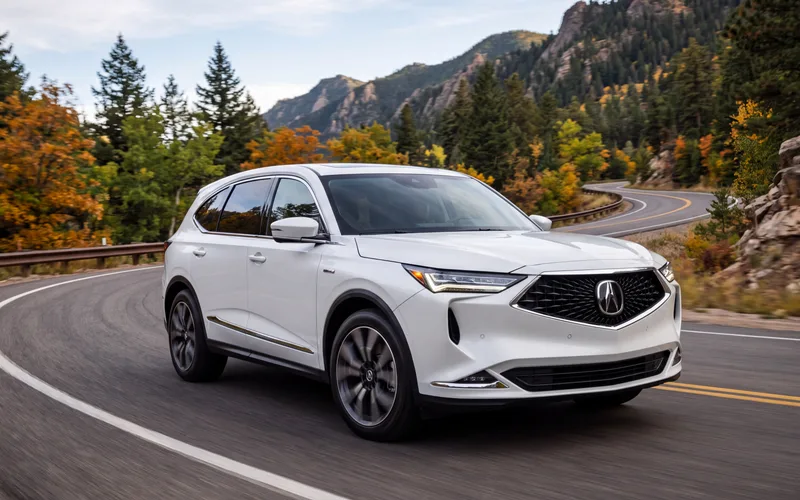 Acura MDXMid-Size Luxury SUVBetter at: Resale value
Same three-row luxury mission and price bracket, but with a V6 that fixes the QX60's refinement complaint and substantially stronger resale.
Compare 2.88B-
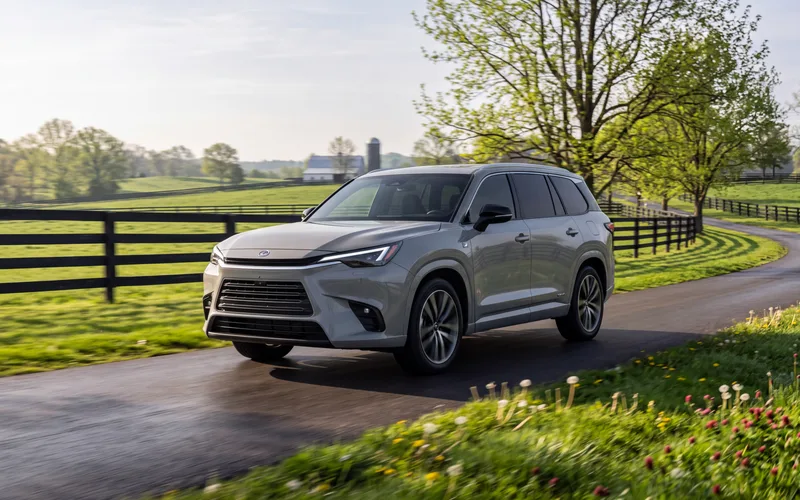 Lexus TXMid-Size Luxury SUVBetter at: Efficiency
Offers hybrid power the QX60 can't, which flips the worst part of ownership — fuel cost and depreciation — in your favor.
Compare 2.79B-
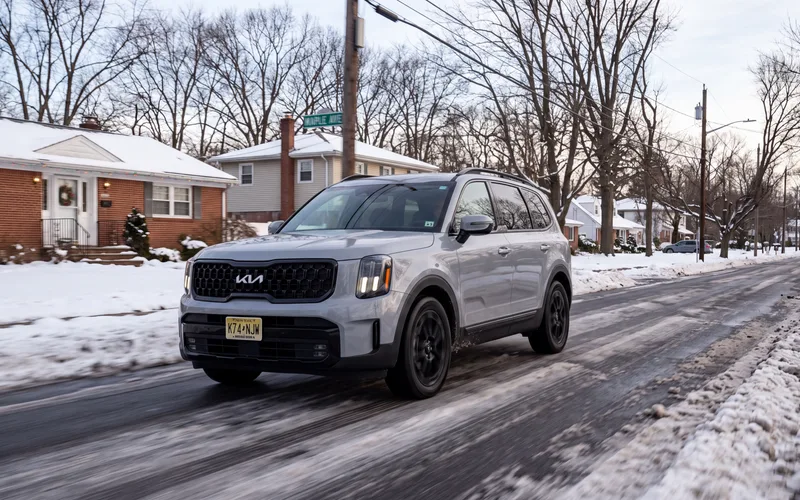 Kia TellurideMid-Size SUVBetter at: Space and warranty
Costs far less, seats adults in the third row, and hauls more cargo, with a 10-year powertrain warranty on top.
CompareHow it's evolved
9 scored model years · 2017–2026
Subject scores by year
Hover or tap a score to see what moved it versus the year before. A corner mark flags a big swing.
| Year | Performance | Efficiency | Safety | Space | Cost | Reliability | Tech | Use-case | Driving | Value |
|---|---|---|---|---|---|---|---|---|---|---|
| 2026 | 47 | 46 | 76 | 70 | 25 | 72 | 82 | 68 | 65 | 74 |
| 2025 | 41 | 42 | 80 | 62 | 30 | 52 | 67 | 64 | 57 | 70 |
| 2024 | 48 | 35 | 81 | 61 | 32 | 67 | 68 | 60 | 61 | 68 |
| 2023 | 46 | 33 | 81 | 61 | 36 | 67 | 70 | 61 | 62 | 68 |
| 2022 | 46 | 33 | 81 | 61 | 33 | 66 | 70 | 61 | 62 | 66 |
| 2020 | 44 | 35 | 65 | 68 | 34 | 65 | 34 | 61 | 56 | 58 |
| 2019 | 44 | 35 | 63 | 67 | 36 | 62 | 34 | 60 | 56 | 60 |
| 2018 | 44 | 35 | 58 | 67 | 39 | 56 | 33 | 59 | 56 | 57 |
| 2017 | 47 | 35 | 59 | 68 | 42 | 50 | 33 | 59 | 57 | 61 |
Compare two years
Best fit & conditions
Higher scores mean a better fit for that use case. Learn more about use-case fit →
Subject profile
Detailed scoring by subject
1Performance & PowertrainGrades near the bottom of the scale.0.95F
The 2020 QX60 is a carry-over final year of the L50 generation, still running the naturally aspirated 3.5-liter VQ35DD introduced with the 2017 refresh; 295 hp is respectable for a three-row but unexceptional next to turbocharged luxury rivals.
270 lb-ft arriving at 4,800 rpm is characteristic of a naturally aspirated V6 — adequate but high-revving, with none of the low-end shove a turbo four or six delivers in this class.
A shade over seven seconds is mid-pack for a 4,500-lb three-row crossover — brisk enough for merging and passing, but the CVT's measured delivery means it never feels as quick as the number suggests.
The naturally aspirated VQ35DD has no turbo lag to manage and no hybrid handoffs to fumble, and reviewers consistently describe the delivery as smooth and quiet — the deduction is that it needs revs to produce its peak outputs, which introduces coarseness under hard load in a vehicle marketed on serenity.
The Xtronic CVT with D-Step Logic simulates stepped shifts well enough that reviewers rate it among the better CVTs, but it is still a CVT in a luxury three-row — the elastic response and drone under full throttle are exactly what the class's 8- and 9-speed automatics avoid, and 2020 was the last year before the second-generation car replaced it with a 9-speed.
5,000 lbs is the high end of what a unibody three-row crossover offers and comfortably covers a small boat or a pair of jet skis, beating the 3,500-lb ratings common among front-drive-based rivals.
Intelligent AWD is offered on both PURE and LUXE, so every buyer can have it, but it is a cost option rather than standard and the hardware is a basic on-demand front-biased system — no low range, no torque vectoring, just a Snow drive mode that trims engine output to limit wheelspin.
The QX60 is an elongated Nissan Murano platform with 6.5 inches of clearance, a 14.7-degree approach angle and all-season tires on 18- or 20-inch wheels — there is no off-road trim, no skid plating, no locker and no low range anywhere in the 2020 range.
For 2020 there is exactly one powertrain — 3.5L V6 and CVT — with only the choice of driven axles; the QX60 Hybrid that once broadened the range had already been dropped from the US lineup, and no turbo or electrified alternative replaced it.
2Efficiency & RangeOne of the QX60's weakest categories.0.30F
22 MPG combined is ordinary for a 4,500-lb three-row on a naturally aspirated V6, and with no hybrid or turbo-four option in the 2020 range there is nothing above it to reach for.
19 MPG in traffic is the weakest part of the QX60's economy picture — a heavy three-row with a large-displacement V6 and no electric assist to cover stop-and-go work.
The CVT's ability to hold low cruising revs and a 0.33 drag coefficient make the highway the QX60's best case, but 26 MPG is still short of the turbo-four and hybrid three-rows that lead this class.
A generous 19.5-gallon tank rescues what mediocre economy would otherwise cost, putting roughly 429 miles between fills — respectable for family road-trip duty even though every one of those gallons is premium.
The EPA's annual estimate is punished twice over — 22 MPG combined priced against premium gasoline — leaving the QX60 near the expensive end of the gas SUV field to keep fueled.
Premium 91 AKI is what INFINITI recommends and what EPA prices the running costs against, but it is not required — the owner's manual expressly permits 87 AKI regular with a noted drop in performance, so owners have an escape valve that a premium-required vehicle does not.
3SafetyOne of the QX60's strongest categories.2.37C+
NHTSA gives the 2020 QX60 the full five stars overall in both drive configurations, with the frontal test (4 stars) and rollover resistance (4 stars) as the components that keep it from a clean sweep.
The QX60 earns Top Safety Pick — not TSP+ — and only when built with the upgraded LED headlights plus High Beam Assist; five of six crashworthiness tests are Good but the passenger-side small overlap comes back Acceptable, and the underlying structure is the 2013-vintage L50 tested across 2014–2018.
Every 2020 QX60 gets Forward Emergency Braking with Pedestrian Detection, Predictive Forward Collision Warning and Blind Spot Warning as standard, but adaptive cruise, any lane-departure system and rear cross-traffic protection are all package-only — and the packages that carry them sit behind the Essential Package on LUXE, so a PURE buyer cannot get them at all.
IIHS rates the QX60's front crash prevention Superior in the vehicle-to-vehicle track tests, the top result available, and pedestrian detection is part of the standard system — but IIHS never published a vehicle-to-pedestrian rating for this generation, so the daytime and nighttime pedestrian performance that separates an 80+ score here is unverified.
Blind Spot Warning is standard across the range, which is ahead of several 2020 rivals, but the active half — Blind Spot Intervention's corrective braking — and Backup Collision Intervention, which is what covers rear cross-traffic and can brake for it, are both optional; there is no safe-exit alert for rear passengers.
There is no lane centering of any kind on the 2020 QX60 — the most it offers is optional Lane Departure Warning with Lane Departure Prevention, which nudges the car back with selective braking rather than steering, and even that is absent unless the buyer takes ProASSIST or ProACTIVE.
Intelligent Cruise Control is the genuinely capable full-speed-range type with stop-and-go, and Distance Control Assist adds pedal feedback in traffic, but it is optional rather than standard and works alone — with no lane centering to pair it with, there is no highway assist mode in the sense rivals were already offering in 2020.
No hands-free highway system is offered at any price — the QX60 does not even have hands-on lane centering in 2020, which is the prerequisite technology.
The volume configuration gets Marginal-rated headlights: the post-May-2019 LED units only climb to Acceptable when combined with High Beam Assist, and High Beam Assist lives in the ProASSIST/ProACTIVE packages, so a PURE or an unpackaged LUXE leaves the showroom with IIHS's second-lowest rating — and even the best variant never reaches Good.
The tall, deep greenhouse and low beltline give a good forward and side view for a three-row, but the signature crescent-cut D-pillar thickens the over-shoulder view, and the Around View Monitor that would compensate is bundled into the Essential Package rather than standard — so the volume car relies on a plain reversing camera.
The QX60's party trick is real family engineering — the multi-mode second row slides far forward for third-row access with a child seat still installed — and the third row takes a forward-facing convertible cleanly, but the lower anchors themselves are buried high in the cushion and take effort, the buckles sit flush, and three seats will not fit across row two.
4Space & ComfortThe QX60's best-graded category.2.58C+
Seven seats across three rows is the standard configuration for every 2020 QX60, and unlike the second-generation car there is no six-seat captain's-chair variant to choose between.
40.7 inches is generous for a mid-size crossover — the L50's tall, upright greenhouse pays off up front, and INFINITI publishes only one figure because the power sliding moonroof is standard on every trim.
42.2 inches is mid-pack for the segment: adequate for tall drivers but well short of the 44-plus inches the roomiest three-rows offer, and short of the 44.4 in the second-generation QX60 later delivered.
38.2 inches in row two is comfortable for adults; the figure quoted is the volume configuration, since the second/third-row panoramic moonroof that costs 0.9 inch lives in the option-only Sensory Package.
41.7 inches is near the top of what any three-row crossover offers and is the L50 QX60's single best space measurement — nearly four inches more than the second-generation car that replaced it, because the sliding multi-mode bench can be pushed right back when the third row is empty.
Access is genuinely class-leading — the multi-mode bench slides and tilts forward even with a child seat strapped in — and 30.8 inches of legroom beats the second-generation QX60, but the cushion is flat and low and reviewers are unanimous that row three is a children's space, with adults tolerable only for short hops.
40.5 cubic feet is the L50 QX60's weakest dimension — the elongated Murano platform gives it good passenger room but a shallow, short load bay, and with all seven seats up the 16 cubic feet behind row three barely holds a stroller and a few soft bags.
76.2 cubic feet fully folded is average for the class — respectable, but the 60/40 and 50/50 backrests fold to a floor that is high and not quite flat, and rivals on dedicated three-row platforms clear 80-plus.
The everyday storage count is strong for 2020 — eight cup holders, six bottle holders, a deep console bin, dual seatback map pockets and three 12-volt points — but there is nothing inventive here: no wireless charging pad, no fold-flat console trick, and the household 120-volt outlet that would make the cabin genuinely useful is buried in an option package.
Front and second-row comfort is what reviewers single out about this car — wide, softly padded chairs, a theater-style raised second row, and available front seat coolers that Edmunds rated among the best it had sampled — with the deductions being a driver's seat limited to eight-way power plus lumbar (no thigh extension or massage at any price) and a flat, low third-row cushion.
Isolation is excellent — Dual-Flow Path shocks and a soft long-travel tune absorb broken pavement better than most rivals even on the 20-inch wheels — but the same calibration is genuinely under-damped, and both Car and Driver and Edmunds fault it for float and body roll, which is what keeps it out of the 80s where a plush *and* controlled ride sits.
Acoustic laminated windshield and front side glass, three liquid-filled engine mounts and a 0.33 drag coefficient make this a quiet highway cruiser by reviewers' account; the one intrusion is the Xtronic CVT holding revs under hard acceleration, since peak torque does not arrive until 4,800 rpm.
Tri-zone automatic climate control, heated front seats and rear floor vents are standard on every 2020 QX60, and LUXE adds a heated steering wheel and remote engine start as standard equipment — rich provisioning for the model year; ventilated front seats, heated outboard second-row seats and the Plasmacluster air purifier are the only items pushed into an option package.
5Cost of OwnershipOne of the QX60's weakest categories.0.21F
The entry PURE front-drive model opens at $44,350 plus INFINITI's $1,025 destination and handling charge, which in 2020 made the QX60 one of the cheapest ways into a genuine three-row luxury crossover — level with the Acura MDX and thousands under a Volvo XC90 or Audi Q7.
LUXE was the volume grade, and almost nobody bought one without the $2,900 Essential Package — that is the box that adds real leather, navigation and the Around View Monitor, none of which is standard at any price otherwise. Scored with Intelligent AWD to match the drivetrain used in the rest of this scorecard.
Mechanically the QX60 is a Nissan Pathfinder — VQ35DD V6, JATCO CVT, Nissan parts and labor rates — so it services far more cheaply than the German or Volvo competition, and RepairPal ranks its running costs at or below the luxury-SUV average. The figure is set above the published model averages for two 2020-specific reasons: INFINITI offered no complimentary scheduled maintenance in 2020, so the owner pays for every service from the first oil change, and at typical mileage the 4-year/60,000-mile basic warranty runs out inside the five-year window with the CVT — the component with the weakest reliability record on this platform — then out of cover.
This item is what sinks the category, and for the 2020 car it is measured rather than projected — a five-year-old QX60 is worth roughly a third of what it stickered for. Two things compound it beyond INFINITI's already weak brand equity: 2020 was the run-out year of a generation everyone knew was being replaced for 2022, and the heavy factory and dealer cash used to move those cars reset the market's idea of what the vehicle was worth on day one.
INFINITI's new-vehicle limited warranty ran four years or 60,000 miles in 2020 — the luxury-brand convention on term and 10,000 miles more generous on distance than the 4/50,000 that Acura, Cadillac, BMW, Audi, Lexus and Volvo all offered that year.
Six years or 70,000 miles on the 3.5-liter V6, the Xtronic CVT and the drive components — better than the German 4/50,000 norm of the era, but well short of the 10-year/100,000-mile powertrain coverage a 2020 shopper could get from Hyundai, Kia or Genesis, and short of what the CVT's reliability record arguably warranted.
A 2020 QX60 came with no included scheduled maintenance whatsoever — INFINITI Premium Care, which covers up to three years of oil changes, rotations and inspections, did not arrive until the 2023 model year, so this owner pays for the first service and every one after it. What is included is roadside-and-trials: 24-hour roadside assistance for four years with no mileage cap plus trip-interruption benefits, one complimentary year of INFINITI Connection and Connection Plus telematics, six months of InTouch Services and a four-year SiriusXM Traffic and Travel Link trial with the Essential Package. That is a genuinely long roadside term attached to nothing else, which is the definition of the middle band rather than the top of it.
$52,075 volume-trim price minus its estimated resale value after 5 years (34% retained, or about $17,706) leaves about $34,370 in depreciation. Add the projected $4,600 in 5-year maintenance and repairs, and owning this vehicle for 5 years costs about $38,969 in total.
6Reliability & QualityOne of the QX60's strongest categories.2.42C+
2020 is the final, most-sorted year of the seven-year L50 generation, and the third-party predictions reflect that maturity: J.D. Power puts the model in its 'Great' band and Consumer Reports rates it above the model-year average, while RepairPal ranks it near the top of its class on cost. It stays out of the 80+ band because CR's own page carries no detailed trouble-spot data for insufficient sample size, and because repair frequency is high even though severity is not.
The dependability study that surveys this exact model year at three years of ownership places Infiniti squarely mid-pack — 19th of 32 brands, worse than the industry average but level with the premium average, since premium brands as a group trail on technology-related problems. Initial quality that year was likewise slightly below average, and Consumer Reports carries too few Infinitis to rank the brand at all, so there is no third opinion to break the tie.
The formal recall record for the 2020 QX60 is close to spotless — a single campaign covering just 643 vehicles, and even that is a supplier heat-treatment defect rather than a design fault. What keeps it out of the top band is the service-bulletin and complaint side of the ledger: the CVT driveability pattern on this generation drew a second federal class action naming 2019–2021 cars, and Nissan issued no recall and declined to reimburse repairs, so the burden sits with owners.
Two halves pulling hard in opposite directions. The 3.5-liter VQ-family V6 is one of the better-proven high-mileage engines in the segment; the JATCO Xtronic CVT bolted behind it is the single most litigated transmission in the US market, with a $277.7M settlement already paid on 2015–18 QX60s and a second class action alleging the identical defect in 2019–2021 cars. Nissan's own verdict is the most telling evidence: it abandoned the CVT entirely for the 2022 redesign in favor of a nine-speed torque-converter automatic.
Reviewers split on this cabin, which is itself the finding: the leather and open-pore-style wood on upper trims genuinely read as luxury, but the architecture underneath dates to 2013 and shares visible switchgear and panels with the far cheaper Pathfinder. That platform-sharing shows exactly where a luxury buyer looks — the dashboard top and upper door cards — and it costs the car the upper band its price implies.
Assembly is solid and the cabin is notably quiet — a seventh-year build of a mature design on a long-running Smyrna line, with no pattern of rattle or misalignment complaints. It sits mid-band rather than higher because Infiniti's initial quality that model year was below the industry average, and the one recall on the car is a manufacturing-process failure — parts that left a supplier improperly heat-treated — which is precisely what this item measures.
Roughly 200 US stores is a thin footprint for a luxury brand, well behind Lexus, Acura, BMW and Mercedes-Benz, and it is contracting rather than growing — Infiniti's share of US luxury sales has more than halved since this car was new, and the brand now permits dealers to co-locate inside Nissan showrooms to survive. For an owner outside a metro area that means a real distance to the nearest franchise, though service reputation itself is adequate rather than poor.
This is the car's strongest reliability-adjacent trait, and it follows directly from the Pathfinder underneath it: the platform, the 3.5L V6 and the CVT are all high-volume Nissan hardware built on the same line, so parts are commodity-priced with deep aftermarket and salvage supply rather than low-volume luxury pieces. Running costs land near the all-vehicle average instead of the luxury-SUV average. It stops short of the top band because a CVT replacement, if it comes, is a four-figure job, and Infiniti-specific trim and electronics remain dealer-sourced.
7Technology & InfotainmentThe QX60's lowest-graded category.0.20F
Eight inches was already the smallest display in the luxury three-row class by 2020, and INFINITI offered no upgrade — the second-generation car jumped to 12.3 inches two model years later.
The saving grace is the hardware layout — a rotary INFINITI Controller, real climate knobs and illuminated wheel switches mean nothing is buried, and reviewers found the system responsive rather than laggy — but the InTouch software itself is 2013-vintage, with low-resolution graphics and a menu structure critics placed roughly five years behind the German competition.
Neither Apple CarPlay nor Android Auto is offered in any form — not wireless, not even wired — on any 2020 QX60 trim; INFINITI added projection across nearly its whole 2020 range and the QX60 was the single holdout, which is why a retrofit-module aftermarket sprang up around this exact car.
Both the native navigation and the voice recognition that drives it are option-package-only — a PURE buyer cannot get either at any price and an unpackaged LUXE has neither — and what the Essential Package delivers is a rigid command-word system with one-shot destination entry, not natural language; with no phone projection to fall back on, a QX60 without that box ticked has no maps at all.
Audio is the clear bright spot of the QX60's tech case: a 13-speaker Bose Premium system is standard equipment on the volume LUXE, and a 15-speaker Bose CenterPoint setup with Driver's Audio Stage is available above it — the only deduction is the thin six-speaker AM/FM/CD unit a PURE buyer is stuck with.
There is no digital cluster on the 2020 QX60 at any trim level — the gauges are analog Fine Vision electroluminescent dials with a small colour Intelligent-View trip display wedged between them, which is the configuration the segment had largely moved past by 2020.
The 2020 QX60 has no over-the-air update capability of any kind: the InTouch head unit takes map data by physical media through a dealer, and no vehicle software can be refreshed remotely — the platform predates INFINITI's connected-update architecture entirely.
The core remote functions exist — InTouch Services covers remote engine start, lock/unlock, vehicle locator and stolen-vehicle assistance from the phone — but on the QX60 the telematics unit itself rides inside the Essential Package rather than being standard, the access is a six-month trial before it becomes a paid subscription, and there is no digital key.
Device power is thoroughly dated: front USB-A ports only with no USB-C anywhere in the car, no wireless charging pad at any trim, and nothing at all for third-row passengers — the three 12-volt sockets carry the load, and the 120-volt household outlet and the rear HDMI/USB pair are both locked behind option packages.
Proximity entry with push-button ignition and a power liftgate are standard on both trims, and LUXE adds standard remote engine start plus dual key-linked memory for seat, wheel and mirrors — solid keyless convenience for 2020; the shortfalls are that the hands-free motion-activated liftgate is option-only and there is no phone-as-key at any price.
The volume car leaves the showroom with a plain reversing camera and no sonar at all — the Around View Monitor with Moving Object Detection and the front/rear sonar system both sit inside option packages — and while the surround-view system is well regarded when fitted, there is no automated parking function offered on the QX60 in any configuration.
No head-up display is offered on the 2020 QX60 at any trim or in any package — it never appeared on the L50 generation in the US market.
8Use-Case FitMid-pack among this car's ten categories.2.08C
Family logistics is what this car was engineered around: the multi-mode second row slides and tilts forward for third-row access with a child seat still installed, the step-in height is a low 18.7 inches, the door openings are wide and the standard leatherette wipes clean — the deductions are LATCH lower anchors in the outboard second-row positions only, buried high in the cushion, and no way to fit three car seats across.
The credentials are good — NHTSA five stars overall, an IIHS Top Safety Pick, and standard automatic emergency braking with pedestrian detection, blind-spot warning and Rear Door Alert on every trim — but the features families lean on most are extra-cost: adaptive cruise, lane departure warning and rear cross-traffic braking are all package-only and entirely unavailable on PURE, and the headlights on the volume configuration are rated Marginal.
Four or five aboard travel very well — 41.7 inches of second-row legroom, tri-zone climate with rear floor vents standard, a quiet soft-riding cabin, and an available Theater Package with dual 8-inch screens, wireless headphones and HDMI — but load all seven and the 16 cubic feet left behind the third row will not swallow a family's luggage.
Low-effort is the whole character of the car — a naturally aspirated V6 with no turbo lag paired to a CVT that never hunts for a gear, feather-light steering, a soft ride and an elevated commanding view make it about as undemanding in traffic as a three-row gets; what holds it under 80 is that the stop-and-go adaptive cruise is an option box rather than standard, and there is no lane centering to share the load.
22 MPG combined on required premium unleaded is an expensive way to commute — the premium requirement adds roughly 15% to every gallon over a similarly thirsty mainstream three-row, and luxury-brand consumables and tire sizes compound it; there is no hybrid or four-cylinder option in the 2020 range to escape into.
At 200.6 inches long and 77.2 wide with a 38.8-foot turning circle, this is a genuinely large thing to thread through a city, and the volume trim compounds it — the Around View Monitor and the front and rear sonar that would make tight spaces easy are both option-package items, leaving a plain reversing camera and a thick crescent-cut D-pillar to work with.
For a unibody front-drive-based crossover the tow rating is genuinely strong — 5,000 lbs beats the 3,500 lbs common among its platform-mates — and payload works out to roughly 1,435 lbs with 76.2 cubic feet of cargo behind it, which covers light trade duty; but there is no bed, no low range, and a CVT plus a naturally aspirated V6 making peak torque at 4,800 rpm is not a drivetrain anyone should ask to work hard for a living.
The VQ35DD V6 is a well-proven Nissan unit, but the JATCO Xtronic CVT behind it is the known weak link under sustained load and heat and is the component that dominates this platform's long-term complaint history — and nothing else about the car is built for abuse: leather-appointed cabin, 20-inch options, no fleet or commercial variant, no wear-focused trim.
Work provisioning is close to nil: three 12-volt sockets, cargo tie-downs and standard wipe-clean leatherette are the extent of it, the single 120-volt household outlet is an option-package item and faces the rear seats rather than the cargo bay, and the roof side rails that would carry ladders or pipe are absent on PURE and require an extra option for crossbars.
As a highway mile-eater it is convincing — a 19.5-gallon tank at 26–27 MPG highway gives roughly 500+ miles between stops, acoustic glass and a 0.33 drag coefficient keep it quiet, and the front seats with available coolers were rated among the best in the class; the shortfall is driver-assist fatigue reduction, since the full-speed-range adaptive cruise is optional and there is no lane centering to pair with it.
Gravel roads, a trailhead parking lot and a pair of bikes on the roof are all comfortably within reach — Intelligent AWD is available on both trims with a Snow drive mode, the seats fold flat 60/40 and 50/50, and 5,000 lbs of towing handles a small camper — but 6.5 inches of ground clearance, a 14.7-degree approach angle, all-season tires and no low range or locker put a hard ceiling on it well short of anything genuinely off-pavement.
Reconfiguration is good — a 60/40 sliding second row and 50/50 third row fold down to 76.2 cubic feet, a hitch will take 5,000 lbs of trailer, and roof side rails are standard on the volume LUXE — but the load bay is short and the floor sits high, so bulky single items are a squeeze, and with all three rows up the 16 cubic feet behind row three restricts a seven-up trip badly.
9Driving ExperienceMid-pack among this car's ten categories.1.78C-
The QX60 is safe and predictable but genuinely under-damped: the soft long-travel tune that makes it ride well leaves it leaning heavily in corners, and both Edmunds and Car and Driver call out the same fault in near-identical terms — this is the bottom of the 'secure but unremarkable' band, not the top of it.
The speed-sensitive hydraulic assist is calibrated for parking-lot effort rather than feedback — Car and Driver found the wheel turnable with a single finger and Edmunds called it flatly numb — so while 2.9 turns lock-to-lock and a 16.8:1 ratio make it accurate enough to place, there is no information coming back through it.
Hardware is adequate rather than generous — 12.6-inch vented front and 12.13-inch vented rear discs hauling down as much as 4,552 lbs — with a soft pedal that matches the rest of the car's tuning and no published instrumented stop for the 2020 model year; the mechanical foot-pedal parking brake is a further reminder of the platform's age.
There is nothing to go wrong here in isolation — a naturally aspirated V6 has no turbo lag and no hybrid handoffs to fumble, three liquid-filled mounts keep vibration out of the cabin, and reviewers consistently describe the delivery as smooth; the deduction is CVT elasticity, where a request for real acceleration produces rising revs before rising speed.
At a cruise the VQ35DD is near-inaudible and, when it does speak up, sounds pleasant in the way a good V6 does; what pulls the score down is the CVT holding high revs under load — with peak torque up at 4,800 rpm the drone on a hard merge or a long grade is exactly the noise the segment's stepped 8- and 9-speed automatics avoid.
A 38.8-foot circle on a 114.2-inch wheelbase is unremarkable — it takes real space to turn around and is a little wider than the second-generation car managed — though only 2.9 turns lock-to-lock means the driver is not sawing at the wheel to use it.
The driving position is a strength: a commanding seat height with a low 18.2-inch step-in, standard power tilt and telescopic column, eight-way power seat with lumbar, and controls still on real illuminated buttons and knobs rather than buried in a screen, with LUXE adding key-linked memory and entry/exit assist; the signature crescent-cut D-pillar is the one ergonomic cost, thickening the over-shoulder view.
Nobody, including INFINITI, was pretending otherwise — light numb steering, a floaty chassis, a CVT and a 7.3-second 0-60 add up to a competent appliance, and reviewers say plainly that no route gets taken the long way in this car; the Sport drive mode changes throttle mapping and not much else.
10Value & Market PositionMid-pack among this car's ten categories.1.89C-
The comfort list on a $45,375 PURE is long for the money — tri-zone automatic climate, power sliding moonroof, power liftgate, heated 8-way power front seats, LED headlights and fog lights, eight cup holders and six USB ports across three rows — and 2020 is the year Blind Spot Warning and Predictive Forward Collision Warning became standard alongside Forward Emergency Braking with pedestrian detection. The technology list is where it falls apart: seating is leatherette rather than leather, and leather, navigation and the Around View Monitor all sit behind the $2,900 Essential Package, while adaptive cruise, lane departure warning and high beam assist need ProASSIST on top of that. Worst of all, the QX60 was the single 2020 INFINITI left off the new InTouch software, so Apple CarPlay and Android Auto were unavailable at any price in a $45,000–$52,000 vehicle.
On the fundamentals the QX60 delivered: genuine seven-passenger, three-row space with a sliding second row, a 5,000-lb tow rating and 295 horsepower for less than an Acura MDX and roughly $10,000 under a comparable Volvo XC90 or Audi Q7, which is why U.S. News singled out its ownership costs. The ceiling is that the money buys comfort rather than capability or content — one naturally aspirated V6 and a CVT with no hybrid or turbo alternative, no CarPlay, and a package structure that adds $6,700 before a LUXE has navigation and adaptive cruise. Non-luxury three-rows launched a year earlier, the Telluride and Palisade, delivered more equipment for $10,000 less and made the comparison uncomfortable.
Only two grades — PURE and LUXE, each front-drive or with Intelligent AWD — but INFINITI ran the old-fashioned package model rather than fixed grades, so five equipment packages plus a wheel package and premium paint stretch the range from $45,375 to past $60,000 with real granularity in between, and a value-priced SIGNATURE EDITION joined during the model year. What limits it is depth and chaining: one engine, one transmission, and packages that lock together — Sensory requires Essential and must be ordered with ProACTIVE, Theater requires Essential — so a buyer cannot simply pick the one feature they want.
Market acceptance of this generation was real and sustained — the QX60 ran between 39,000 and 47,000 US units a year from 2015 through 2019, which is competitive with the Acura MDX and made it INFINITI's best-selling model by a wide margin. The trajectory is what pulls the score to mid-band: the 2020 model year sold into a calendar year that fell 47% to 22,879 units on COVID plus the wind-down of a generation everyone knew was ending, and 2021 collapsed a further 75% to 5,830 as production stopped ahead of the redesign.
2020 was close to the low point for INFINITI in the US — 79,502 deliveries, the worst in twenty years, after killing off the Q70 and QX30 and with no clear brand direction — and the market prices that reputation directly into the QX60, which retains roughly a third of its sticker over five years against about 45% for the luxury midsize SUV class. The offsetting evidence is that the badge still carried genuine luxury credibility with the buyers it had, and the QX60 in particular was well liked by its owners rather than merely tolerated.
Scored on buyer benefit, this is the QX60's strongest card in the whole category. A run-out model from a brand fighting a 32% sales collapse was discounted harder than almost anything in the luxury three-row class: stackable factory cash, loyalty money and dealer cash routinely took double-digit percentages off sticker, and documented 2020 transactions closed around 20% below MSRP. The buyer who ignored the depreciation and simply took the discount got a great deal; it lands just short of the top of the band only because the discounting was plainly distress-driven rather than routine.
This is the weakest item on the vehicle and it is not close. 2020 is the eighth model year of the L50 generation that launched as the JX35 for 2013, on an elongated Nissan Murano platform, with its only significant facelift back in 2016 — and it is the second-to-last year before the ground-up L51 arrived for 2022. The 2020 changes amount to two driver-aids becoming standard and an EDITION 30 appearance package. The clearest measure of how far behind it had fallen is that INFINITI updated every other 2020 model's infotainment to add CarPlay and Android Auto and left the QX60 on the old system, because the old car could not take it.
Reception splits cleanly along the same fault line as the car. Aggregate scoring was genuinely good — U.S. News put it second in its 2020 luxury midsize SUV class on 7.9 out of 10, praising ride comfort, cargo room and ownership costs — and it earned an IIHS Top Safety Pick, though only when built with the upgraded headlights and High Beam Assist. Driving-focused reviewers were consistently unimpressed, calling out numb steering, an isolating chassis, the CVT and above all the eight-year-old infotainment, and it won no comparison tests and no 10Best, NACTOY or equivalent recognition in 2020.