

The verdict
A struggling mid-size truck, strong on technology and held back by efficiency.
For 2025 Chevrolet deleted the weak base engine, so every Colorado — even the $33,595 Work Truck — comes with the 310-hp, 430-lb-ft TurboMax four, an 11.3-inch touchscreen and a fully digital gauge cluster. That makes it the most truck-per-dollar buy in the mid-size class at the moment of purchase, with up to 7,700 lbs of towing, a genuinely deep off-road ladder topping out in the ZR2 Bison, and cheap projected upkeep ($3,348 over five years). The bills come later: 19 MPG combined and roughly $3,250 a year in fuel for the volume LT 4WD, 63.1% five-year resale against a 70% class average, and an owner-survey reliability record Consumer Reports rates well below par. It is also crew-cab-only with a single 5-foot-2 bed and a tight back seat, so it works far better as a capable weekend-and-work truck than as the family's only vehicle.
Jump to scoresStrengths
- Cheap to keep, cheap to get into
- A real off-road ladder, not a sticker package
- Big-screen technology standard on every trim
What holds it back
- Poor headlights and a failing AEB grade
- Cramped, noisy back seat
- Thirsty, with no efficient alternative
Top alternatives
Cars shoppers cross-shop with the Chevrolet Colorado 2.12C
2.12C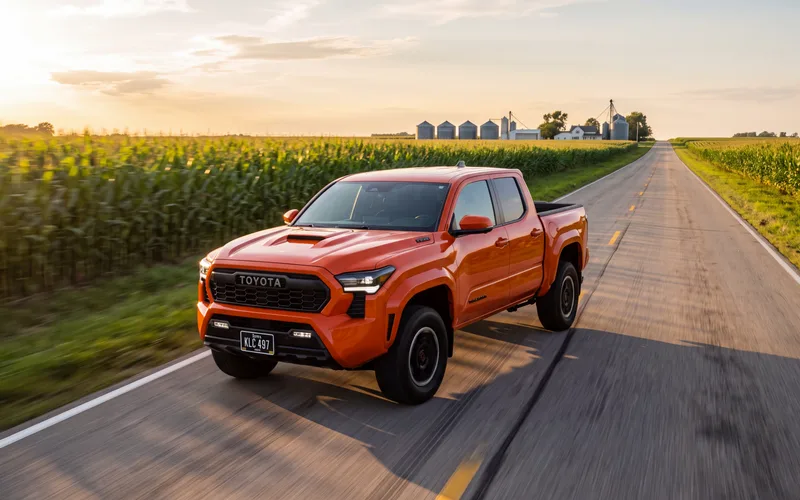 Toyota TacomaMid-Size TruckBetter at: Resale value
Better predicted reliability, standard safety tech on every trim, cab and bed choices, a hybrid option, and resale that holds roughly 65-70% at five years versus the Colorado's 56%.
Compare 1.87C-
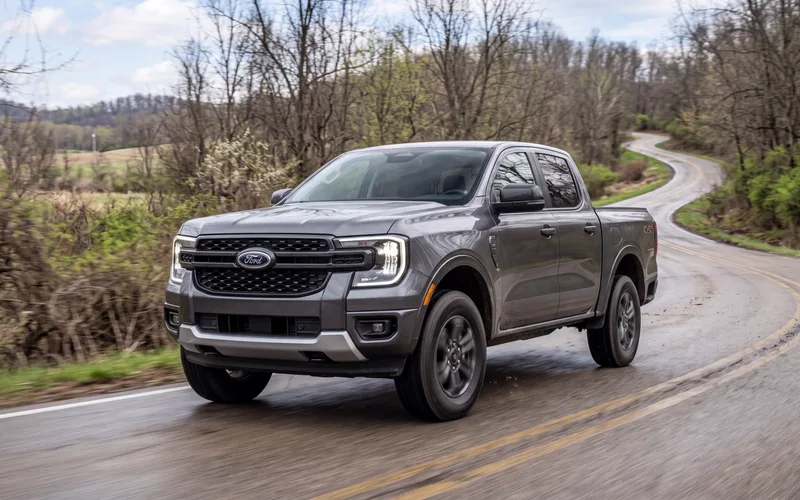 Ford RangerMid-Size TruckBetter at: Cargo and resale
Retains close to 70% of its value after five years, offers a bigger 51.5-cu-ft SuperCrew bed and more rear legroom, and sees better out of the cab.
Compare 1.97C-
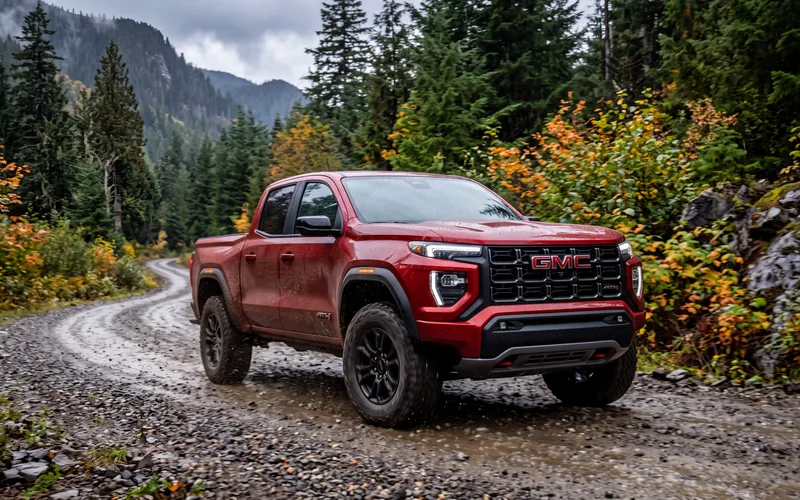 GMC CanyonMid-Size TruckBetter at: Interior quality
The identical truck with a nicer interior, standard 4WD, a standard 11-inch digital cluster and a Denali flagship with ventilated seats — worth the roughly $5,000-$7,000 premium only if materials matter to you.
CompareHow it's evolved
10 scored model years · 2017–2026
Subject scores by year
Hover or tap a score to see what moved it versus the year before. A corner mark flags a big swing.
| Year | Performance | Efficiency | Safety | Space | Cost | Reliability | Tech | Use-case | Driving | Value |
|---|---|---|---|---|---|---|---|---|---|---|
| 2026 | 46 | 40 | 56 | 50 | 55 | 62 | 72 | 63 | 69 | 72 |
| 2025 | 46 | 39 | 55 | 50 | 66 | 59 | 72 | 63 | 69 | 72 |
| 2024 | 39 | 58 | 58 | 49 | 68 | 52 | 71 | 67 | 71 | 79 |
| 2023 | 42 | 58 | 56 | 51 | 71 | 53 | 70 | 66 | 70 | 81 |
| 2022 | 47 | 42 | 27 | 53 | 51 | 67 | 48 | 63 | 68 | 68 |
| 2021 | 46 | 42 | 24 | 51 | 57 | 62 | 48 | 65 | 68 | 67 |
| 2020 | 45 | 54 | 25 | 51 | 55 | 58 | 48 | 65 | 72 | 67 |
| 2019 | 45 | 47 | 28 | 50 | 68 | 58 | 45 | 62 | 68 | 77 |
| 2018 | 47 | 47 | 28 | 53 | 71 | 59 | 48 | 63 | 70 | 78 |
| 2017 | 47 | 50 | 28 | 53 | 70 | 52 | 45 | 65 | 71 | 74 |
Compare two years
Best fit & conditions
Higher scores mean a better fit for that use case. Learn more about use-case fit →
Subject profile
Trims & configurations
5 trimsScores above reflect the volume trim. Per-trim specs and scores are rolling out — the full lineup:
Detailed scoring by subject
1Performance & PowertrainOne of the Colorado's weakest categories.1.06D
2025 is a change year within the third generation Wikipedia dates from 2023: Chevrolet dropped the 237-hp standard-output 2.7L (L2R) and made the 310-hp TurboMax (L3B) the sole engine, so the volume LT now carries the range-maximum output rather than the base tune.
The volume LT's now-standard TurboMax makes 430 lb-ft, an unusually strong figure for a gasoline midsize truck and 170 lb-ft above the 2024 LT's standard engine. No lower-output alternative is offered for 2025.
Consumer Reports' instrumented 2025 road test of the volume LT 4WD recorded 6.9 seconds. Standardizing the 310-hp engine cuts roughly a second from the 2024 LT's base-engine time.
With the TurboMax now standard, the volume trim gets responsive, torque-rich delivery from low rpm instead of the base engine's throttle lag reviewers criticized through 2024. It still sounds coarse and gravelly under hard acceleration, which keeps it out of the top band.
The eight-speed automatic is smooth and decisive and is better matched to the 430-lb-ft engine than it was to the deleted base tune, whose calibration drew complaints about early upshifts and hunting. It is competent rather than class-leading, and there is no manual alternative.
Because the TurboMax is now standard, the 7,700-lb maximum rating is reachable on WT and LT for 2025 (with the Advanced Trailering Package) rather than requiring an engine upgrade. That is near the top of the gasoline midsize class, though the normalization band also spans full-size pickups.
GM's published 2025 per-trim table tops out at 1,710 lbs on the rear-drive WT and LT, slightly above the 2024 rating. Off-road hardware costs the ZR2 400 lbs of that capacity.
The suite is complete for the class - in-vehicle trailering app, integrated trailer brake controller, Hitch Guidance and Hitch View, trailer profiles - and 2025 makes the Advanced Trailering Package standard on Trail Boss and Z71 and adds blind-zone steering assist with trailering to those trims. It still lacks the full-size Silverado's transparent-trailer and steering-assist functions.
Four-wheel drive is optional on WT and LT and standard on Trail Boss, Z71 and ZR2, with Auto 4WD on the mainstream trims and a two-speed transfer case, terrain modes and locking differentials on the off-road trims. It falls short of the top band only because the volume LT's 4WD is a paid option.
Three purpose-built off-road trims sit above the LT, topped by a ZR2 with Multimatic DSSV dampers, a three-inch factory lift, 33-inch mud-terrain tires and front and rear lockers, plus a ZR2 Bison with 35-inch tires and AEV boron-steel protection. That ladder is among the deepest in the midsize segment.
2025 narrows the lineup rather than widening it: deleting the 237-hp L2R leaves one engine, one output and one transmission for every trim, with no V6, diesel, hybrid, plug-in hybrid, EV or manual. Strong standard output does not offset a take-it-or-leave-it powertrain under this criterion.
2Efficiency & RangeThe Colorado's lowest-graded category.0.57F
The volume LT is represented in 4WD crew-cab form, which EPA rates at 19 MPG combined for 2025; rear-drive returns 20 MPG. Standardizing the 310-hp TurboMax and deleting the 237-hp base engine costs the LT two combined MPG versus 2024's 22 MPG rating.
EPA's 2025-specific record rates the representative 4WD configuration at 17 MPG in the city cycle, three below the 2024 LT 2WD's 20 MPG with the now-deleted base engine.
The 2025 4WD Colorado is rated 21 MPG highway, a weak figure even against gas midsize rivals and one MPG below the same truck's 2026 rating.
EPA publishes no total-range field for this gasoline truck, so range is computed from its 19 MPG combined rating and the third generation's 21.4-gallon tank. Mediocre economy leaves the Colorado short of the 450-plus miles the best gas trucks manage.
EPA's 2025 model-year estimate at 15,000 miles per year is $3,250 for the representative 4WD configuration, an expensive result driven by the truck's 19 MPG combined rating despite its use of regular fuel.
Every 2025 Colorado uses the same 2.7L TurboMax on regular 87-octane unleaded, so there is no premium-fuel penalty and no trim-dependent complication - the only cost issue is how much of it the truck uses.
3SafetyMid-pack among this car's ten categories.1.72C-
NHTSA rates the 2025 Colorado Crew Cab four stars overall, held down by a three-star rollover result typical of a body-on-frame midsize pickup. 2025 is the third model year of the third generation (2023-) with no structural or restraint redesign.
The Colorado earns Good ratings in both the small overlap front and the updated side test, but the updated moderate overlap front result is Marginal on rear-passenger injury measures, which disqualifies it from any Top Safety Pick award. Solid structure with one clearly identified weak point.
Every 2025 Colorado carries the six-feature Chevy Safety Assist bundle — forward collision alert, automatic emergency braking, front pedestrian and bicyclist braking, lane keep assist with lane departure warning, following distance indicator and IntelliBeam. Adaptive cruise, blind-zone assistance and rear cross-traffic braking all require extra-cost packages, so the standard suite covers the core but not the full five-feature set.
IIHS tested the standard system for 2025 and rated it Poor under the tougher vehicle-to-vehicle 2.0 protocol, with only an Acceptable pedestrian result. Coverage is broad in what it nominally detects, but measured higher-speed effectiveness against cars and motorcycles is weak.
When ordered, the system is more than alert-only: Blind Zone Steering Assist can apply a corrective steering nudge and Rear Cross Traffic Braking can brake automatically, and with the Advanced Trailering Package the blind zone extends to trailer length. It stays optional on the volume LT, which keeps it out of the top band.
Lane Keep Assist with Lane Departure Warning is standard on every trim, but it is a corrective lane-edge intervention rather than continuous lane centering, and no centering system is offered at any price. Credit here is for universal availability, not sophistication.
Adaptive Cruise Control with stop-and-go capability is available, but on the volume LT it arrives only inside the Technology Package bundled with the Convenience Package, and it is never paired with lane centering. That makes it competent optional ACC rather than an integrated highway assistant.
No hands-free highway system is offered on the 2025 Colorado at any trim or option level. Super Cruise remains reserved for larger Chevrolet models, so the best available system stays hands-on adaptive cruise.
IIHS tested 2025 Colorado headlights by trim and rated the halogen reflectors fitted to WT, LT and Trail Boss Poor, faulting visibility on curves; only the Z71 and ZR2 LED projectors reach Acceptable. The volume LT therefore ships with the worst-rated hardware in the range.
Reviewers rate natural sightlines as good by pickup standards, without unusually large blind zones, though the tall hood still hides the near-field ahead of the bumper. Up to 10 camera views including HD Surround Vision and underbody cameras compensate well, but they are packaged options rather than standard equipment on the LT.
Two easy-to-reach outboard lower-anchor sets and three tether loops near the head restraints make installation straightforward, and forward-facing seats fit well. Rear-facing seats push into front-passenger space and three seats will not fit across the crew cab bench.
4Space & ComfortOne of the Colorado's weakest categories.1.36D
The third-generation Colorado that Wikipedia dates from 2023 is Crew Cab-only, so every 2025 trim seats five in two front buckets plus a three-place rear bench. No extended or regular cab is offered.
Front headroom without the optional sunroof is 40.3 inches on the volume LT, mid-pack for the truck band. 2025 is a powertrain change year within the 2023-present generation, with no body or packaging revision.
At 45.2 inches the Colorado reaches the top of the truck normalization band for front legroom, and reviewers consistently describe ample front-row space. The figure is a platform dimension shared across the whole 2025 range.
Second-row headroom of 38.3 inches sits near the bottom of the truck band, and Consumer Reports' tested 2025 LT specifically calls out limited rear headroom. The low roofline is a generation-level packaging choice, unchanged for 2025.
The Crew Cab's 34.7 inches of rear legroom is close to the bottom of the truck band and well behind full-size crew cabs, matching road-test complaints about knee room and an upright seatback. No longer-cab configuration exists to improve it.
Every 2025 Colorado uses the same 61.7-inch short box, with no long-bed alternative anywhere in the range, which is why the score is low despite competitive bed width and depth. Wikipedia confirms the single bed length for this generation.
The box holds 41.9 cubic feet — usefully wide and deep for a midsize pickup, but limited in absolute terms by the single short-bed configuration that the normalization band measures against full-size boxes.
The volume LT pairs a roomy center bin, large door pockets and under-rear-bench storage with the EZ Lift and Lower tailgate's lockable StowFlex compartment, plus up to 17 bed tie-downs and an available 120-volt bed outlet. It lacks the Ridgeline's in-bed trunk or a high-output onboard generator, which keeps it out of the top band.
The 2025 LT's eight-way power driver's seat with lumbar gives a better driving position than the previous generation, but Consumer Reports rates overall seat comfort merely average, faulting flat, firm cushions with limited lateral support, and the rear bench is cramped and upright. That is adequate rather than long-haul comfort.
In volume LT form the Colorado rides better than most body-on-frame midsize rivals, absorbing bumps without the stiff, choppy secondary motions the class is known for while keeping body motions controlled. The Z71 and Trail Boss off-road suspensions ride distinctly firmer, so the range as a whole does not reach the plushest band.
Road and tire isolation can be good for the class, but with the 310-hp TurboMax now the only engine, the raspy four-cylinder is audible in every 2025 Colorado, and A-pillar wind noise is noticeable at highway speed. Consumer Reports singles out noise as a clear low point of the truck it tested.
For 2025 the LT bundles the comfort content that used to be optional — heated front cloth seats, dual-zone automatic climate control, remote start, an eight-way power driver's seat with lumbar and an auto-dimming mirror are all in the trim's standard equipment — with rear vents throughout the range. Ventilated leather seats and a heated wheel remain reserved for the top of the range and there are no heated rear seats, so it stops short of the highest band.
5Cost of OwnershipMid-pack among this car's ten categories.2.49C+
The 2025 Colorado is crew-cab-only, so the entry point is the Work Truck 2WD at $31,900 plus a $1,695 destination charge. That undercuts the Ranger XL's $35,045 as-delivered price while including the 310-hp TurboMax that all 2025 trims now share.
The LT 4WD crew cab is the volume configuration and the one the rest of this scorecard describes: $39,100 plus $1,695 destination. The full 2025 range runs from $33,595 for the WT to $51,295 for the ZR2, before the $11,700 Bison package.
CarEdge projects $3,348 in combined maintenance and repairs over the first five years, below the mid-size truck norm and marginally cheaper than the Ranger's $3,443. RepairPal's $599/yr average repair figure and a low reported repair frequency corroborate an inexpensive truck to keep running.
iSeeCars puts Colorado five-year depreciation at 36.9%, which is 6.7 points worse than the 30.2% midsize-pickup average and behind both the Tacoma and the Ranger. Retention is the Colorado's weakest ownership-cost input — on a $40,795 LT 4WD it works out to roughly $15,000 of depreciation.
Standard GM bumper-to-bumper coverage, identical to Ford's and Toyota's and the floor for the segment — no mid-size truck rival is beaten here, and Hyundai-style long terms have no equivalent in this class.
GM's 5-year/60,000-mile powertrain term matches the Ranger and the segment baseline, which is worth noting because every 2025 Colorado now runs the same turbocharged 2.7-liter four with no naturally aspirated alternative.
Chevrolet Complete Care covers a single scheduled maintenance visit in the first year — one oil change and tire rotation, not the multi-year plans Toyota (2 yr/25,000 mi) or premium brands include — but pairs it with 5-year/60,000-mile roadside assistance AND courtesy transportation, plus 8 years of OnStar Basics connectivity standard on 2025 vehicles. That puts it a step above the Ranger's roadside-only package while well short of a genuine included-maintenance program.
$40,795 volume-trim price minus its estimated resale value after 5 years (63.1% retained, or about $25,742) leaves about $15,053 in depreciation. Add the projected $3,348 in 5-year maintenance and repairs, and owning this vehicle for 5 years costs about $18,401 in total.
6Reliability & QualityMid-pack among this car's ten categories.2.00C
The two authoritative sources point in opposite directions and the model-specific owner data is the harsher of the two: Consumer Reports' survey of 2025 Colorado owners rates the truck much less reliable than other vehicles of the same model year, flagging engine, transmission, in-car electronics, brakes, body hardware and noises/leaks, while J.D. Power scores its quality and reliability 83/100 and ranks it third for dependability among midsize pickups. Weighting the real owner-survey result above the predictive score puts the third-year Colorado below the segment average.
Chevrolet's brand record for the 2025 cycle is mixed but net above average: J.D. Power places it sixth overall in the 2025 Vehicle Dependability Study and third among mass-market brands in the 2025 Initial Quality Study at 178 PP100, while Consumer Reports' 2025 brand rankings put Chevrolet 17th with a score of 42, i.e. squarely midpack. That combination supports an above-midpoint but not top-tier brand score.
The 2025 model year's formal recall record is unusually clean — a single compliance campaign over a radio setting that blocks the electronic owner's manual download, with CarComplaints listing none at all, a clear improvement on the three campaigns (fuel-pump fire risk, seat-belt bolt, tire/TPMS) that hit the 2024 truck. Service-bulletin and defect activity keeps it out of the top band: GM bulletin 25-NA-064 covers brake-system warning messages on 2023-2025 Colorado/Canyon, and a refiled class action alleges premature brake master cylinder seal failure specifically in the 2025 Colorado.
2025 is a change year: Chevrolet deleted the 237-hp standard-output 2.7L (L2R) and made the 310-hp/430-lb-ft TurboMax L3B the sole engine on every trim, paired with the eight-speed automatic. The L3B family has been in Silverado production since 2018 with no systemic failure pattern, but 2025 is the first year the highest-output tune carries the whole volume lineup, the 8L80 has an existing whine bulletin from this generation, and CR's 2025 owner survey flags both engine and transmission as major trouble spots — too much open risk to call it proven.
The cabin is well laid out and durable-feeling but not rich: reviewers of the 2025 truck consistently call out extensive hard plastic, and material grade splits sharply by trim, with Work Truck and Trail Boss described as hard plastic everywhere and colorless while Z71 and ZR2 add padded surfaces and accents. Acceptable for a work-oriented midsize pickup, short of the class leaders.
Assembly quality reads better than the plastics suggest — reviewers describe the interior as well built with chunky, robust controls and no pattern of panel-gap complaints — but Consumer Reports' 2025 owner survey flags body hardware, paint/trim and noises/leaks as trouble spots, and owner reports of electrical and infotainment malfunctions point to imperfect assembly and integration consistency.
Chevrolet pairs one of the densest US dealer networks with the best service satisfaction in its own segment — it ranked highest among truck brands in J.D. Power's 2025 Customer Service Index, the study year that matches this model year. Broad metropolitan and rural coverage plus shared GM parts systems make this a clear strength versus most midsize-truck rivals.
Platform and mechanical sharing with the GMC Canyon, an engine already used across the Silverado line, a huge domestic dealer parts channel and a mature truck aftermarket make components easy to source. Costs are ordinary rather than cheap for the class, and turbocharging plus dense electronics add complexity.
7Technology & InfotainmentThe Colorado's best-graded category.2.88B-
Every 2025 Colorado, from WT to ZR2, uses the same 11.3-inch center touchscreen; there is no larger option. It is generous for a midsize truck but modest against the truck band, which is anchored by full-size pickups with much larger displays.
The Google-based system is quick, graphically crisp and logically laid out, and Chevrolet keeps a real volume knob and physical climate controls alongside it so common adjustments do not require the screen. Consumer Reports still docks it for burying some functions in menus, which caps it in the low 80s.
Wireless Apple CarPlay and wireless Android Auto are standard on all five 2025 trims including the work-oriented WT, which is the best possible answer to this criterion short of also standardizing the charging pad. Wireless device charging is still an option, so cable-free projection can drain a phone on the volume LT unless it is equipped.
Google built-in is standard on every 2025 Colorado, giving native Google Maps and Google Assistant rather than a legacy embedded nav that owners bypass — among the strongest native implementations in the segment. It falls short of the top band because place-search phrasing is occasionally fussy and full functionality depends on connected services.
The volume LT ships with the standard six-speaker system, which reviewers describe as thin and prone to distortion at moderate volume. A seven-speaker Bose system is available but only on upper trims and packages, so it does not lift the representative configuration.
An 11-inch fully digital, reconfigurable driver information center is standard on every 2025 trim, not just the upper ones, with multiple display themes. Standard fitment at the WT level makes it one of the strongest clusters in the midsize truck class.
GM's over-the-air system on this truck reaches beyond infotainment to body, powertrain and gateway modules, delivering real software fixes and occasional feature additions without a paid data plan. The cadence of genuinely new features still trails software-defined EV rivals, so it sits in the low 80s rather than higher.
The myChevrolet app covers remote start, lock/unlock, locate, vehicle status, tire pressure, oil life and service scheduling, and 2025 vehicles get those remote commands included for eight years rather than behind an early-expiring trial. No phone-as-key and only coarse remote climate control keep it below the leaders.
The 2025 LT includes front USB ports plus a rear USB port in its standard content, and wireless charging, a rear-console 120-volt outlet and a bed-mounted 120-volt outlet are all available. Those useful extras are options rather than standard on the volume trim, which holds it just above average.
The volume LT has Keyless Open and Start plus remote start in its standard equipment for 2025, while WT and Trail Boss make do with remote keyless entry. No phone-as-key and no power or hands-free tailgate release cap the score in the mid 70s.
Every 2025 Colorado has an HD rear vision camera with Hitch Guidance, and the LT can add HD Surround Vision and rear park assist through the Technology and Convenience packages, with up to 10 camera views including underbody and transparent-trailer functions on higher trims. The 360-degree system is not standard and no automated parking is offered.
No head-up display is offered on any 2025 Colorado trim or in any package, so even a fully loaded ZR2 goes without one. That is a clear convenience-tech omission against rivals that offer it.
8Use-Case FitMid-pack among this car's ten categories.2.28C
The Crew Cab-only body gives four full doors, two easily reached outboard LATCH sets and three top tethers, plus under-seat storage for gear. But 34.7 inches of rear legroom means rear-facing seats push into front-passenger space, three seats will not fit across, and a stroller only rides securely with an accessory bed cover.
Chevy Safety Assist's six features are standard on every 2025 trim, which is a solid baseline, but the crash-test picture is mixed — 4 NHTSA stars, a Marginal updated moderate-overlap result and a Poor vehicle-to-vehicle AEB rating — and the volume LT ships with the halogen headlights IIHS rates Poor. Blind-zone assistance and adaptive cruise are extra-cost on the trim families actually buy.
The LT's composed ride, standard dual-zone climate, rear vents and 41.9-cu-ft bed help on trips, but four or five people are limited by 34.7 inches of rear legroom, 38.3 inches of rear headroom and an upright bench, and the raspy engine plus highway wind noise wear on occupants over several hours.
Making the 310-hp, 430-lb-ft TurboMax standard for 2025 removes the base engine's low-rpm lag from the volume LT, and the composed ride, quick 11.3-inch interface and retained physical climate controls make it easy in traffic. A coarse engine note, tall-hood near-field blind zones and lane keeping that corrects rather than centers keep it merely good.
EPA-rated 17/21/19 MPG and roughly $3,250 a year in fuel make the representative LT 4WD an expensive commuter, and with the base engine deleted for 2025 there is no thriftier alternative anywhere in the lineup — no hybrid, no diesel. Cheap regular fuel and low projected maintenance are the offsetting factors.
At 213.2 inches long on a 131-inch wheelbase with a tall hood, the Crew Cab short box is awkward in city garages even though its measured turning circle is reasonable for the class. The standard HD rear camera with hitch guidance helps, but Surround Vision and park assist are optional on the volume LT.
Standardizing the TurboMax for 2025 puts the 7,700-lb maximum tow rating within reach of the WT and LT with the Advanced Trailering Package rather than requiring an engine upgrade, and payload tops out at 1,710 lbs with 430 lb-ft to pull it. The single 61.7-inch short box and Crew-Cab-only body limit trade flexibility against rivals offering longer beds.
Body-on-frame construction, a genuinely spartan WT cabin, shared GM truck hardware and one of the densest dealer networks in the country all suit hard use. Below-average predicted reliability for this generation and a high-output TurboMax/eight-speed combination without long high-mileage fleet history keep it out of the proven band.
Up to 17 bed tie-downs, CornerStep bumper access, a multi-position tailgate rated for 500 lbs, LT-standard lockable StowFlex tailgate storage, Hitch Guidance and an available 120-volt bed outlet make a strong jobsite toolkit, and 2025 adds a Midnight Edition with a bed-mounted power distribution box and accessory switch kit. Bed power stays optional and the short-box-only body constrains long materials.
Roughly 407 miles of range from the 21.4-gallon tank and a composed ride make the LT a workable highway truck, and full-speed adaptive cruise is available. But ACC costs extra, there is no lane centering or Super Cruise at any price, and the cramped rear bench, firm seats, wind noise and raspy engine undercut a long day behind the wheel.
Trail Boss, Z71, ZR2 and ZR2 Bison form one of the deepest off-road ladders in the segment, topping out with Multimatic DSSV dampers, a three-inch lift, front and rear lockers, 33- or 35-inch tires and AEV boron-steel protection. Broad 4WD availability, a 7,700-lb tow rating and available bed power make it a genuine adventure enabler.
A 41.9-cu-ft open bed with up to 17 tie-downs, a multi-position tailgate, lockable StowFlex storage, under-rear-seat cabin storage and the entire GM hitch and rack accessory ecosystem swallow bulky outdoor gear easily. Only one 61.7-inch bed is offered and nothing is weather-secure without an accessory cover, which caps the score.
9Driving ExperienceOne of the Colorado's strongest categories.2.64C+
The third-generation chassis has unusually disciplined body control for a body-on-frame pickup, and Consumer Reports' 2025 LT tracked predictably over rough surfaces with responsive steering and minimal roll. Instrumented grip of about 0.78 g and the leaf-sprung rear axle's unladen bounce keep it competent rather than sporty.
The electric rack is prompt and reassuringly weighted, and reviewers of this generation consistently describe more precision and feedback than the numb norm for midsize trucks. It does not deliver genuine texture through the wheel, so it stays below the top band.
Four-wheel discs stop the LT consistently from 60 mph in roughly 126-134 feet dry, which is competitive for a midsize pickup, and the pedal builds pressure progressively in everyday use. Limited feedback through the pedal and a brake overheat warning during repeated hard stops in instrumented testing keep it short of the top band.
2025 deletes the 237-hp base engine, so every Colorado gets the 430-lb-ft TurboMax and the throttle lag reviewers criticized on the old base tune disappears from the volume trim; the eight-speed generally keeps the engine in its strong midrange. Deep initial pedal travel and some turbo response delay stop the calibration short of impeccable.
The turbo four is acceptably isolated when cruising but sounds raspy and uncultured when worked, and with the base engine gone for 2025 that character now defines every trim. Consumer Reports treats it as a genuine demerit rather than a quirk, which is a clear refinement deficit against V6 rivals.
The measured 42-foot circle is good for a 131-inch-wheelbase midsize pickup and applies directly to the volume LT specification. Chevrolet does not publish a curb-to-curb figure for the 2025 Colorado — specification aggregators show the field as unpopulated — so the instrumented result is the best available number.
The 2025 LT's standard eight-way power driver's seat with lumbar, tilt/telescoping column, commanding sightlines and large standard displays make a good starting point, and physical climate controls keep frequent tasks simple. Firm cushions, thick pillars, limited wheel telescope for tall drivers and a left-stalk wiper control that Consumer Reports flags as a quirk hold it in the mid 60s.
Standardizing 430 lb-ft for 2025 makes even the volume LT feel muscular off the line, and better-than-average steering with a composed chassis makes it more entertaining than most conventional midsize trucks, while the ZR2 gives the nameplate real enthusiast credibility off-road. The coarse engine note, ordinary grip and non-defeatable stability control stop it short of genuinely sporty.
10Value & Market PositionOne of the Colorado's strongest categories.2.86B-
2025 is the year Chevrolet stopped rationing content: the 310-hp/430-lb-ft TurboMax became standard on every trim (the 237-hp base tune is gone), cruise control reached the WT for the first time, and WT/Trail Boss added a sliding rear window and rear defogger. Every Colorado, base included, carries an 11.3-inch touchscreen, an 11-inch digital cluster, wireless CarPlay/Android Auto and Google built-in — screen hardware rivals charge up for. Adaptive cruise remains optional, which is what keeps this out of the 80s.
At $33,595 delivered, the WT is the cheapest way to buy 310 hp and 430 lb-ft in the mid-size class — more torque than the Ranger's $33,350 270-hp base four and more than the Tacoma's base i-FORCE — and the Advanced Trailering Package lifts lower trims to 7,700 lb. The counterweight is running cost rather than sticker: 19 MPG combined for the volume LT 4WD and 63.1% five-year retention are both below segment par, so the bargain is at purchase more than over the hold.
Five well-spaced trims from work truck to ZR2 Bison span $33,595 to $51,295 plus an $11,700 Bison package, with 2WD or 4WD on WT and LT. Body and powertrain choice is the opposite of broad, though: crew cab only, one 5-foot-2 bed, one engine, one transmission — no extended cab, no long box and no hybrid option, where the Tacoma offers two cabs, two beds and an electrified powertrain.
Colorado sold 107,867 units in the US in calendar 2025, up about 10% year over year, finishing a clear second in the mid-size segment behind the Tacoma and comfortably ahead of the Ranger's 70,960. Counting its Canyon twin, GM took roughly 23% of the segment — a strong, rising seller rather than a leader only because the Tacoma exists.
Chevrolet carries real truck credibility from the Silverado and genuine off-road cachet from the ZR2/Bison sub-brand, but in the mid-size class the aspirational badge is Toyota's — the gap shows up directly in resale, where the Colorado gives up nearly seven points of five-year retention to the segment average that the Tacoma anchors.
Buyers get a usable stack without the truck looking distressed: roughly $1,000 customer cash, 3.9% APR over 36–60 months, up to $1,250 in Costco member rebate, plus military, first-responder and conquest cash for owners of a Tacoma, Ranger, Frontier, Gladiator, Ridgeline, Bronco or Wrangler. That is more negotiating room than the Ranger's momentum allows, and it stops short of desperation pricing given rising volume.
2025 is the third year of the third-generation Colorado launched for 2023, so the platform, interior and screens are current rather than new — and unlike a typical third year it brought substantive content changes (standard 310-hp TurboMax, added WT equipment) rather than a carry-over. No redesign was imminent; the 2026 model year continued the same generation.
This generation took MotorTrend's 2024 Truck of the Year, and the 2025 truck holds top-three class rankings across the majors — 8.7/10 and #3 at U.S. News, 4.6 expert rating and #3 best mid-size truck at KBB, with Edmunds calling it 'one of the best midsize pickups on sale' for towing, controls and value. Reviewers consistently place it at or near the front without it being the automatic comparison-test winner over the Tacoma; flat seat cushions and thin lumbar adjustment are the recurring complaint.