
The verdict
A mixed-report mid-size luxury suv, strong on technology and held back by ownership.
The 2020 X6 is the launch year of BMW's third-generation Sports Activity Coupe, and it drives beautifully — a 335-hp turbo inline-six, a benchmark eight-speed automatic, 5.3 seconds to 60 mph, and a cabin that was near the top of the luxury mid-size class at the time. What you pay for the fastback roof is measurable: 27.4 cu ft of cargo space against the X5's 33.9, 1.2 inches less rear headroom, a slit of a rear window, and about $5,400 more than the mechanically identical X5. As a six-year-old used buy the running costs are the bigger issue — 22 MPG on required premium, roughly $3,450 a year in fuel, and a repair record RepairPal rates 16th of 19 luxury SUVs. Buy it because you want this specific shape and the way it drives; there is no practical argument for it over the X5.
Jump to scoresStrengths
- The drivetrain is genuinely special
- Full-fat technology with no upgrade to buy
- Cabin quality near the top of the class
What holds it back
- The roofline costs you real cargo and rear space
- Ownership costs are the worst part of the car
- 22 MPG on premium, with no way out
Top alternatives
Cars shoppers cross-shop with the BMW X6 3.07B
3.07B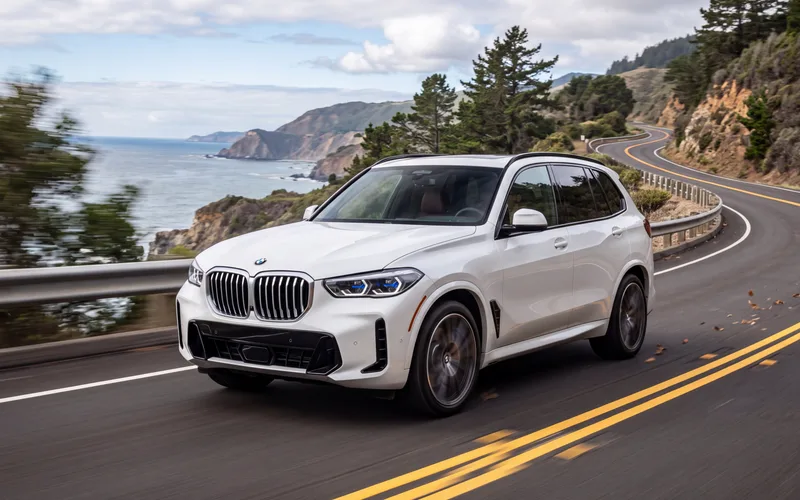 BMW X5Mid-Size Luxury SUVBetter at: Practicality
Identical mechanicals for less money with 6.5 more cu ft of cargo, more rear headroom, an optional third row, and a plug-in hybrid option the X6 doesn't offer.
Compare 2.81B-
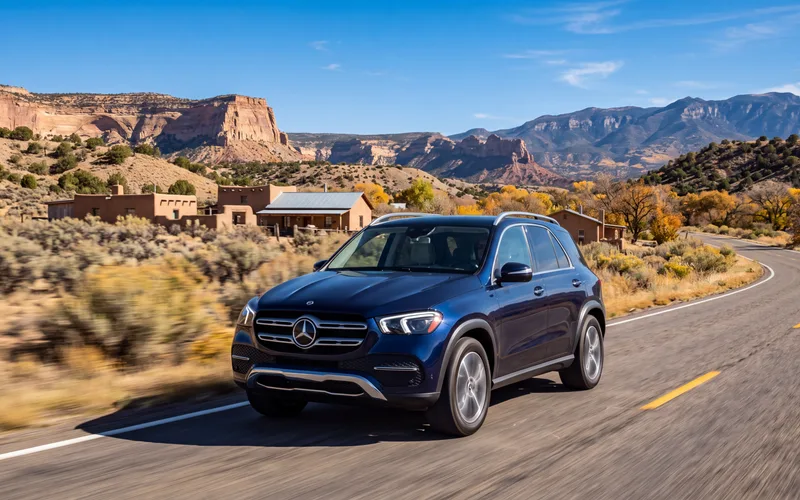 Mercedes-Benz GLEMid-Size Luxury SUVBetter at: Comfort
Roomier back seat (40.2 in of legroom), a plusher ride, and a more generous ownership package if you want luxury rather than a sport coupe silhouette.
Compare 2.65C+
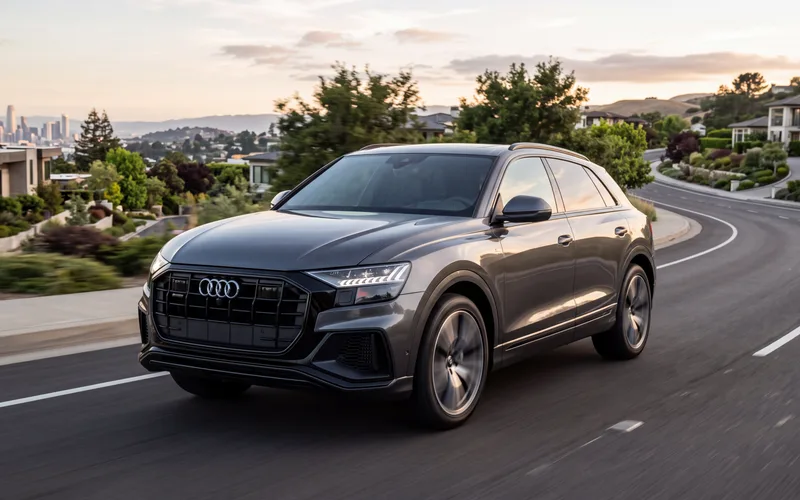 Audi Q8Mid-Size Luxury SUVBetter at: Value
The same style-first coupe-SUV idea with more equipment per dollar and a less cramped cabin, if you like the shape but not the X6's price-to-content math.
CompareHow it's evolved
10 scored model years · 2017–2026
Subject scores by year
Hover or tap a score to see what moved it versus the year before. A corner mark flags a big swing.
| Year | Performance | Efficiency | Safety | Space | Cost | Reliability | Tech | Use-case | Driving | Value |
|---|---|---|---|---|---|---|---|---|---|---|
| 2026 | 69 | 41 | 72 | 47 | 9 | 79 | 85 | 68 | 77 | 69 |
| 2025 | 69 | 49 | 70 | 41 | 16 | 74 | 83 | 52 | 75 | 65 |
| 2024 | 71 | 49 | 70 | 44 | 19 | 73 | 83 | 63 | 76 | 66 |
| 2023 | 67 | 45 | 66 | 42 | 26 | 73 | 80 | 55 | 74 | 57 |
| 2022 | 66 | 45 | 65 | 42 | 33 | 77 | 79 | 55 | 74 | 56 |
| 2021 | 66 | 45 | 64 | 41 | 26 | 69 | 81 | 55 | 74 | 61 |
| 2020 | 66 | 37 | 64 | 42 | 25 | 70 | 77 | 54 | 73 | 68 |
| 2019 | 56 | 28 | 61 | 42 | 18 | 65 | 60 | 47 | 62 | 55 |
| 2018 | 56 | 28 | 52 | 42 | 19 | 67 | 56 | 46 | 62 | 57 |
| 2017 | 56 | 28 | 41 | 41 | 19 | 72 | 54 | 45 | 69 | 60 |
Compare two years
Best fit & conditions
Higher scores mean a better fit for that use case. Learn more about use-case fit →
Subject profile
Detailed scoring by subject
1Performance & PowertrainMid-pack among this car's ten categories.2.44C+
2020 is the launch year of the third-generation G06, and the volume trim is the xDrive40i with the B58 3.0L turbocharged inline-six at 335 hp — no 48V mild-hybrid assist yet, which arrived with the 2021 model year.
The pre-LCI B58 makes 330 lb-ft across a wide 1,500–5,200 rpm plateau — 68 lb-ft less than the later mild-hybrid version of the same engine, but delivered early enough that the X6 never feels short of thrust.
BMW's US claim for the 2020 xDrive40i is 5.3 seconds to 60 mph, and independent tests have come in at or under that figure. The V8 trims are dramatically quicker, with the M Competition at 3.7 seconds.
The B58 twin-scroll turbo six is one of the smoothest engines in the segment — near-immediate response off idle thanks to peak torque from 1,500 rpm, and no coarseness at the top of the range. Without the 48V system that later years added, stop-start restarts are the one noticeable rough edge.
Every 2020 X6 uses the eight-speed Sport Steptronic (ZF 8HP) torque-converter automatic with an adaptive shift strategy that reads navigation and driving-style data. It is the segment benchmark for shift smoothness and gear choice, with crisp paddle response and no hunting.
With the optional factory towing package the 2020 X6 is rated at 7,200 lbs — near the top of the mid-size luxury SUV field, and a surprising capability for a fastback-roofed coupe-SUV.
xDrive all-wheel drive is standard on every 2020 trim, rear-biased with fully variable electronic torque split, and the xDrive40i can add an Off-Road Package bringing an M Sport differential and four terrain modes. No low-range transfer case keeps it out of the very top band.
The X6 is a pavement-first Sports Activity Coupe at roughly 8.2 in of ground clearance with no skid plates, no lockers and no off-road trim — but 2020 did offer a genuine Off-Road Package (two-axle air suspension, M Sport differential, snow/sand/gravel/rock modes) that later X6 years dropped, which lifts it above the segment's pure-road entries.
US buyers get gasoline only in 2020 — turbo I6 (xDrive40i), twin-turbo V8 (M50i) and the M-tuned S63 V8 (X6 M / M Competition). There is no hybrid, no PHEV, no EV and no diesel, and unlike 2021-onward cars not even a 48V mild-hybrid layer; the European xDrive30d diesel is not sold here.
2Efficiency & RangeOne of the X6's weakest categories.0.46F
EPA combined rating for the volume xDrive40i is 22 MPG on the 3.0L turbo I6 with standard xDrive — mid-pack among gas SUVs, and two MPG short of the later mild-hybrid version of the same drivetrain.
EPA city rating for the xDrive40i. Engine stop-start is standard but there is no 48V hybrid assist for 2020, so roughly 4,900 lb of all-wheel-drive luxury SUV shows up plainly in stop-and-go driving.
EPA highway rating for the xDrive40i — the fastback roofline's aerodynamic advantage over the X5 does not translate into an EPA gain, and standard AWD plus wide performance tires hold it to segment-average highway economy.
The large 21.9-gallon tank offsets the ordinary MPG and yields roughly 482 miles between fills, comfortably above the gas-SUV midpoint and the item that carries this category. The V8 trims fall to roughly 394 mi (M50i) and 329 mi (X6 M Competition).
EPA's published annual cost for the xDrive40i at 15,000 mi/yr on premium fuel. The premium-only requirement is what pushes this near the top of the gas-SUV cost band — a regular-fuel SUV at the same 22 MPG would run meaningfully cheaper.
Every 2020 X6 powertrain requires premium unleaded — no regular-fuel option, no flex-fuel, no diesel and no plug-in pathway in the US, so there is no configuration that buys out of the fuel-cost premium.
3SafetyMid-pack among this car's ten categories.2.33C+
NHTSA holds records for both 2020 X6 drivelines but never crash-tested either — overall, frontal, side barrier, side pole and rollover all read "Not Rated", with rollover possibility returned as 0.0 and a blank dynamic tip result. The estimate is not a segment guess: the G06 X6 launched for 2020 on the same platform, from the same Spartanburg plant and with the same crash structure as the G05 X5, which NHTSA did test for 2020 and rated 4 stars overall (4 frontal, 5 side, 4 rollover). The sports activity coupe roofline changes the greenhouse, not the load paths, so 4 stars is the defensible carry-across — but there is no tested figure behind it.
IIHS has never published an X6 rating page for this generation's early years — 2020 through 2023 all 404, with the first X6 entry appearing for 2024 — and the X6 does not appear on the 2020 BMW award list, where the 3 Series is the only BMW listed. What exists is indirect and good: the 2020 X5 page posts Good in every crashworthiness test IIHS ran and carries Top Safety Pick+, and IIHS explicitly states that the driver-side small overlap, passenger-side small overlap and moderate overlap front ratings also apply to the BMW X6. Mid-band is the honest place for a structurally identical car with three transferred results, no side/roof/head-restraint evaluation of its own, and no award.
Active Driving Assistant is standard on every 2020 X6 — frontal collision warning with city collision mitigation and braking, Active Blind-Spot Detection, lane departure warning, rear cross-traffic alert, plus front and rear Park Distance Control and a rearview camera — so the core suite and blind-spot coverage need no options on the launch-year car. Adaptive cruise and lane keeping are not standard: they sit inside the $1,700 Driving Assistance Professional package on a $64,300–$66,600 SUV, and that gap is what keeps this out of the top band.
The X6 carries the same forward-sensing hardware and software as the 2020 X5, which IIHS rates Superior in vehicle-to-vehicle front crash prevention with both the standard and the optional system, the optional setup shedding 23 mph in the 25 mph run. Two things hold it to the middle: IIHS published no pedestrian rating at all for the 2020 model year — day or night — on either car, so nothing above the mid band is demonstrated on the vulnerable-road-user side, and unlike the crashworthiness results the front crash prevention rating is not one IIHS extends to the X6, so even the vehicle-to-vehicle figure is inference from the twin.
Active Blind-Spot Detection and rear cross-traffic alert are standard on every 2020 X6 trim, and on this body they are doing more work than on most rivals — the slit rear window and heavy D-pillars mean the electronics cover sightlines the glass does not. Front cross-traffic alert and lane-change assist still require the Driving Assistance Professional package, there is no trailer-aware coverage, and unlike the X5 the launch-year X6 material does not confirm rear automatic braking as standard, so this is alert-heavy rather than intervening.
Lane departure warning is standard, but Lane Keeping Assistant with Active Side Collision Protection and the lane centering that rides with it are option-only inside the Driving Assistance Professional package. Reviewers of this generation's launch software were lukewarm on both: centering held inconsistently at highway speed while lane keeping sometimes intervened aggressively, and engaging the system was judged confusing. Functional with rough edges rather than a system drivers settle into — and not standard at this price.
Active Cruise Control with Stop & Go is a genuine full-speed-range system on the 2020 X6 — it works to 210 km/h (about 130 mph), brakes to a standstill and resumes automatically after up to 30 seconds stopped, and pairs with the Extended Traffic Jam Assistant below 40 mph. Reviewers rate the hardware well. It lands below the top band because it is a $1,700 extra on the volume xDrive40i rather than standard, and because testers of the same-generation system caught the low-speed assist failing to register a car cutting into the gap ahead.
With the Driving Assistance Professional package the 2020 X6 offers Extended Traffic Jam Assistant — genuinely hands-off, but only below 40 mph on mapped limited-access divided highways and only while the cluster-mounted driver-attention camera confirms eyes on the road. That is a real hands-free capability and rare in 2020, yet far narrower in speed and road coverage than Super Cruise or BlueCruise, and it predates the roughly 85 mph Highway Assistant BMW added to the X6 with the 2024 LCI facelift.
The launch X6 does better on standard hardware than its own X5 twin: Adaptive Full LED headlights and LED fog lights are standard on every trim, with Icon Adaptive LED Headlights with BMW Laserlight and Selective Beam available in the $3,600 Executive package. There is no IIHS headlight rating for a 2020 X6 to confirm what that hardware delivers, and the nearest measured evidence on either side of it is unflattering — the 2020 X5's standard LED projector unit rates Poor for excessive glare, and the first year IIHS did rate an X6 (2024) the base xDrive40i unit came back Marginal. Mid-band reflects good standard equipment with nothing measured behind it.
This is the price of the sports activity coupe body and the X6's clearest safety compromise against the X5 it is otherwise identical to: the sloping roofline, tapering rear side glass, very thick D-pillars and a shallow slit of a rear window leave real blind zones to the sides and rear, and reviewers flag rear visibility as a con of the car. Forward sightlines are fine and the standard rearview camera plus front and rear Park Distance Control do genuine work, but the Surround View with 3D View that would properly compensate sits in the optional Parking Assistance Plus package.
The 2020 X6 carries the G05 X5's rear bench and child-seat hardware — two outboard positions with complete lower anchors and tethers, the centre position tether-and-belt only — which IIHS rates Good for ease of use on the X5. The coupe body is what costs it: the chopped roofline and shallower rear door aperture make lifting a rear-facing seat past the opening more awkward than in the X5, and there is no third row on any 2020 X6 trim. Workable rather than easy.
4Space & ComfortOne of the X6's weakest categories.0.80F
Every 2020 X6 is a strict five-seater. Unlike the mechanically identical X5, which could be ordered with a third row for 2020, the fastback roofline leaves no room for one and BMW never offered it.
39.3 in of front headroom is mid-band for a mid-size SUV and about an inch and a half less than the X5 this car shares a floorpan with — the price of the lowered roof and the standard panoramic glass. It is still ample for tall drivers.
40.4 in barely clears the 40 in floor of the SUV band — a consequence of the long CLAR hood and a cabin set well back in the wheelbase. In practice the 16-way power seats and power-adjustable column give enough travel that only the very tallest drivers notice, but the published number is genuinely near the bottom of the class.
This is where the sports activity coupé bodystyle collects its bill: 37.5 in of second-row headroom sits in the lower third of the SUV band. Reviewers confirm six-footers still fit in the outboard positions, but the sloping backlight noticeably crowds taller rear passengers.
35.7 in is mid-band and genuinely adequate for adults — the 117.1-inch wheelbase is doing the work — but it gives up 1.7 in to the X5 built on the same platform, so the second row is merely acceptable rather than a selling point.
There is no third row and never was one — not standard, not optional, not at any price. This scores in the bottom band as a two-row-only SUV, and it sits below the X5's equivalent score because that car at least offered a third-row box to tick for 2020.
27.4 cu ft is near the very bottom of an SUV band that runs to 80 cu ft, and 6.5 cu ft short of the X5's hold — the clearest, most measurable cost of the fastback tail. The floor itself is flat and wide; it is the vertical space above it that is gone.
Even with the rear seats down the X6 manages only 59.6 cu ft, close to the bottom of the SUV band and 12.7 cu ft behind the X5. Folding the seats recovers floor length but cannot restore the roof height the styling removed.
Below average for the money, and worse than the X5 in the one place the X5 is clever: the X6 gets a conventional single-piece power liftgate rather than the two-piece split tailgate with its load ledge and sitting step. What is left is ordinary — deep door bins, underfloor storage in the cargo well, and a centre console crowded by the iDrive controller — and on the volume xDrive40i even the wireless charging tray is locked inside an option package.
The front seats are a real strength — Vernasca leather sport seats are standard rather than the X5's SensaTec, with 16-way power adjustment and four-way lumbar, and testers rate them top-marks for long stints. Two things hold it below the X5: the rear bench sits under a roofline that crowds taller passengers, and ventilated seats are locked in the Luxury Seating Package, which reviewers flagged as a conspicuous omission on a $72,000 test car.
Composed and well-controlled but distinctly firm — the X6 is tuned harder than the X5 and rides on 20-inch run-flats as its softest standard setup, with 21s and 22s widely fitted. Reviewers report that even Comfort mode feels firm and that big wheels crash into city potholes. The two-axle air suspension is a genuine fix but a stand-alone option on the 40i.
Very quiet, helped by thorough isolation and the inherently smooth B58 inline-six — testers describe the cabin as quiet at speed. It scores a notch below the X5 because acoustic glass is a stand-alone option rather than standard equipment, and the wide staggered performance tires most X6s wear generate more road roar than the X5's narrower fitment.
A good standard baseline — heated front seats, dual-zone automatic climate, panoramic moonroof and ambient lighting all come on the volume xDrive40i — but everything beyond it is an option box. Four-zone climate needs the Convenience, Premium or Executive Package; ventilated and massaging front seats need the Luxury Seating Package; heated rear seats, heated armrests and a heated steering wheel are stand-alone options; and remote pre-conditioning arrives only with Remote Engine Start.
5Cost of OwnershipThe X6's lowest-graded category.0.00F
The entry 2020 X6 is the rear-drive sDrive40i at $64,300 MSRP plus BMW's $995 destination and handling charge; 2020 is the launch year of the all-new G06 generation, so this is fresh manufacturer pricing rather than a carry-over.
The all-wheel-drive xDrive40i is the volume 2020 X6 at $66,600 plus $995 destination = $67,595 before options, and BMW's a-la-carte structure means a representative press build lands right around $72,000; the X6 carries roughly a $5,400 premium over the equivalent X5 for the fastback body.
Independent class estimates for the X6 cluster near $6,100–$6,200 over five years, but the X6 rides on standard 20-inch wheels (21s and 22s optional) with staggered run-flat performance tires and shares the X5's above-average out-of-warranty repair severity, which argues for the upper end of the range.
The 2020 X6 hit its five-year mark in 2025, so this is close to observed rather than projected: iSeeCars puts nameplate five-year depreciation at 50.3% (≈49.7% retained), and KBB's current six-year private-party value of $31,900 against a ~$72,000 as-equipped price implies roughly 48% at the five-year point.
BMW's New Vehicle Limited Warranty on 2020 models runs 4 years or 50,000 miles, a year longer than the 3/36 offered by most mainstream brands and matching Mercedes-Benz and Audi.
Unlike most of the market, BMW provides no extended powertrain schedule on 2020 models: the B58 inline-six or N63 V8, the eight-speed Steptronic, the transfer case and the drivetrain are all covered by the same 4-year/50,000-mile term, well short of the 5–10-year powertrain warranties that are the segment norm.
BMW Ultimate Care covers scheduled maintenance for 3 years/36,000 miles and roadside assistance runs the full 4 years with unlimited mileage — genuinely multi-year coverage — but on a 2020 car the maintenance plan is strictly non-transferable (BMW did not make it transferable to a second owner until MY2022) and the standard tier is narrow after BMW trimmed it from the old 4/50 comprehensive plan.
$72,000 volume-trim price minus its estimated resale value after 5 years (48% retained, or about $34,560) leaves about $37,440 in depreciation. Add the projected $7,000 in 5-year maintenance and repairs, and owning this vehicle for 5 years costs about $44,440 in total.
6Reliability & QualityOne of the X6's strongest categories.2.74B-
The one study that actually covers this nameplate rates it top of class — J.D. Power gives the 2020 X6 a 90/100 predicted reliability score ("Great"), the highest in the luxury midsize SUV set, and the X6 was the highest-ranked model in the upper midsize premium SUV segment in the 2020 Initial Quality Study, which surveys 2020 model-year owners at 90 days. What keeps it out of the 80s is the absence of a second opinion: Consumer Reports publishes no rating for this model year at all (insufficient sample), and the mechanically identical G05 X5 that CR did survey came back below average for the same model year, with brake, transmission-shift and electronics complaints. 2020 is also the launch year of the G06 generation, so there is no carry-over year's data to lean on.
BMW over the window bracketing this car is a mid-pack brand on a steep improvement curve rather than a consistently top-five one. It sat 12th on Consumer Reports' brand card and below the industry average on initial quality when the 2020 X6 was being sold, then reached CR's top three within two years; the dependability study covering 2020 model-year cars put it marginally better than average. Consistently ahead of Mercedes-Benz, Audi and Land Rover, consistently behind Lexus and Porsche.
Ten NHTSA campaigns, and the severity is what places this in the bottom band rather than the count alone: two separate fire-risk starter-motor recalls, a front-axle-support weld that can separate from the right front control arm bracket, an ABS/braking-assistance loss, and — unique to the X6 and both inside its launch year — two distinct rear-spoiler campaigns where the roof spoiler can come unbonded and detach at speed. It lands a few points above the platform-twin X5 only because the X6 escapes that car's two steering recalls, including the one where the steering rack pinion teeth can break and cause loss of steering control.
The volume xDrive40i runs the B58 3.0L turbocharged inline-six at 335 hp — notably without the 48V mild-hybrid system BMW added to this trim for 2021 — through the ZF 8HP eight-speed. Both are about as proven as modern forced-induction luxury hardware gets: closed-deck block, a deep high-mileage record and no chronic failure mode. Held just below the top of the band by the electric water pump and oil-filter-housing/cooler-gasket weep that show up across the nameplate past the warranty window, and by the fact that the step-up M50i uses the N63 4.4L V8, a family with a materially worse durability reputation than the six.
The G06 cabin was a step change over the outgoing F16 and reviewers put it at or near the top of the mid-size luxury set at launch: Vernasca leather standard even on the base car, simulated leather across the dashboard, real metal accents, and dense, well-damped switchgear under the iDrive 7 rotary controller. Soft-touch coverage extends to surfaces where rivals still use hard plastic, and reviewers noted even the plastics read better than mainstream. Only the most theatrical rivals feel more special.
The strongest evidence here is positive and directly on-point: the X6 was the highest-ranked model in its segment in the 2020 Initial Quality Study, which measures exactly this at 90 days, and launch reviews report tight panel gaps with no shakes or rattles. Spartanburg assembly gives it a solid structure. What holds it in the 70s is that 2020 is a launch year and the recall record carries the fingerprints — two separate campaigns for a roof spoiler that was not properly bonded to its mounting plate, and a front axle support weld that can separate, both assembly-origin defects — while BMW as a brand sat below the industry average on 2020 initial quality.
Roughly 350 BMW centers across all 50 states is dense coverage by luxury standards — better reach than Genesis, Volvo or Land Rover, comparable to Mercedes-Benz — and a six-year-old X6 is a car every one of them services routinely, since it shares essentially all of its mechanicals with the far more common X5. Service satisfaction is the limiter: BMW sits mid-pack among premium brands rather than with the Lexus/Porsche/Cadillac leaders.
Availability is fine — the mechanical parts are X5 parts, so there is deep dealer stock, a real independent-specialist trade and genuine aftermarket support. Cost is the problem, and RepairPal rates the X6 worse than the X5 on every axis: below-average reliability, near the bottom of its luxury class, and roughly double the all-vehicle average annual spend with both frequency and severity of repairs much higher than normal. A 2020 car makes it worse — the 4-year/50,000-mile warranty (BMW publishes no separate powertrain term) has long lapsed, and this is exactly the mileage window for air-suspension struts, oil filter housing and cooler gaskets, and staggered run-flats on standard 20-inch wheels. The X6's own bodywork is the extra penalty over the X5: the fastback roof, rear glass and spoiler assembly are model-unique and produced in far smaller volume, so the body-side used and replacement supply is thinner and dearer.
7Technology & InfotainmentThe X6's best-graded category.3.24B+
BMW Live Cockpit Professional is standard across the whole US 2020 X6 range, pairing a 12.3-inch center touchscreen with a 12.3-inch digital cluster on iDrive 7. There is no upgrade path — the curved 14.9-inch display did not reach the X6 until the 2024 LCI.
iDrive 7 on a 2020 car is close to the high-water mark for the era: fast, crisply rendered, deeply customizable with widget tiles, and — critically — it still keeps the rotary controller, physical climate controls, touch, gesture and voice as parallel inputs rather than pushing everything onto glass. It stays out of the top band because reviewers consistently describe menu structure as a maze of 'rabbit holes' with a real learning curve.
Wireless Apple CarPlay is standard equipment and 2020 is the model year BMW stopped charging for it, dropping the $80/year subscription in December 2019 for all 2019 and 2020 cars. Android Auto is the gap: it did not exist on the G06 at launch, arriving with July 2020 production and reaching earlier builds only through an autumn 2020 over-the-air campaign — and BMW supports it wirelessly only, with no wired fallback.
Navigation Professional is bundled into the standard Live Cockpit Professional, so unlike most vehicles at this price there is no navigation upcharge at all and the maps are good enough that owners are not driven straight to phone projection. Cloud-based natural-language voice control and the BMW Intelligent Personal Assistant handle climate, navigation and vehicle settings well by 2020 standards.
A deep ladder with a modest bottom rung. The volume xDrive40i ships with a competent but unremarkable standard system, Harman Kardon Surround Sound is an affordable stand-alone upgrade and standard on the M50i, and the Bowers & Wilkins Diamond Surround system at the top is among the best factory audio available in any vehicle at any price.
A 12.3-inch fully digital, high-resolution cluster is standard on every 2020 X6 with no trim walk, carrying drive-mode-linked themes and a map inset in the centre. It falls short of the top band only because BMW's iDrive 7 layout — pushing the speedometer and tachometer to the outer edges as outward-sweeping geometric bands — is widely criticised as less legible at a glance than the analog dials it replaced.
BMW Remote Software Upgrade on iDrive 7 covers whole-vehicle software rather than maps alone, is notified through the car and phone app, and installs while parked. 2020 is the model year it demonstrably earned its keep: G06 cars already in customers' hands gained wireless Android Auto through an OTA campaign rather than a dealer visit. Below the top band because installs are periodic rather than continuous and stalled-update owner reports are common.
Complete on the fundamentals — the BMW Connected app handles remote lock/unlock, vehicle finder, status and service scheduling, imports calendar destinations into the navigation and integrates with Apple Watch, Android, Alexa and Google Home — and 2020 is the year BMW Digital Key with Apple CarKey became real, supported on cars built from July 2020 with Comfort Access, which every X6 has. It sits mid-band because Remote Engine Start is an extra-cost option on the volume 40i and the WiFi hotspot needs a package.
Adequate but option-gated. Live Cockpit Professional brings two USB-C ports as standard and rear passengers get charging ports in the front seatbacks, so the basics are covered in both rows — but the wireless charging tray and WiFi hotspot need the Convenience or Premium Package on the volume xDrive40i, there is no household AC outlet anywhere in the vehicle, and the extra ports come with 'Enhanced USB & Bluetooth' package content rather than as standard.
Better than its X5 twin here: BMW lists Comfort Access Keyless Entry as standard equipment on every 2020 X6, alongside a power liftgate and push-button start, and Digital Key with Apple CarKey is supported on Comfort Access cars built from July 2020. The only thing keeping it out of the very top band is Remote Engine Start, which remains an extra-cost stand-alone option or Premium/Executive Package content rather than standard.
Rear View Camera and Park Distance Control are standard, and the Parking Assistance Plus Package is strong content — Surround View with 3D View, Active Park Distance Control and Back-Up Assistant, which retraces the last 50 metres of steering automatically. On this body the electronics matter more than usual, because the slit rear window and heavy D-pillars make the camera the primary rearward sightline. Held below the top band only because surround view is an option rather than standard on the volume trim.
BMW's latest-generation head-up display is one of the largest and clearest in the industry — 2020 brought a bigger projection area, optimized graphics and more content, covering speed, limits, navigation and driver-assist status. It is strictly optional on every 2020 X6, reachable only through the Premium or Executive Package, which is what keeps it mid-band rather than higher.
8Use-Case FitGrades below the middle of the scale.1.63D
The hardware is sound — the X6 carries the X5's rear bench with two outboard positions with complete lower anchors and tethers, a high hip point so you buckle a child without stooping, and 35.7 in of second-row legroom. The bodystyle is what costs it: the sloping roofline and lower door aperture make lifting a rear-facing seat over the sill genuinely awkward, 27.4 cu ft behind the second row is tight for a stroller plus a week's gear, and there is no third row at any price for a third child.
The equipment is genuinely good — Active Driving Assistant with frontal collision warning and city braking, blind-spot detection, lane departure warning and rear cross-traffic alert are standard on every trim, running the same forward-sensing hardware IIHS rates Superior on the X5 twin. What holds it well below the X5's score is the absence of any published crash data: neither NHTSA nor IIHS ever tested a 2020 X6, so a family buyer has no third-party rating to rely on, and the car's own outward visibility is the segment's weakest.
Pleasant for four adults on a long haul — quiet cabin, excellent front seats, a 21.9-gallon tank worth roughly 570 highway miles, and rear passengers get seatback USB ports and their own climate zone when four-zone is fitted. The ceiling is set by the bodystyle and the option sheet: 37.5 in of rear headroom crowds taller passengers, 27.4 cu ft of luggage space with everyone aboard is tight, and four-zone climate, heated rear seats and rear entertainment all cost extra on the volume 40i.
The powertrain does this well — the B58 turbo six pulls cleanly from 1,500 rpm with almost no lag and the eight-speed Steptronic shifts imperceptibly in Comfort — but the X6 is a harder-edged car to live with than its X5 twin. The suspension is firm even in its softest setting on standard 20-inch run-flats, the sloping backlight makes over-the-shoulder checks a camera exercise, 2020 predates the 48V mild hybrid that would smooth the stop/start restart from 2021, and adaptive cruise with stop-and-go is a package option rather than standard.
An expensive way to cover commuting miles. 22 MPG combined on required premium fuel is unremarkable even by luxury-SUV standards, EPA puts annual fuel cost at roughly $3,450, and the consumables are punishing — staggered run-flat performance tires on 20-inch wheels as the cheapest fitment, dealer-priced service, and no hybrid, plug-in or diesel escape route offered in the US for 2020.
Awkward in the city and worse than the X5 for the same footprint. It is 194.8 in long and 78.9 in wide on a 117.1 in wheelbase with a turning circle of roughly 41.4 ft, and the fastback roof leaves a shallow rear window and heavy D-pillars that make the reversing camera the primary rearward sightline rather than a supplement. Surround View with 3D View fixes most of it — but it is a package option, and Integral Active Steering, which actually tightens the circle, is another.
The tow rating is the one genuinely capable number: 7,200 lbs with the factory hitch, enough for a decent boat or a two-horse trailer, and the B58 and ZF eight-speed pull it without strain. Everything else is passenger-car scale — 893 lbs of payload on the xDrive40i, no bed, and 27.4 cu ft behind the second row, less than most compact SUVs. This is a tow vehicle for toys, not a work tool.
The mechanical core is respectable — the B58 inline-six and ZF 8HP are among the more durable modern luxury powertrains, and a 40i left on standard dampers avoids the two-axle air suspension that is this platform's most expensive failure mode. Around it, though, is a vehicle built entirely for a garage: standard Vernasca leather, ambient lighting, staggered run-flat performance tires, repair costs running roughly double the all-vehicle average, and no fleet or commercial tradition whatsoever behind the nameplate.
Essentially nothing here, and less than the X5 offers. Cargo tie-downs, underfloor storage and an optional hitch are the whole provision: there is no onboard AC power, no washable or vinyl interior option, no upfit or ladder-rack ecosystem, and — unlike the X5 — no split tailgate load ledge and no standard roof rails, which on the G06 are a retrofit or option rather than fitted equipment. Standard leather and ambient lighting are precisely what you do not want to load dirty gear against.
The X6's best use case. A quiet cabin, 16-way front seats testers rate top marks for long stints, effortless mid-range from the B58, and a 21.9-gallon tank worth roughly 570 miles at the 26 MPG highway rating make it a genuine mile-eater. It lands short of the very top band because the ride is firm enough on standard 20s to become wearing on broken interstate, and every fatigue-reducing assist that defines a great tourer — adaptive cruise with stop-and-go, Extended Traffic Jam Assistant, automatic lane change — sits inside the optional Driving Assistance Professional Package.
More capable than the shape suggests, but clearly pavement-first. xDrive is standard on the volume trim, the factory hitch is rated 7,200 lbs for toys, and 2020 is one of the few X6 years offering a real Off-Road Package — two-axle air suspension, front and rear sump guards, M Sport differential and dedicated xOffroad modes. Against that sit 8.1 in of ground clearance, road-biased run-flats on 20-inch-plus wheels, no standard roof rails for a box or bikes, and a cargo opening that will not take tall gear.
The floor is flat and wide and the second row splits and folds to 59.6 cu ft, which handles ordinary luggage well. Bulky gear is where it falls down: 27.4 cu ft behind the seats is near the bottom of the SUV band, the sloped tailgate limits how tall an item can be, the load height is high, there is no split tailgate ledge to slide long items over, and roof rails — the usual escape valve — are not standard equipment.
9Driving ExperienceOne of the X6's strongest categories.2.92B-
Among the best-handling vehicles in the mid-size luxury SUV set, and tuned a notch sharper than the X5 it is built beside: Dynamic Damper Control is standard, the staggered performance tire fitments are wider than anything the X5 offers, and reviewers report the combination of adaptive dampers and the optional self-levelling air suspension keeps a body this heavy remarkably flat through hard cornering. It stays out of the top band because the genuinely sharp hardware — Integral Active Steering, Active Roll Stabilization, Adaptive M Suspension Professional — lives in the Dynamic Handling Package, which on the xDrive40i also requires the M Sport Package first.
Accurate, heavily weighted and quick — the xDrive40i uses a variable-ratio rack (16.4:1 to 18.7:1) that makes a 194.8-inch vehicle easy to place and responds keenly off-centre in Sport. The electric rack is the limit rather than the geometry: reviewers describe the weight as meaty but note it does not translate into road feel, and the optional Integral Active Steering sharpens response without adding feedback.
Pedal feel is firm, progressive and consistent, and the X6 carries the same brake hardware as the X5, whose instrumented 60-0 stop of roughly 119 ft trails most direct competitors — which is what keeps this mid-band. M Sport Brakes with blue fixed calipers are available on the 40i and standard on the M50i, and address most of the shortfall for buyers who tick the box.
A benchmark drivetrain. The B58 3.0L turbo inline-six makes 335 hp and 330 lb-ft with peak torque from 1,500 rpm and essentially no lag, and the eight-speed Steptronic shifts imperceptibly in Comfort and decisively in Sport — 5.3 seconds to 60 mph claimed, and testers matching or beating it. It sits a shade below the very top because 2020 predates the 48-volt mild-hybrid starter-generator that arrived for 2021, so auto stop/start restarts are conventional rather than near-undetectable.
The inline-six is inherently balanced, so nothing reaches the wheel or pedals, and it is close to silent at a cruise inside a cabin testers call quiet. Under load it produces a cultured, genuinely pleasant note rather than the coarse thrash of the turbo fours common at this price — though without the M Sport exhaust that the M50i gets standard and the 40i's M Sport Package adds, the standard car's voice is muted rather than characterful.
A wide arc near the top of the SUV band — over 41 ft means U-turns need a second bite and parking structures need care, a direct consequence of the 117.1-inch wheelbase and 275-section front tires. Integral Active Steering tightens it meaningfully, but on the xDrive40i it is a stand-alone option or Dynamic Handling Package content that itself requires the M Sport Package.
The seat itself is excellent — 16-way power adjustment with four-way lumbar, rated top marks for big and tall drivers, with a commanding view forward and a power-adjustable column. Two things pull it below the X5: the sloping backlight and heavy D-pillars make rearward vision the worst in the segment, so lane changes and reversing lean on the electronics, and iDrive 7's menu depth means secondary functions are several layers down.
One of the few SUVs this size an enthusiast genuinely enjoys, and the sharper of the two cars BMW builds on this floorpan — the B58's shove and sound, a 5.2-second run to 60 mph in independent testing, quick heavy steering and body control that flatters the mass. It is still a two-and-a-half-ton luxury SUV rather than a sports car, but the whole point of choosing an X6 over an X5 is the way it drives, and 2020 backs it with a new 523 hp M50i above the volume trim.
10Value & Market PositionMid-pack among this car's ten categories.2.63C+
The G06 X6 is better kitted at base than the X5 it is built beside — Vernasca leather sport seats, 20-inch wheels, a panoramic moonroof, Live Cockpit Professional with navigation and twin 12.3-inch displays, Adaptive Full LED headlights, Comfort Access keyless entry, Active Driving Assistant and Park Distance Control are all standard — but BMW still bills separately for the things a $65,000 vehicle ought to include, notably the $2,300 Premium Package (head-up display, gesture control, four-zone climate, Wi-Fi hotspot, SiriusXM) and adaptive cruise, which lives in the extra-cost Driving Assistance Professional package.
This is the X6's structural weakness and reviewers are unanimous about it: it is the same car as the X5 — same B58 335-hp inline-six, same CLAR chassis, same cabin — for about $5,400 more, with less cargo room, less rear headroom and worse rearward visibility in exchange for the fastback roof. The powertrain-per-dollar case against base rivals fielding 250-hp fours is genuinely strong, but you are paying a style premium for measurably less vehicle, and the extra-cost packages push a modest build past $72,000.
Five variants spanning $64,300 to $117,600 and 335 to 617 hp, with rear- or all-wheel drive on the six and BMW's deep package and Individual catalogue behind them — a wide ladder by any measure. What is missing is configuration variety rather than trim variety: the fastback body admits no third-row option (which the X5 offers), and there is no plug-in hybrid or diesel for 2020, so every X6 is a five-seat gas SUV.
The X6 was the only BMW X model to grow in the US in 2020 — 7,313 units, up 68.6% — in a year when the brand as a whole fell 17.5%, which is a strong reception for a brand-new generation. But the absolute number is small: roughly one seventh of the X5's volume, on a body style that is a deliberate niche, so this is a healthy launch rather than a segment-volume story.
BMW remains one of the most aspirational mass-luxury badges in the US, and the X6 has an image argument the X5 does not: it invented the sports activity coupé in 2008 and every rival fastback SUV since — GLE Coupé, Cayenne Coupé, Q8 — followed it. Polarizing styling and BMW's out-of-warranty running-cost reputation are what keep it out of the top band.
2020 was one of the best buyer's markets of the decade — the opposite of the 2022 market-adjustment era. Pandemic-driven demand collapse pushed industry incentive spending to record highs, and BMW layered subsidized financing, payment deferral and a cash credit specifically on X6 40i models; a low-volume niche body style is also more negotiable than a core seller.
2020 is the launch model year of the third-generation G06 — unveiled 3 July 2019, production from August 2019 at Plant Spartanburg, sales from November 2019 — on the current CLAR platform with iDrive 7 and twin 12.3-inch displays, and with the M50i and the returning X6 M new to the range. Redesign risk for a 2020 buyer was nil; the LCI facelift is four model years away.
Reviewers praise the powertrains and chassis — the same ones that made the X5 a class benchmark — but rank the X6 near the bottom of the class because of what the roofline costs in practicality and what the badge costs in dollars, and it collected no significant US award. It also carries no IIHS or NHTSA rating at all, so there is no safety honor of the kind the X5 won.